
Here is a window into some of the LITERACY CENTRES we’ve been doing in 4A lately. Feel free to use or build on any of these ideas! Students are taught the theory, skills, and strategies for each centre in advance.
Impromptu Speeches
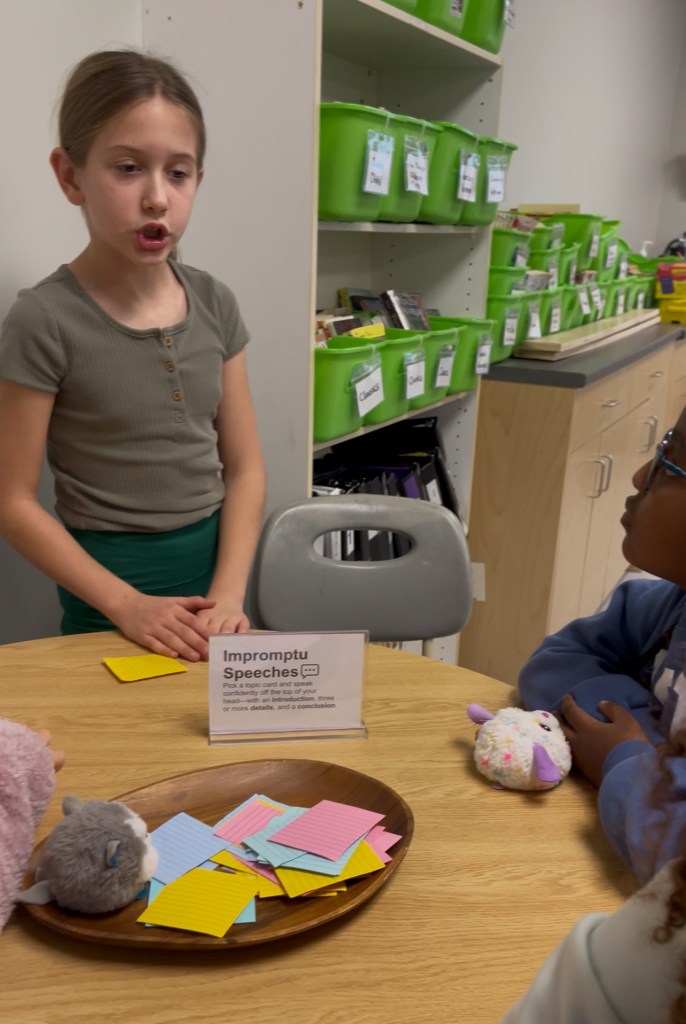
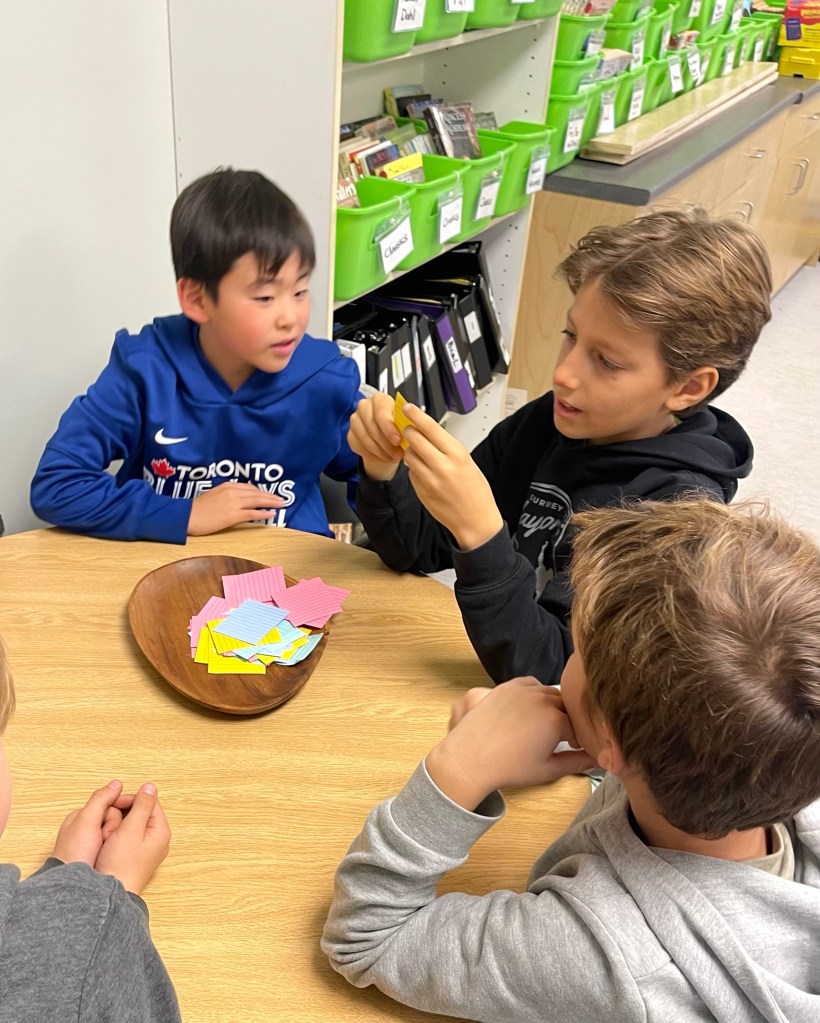
At this station, students take turns drawing a speech topic from the collection our students brainstormed. With no time to plan, a student is challenged to deliver a 1-2 minute speech, with effort towards using a captivating hook and topic sentence, a few developed ideas, and a meaningful conclusion. The results have been very engaging so far!
LEARNING GOAL: This centre strengthens students’ oral language and composition skills. It puts into practice their ability to organize ideas, use language purposefully, and creatively engage an audience. Students build confidence in speaking and thinking on their feet. It also produces lots of giggles and joy because the topics can be silly and fun! (For example: How to Wash Your Elephant, Why We Need a Ball Pit at School, Ways to Repurpose Your Toothbrush, etc.)
Paragraph Puzzle
At this station, students pull an envelope filled with sentence strips that together form one well-organized paragraph. They read each strip carefully, then work to arrange them in order—from title to topic sentence, supporting details, and conclusion.
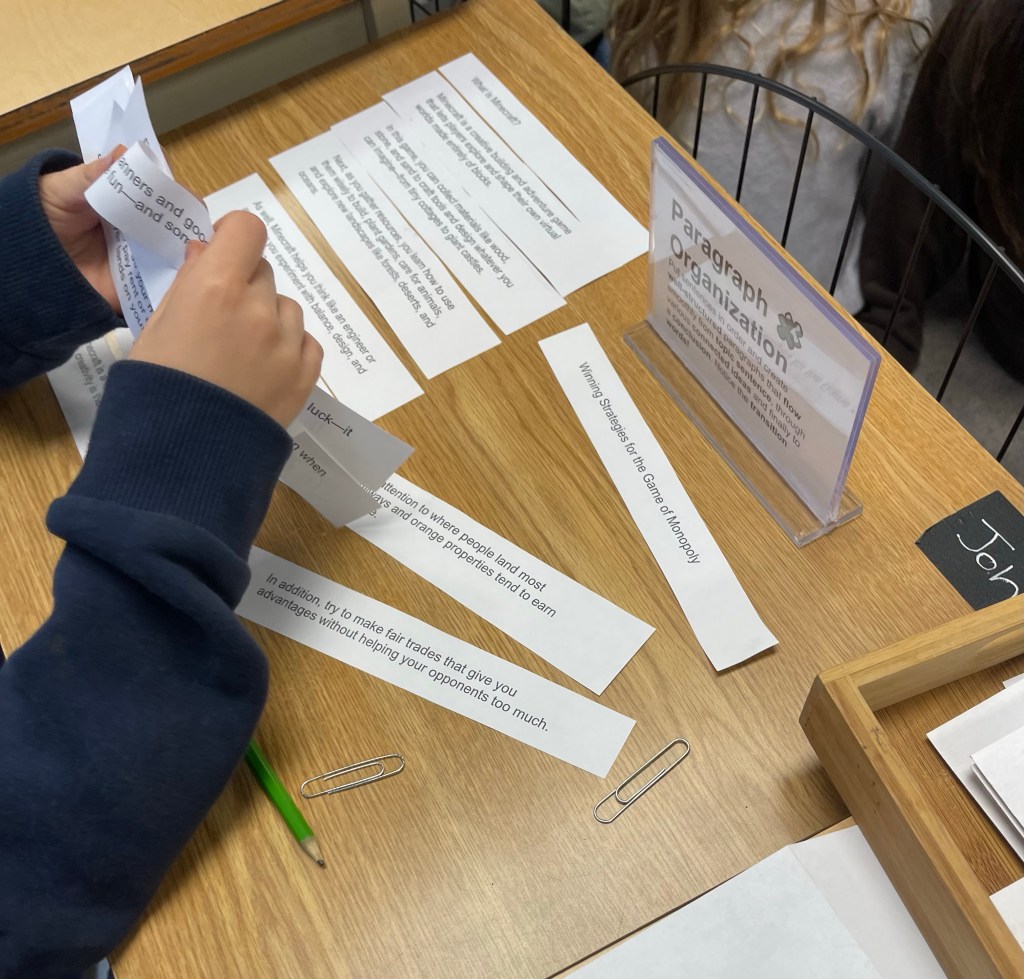
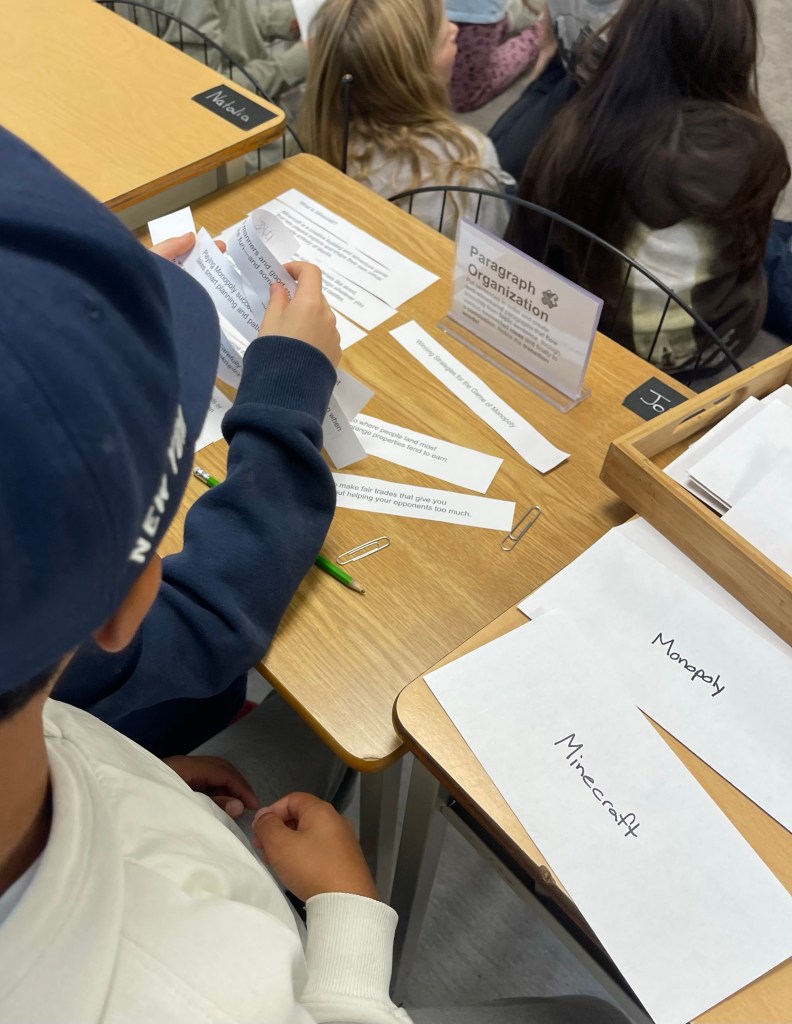
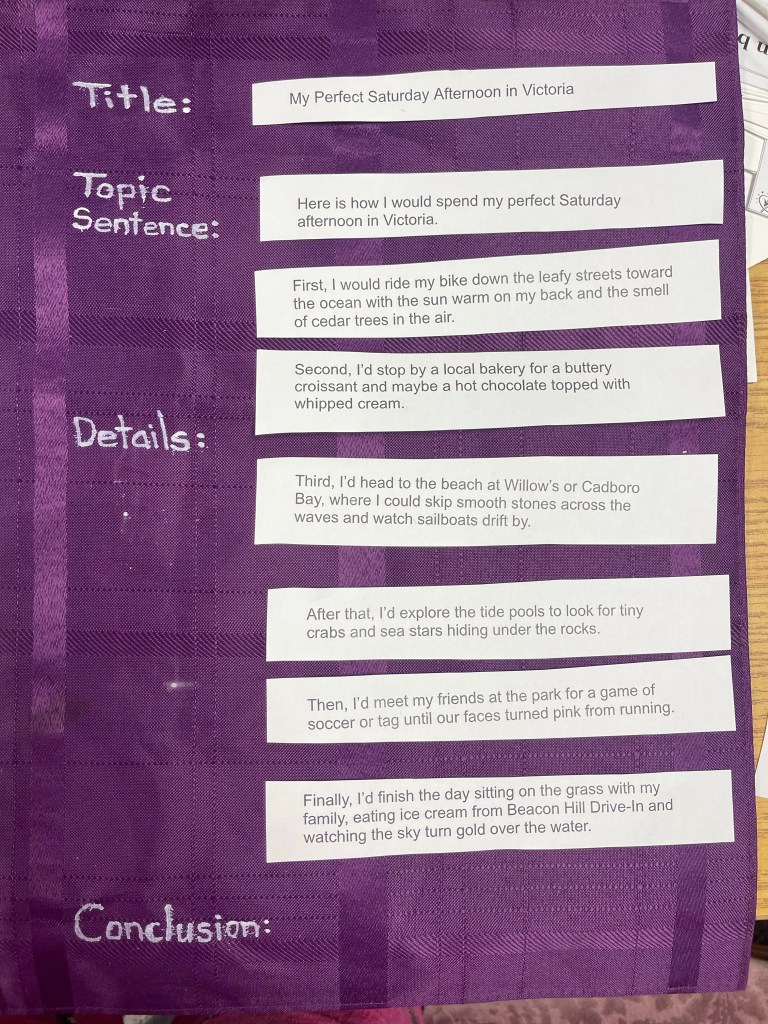
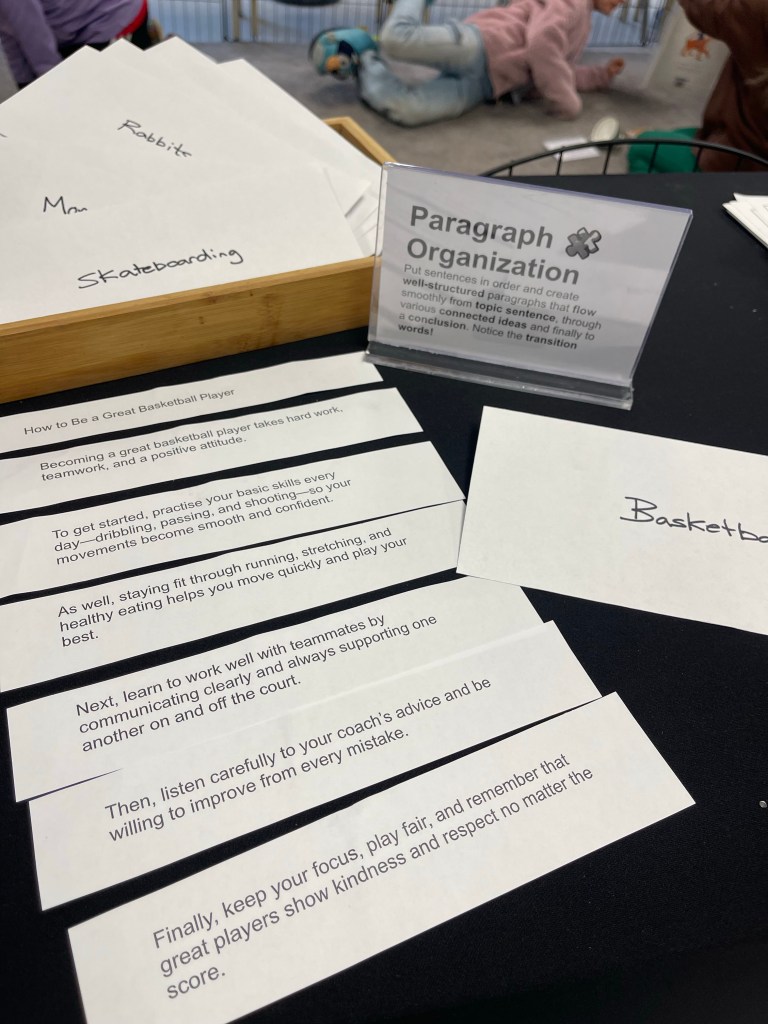
LEARNING GOAL: This hands-on “paragraph puzzle” gamifies close reading and helps students recognize the features of strong expository writing, such as logical sequencing, transition words, and clear topic development. In piecing ideas together, they learn to read like editors and think like writers.
DOWNLOAD: Click here to download the document I made (with AI help) with loads of paragraphs broken into sentence strips. Just cut up and group the each paragraph into puzzle sets. I recommend putting a letter and number on the back of each sentence to identify which set it belongs to and as an “answer key”. For example, a paragraph about Pokémon could have the sentence strips listed as P1, P2, P3, etc.
Story Studio
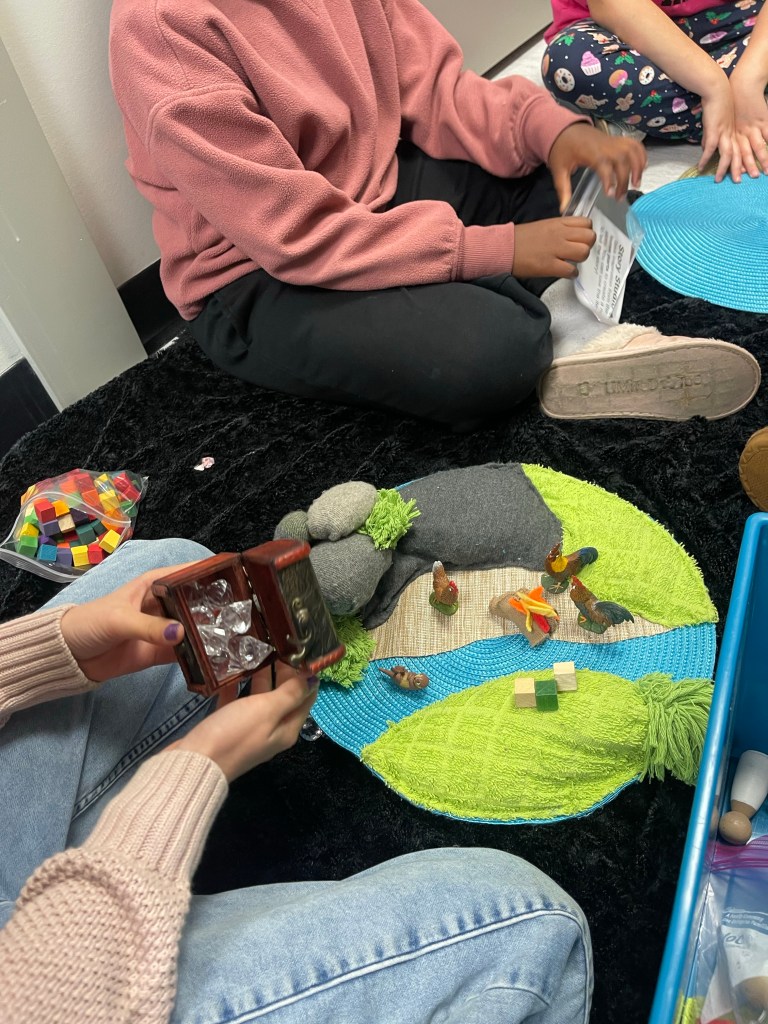
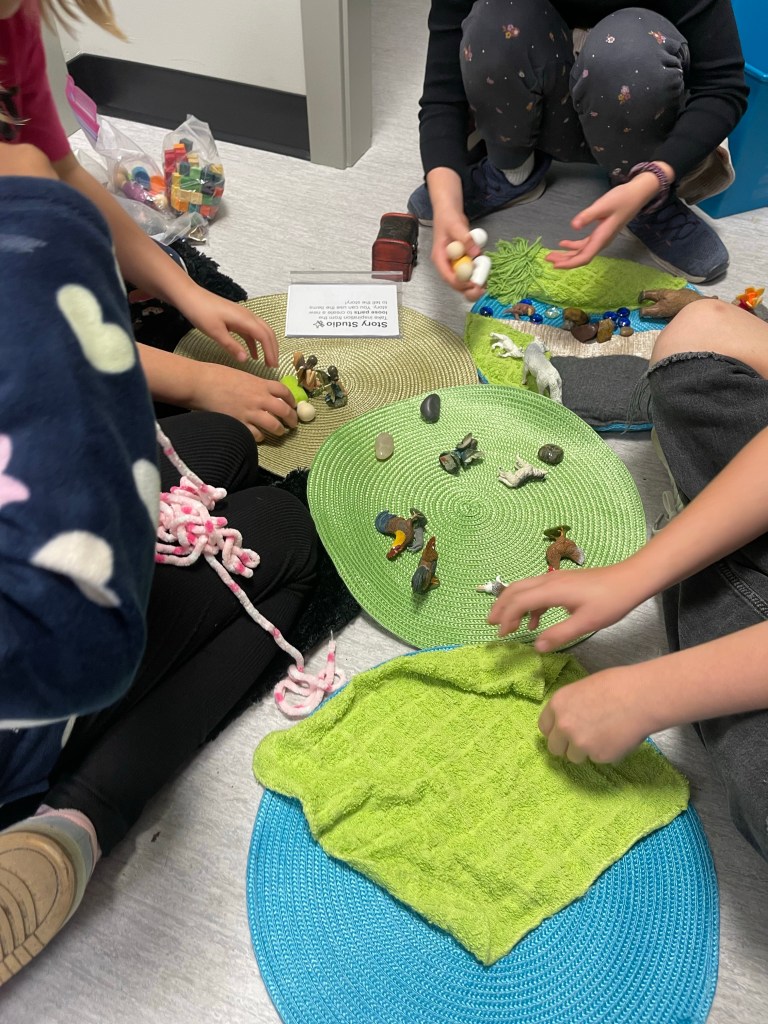
The students use loose parts as creative prompts when telling imaginative stories with a clear beginning, middle, and end. Modelling is key—so is setting up ground rules like no stealing or hoarding parts. Front loading ensures this more than “play time” and actually outcome driven, safe and sustainable.
LEARNING GOAL: This activity strengthens oral language, story sequencing skills, memory, and creative thinking as students transform toys and odds and ends into coherent tales. It essentially teaches kids how to add complexity to their play.
Morphology
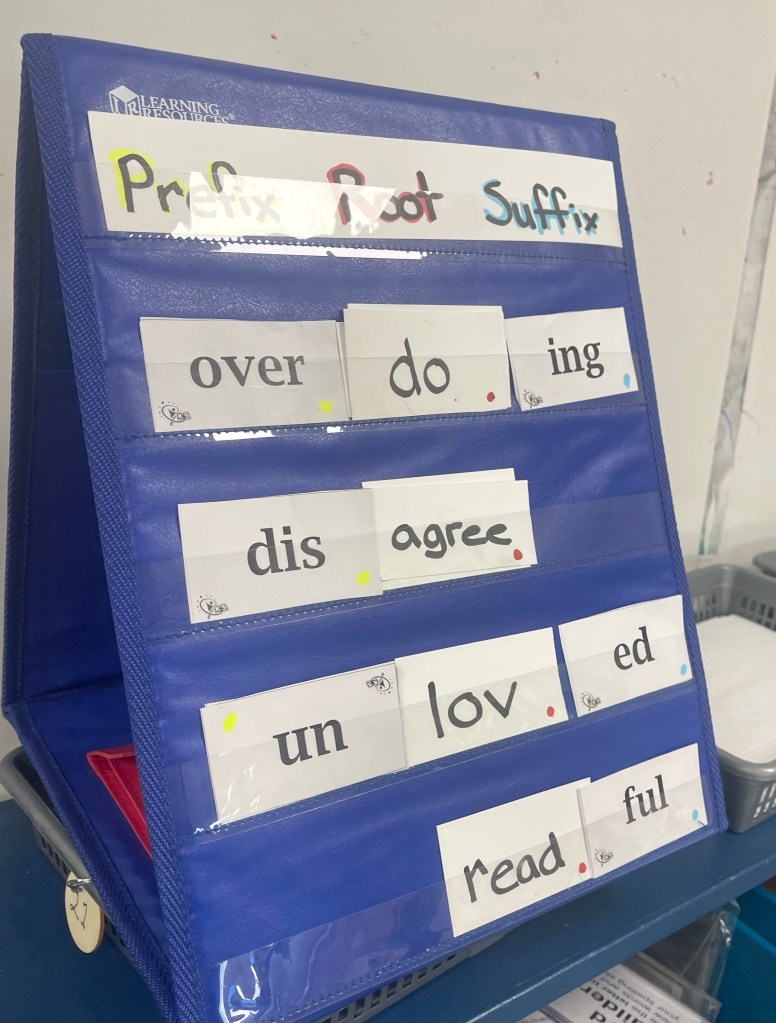
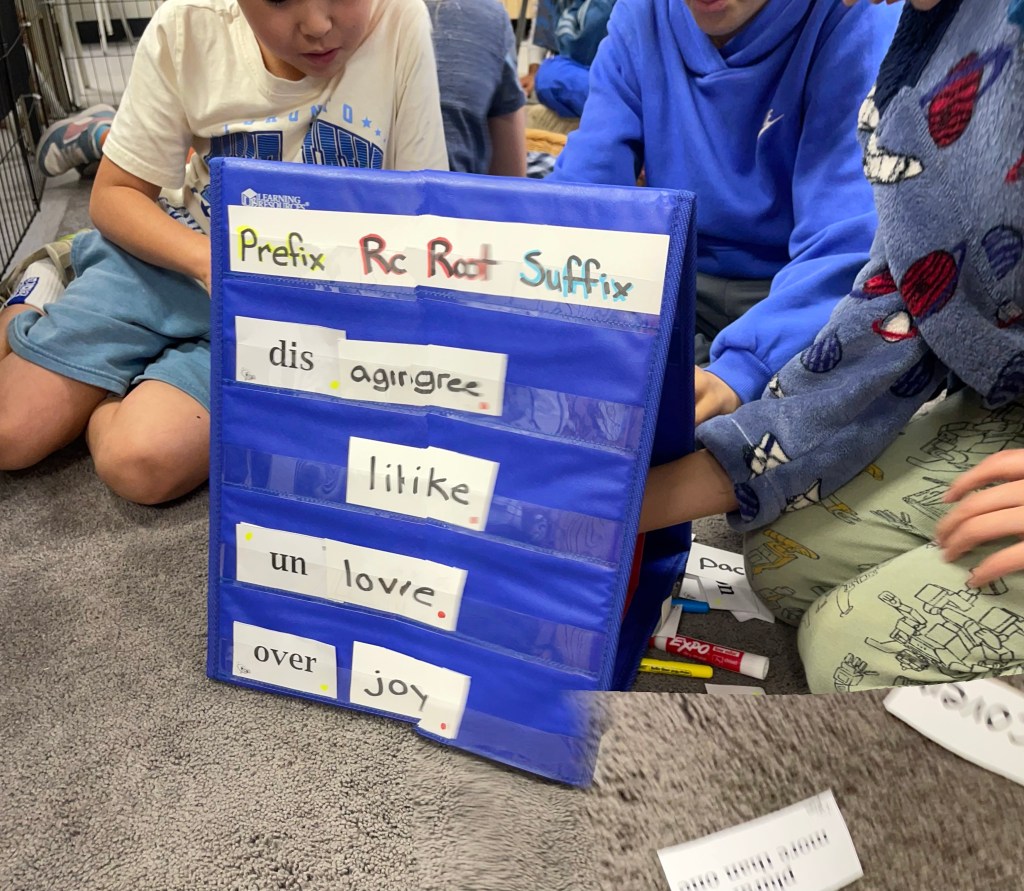
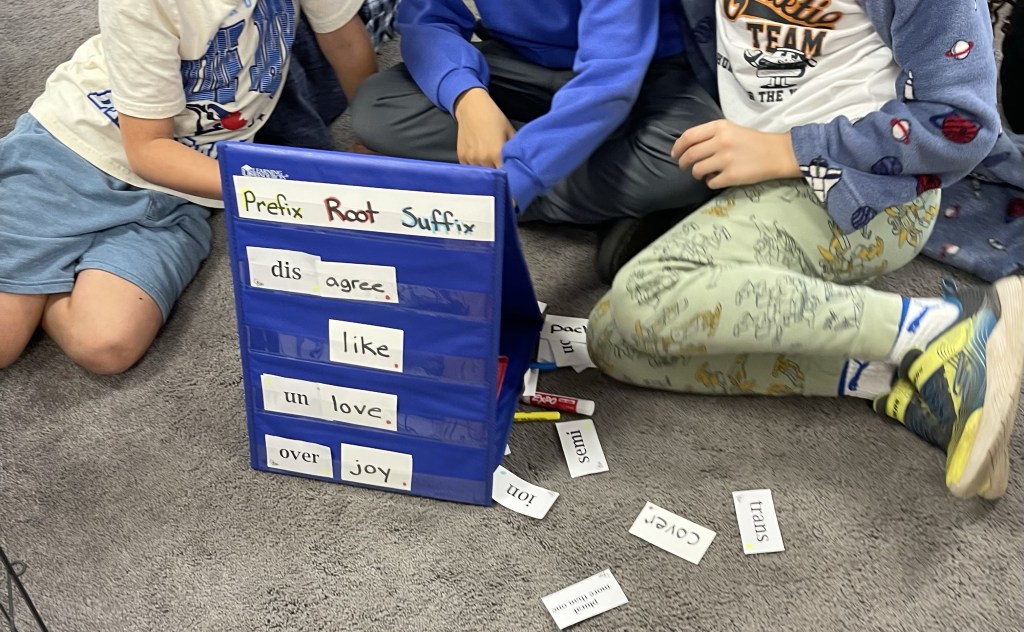
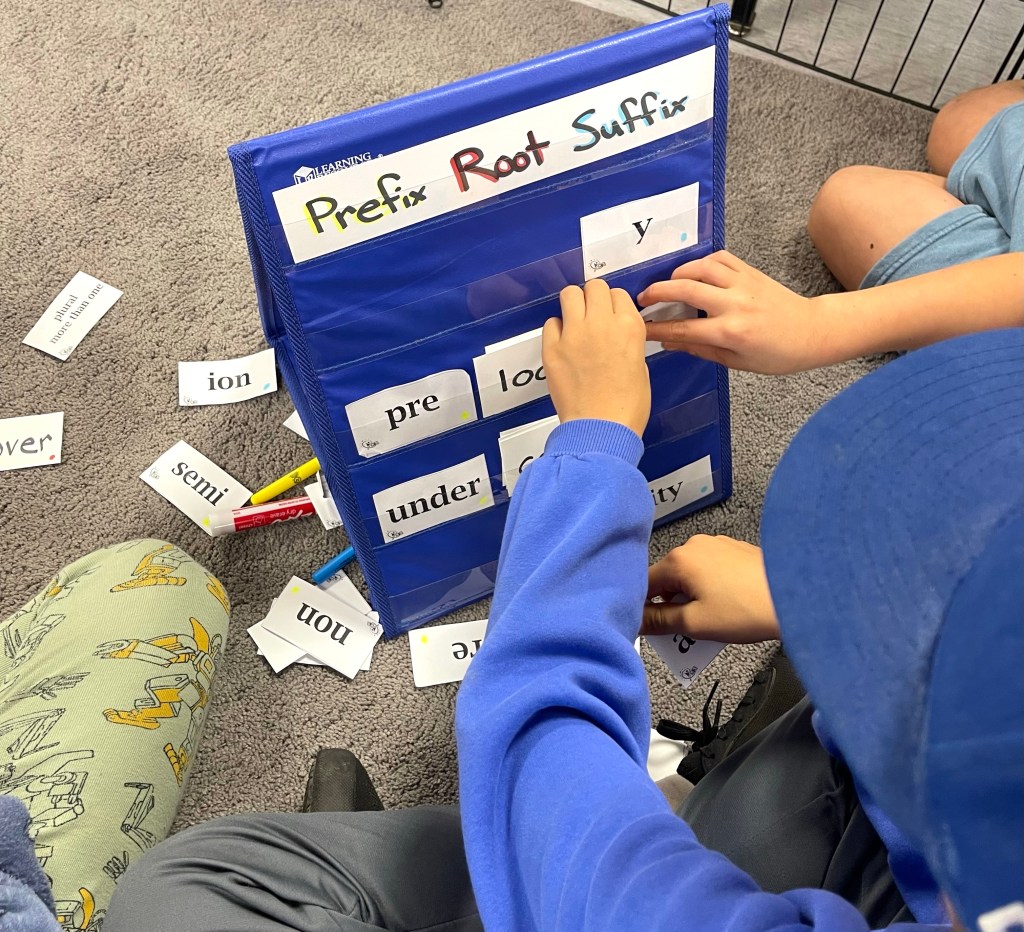
Morphology is the study of how words are built from smaller parts called morphemes—prefixes, root words, and suffixes. A prefix is a word part added to the beginning of a word that changes its meaning (for example, un- means “not”). A suffix is a word part added to the end of a word that changes its meaning or part of speech (for example, -ful means “full of”).
In this centre, students choose cards combine prefixes, roots, and suffixes to build real or possible words (for example, un + believe + able = unbelievable). They use their spelling dictionaries to check if their creations are indeed real words and they record as many words as they can find in the time given.
LEARNING GOALS: Understanding morphology helps us figure out what words mean, how to spell them, and how new words are formed. In this centre, students learn to recognize and manipulate word parts to unlock meaning, strengthen spelling, and expand vocabulary.
Story Chain
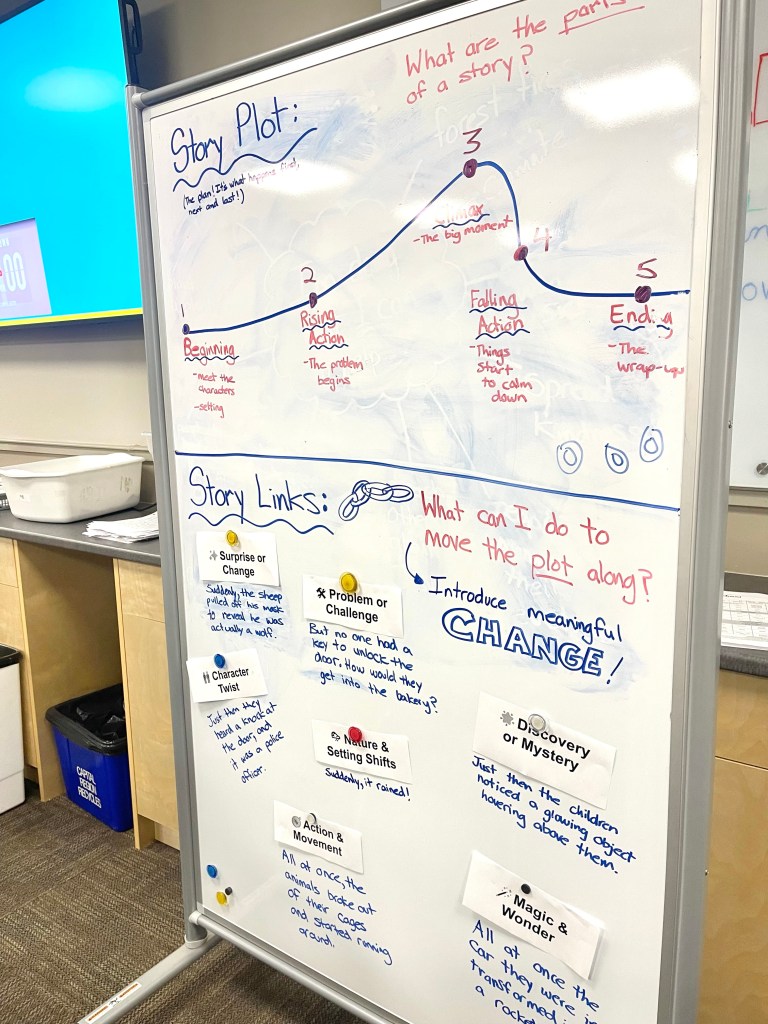
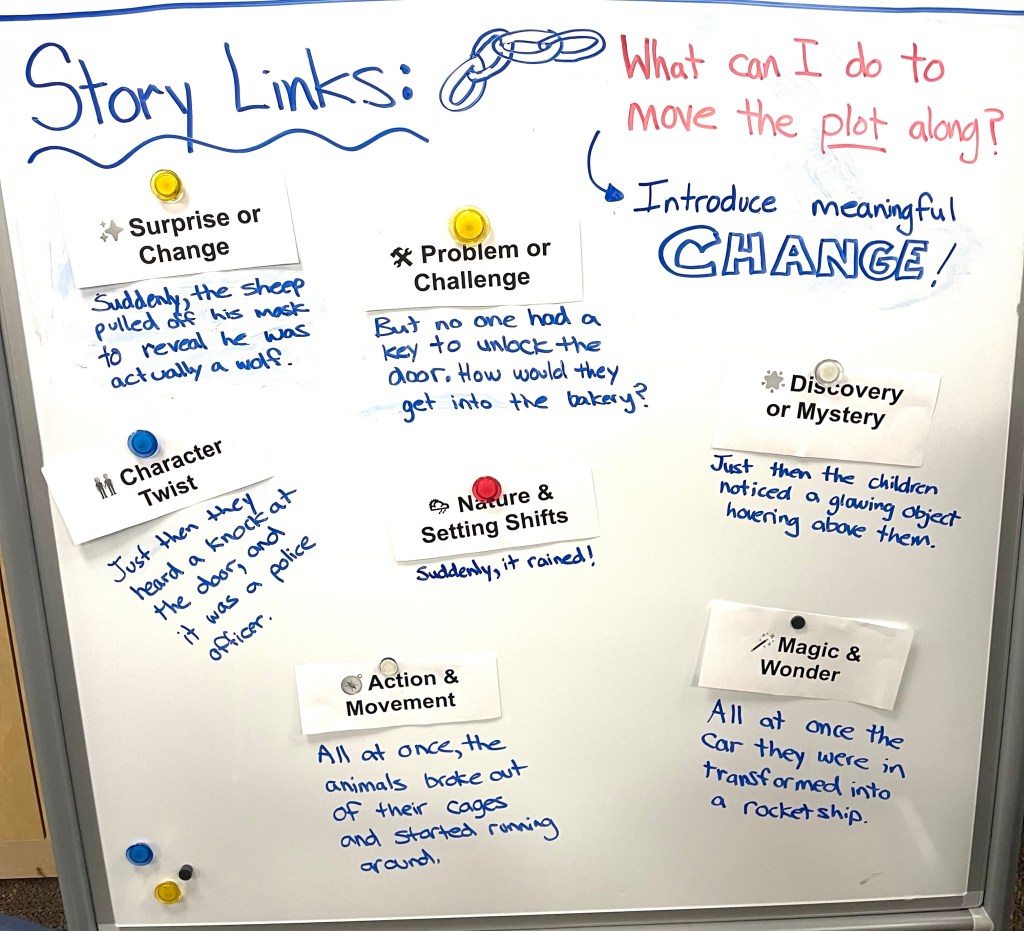
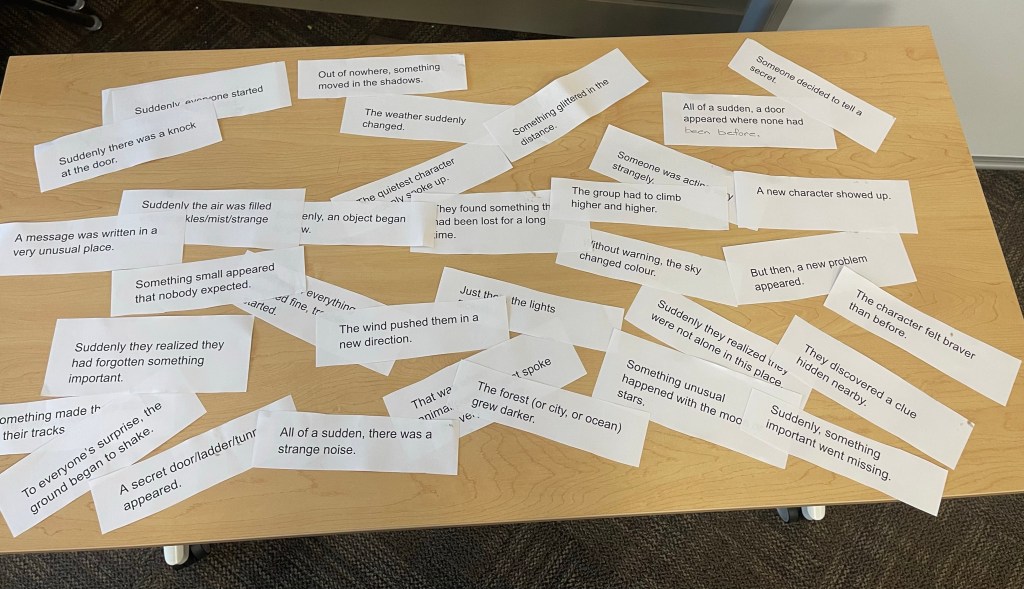
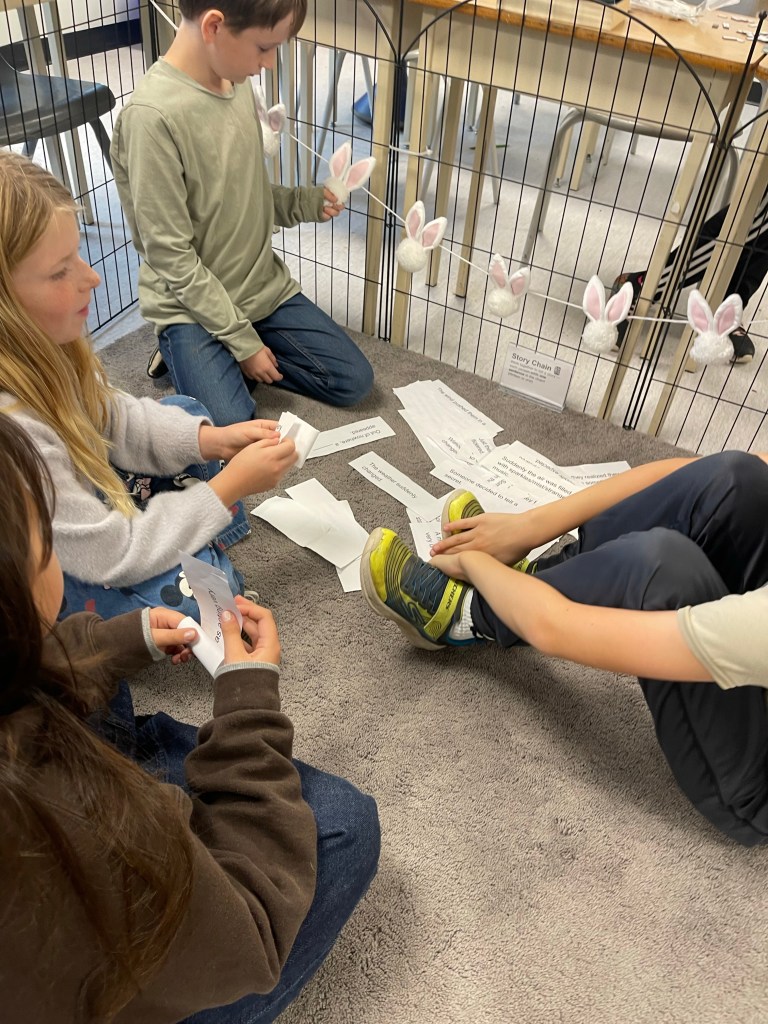
At the Story Chain station, students take turns telling a story by adding one sentence at a time. After learning about story structure and plot development, they practice building on one another’s ideas to move the story forward toward a climax and resolution. A stack of “story links”—sentence prompts like “Suddenly, a mysterious glowing orb appeared in the sky”—helps spark creativity or rescue stories that stall. Students learn how to use these prompts thoughtfully without overloading the story with new, unresolved elements.
LEARNING GOALS: Students learn to collaborate in oral storytelling by developing plot progression, conflict and resolution, and cohesive narrative flow while practicing spontaneous creative thinking.
Word Building with Letter Tiles
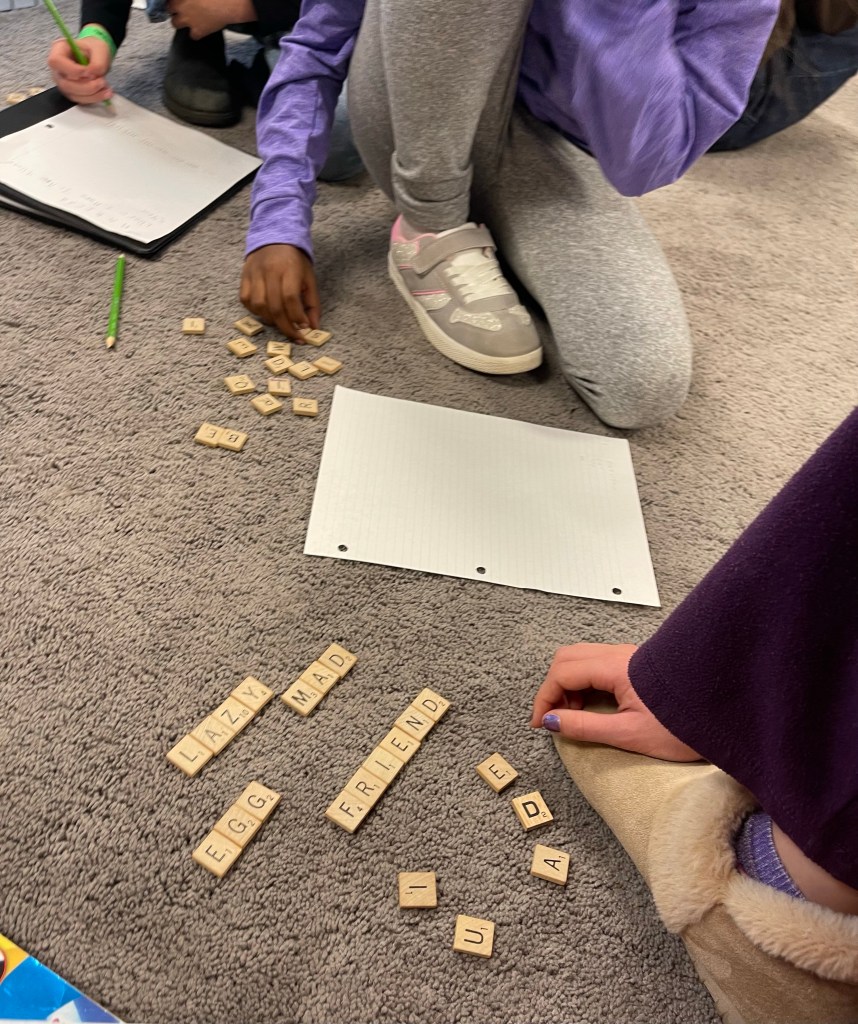
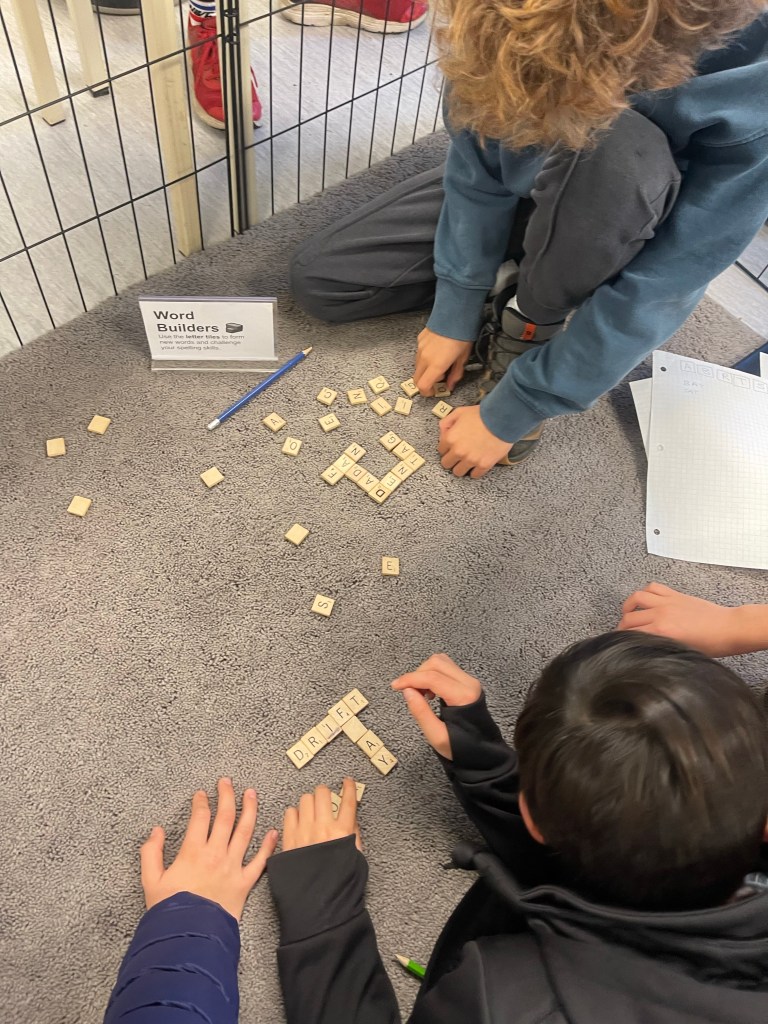
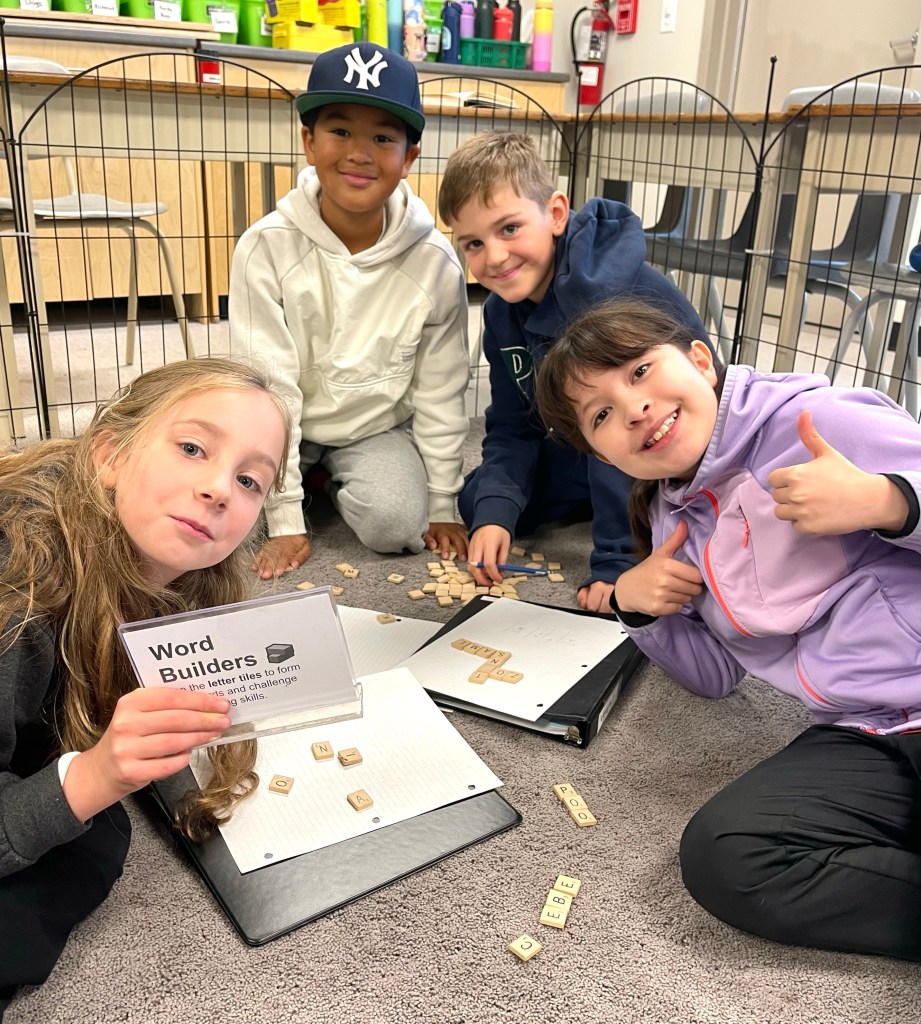
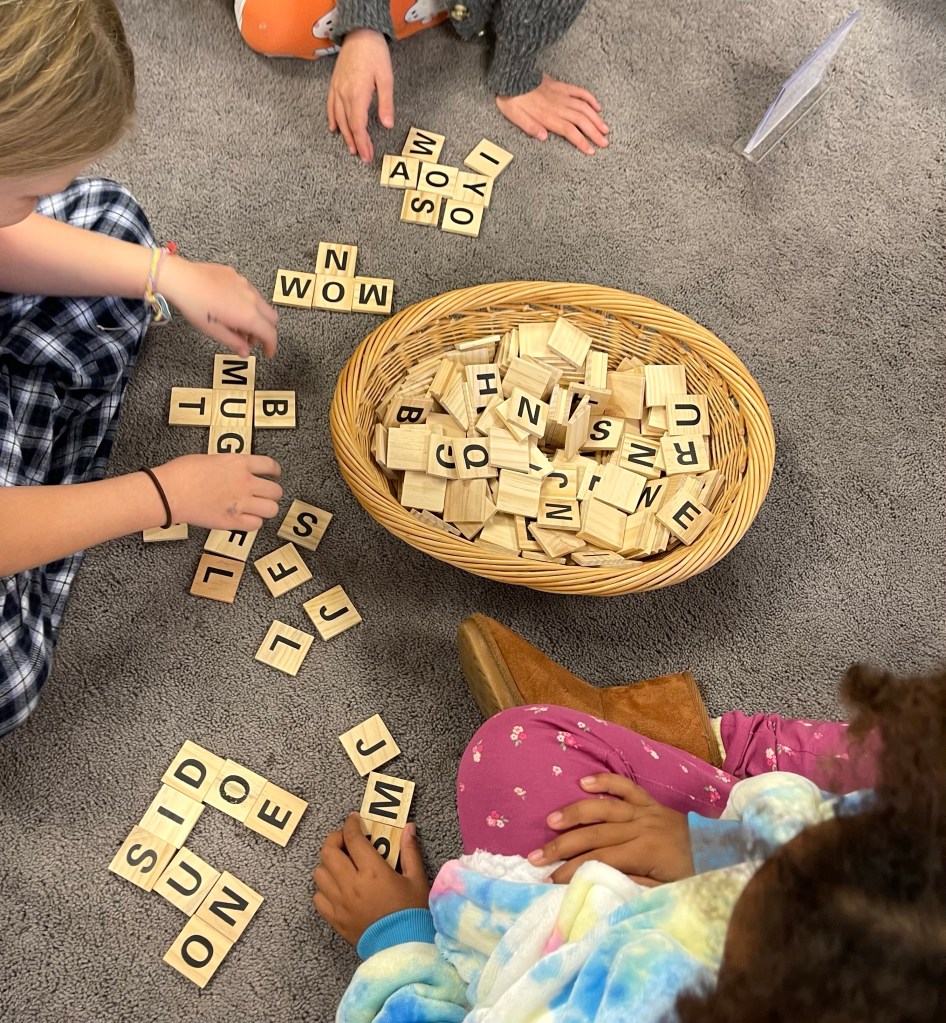
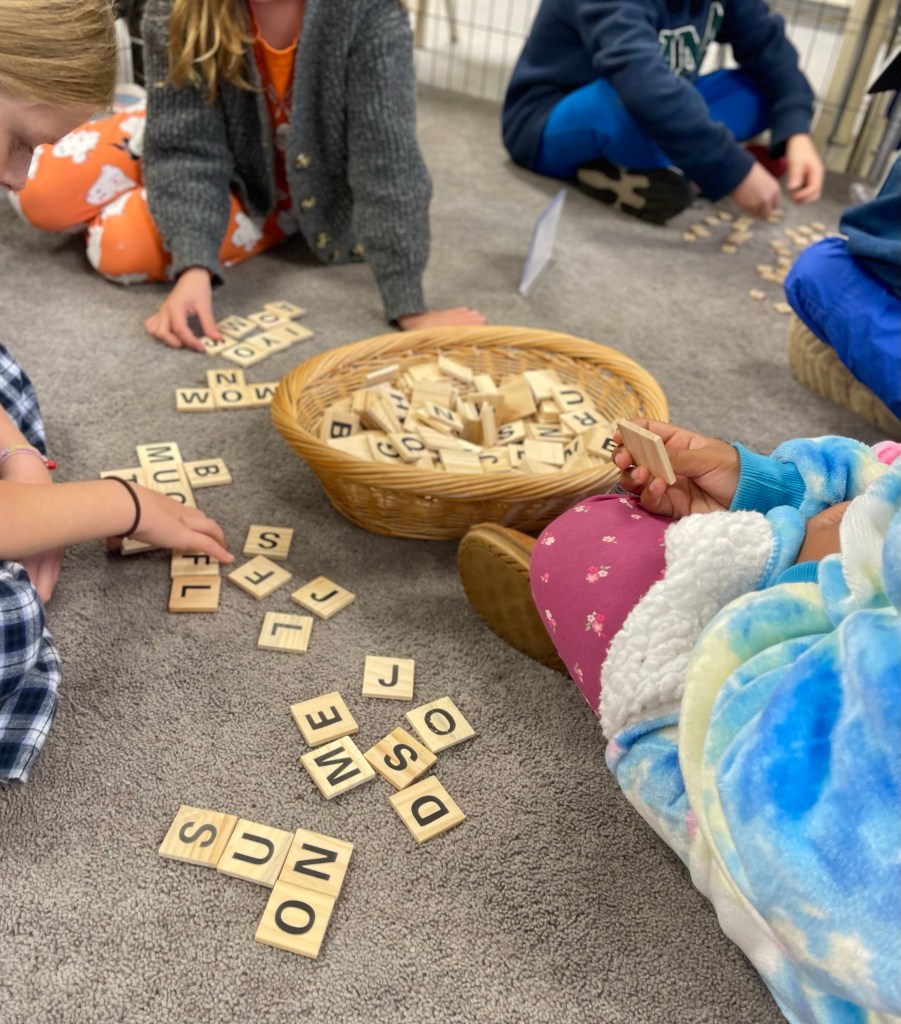
A collection of letter tiles, such as from a Scrabble game or Bananagrams, can be used in many ways in a “Word Builders” station. I teach a variety of options including a “Boggle”-style word generating game and let the kids choose which game version to play. The favourite way to play in my class right now is for partners to work together and take turns building a crossword one word at a time using the tiles they draw randomly (basically, it’s Scrabble but collaborative with no points). Keep a spelling dictionary at the station and insist on spelling being checked in there before a word is played unless it’s super basic like “and” and “the”.
LEARNING GOALS: The advantage of this version of the game is largely reinforcing correct spelling and building social motivation for improving word knowledge. Letter tile games can strengthen vocabulary and word-formation skills while encouraging strategic thinking and pattern recognition.
Gamifying “Task Card Sets”
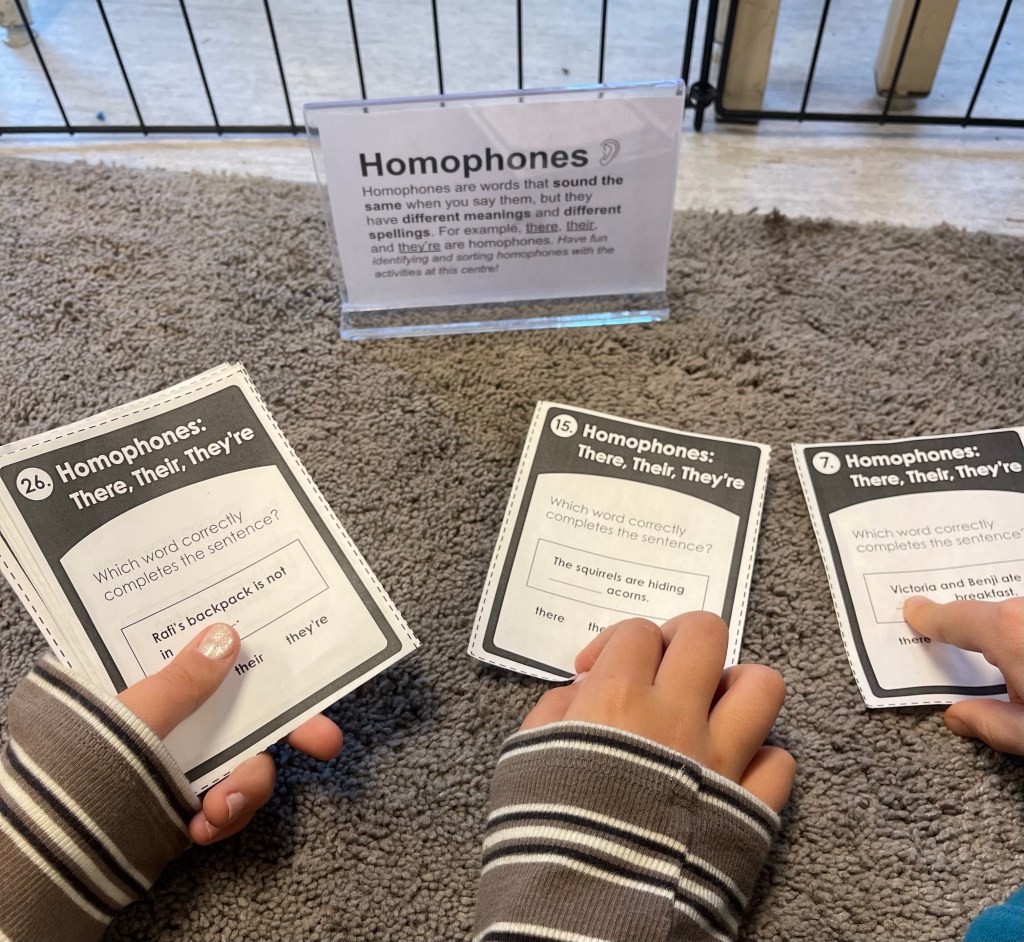
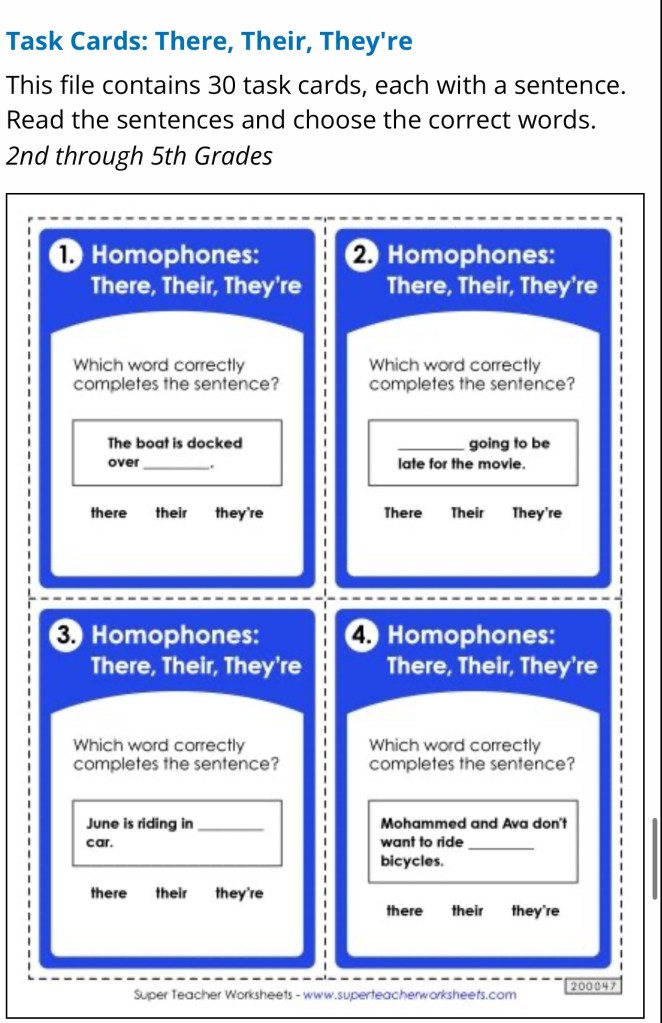
SuperTeacherWorksheets.com is an inexpensive subscription site that has lots of ready-made task card sets for both language arts and math concepts. Teachers can print and cut them out to create quick, self-checking flashcards. I write the answers on the back (answer keys are included). Beyond simply self testing, students can “gamify” the flashcards by playing activities like Go Fish or Speed Rounds, adjusting the level of competition. (Though the materials are basic, they provide solid, reliable skill-building practice with instant feedback, and I find my students really enjoying them especially because it doesn’t involve any writing.)
LEARNING GOALS: In the case of homophones station above, the purpose is for students to gain practice and improve accuracy and speed in identifying the correct homophone for each sentence—obviously this goal depends on the topic of the task cards.
Magnetic Poetry
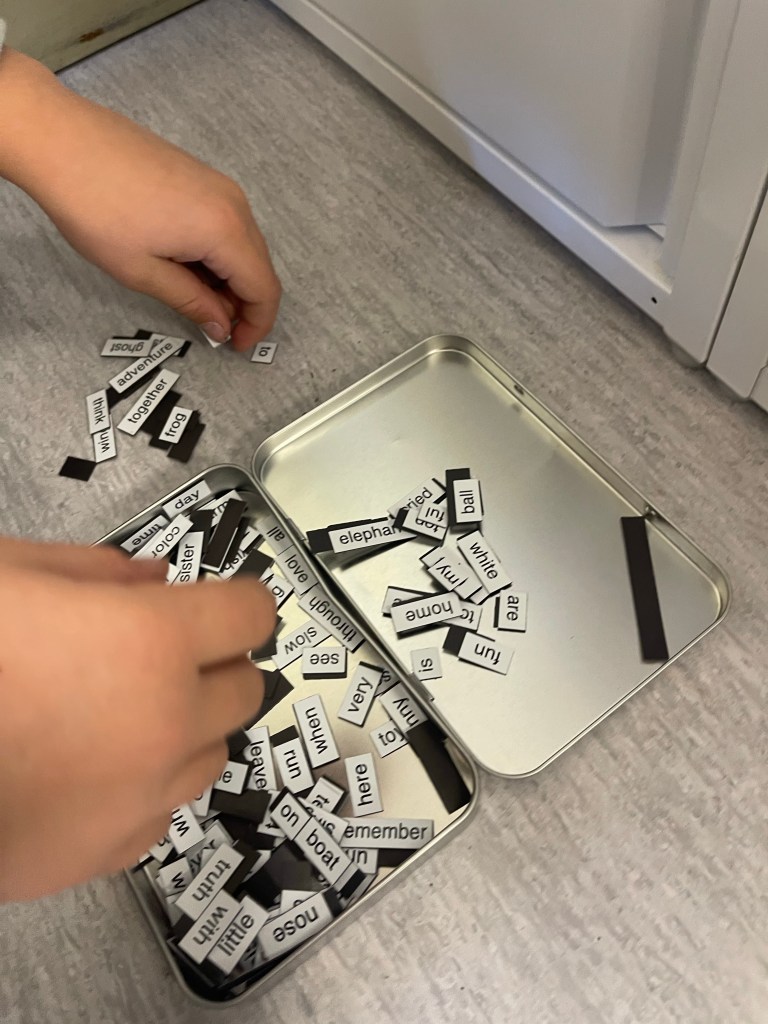

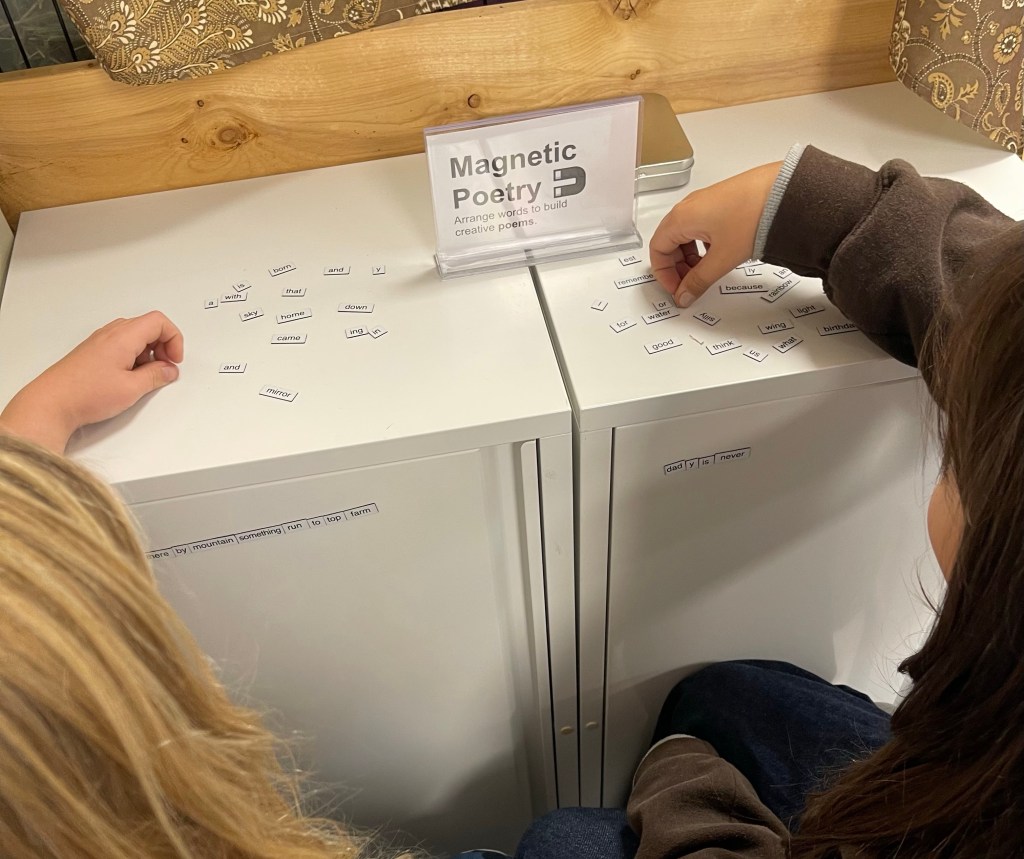
Magnetic Poetry sets can be used at a desk or on metal filing cabinets or whiteboards.
LEARNING GOALS: Magnetic Poetry encourages creative sentence construction, experimentation with grammar and self checking “does it sound right”, and expressive word choice through hands-on play with language.
Story Spotlight: The Tiger Who Came to Tea
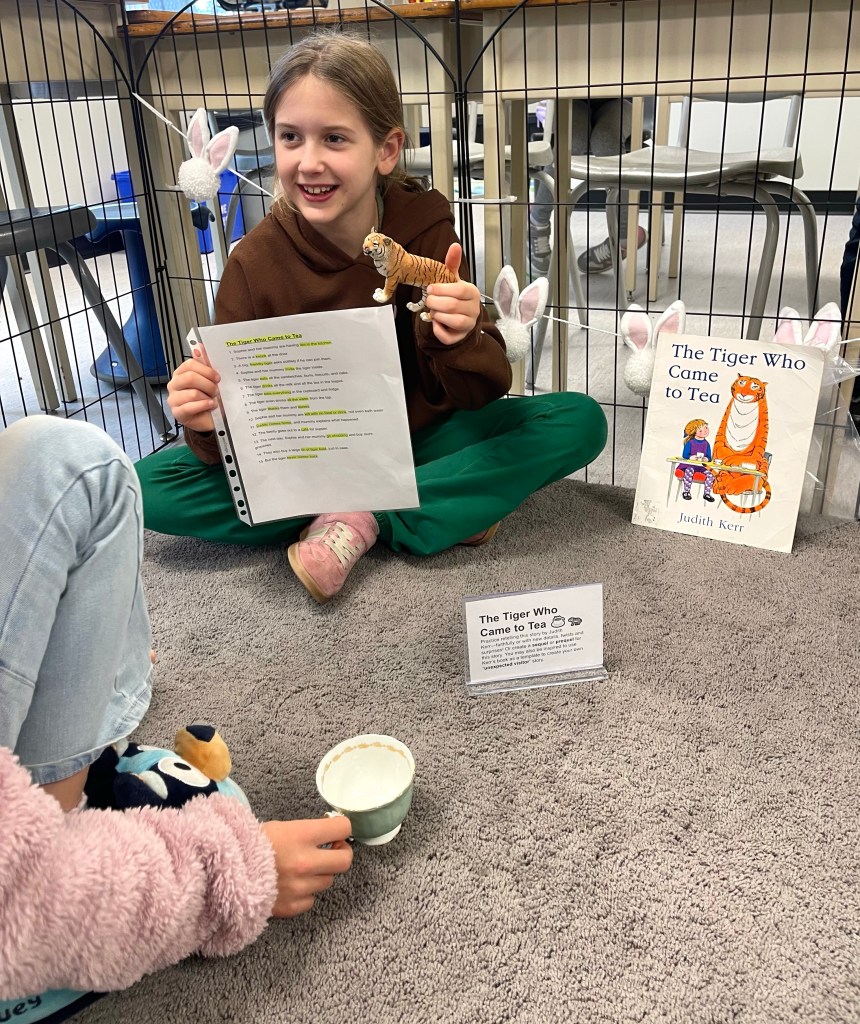
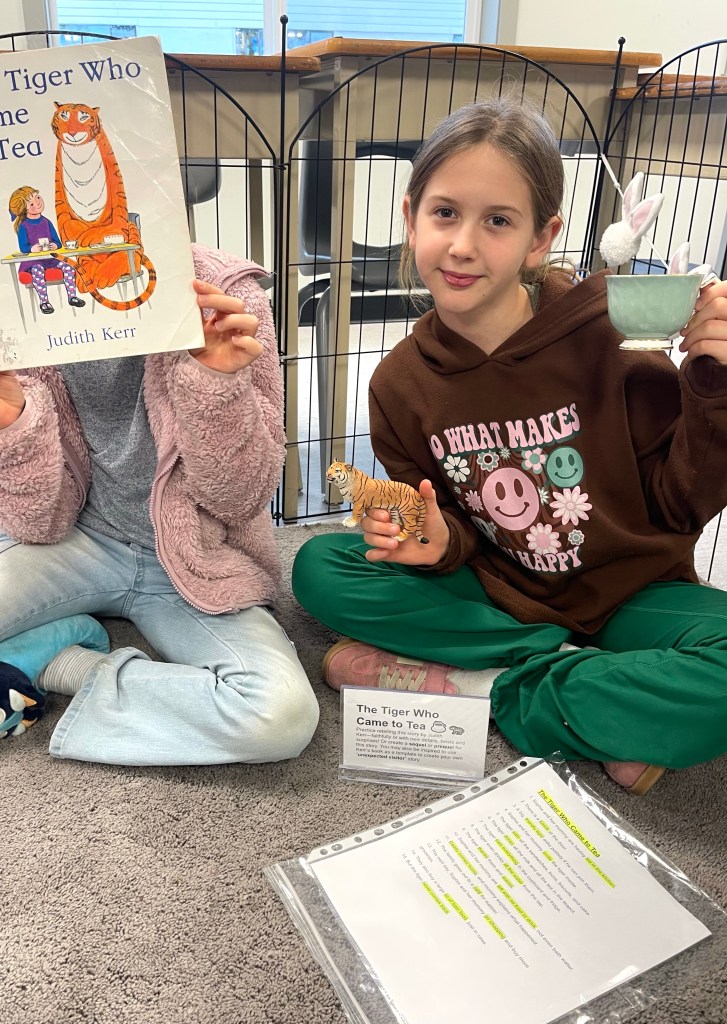
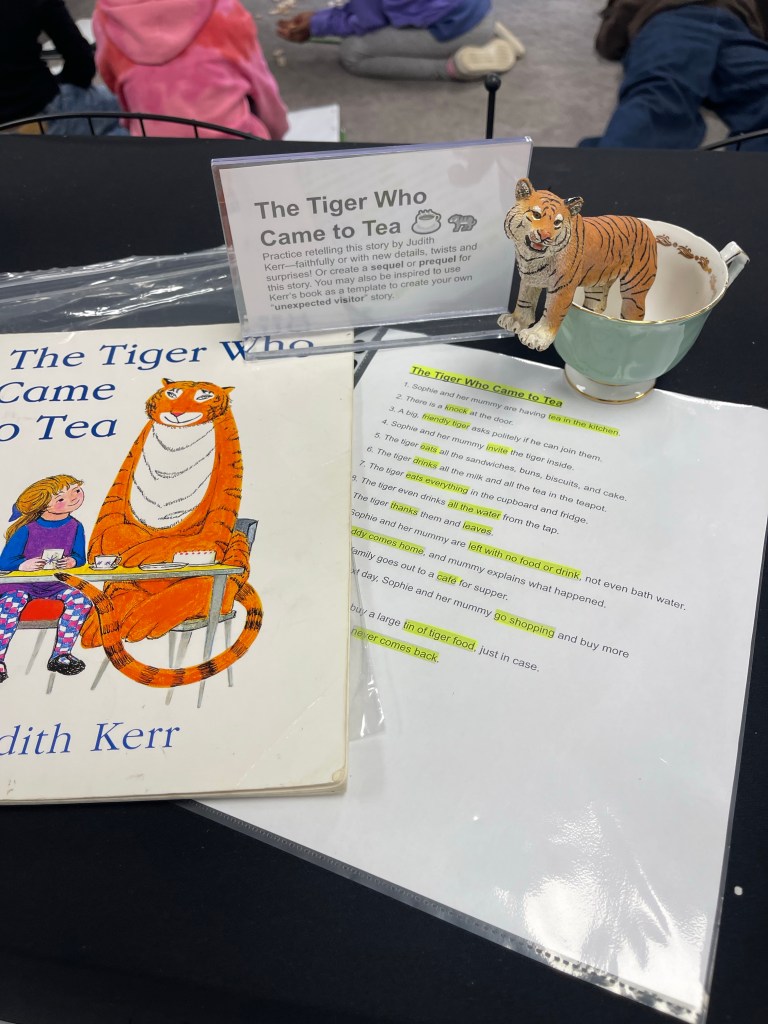
This station highlights a different book every few weeks. Students can retell the original story (with or without props) from memory or using a provided story map. Alternatively, inspired by “The Tiger Who Came to Tea” by Judith Kerr, they can create their own version of an “unexpected visitor” story, adapting the same template.
LEARNING GOAL: The goal is to help students see how strong stories follow a clear sequence, while also encouraging creative adaptation. Practicing with a known story as a template helps students overcome their writer’s block, build their storytelling confidence, and see that there are an infinite number of ways to innovate from a basic story concept.
 Tiffany Poirier