
Hello, 5B families!
I created some tutorial videos to show the “box method” of multi-digit multiplication. Polling my students over the years, I have found so many end up loving and preferring this method over others—even if they resisted learning it at first. Check it out!
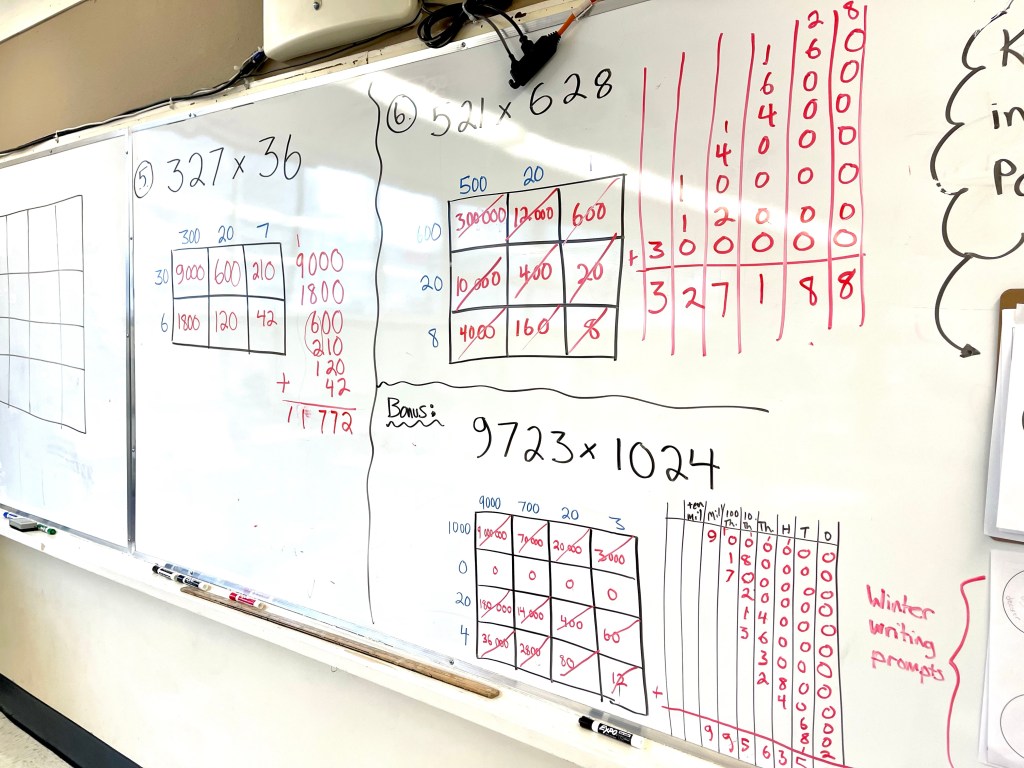
The BC Math curriculum emphasizes the importance of empowering students to apply flexible math strategies, rather than narrowing using simple tricks that may leave students without a sense of the bigger picture of how numbers work together. The box method in particular offers students a tidy way to increase their accuracy and understanding of the meaning of what they are doing, especially when multiplying those larger numbers.

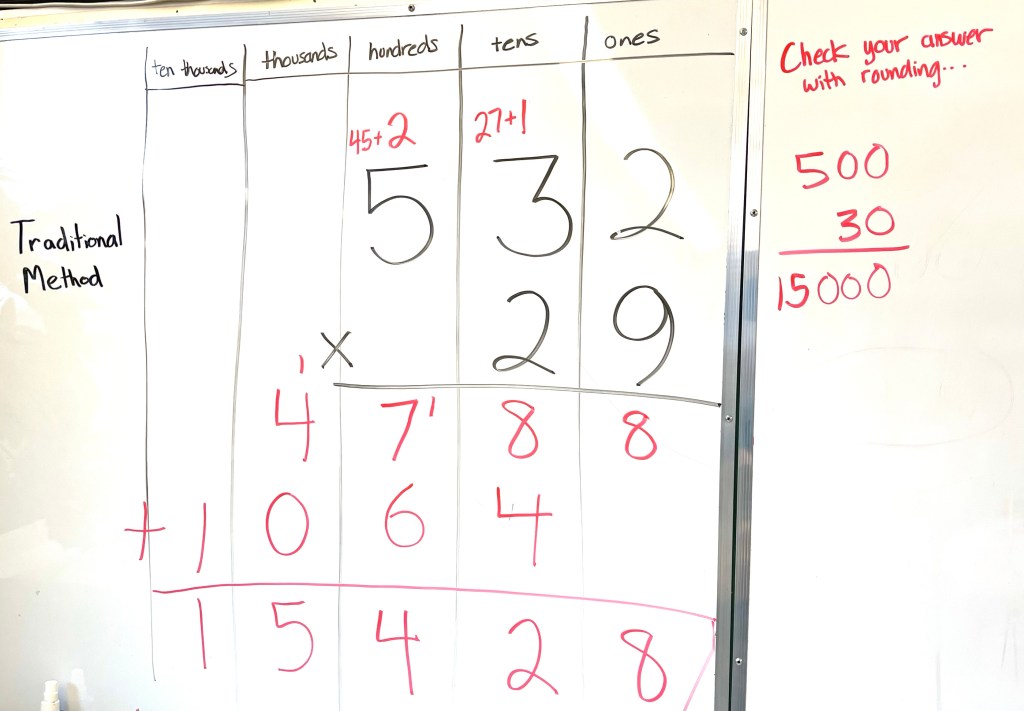
In our class, we have also been teaching the traditional multiplication algorithm; I will be assessing students’ use of both methods this term.
I have encouraged students to use their rounding and estimating skills to check the reasonability of their multiplication answers. As well, we have asked students to try the traditional method directly after using the box method to note the differences and use it as a “double check” of their work.
*At this stage in the year, it is completely fine for students to use their multiplication charts to help them find smaller values (such as the 6, 7, 8, and 9 times tables). Of course, I’d like them to learn these by heart eventually; but for now, accuracy when applying the multi-digit multiplication methods is the priority goal.
If you are helping your children study at home, you might ask them to demonstrate the box method for you, and if they are struggling, please have them watch one or more of these videos. Thank you!

 Tiffany Poirier
Thank you for your comment, but for clarity BOTH “When you are done with your spelling practice” and “When you have finished your spelling practice” are grammatically correct, but they differ slightly in tone and formality:
• “When you are done with your spelling practice” is more casual and common in everyday conversation, especially in North American English.
• “When you have finished your spelling practice” is more formal and may be preferred in writing or more structured settings.
For a Grade 5 classroom, either is acceptable, but the first version may be seen as more conversational and child-friendly.
LikeLike