
Hello, 4A families!
We are in the middle of a deep dive into the book of Jonah. This book is a prophetic narrative, with satire, irony, and exaggeration.

For homework, students have been asked to present a faithful RETELLING of the story of Jonah to a family member.
How Did We Study this Story?
A goal in our class is to focus first on the Biblical text, in our case that’s the students’ NIV translations.
We go line by line.
We look up word definitions and discuss cultural/historical context.
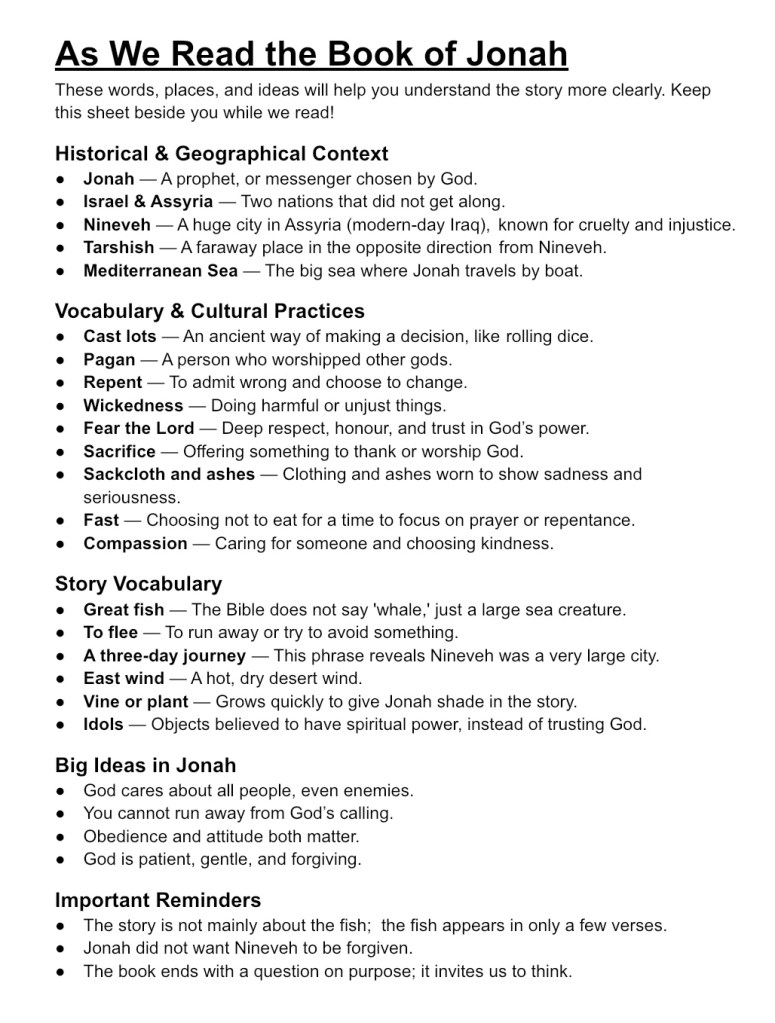
The book of Jonah isn’t just about a big fish—it’s about God’s huge, surprising mercy.
After reading the Bible, later we explore some of the wonderfully creative retellings of Jonah’s story—while staying alert to what they have left out. (The students especially love watching the Lego Bible stories!)

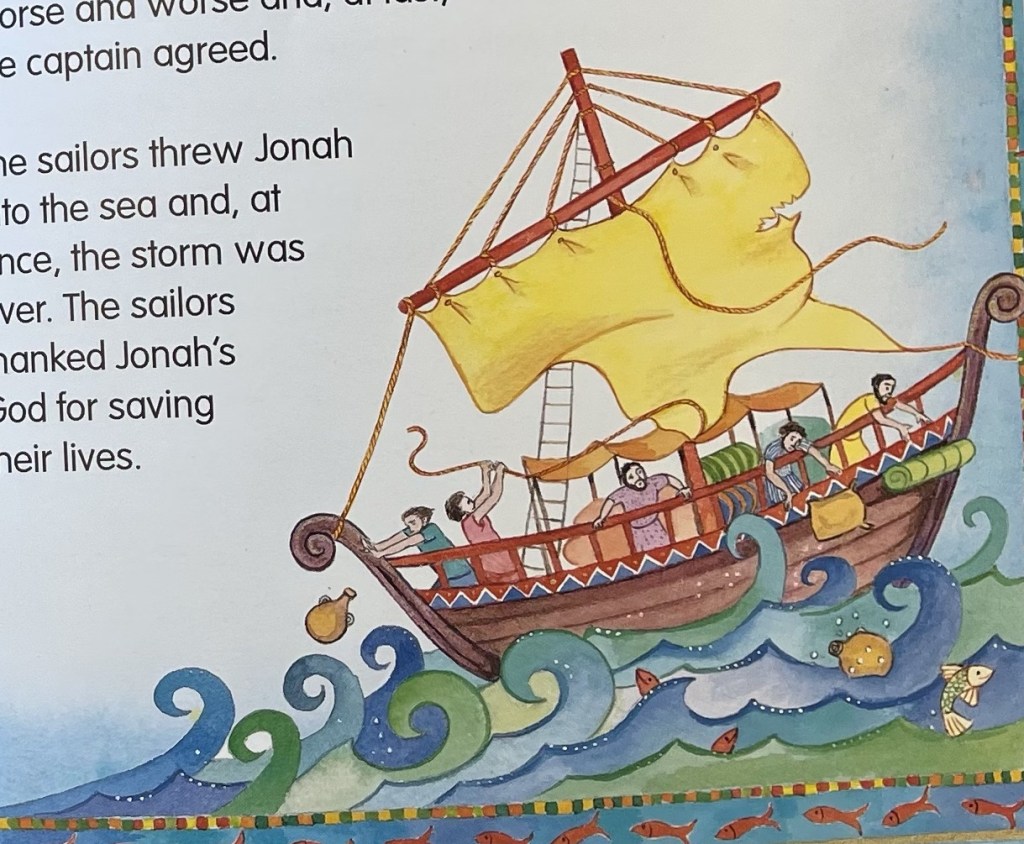




Some children’s Bible versions of Jonah may be…
MOSTLY “FISH FOCUSED”: Making the story only about the excitement of big fish and treating the fish as the main character, misses out on the central point of God’s mercy.
OVERSIMPLIFIED: Teaching “obey right away or else!” misses the depth of Jonah’s journey through running, resisting, arguing, and sulking and God’s patience along the way.
SHORTENED: Ending the story when Jonah gets spit out and “saved”, leaves out the whole part about his continued reluctance and God’s compassion.
VILLAINIZING: Portraying Nineveh’s people as cartoon villains (especially without acknowledging their repentance), forgets they were people in a violent empire that God cared about and wanted to see change. The people of Nineveh model immediate full repentance when confronted—something Jonah could learn from.
GLOSSING OVER: Saying Jonah finally understood and was happy in the end of the story is not faithful to the original Bible text, which leaves actually leaves the reader with more questions and a thought provoking cliff hanger.
But the Lord said, “You have been concerned about this plant, though you did not tend it or make it grow. It sprang up overnight and died overnight.
And should I not have concern for the great city of Nineveh, in which there are more than a hundred and twenty thousand people who cannot tell their right hand from their left—and also many animals?”
And the fact that end has no closure and no response from Jonah, lets God’s compassionate question hang in the air for us as readers to consider and apply to our own lives.
The book of Jonah is another way God shows…
He is who He says He is: compassionate, gracious, slow to anger.
 Tiffany Poirier