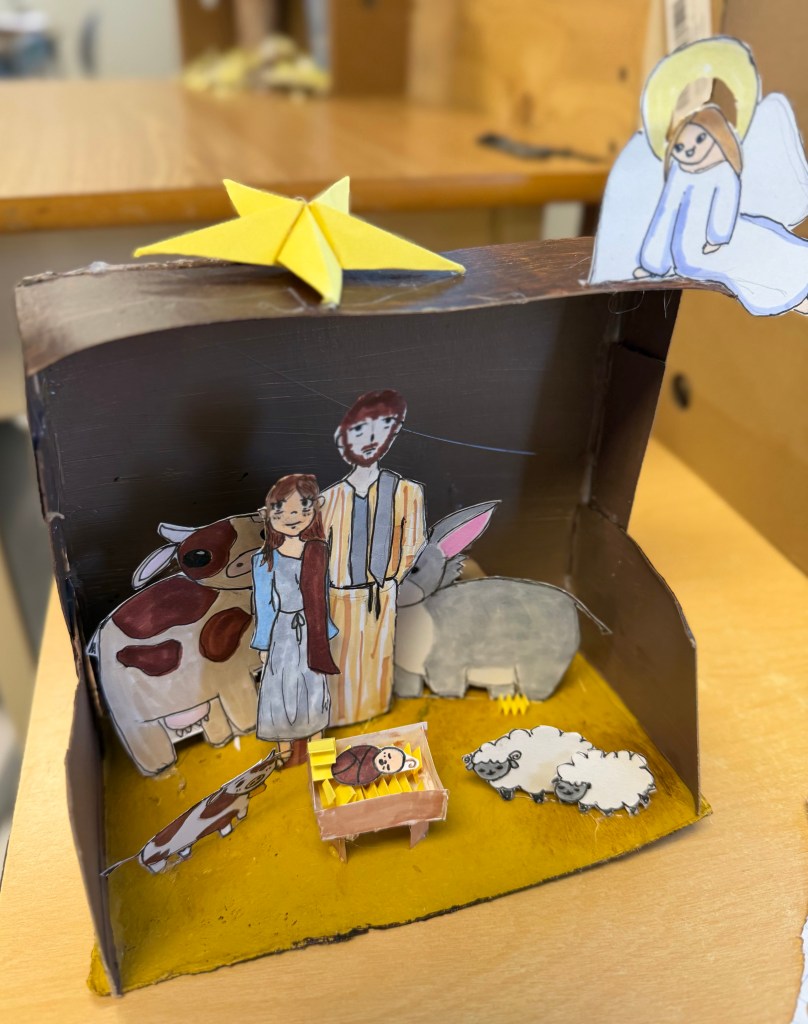
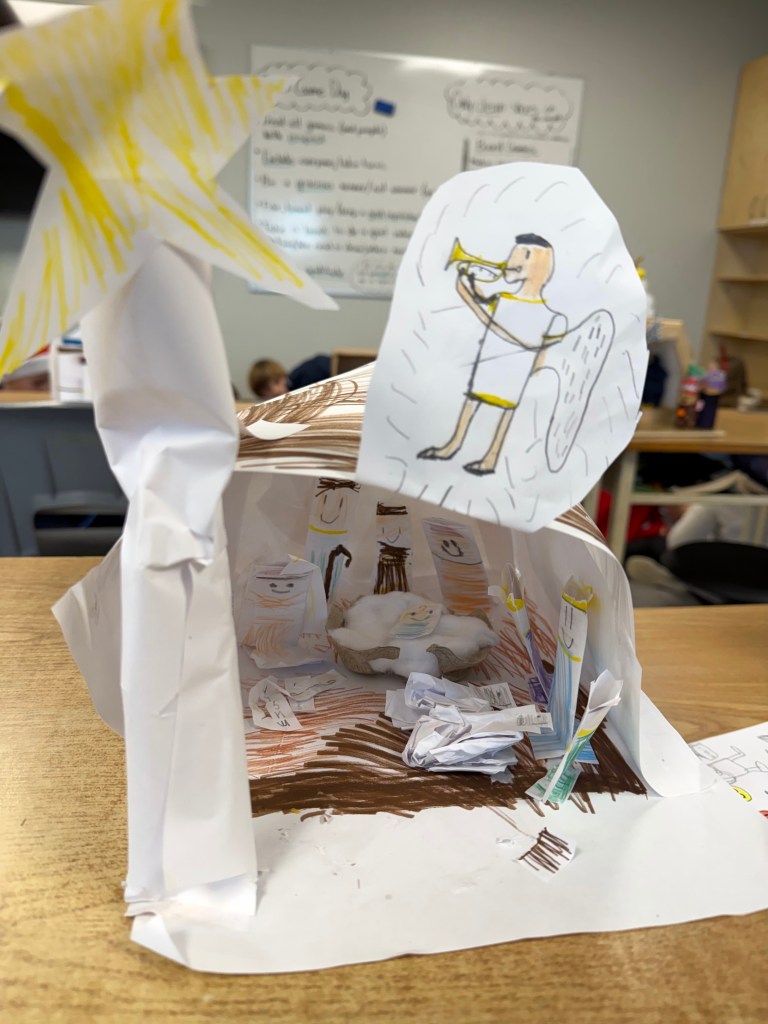
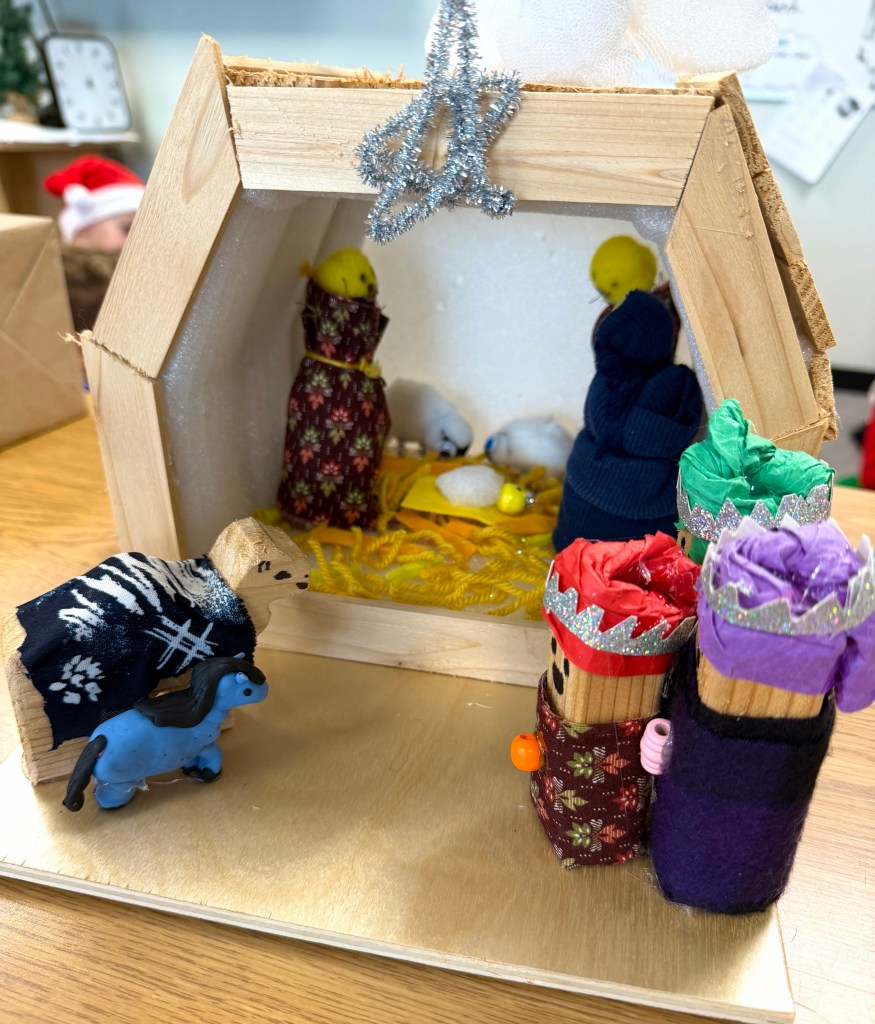
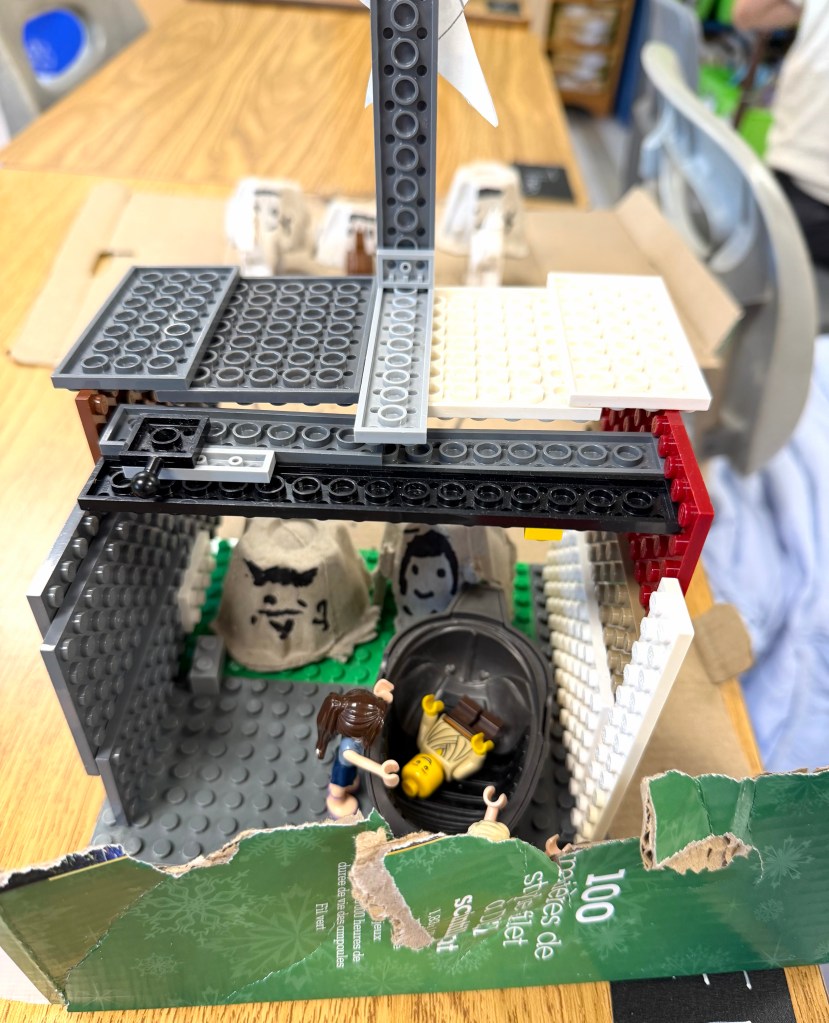
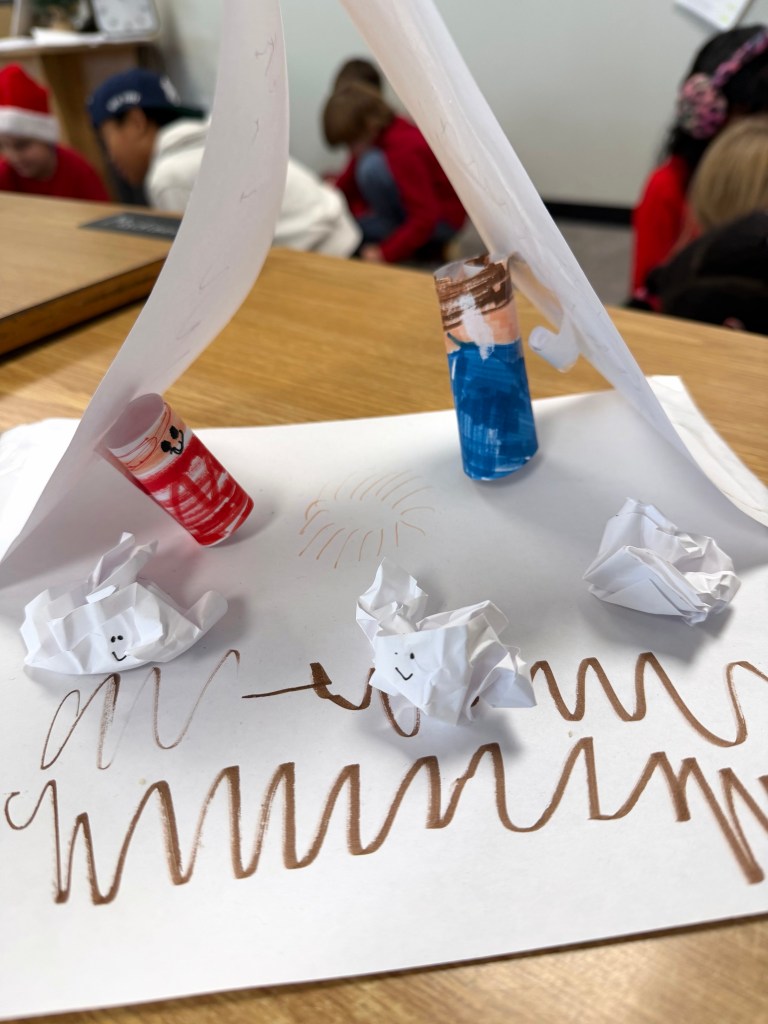
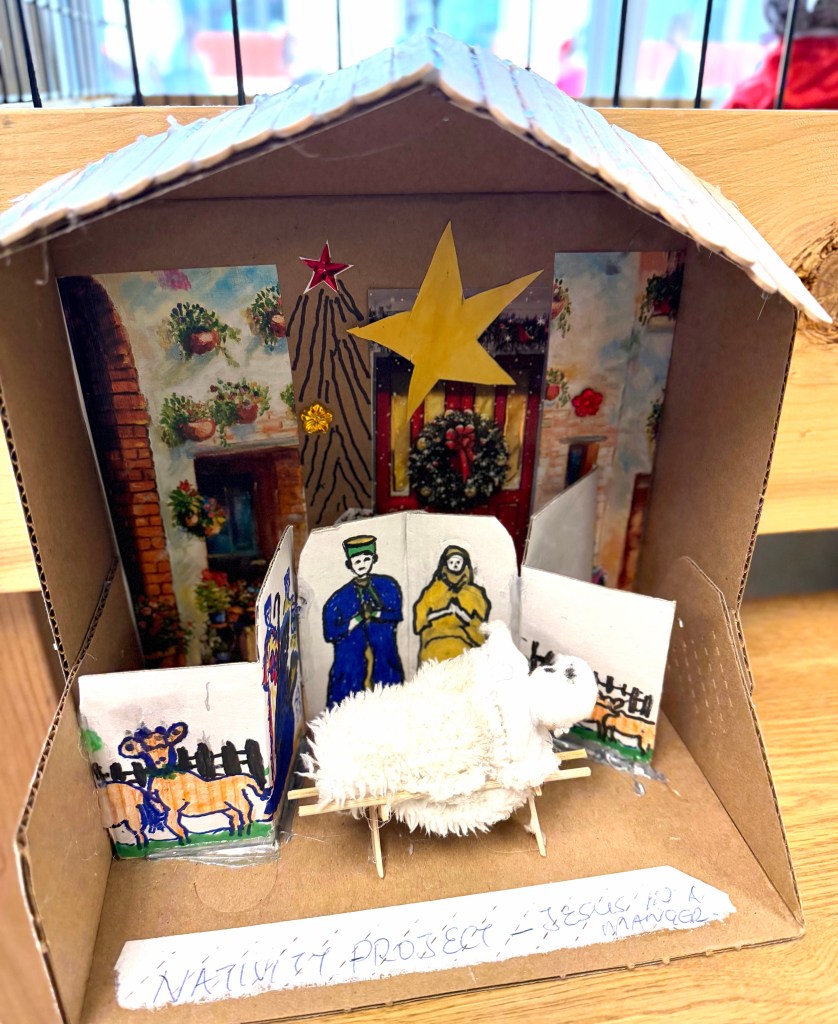
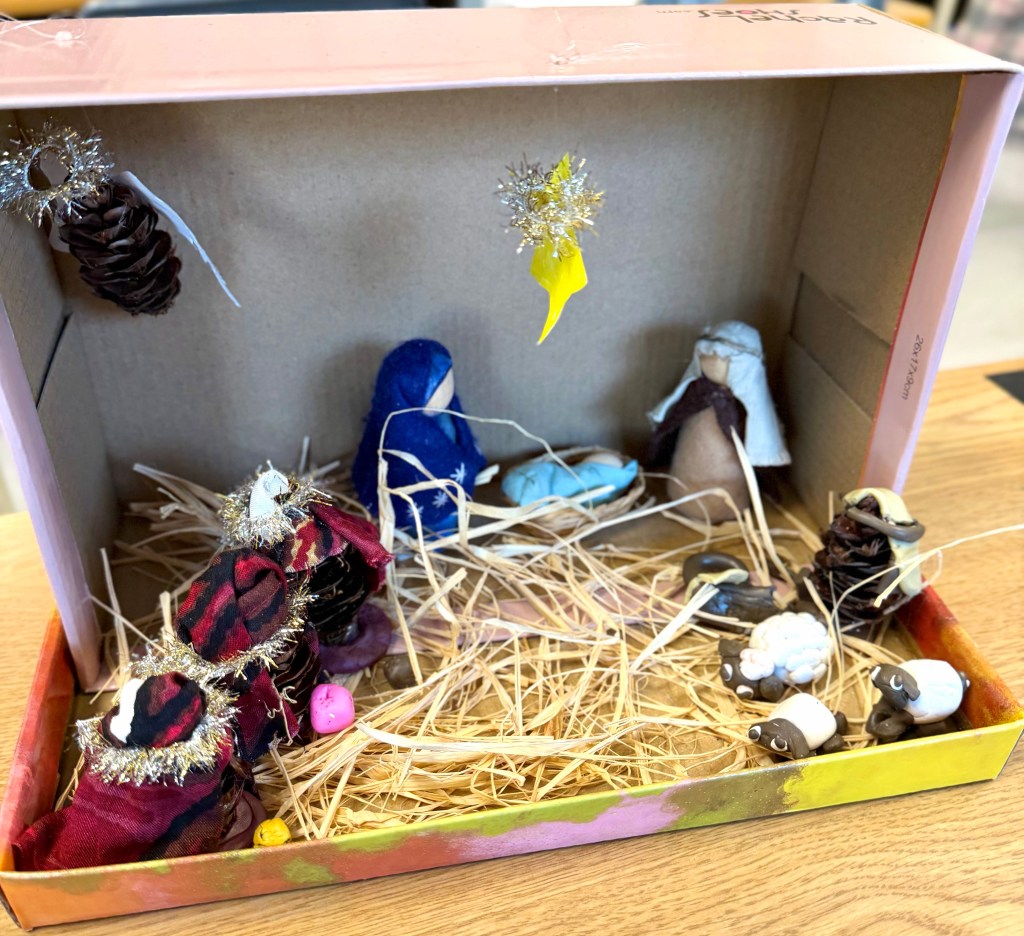
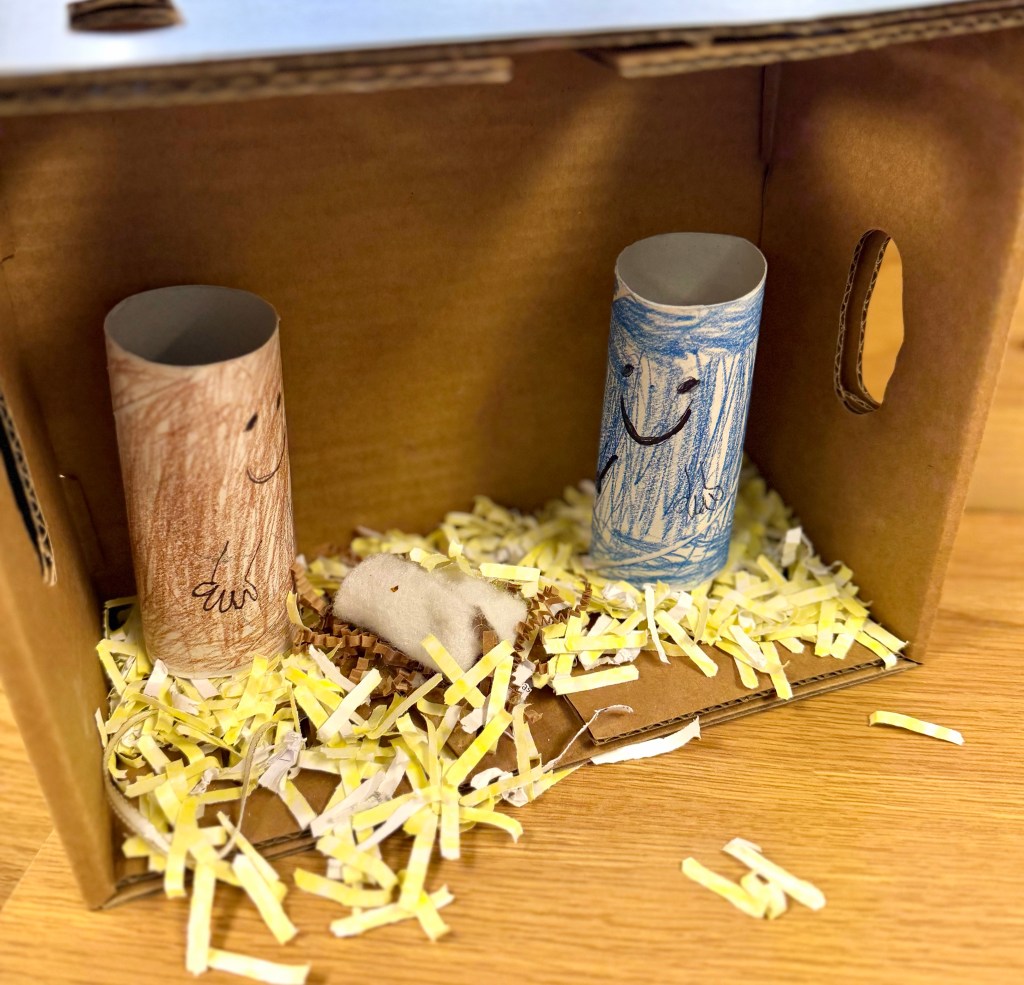
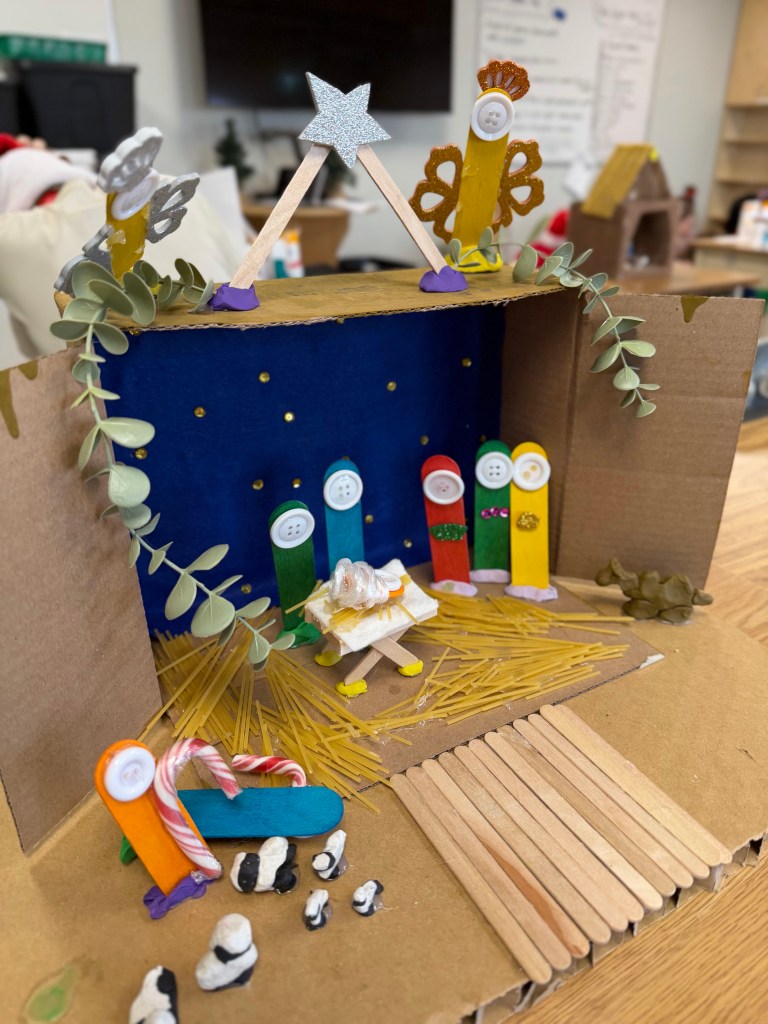
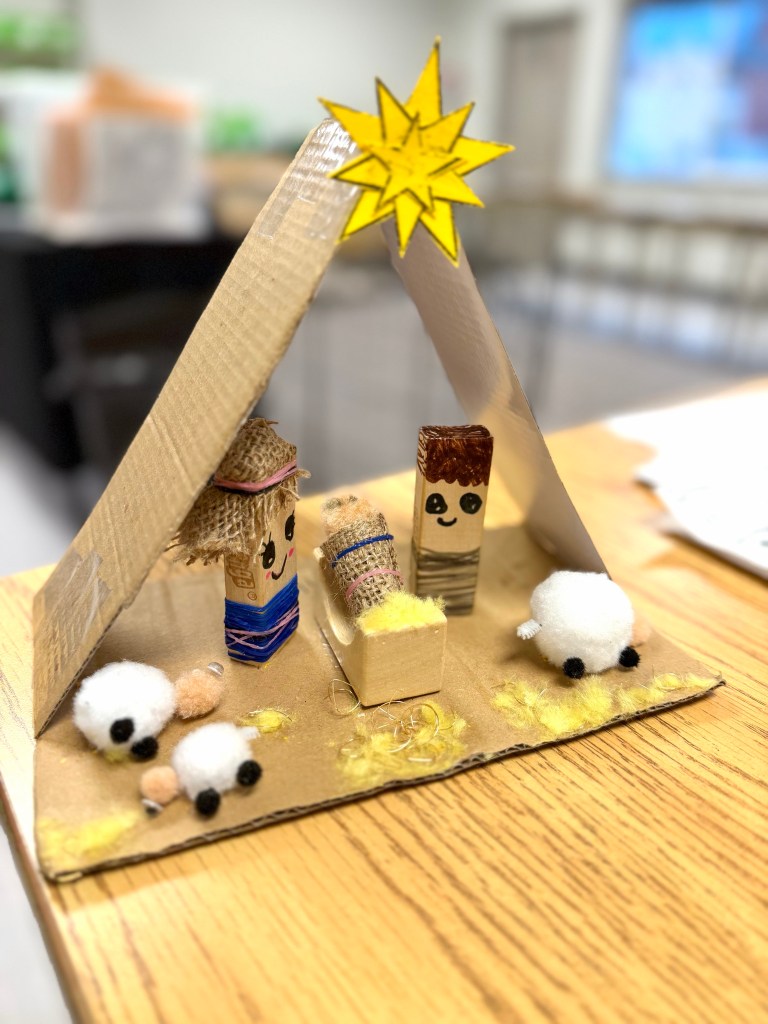
Please enjoy our gallery of an incredibly special collection of artworks. The students in our class worked with so much creativity and heart to apply their understanding of the nativity story in making their own nativity scenes.
My heart just bursts to see these—every creation is a marvel!
They are lovely to behold and show creative problem solving, while symbolizing and celebrating this sacred story of the birth of our Lord Jesus.
This is the last week before the holiday—and so much learning and excitement continues!
In Bible, we have been studying the Nativity story in the books of Luke and Matthew: please see the previous blog post (scroll down) for details on our approach.
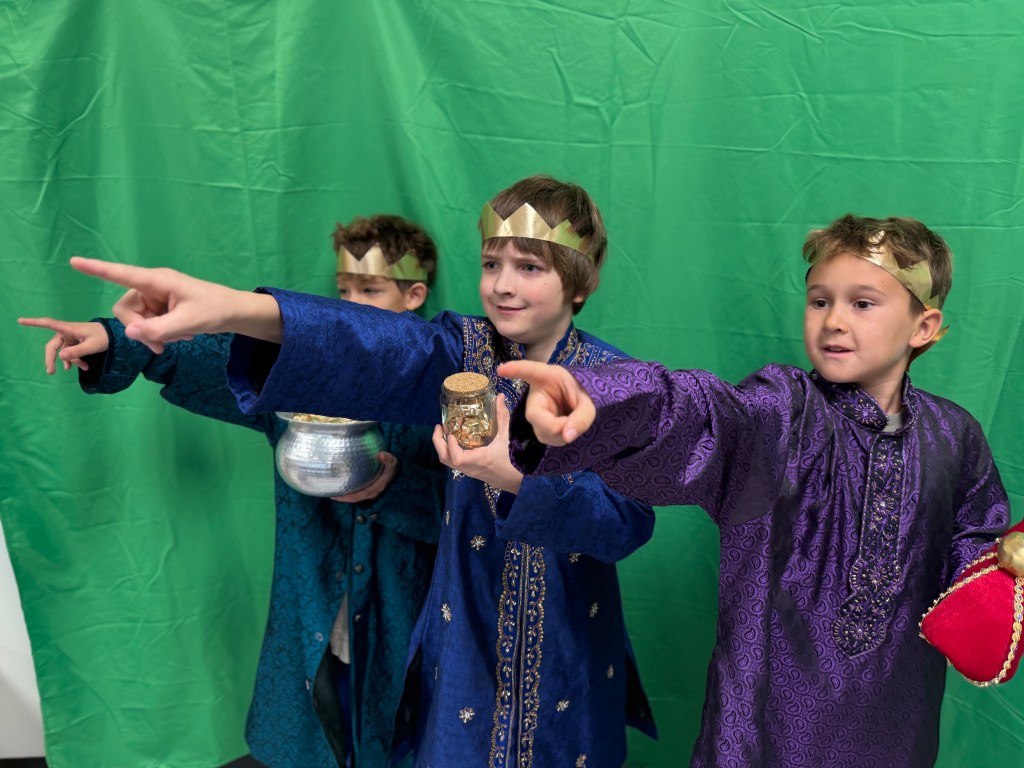
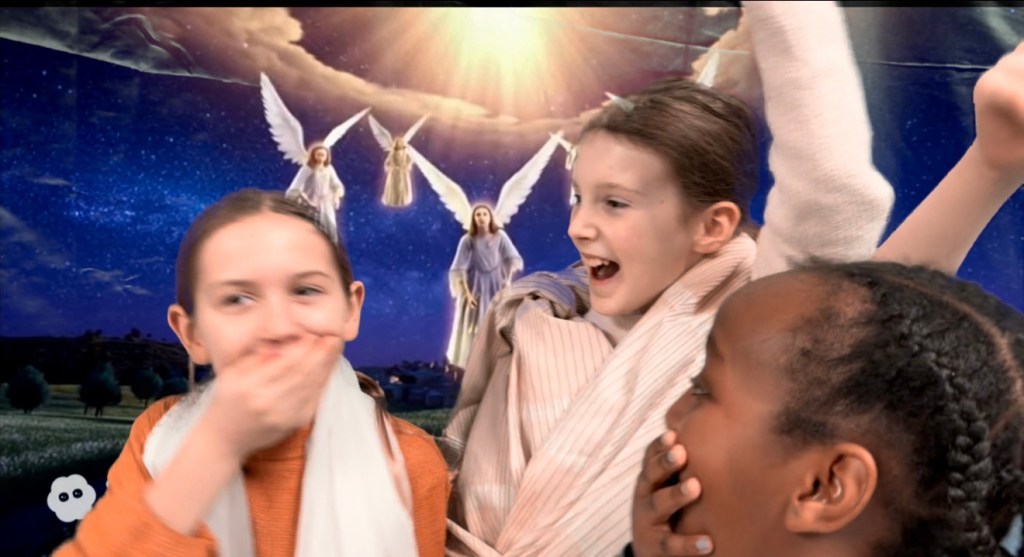
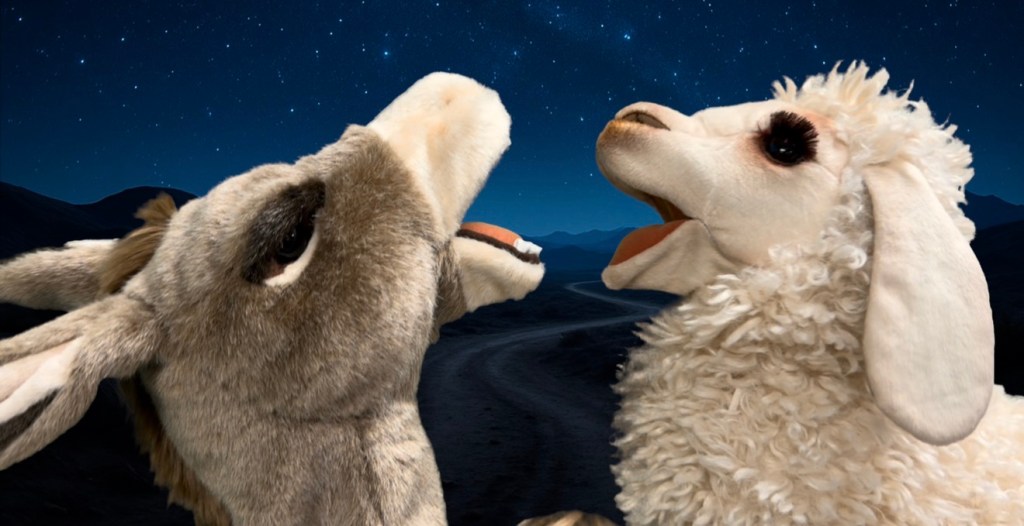
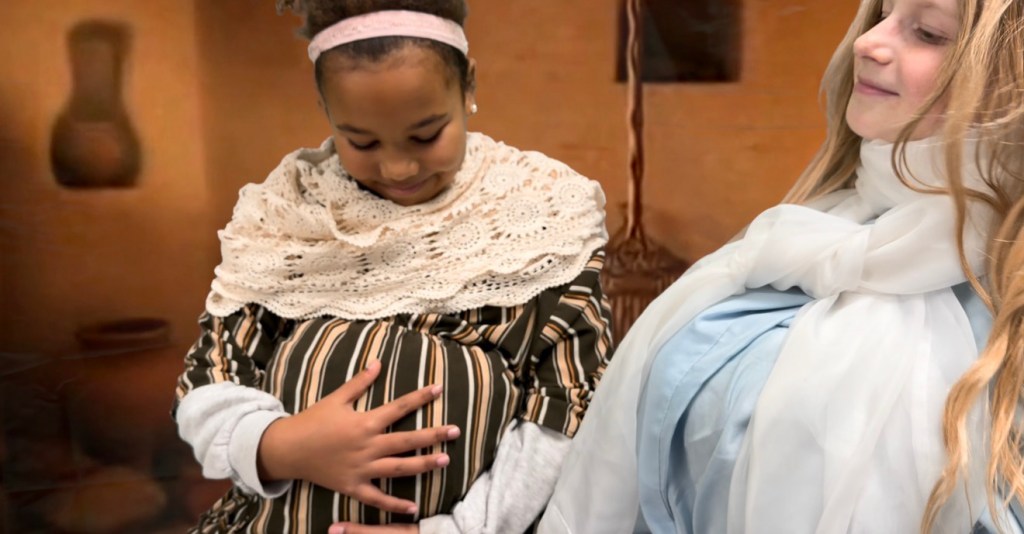
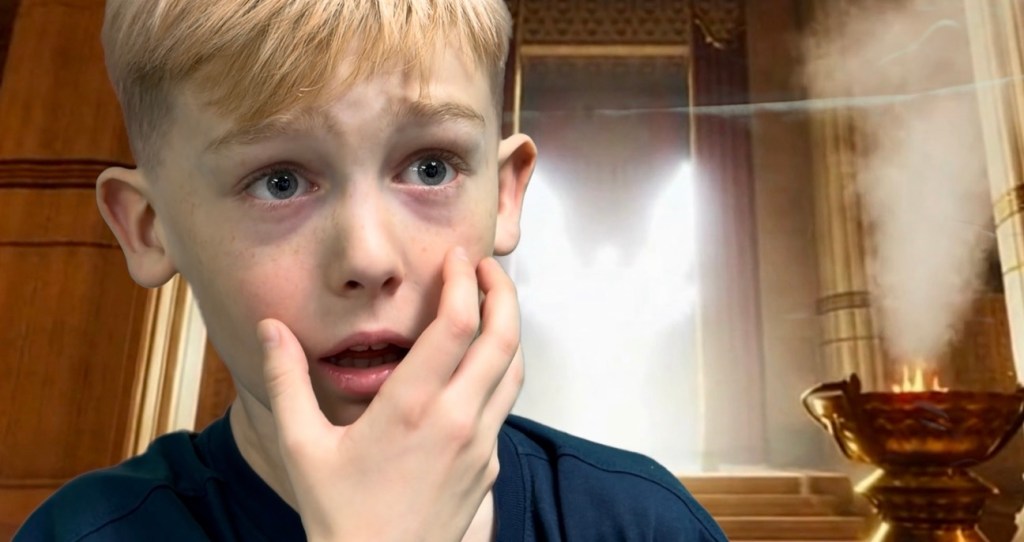
We have been working on a dramatization of the story as well, using costumes, puppets and green screen technology. (I am working on using iMovie on my phone for editing and I import AI backgrounds made with Sora and ChatGPT).
For fun, you could ask your child to tell what is happening in each of the above scenes!
This is a hugely time consuming editing project since we are starting the story with Zechariah and Elizabeth and trying to work in meaningful parts for every student—so thank you for your patience if the final movie isn’t ready until closer to Christmas—but I will email the link when it’s ready!) Above are some screenshots.
Reminders:
Tomorrow (Tuesday, December 16) is the Relove Market. Students are asked to bring a donation item. In exchange, they’ll be able to shop for one or two second-hand items as gifts for someone in their family. Please also send an extra reusable bag so they have something to carry their gifts home. Gifts will be wrapped at school. Also, on Wed, Dec. 17 we have Whoville Day at our school. So please come dressed as your favourite “Who”character from The Grinch.
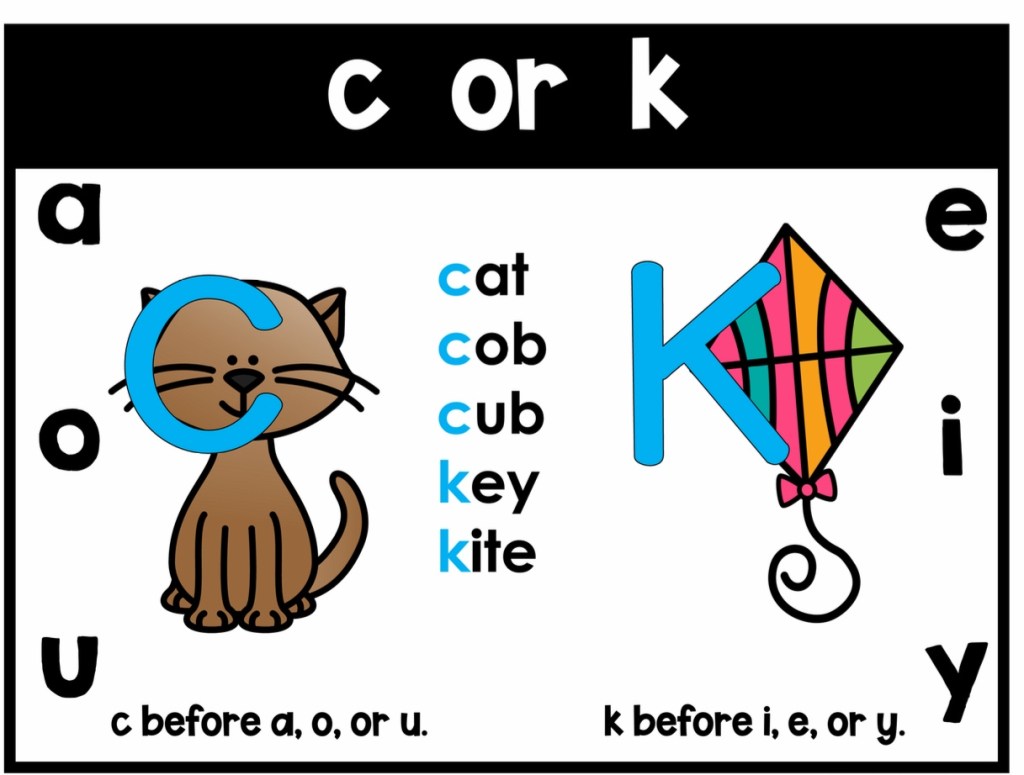
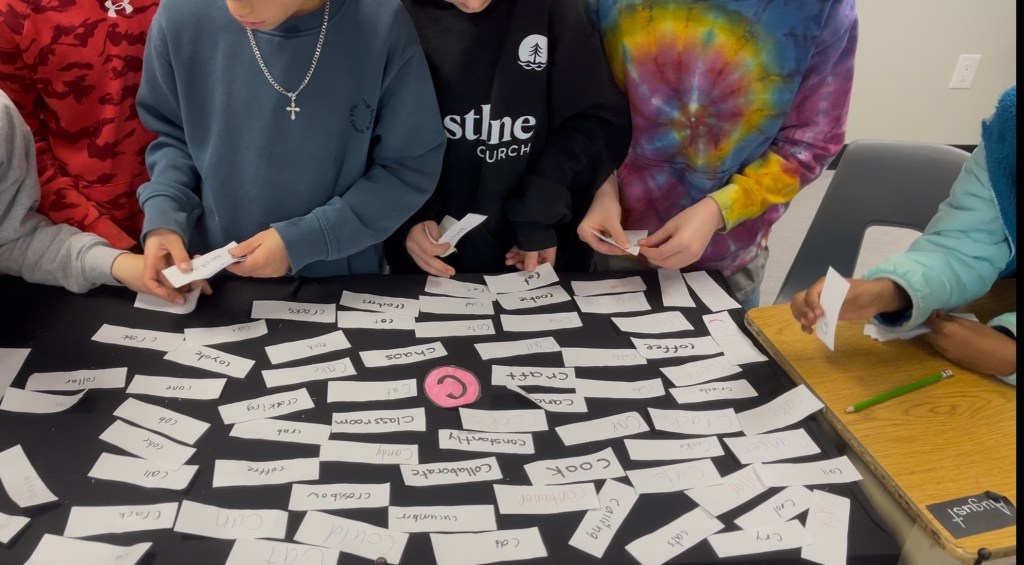
In Language Arts, we are wrapping up our /k/ spelling unit tomorrow with a writing activity and self-quiz.
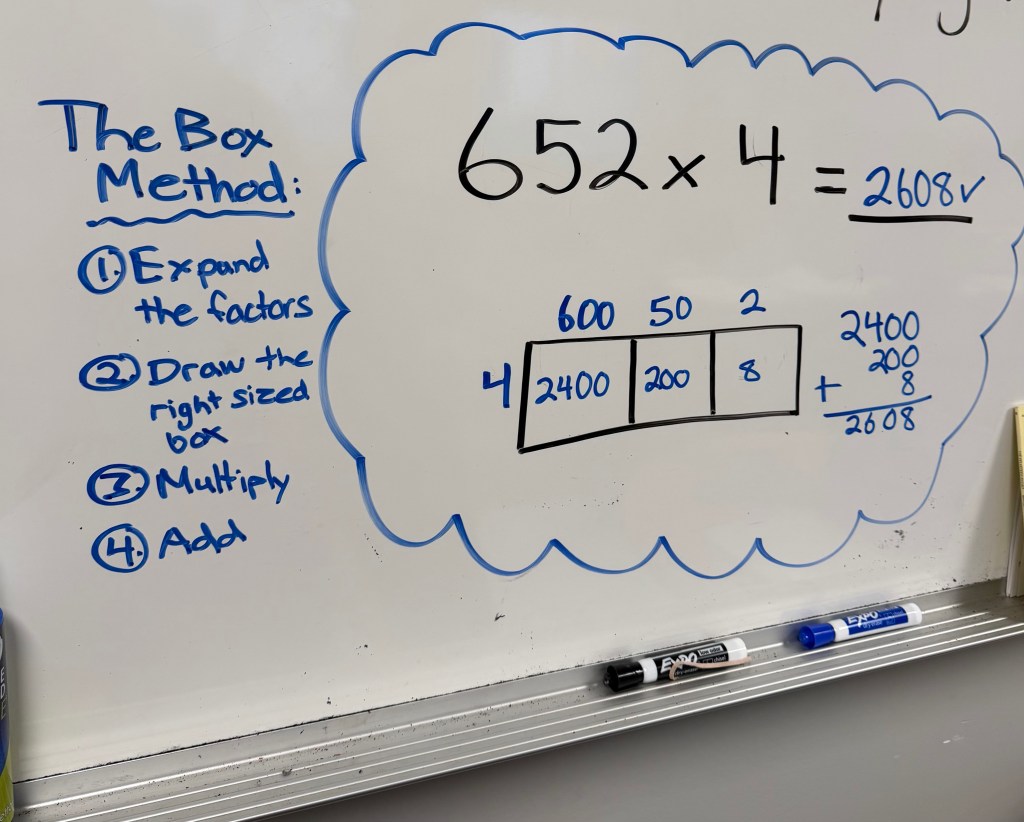
In Math, we are learning to multiply 1-digit by up to 4-digit numbers using both the traditional method and the box method. Scroll down to the previous blog post for the tutorial video.
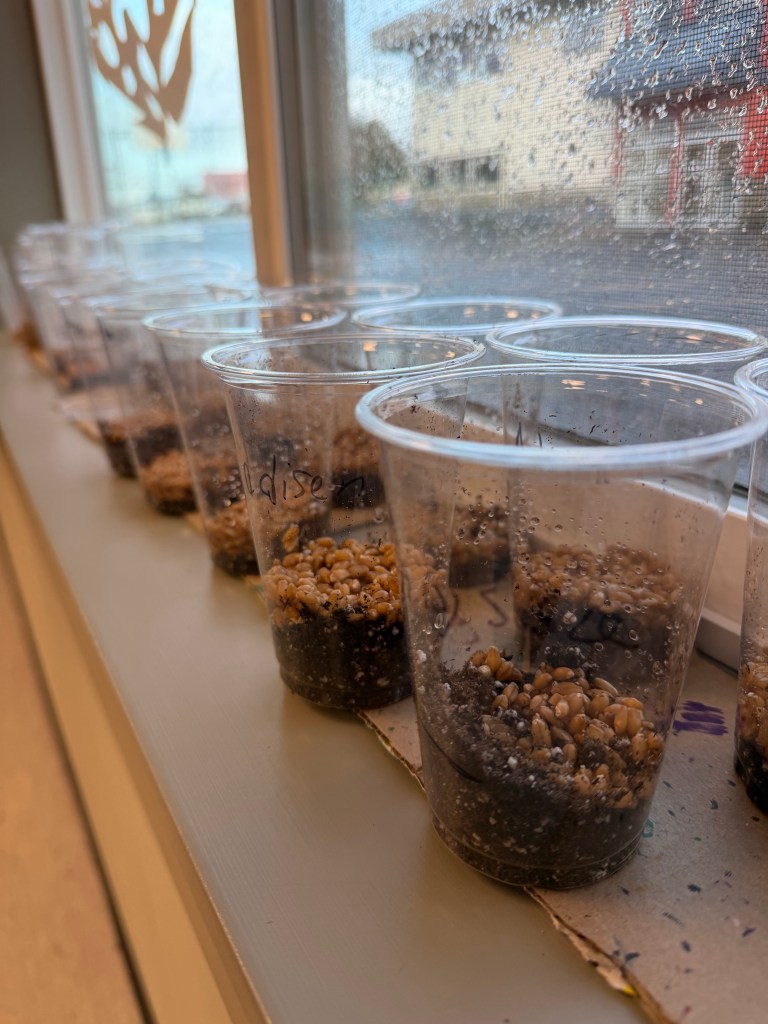
In Science, we are learning about what plants need to grow and studying the lifecycle of wheat. We are growing wheatgrass in class and main connections to wheat in the Bible. For example…
“Very truly I tell you, unless a kernel of wheat falls to the ground and dies, it remains only a single seed. But if it dies, it produces many seeds.” — John 12:24 (NIV)
Congratulations to everyone for their hard work in making our Christmas concert a great success!
This month we have been reading the Nativity story from the Gospel accounts of Matthew and Luke, comparing what each book tells us about Jesus’ birth. Part of learning the story for our class has been going line by line in both Matthew and Luke to see what is really there…
We are seeing how Matthew highlights prophecy and lineage, while Luke draws us into the shepherds’ story and the wonder of the angelic announcement. Together, these two voices give us a richer picture—and they have sparked meaningful conversations and our own dramatizations in class.
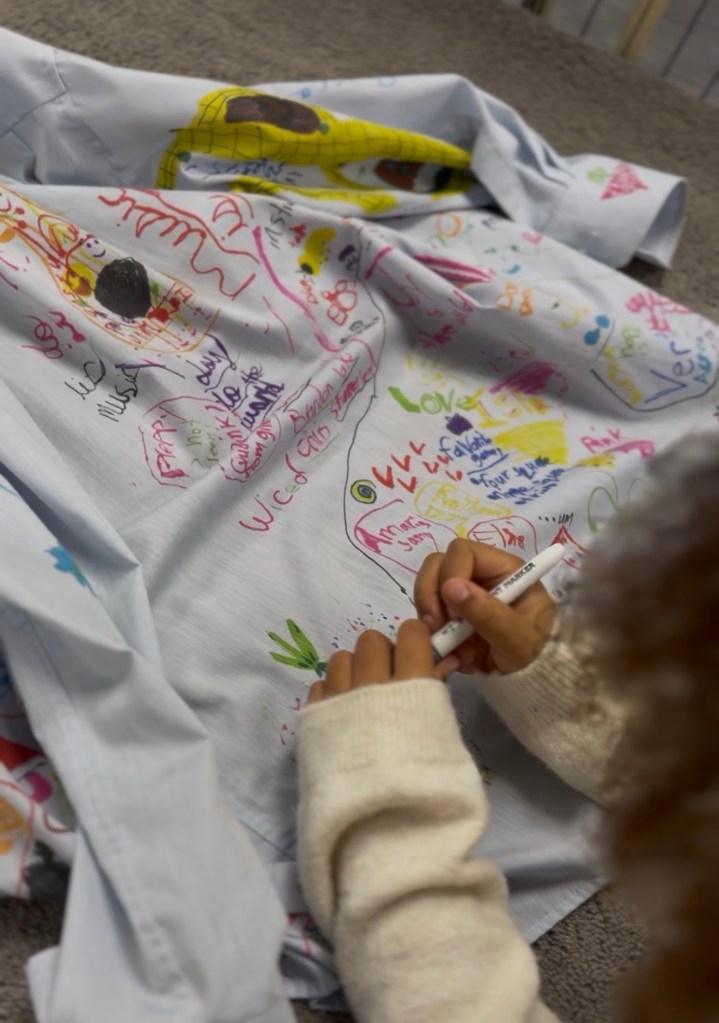
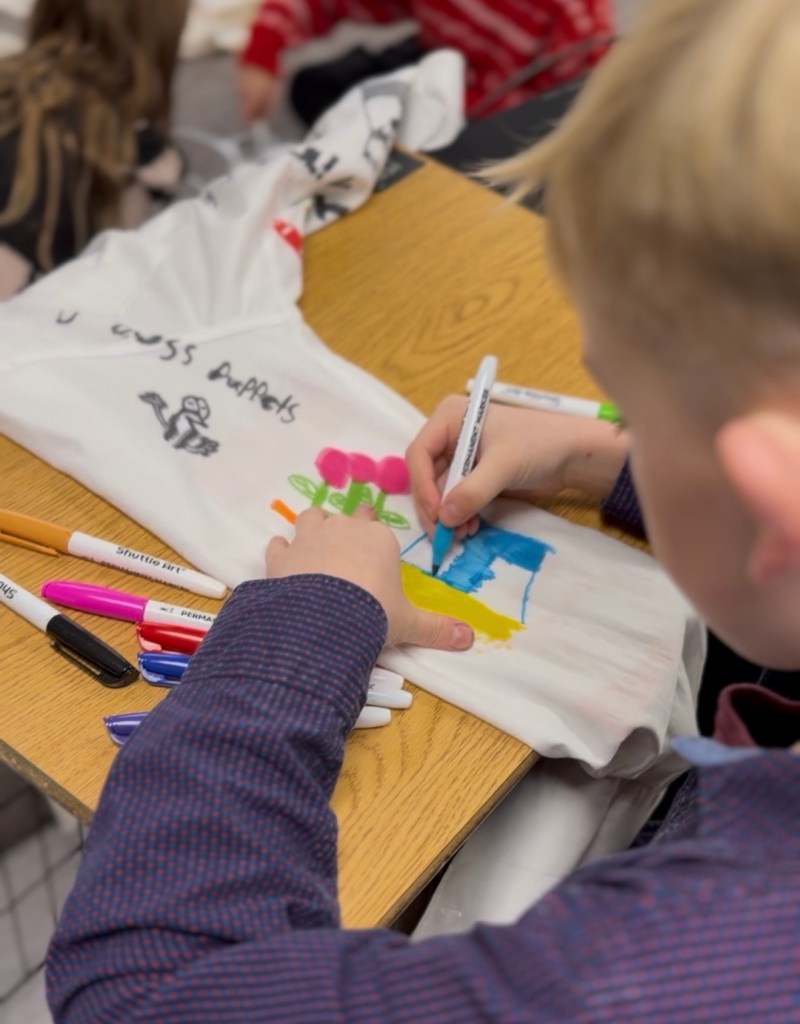
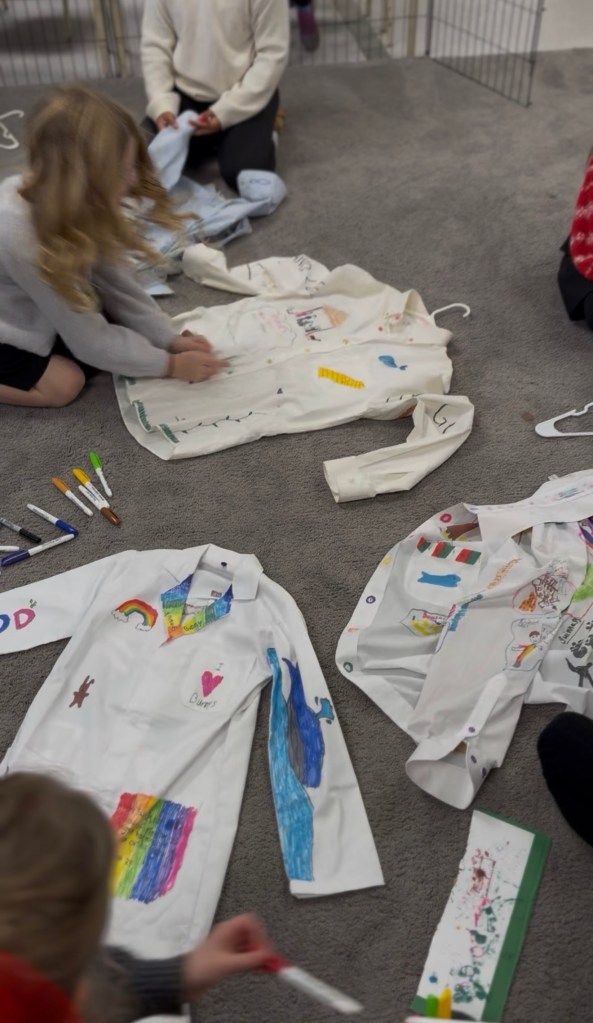
Meanwhile, our room has is transforming into a creative workshop as students work on their Learning Coats, dive deeper into their Personal Interest Projects, and build their own Nativity scenes using found, recycled, and natural materials.
These nativity scene projects are due next Tuesday, Dec. 16, but students are welcome to bring them earlier if finished, or to bring materials to school if they’d like to keep working during class. Creating them entirely at home is perfectly fine too. *Remember, this should be a joyful, creative and low stress project that doesn’t require any new materials to be purchased. We have already seen wonderful scenes made entirely out of paper and cardboard.
In Math, we’ve been building confidence with the box method for multiplying a one-digit number by a number up to three digits—breaking big ideas into manageable parts.
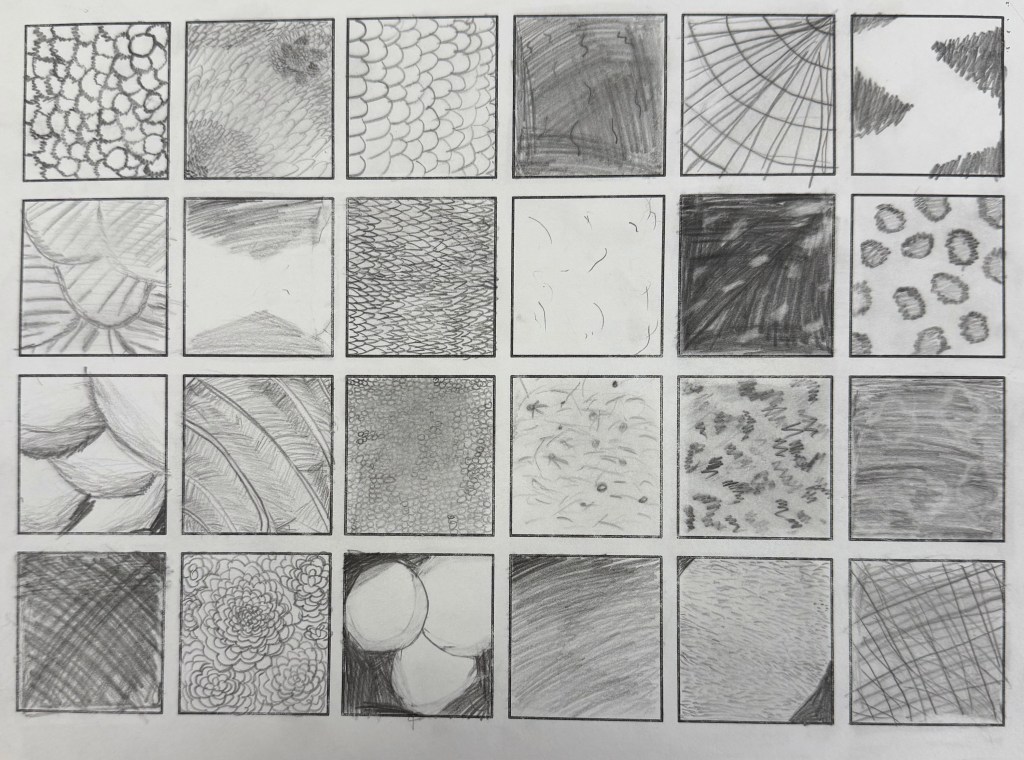
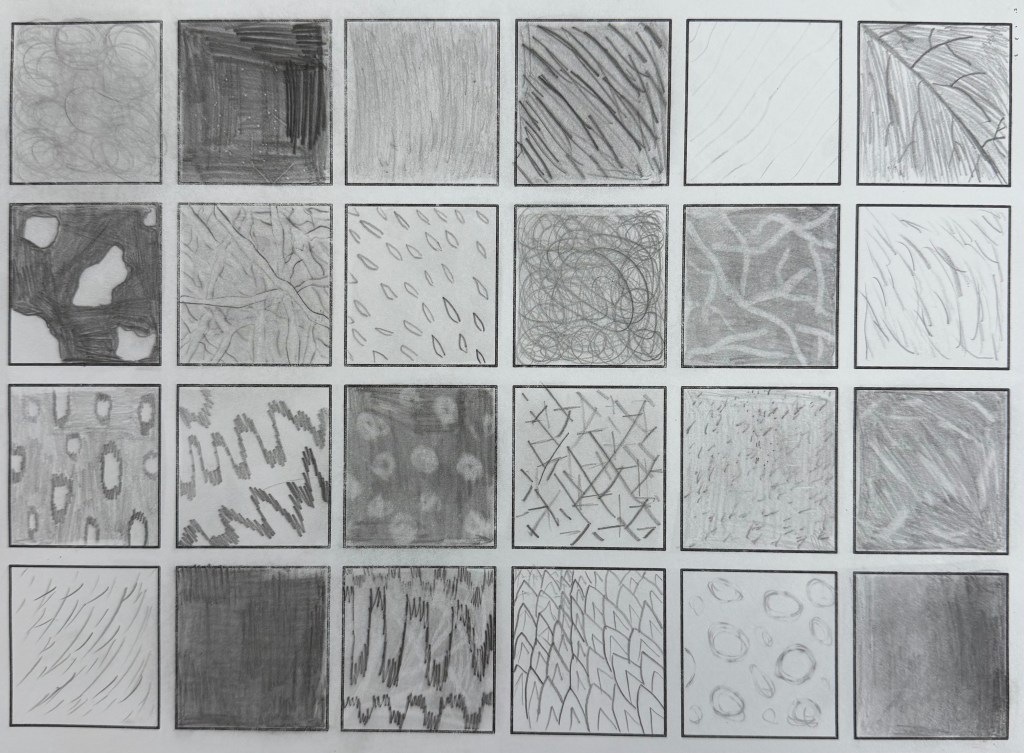
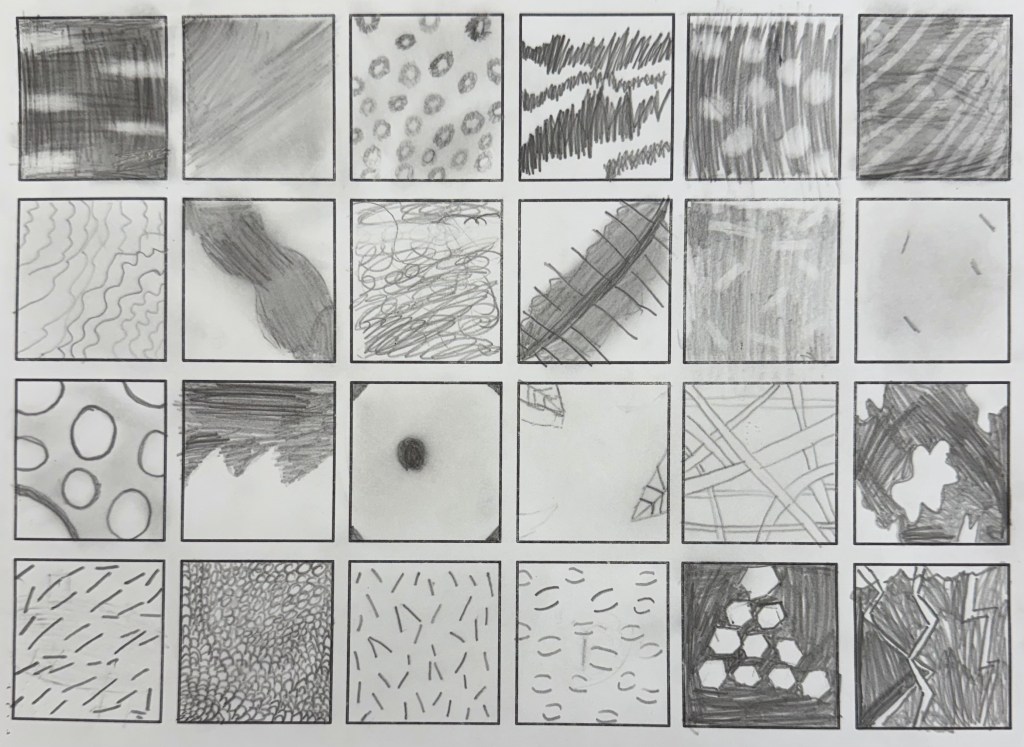
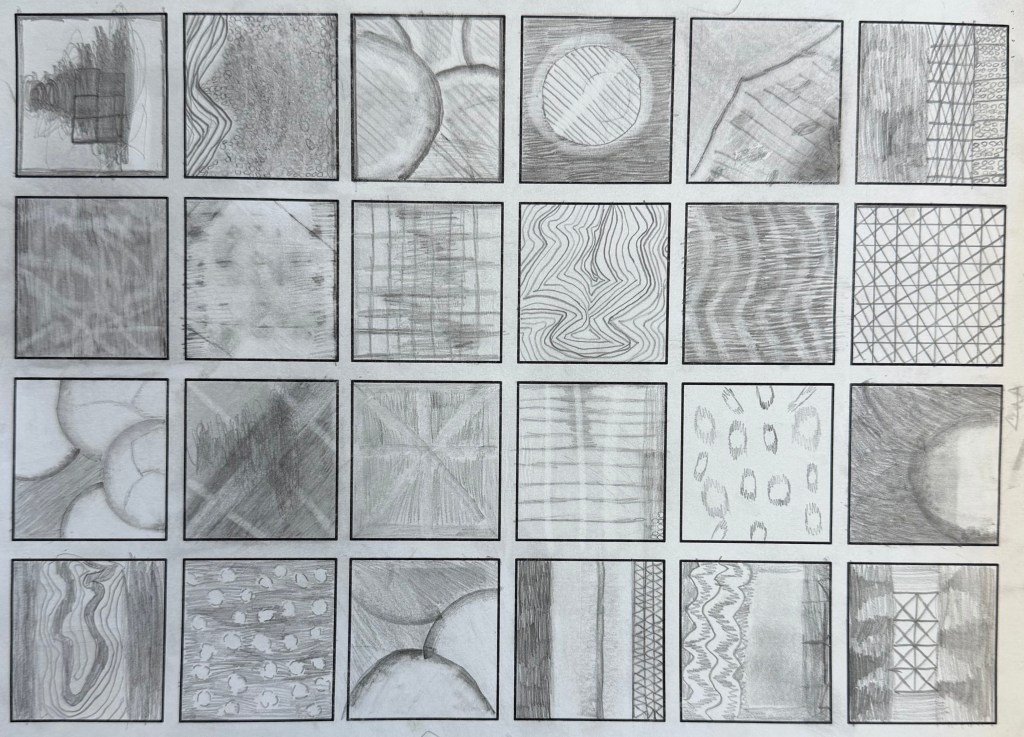
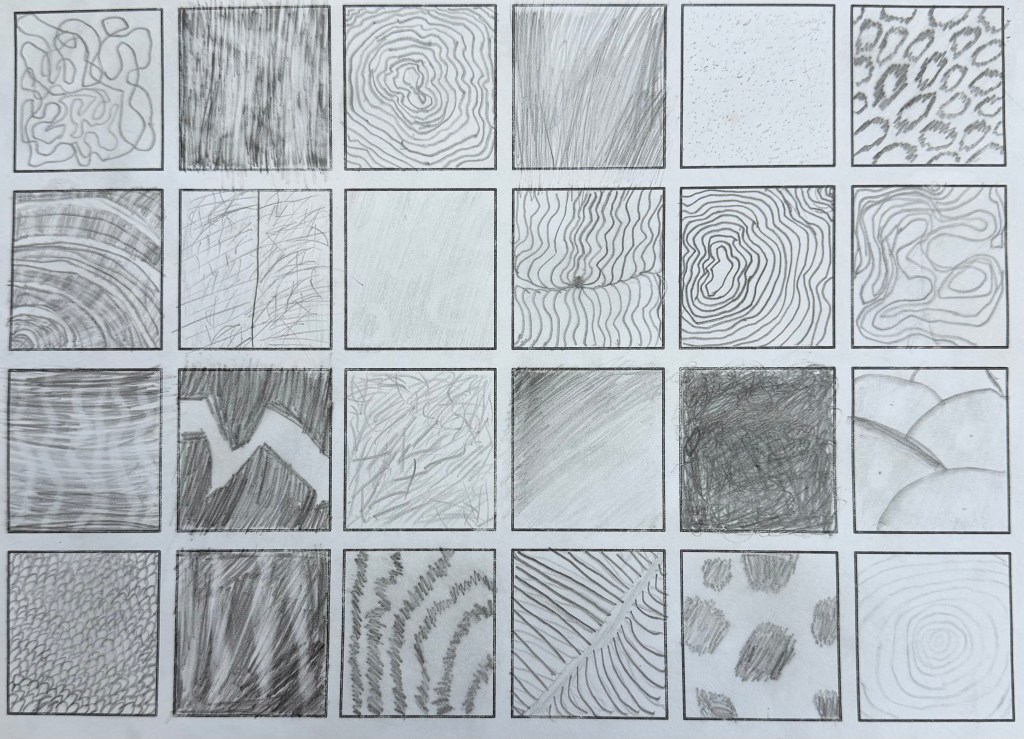
In Art, the students have now finished their “Natural Textures” project, which helped them to explore new pencil drawing techniques.
And in Language Arts, we continue our work on storytelling and building vocabulary with a word study on spelling patterns that make the hard /k/sound.
As always, thank you for your support at home. Advent is such a special season of learning, worship, and wonder, and your children bring joy into everything we do.
Here are some tutorial videos I made to help students review their recent math learning. I hope this helps.
In Math for the rest of December, we are going to focus on doing multi-digit multiplication using both the traditional method and the box method. A solid understanding of place value and addition skills are needed for both.
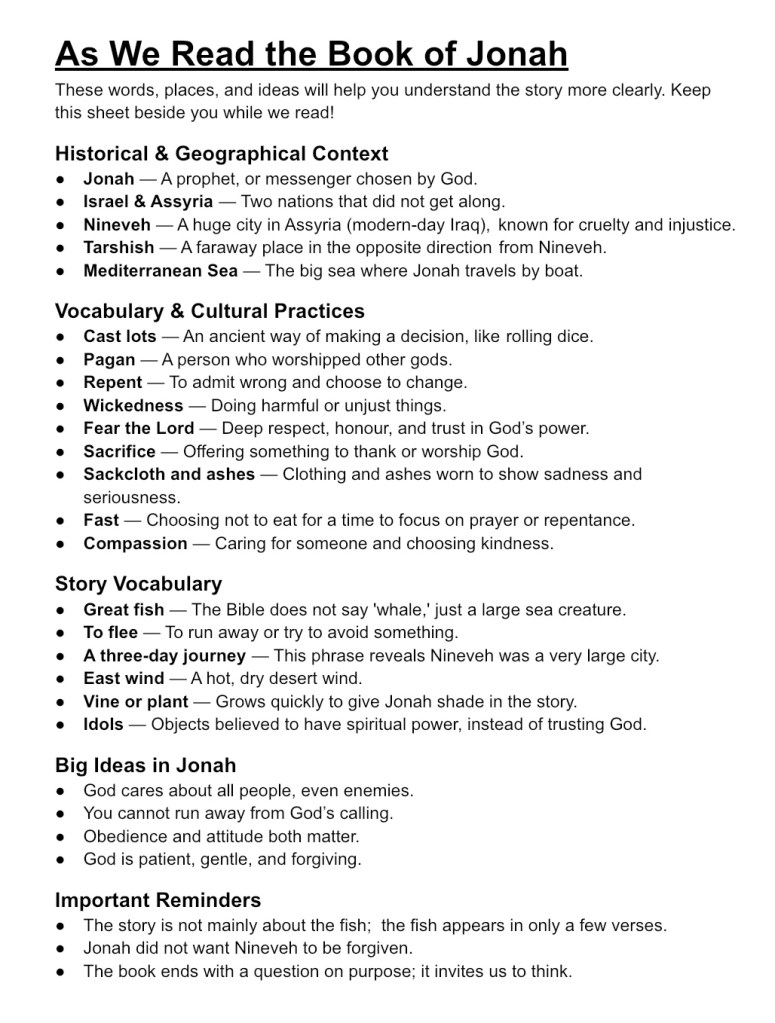
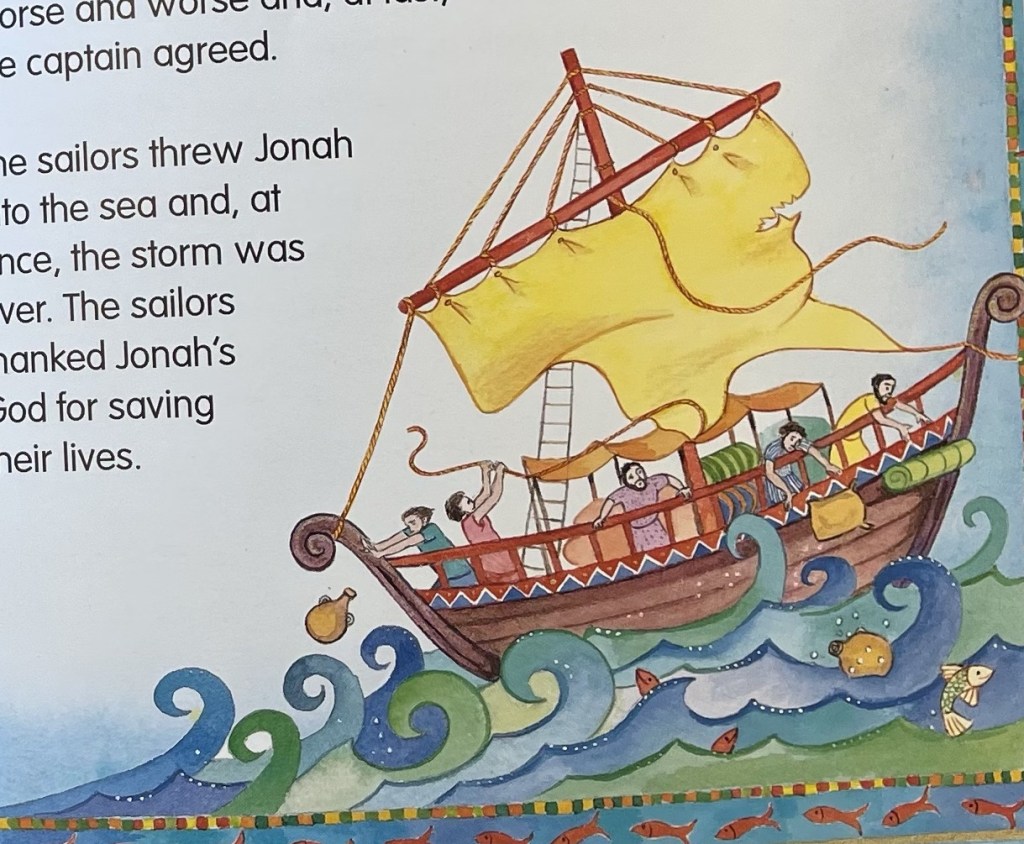
We are in the middle of a deep dive into the book of Jonah. This book is a prophetic narrative, with satire, irony, and exaggeration.
This video is a SUMMARY that we made to help students remember the main parts of Jonah.
For homework, students have been asked to present a faithful RETELLING of the story of Jonah to a family member.
A fun way to check our memory and understanding is with Bible trivia like this!
How Did We Study this Story?
A goal in our class isto focus first on the Biblical text, in our case that’s the students’ NIV translations.
We go line by line.
We look up word definitions and discuss cultural/historical context.
The book of Jonah isn’t just about a big fish—it’s about God’s huge, surprising mercy.
After reading the Bible, later we explore some of the wonderfully creative retellings of Jonah’s story—while staying alert to what they have left out. (The students especially love watching the Lego Bible stories!)
Some children’s Bible versions of Jonah may be…
MOSTLY “FISH FOCUSED”: Making the story only about the excitement of big fish and treating the fish as the main character, misses out on the central point of God’s mercy.
OVERSIMPLIFIED: Teaching “obey right away or else!” misses the depth of Jonah’s journey through running, resisting, arguing, and sulking and God’s patience along the way.
SHORTENED: Ending the story when Jonah gets spit out and “saved”, leaves out the whole part about his continued reluctance and God’s compassion.
VILLAINIZING: Portraying Nineveh’s people as cartoon villains (especially without acknowledging their repentance), forgets they were people in a violent empire that God cared about and wanted to see change. The people of Nineveh model immediate full repentance when confronted—something Jonah could learn from.
GLOSSING OVER: Saying Jonah finally understood and was happy in the end of the story is not faithful to the original Bible text, which leaves actually leaves the reader with more questions and a thought provoking cliff hanger.
But the Lord said, “You have been concerned about this plant, though you did not tend it or make it grow. It sprang up overnight and died overnight.
And should I not have concern for the great city of Nineveh, in which there are more than a hundred and twenty thousand people who cannot tell their right hand from their left—and also many animals?”
And the fact that end has no closure and no response from Jonah, lets God’s compassionate question hang in the air for us as readers to consider and apply to our own lives.
The book of Jonah is another way God shows…
He is who He says He is: compassionate, gracious, slow to anger.
Here are a some dates to mark on your calendars for December: – Dec. 9th – Christmas concert evening and matinee performances. Tickets can be purchased here. – Dec. 17th – Whoville Day – Dec 19th – Festive Sweater Day (last day before Christmas break; dismissal at 11:25)
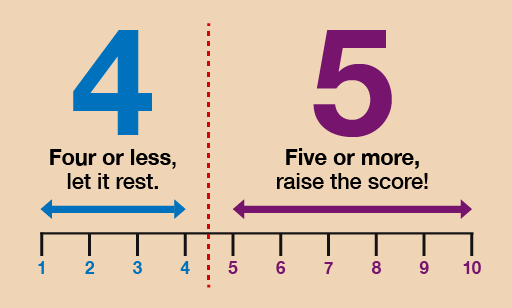
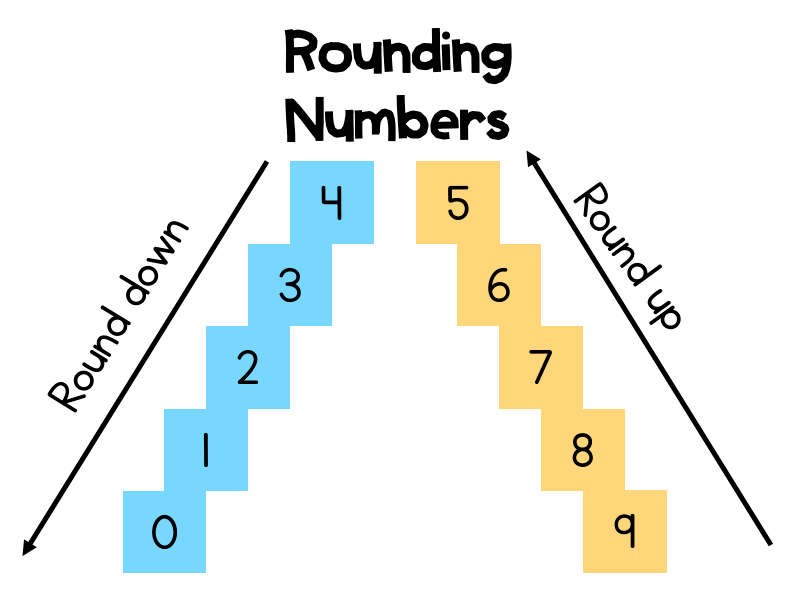
Lately in Math, we have been learning how to round numbers to the nearest tens place and hundreds place. We have added a “Rounding Numbers” Math Centre into rotation for extra practice.
As homework, each day students are asked to (1.) bring home their completed math work, (2.) briefly show and explain it to a family member, and (3.) finish any incomplete work they may have missed during class time.
If your child is struggling with rounding, you might share with him or her some YouTube math tutorials such as the ones below or go over the worksheets together.
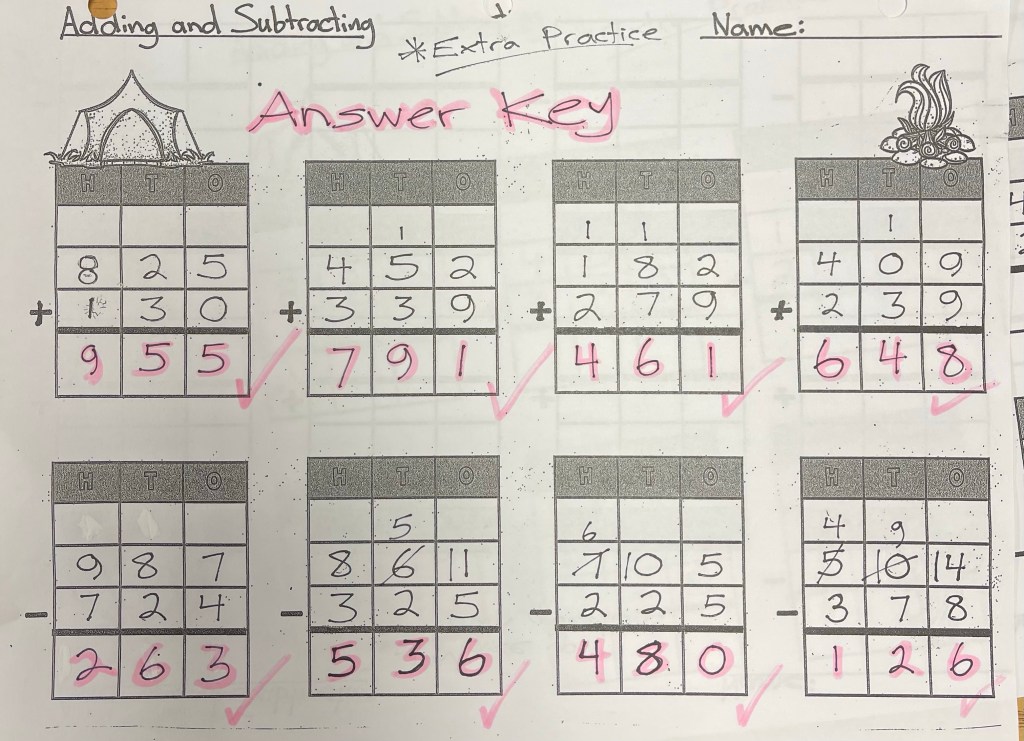
Here is a copy of the extra practice sheets students will be using this week with answer keys. (You do NOT need to print or use these at home, since we are covering and marking them in class; however, this is here for your reference.)
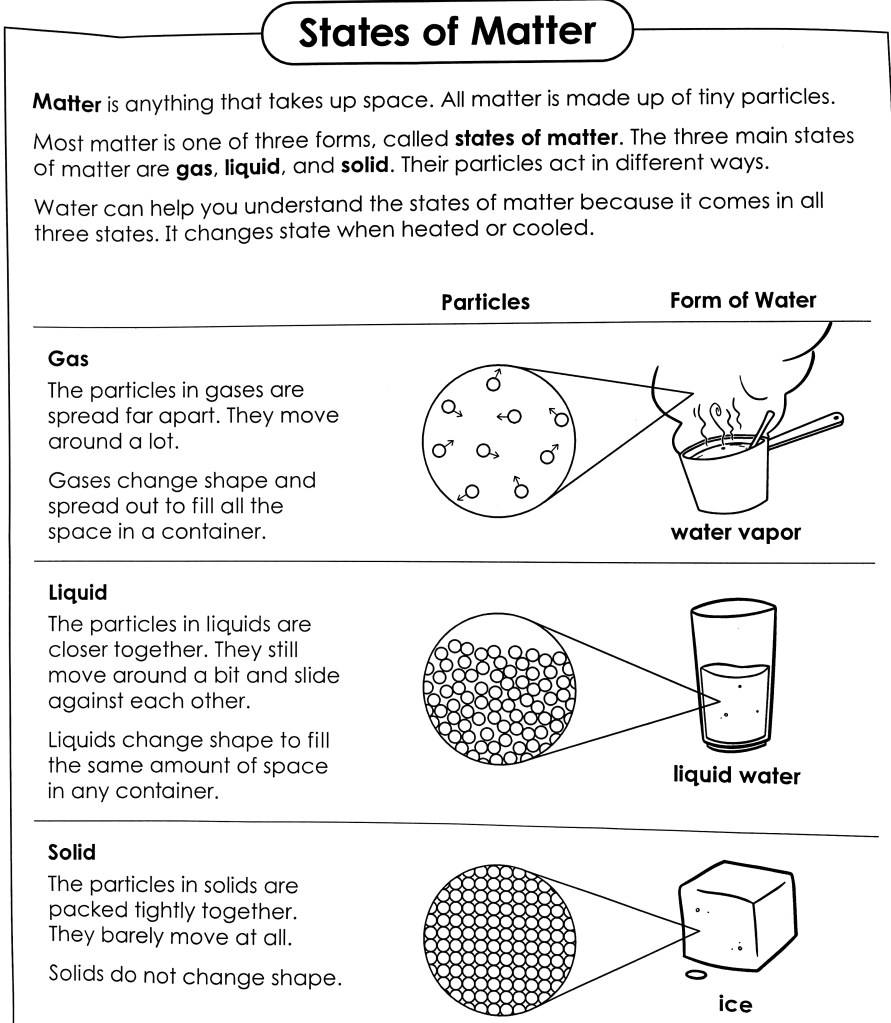
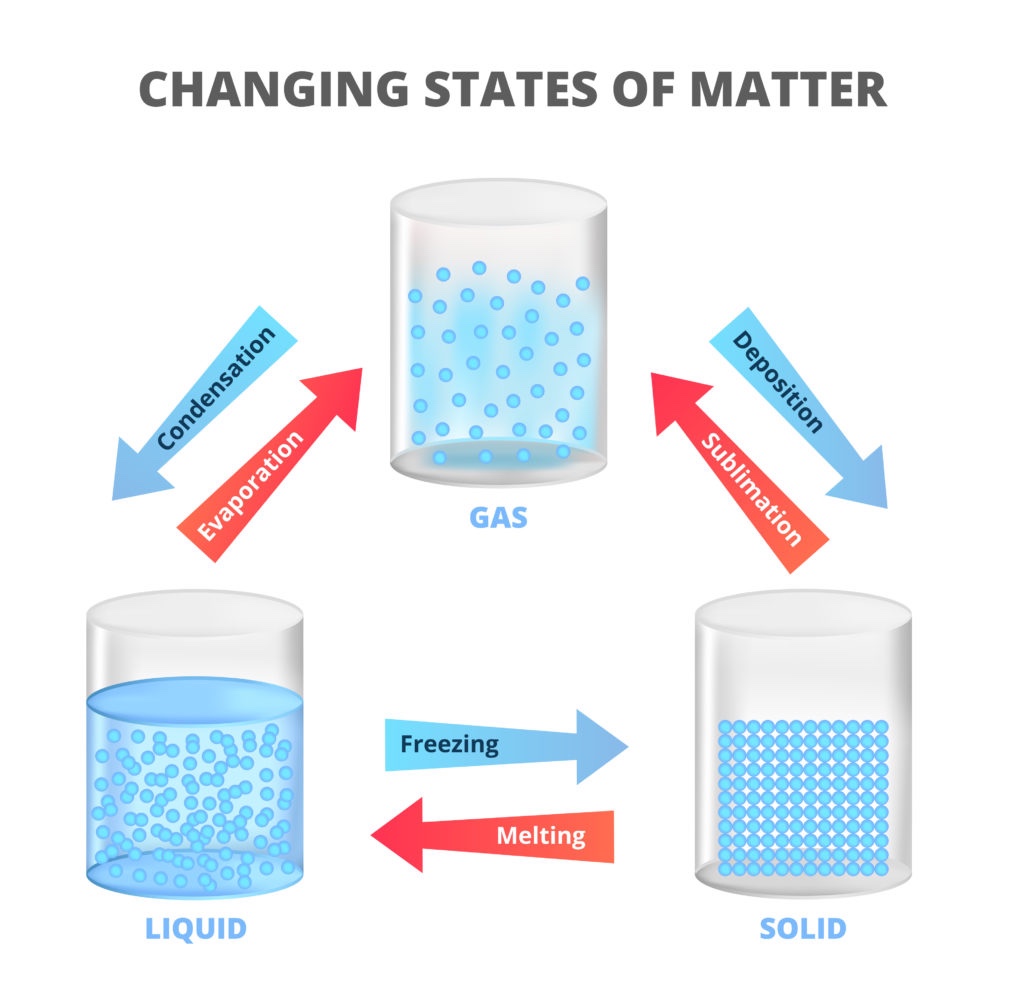
In Science class we have been learning this term about scientific questions, planning and structuring lab reports, safety and ethics in scientific inquiry, and how animals such as bunnies sense and respond to their environments. Today also learned about three mains states of matter: solids, liquids and gases.
We even enjoyed an exuberant states of matter game in the gym during which students ran around like particles who work together to demonstrate sudden changes of state.
Science Enrichment: A 4th State of Matter
Some students dove in to challenge themselves by learning about a 4th state of matter: plasma!
Memory Verse Strategy
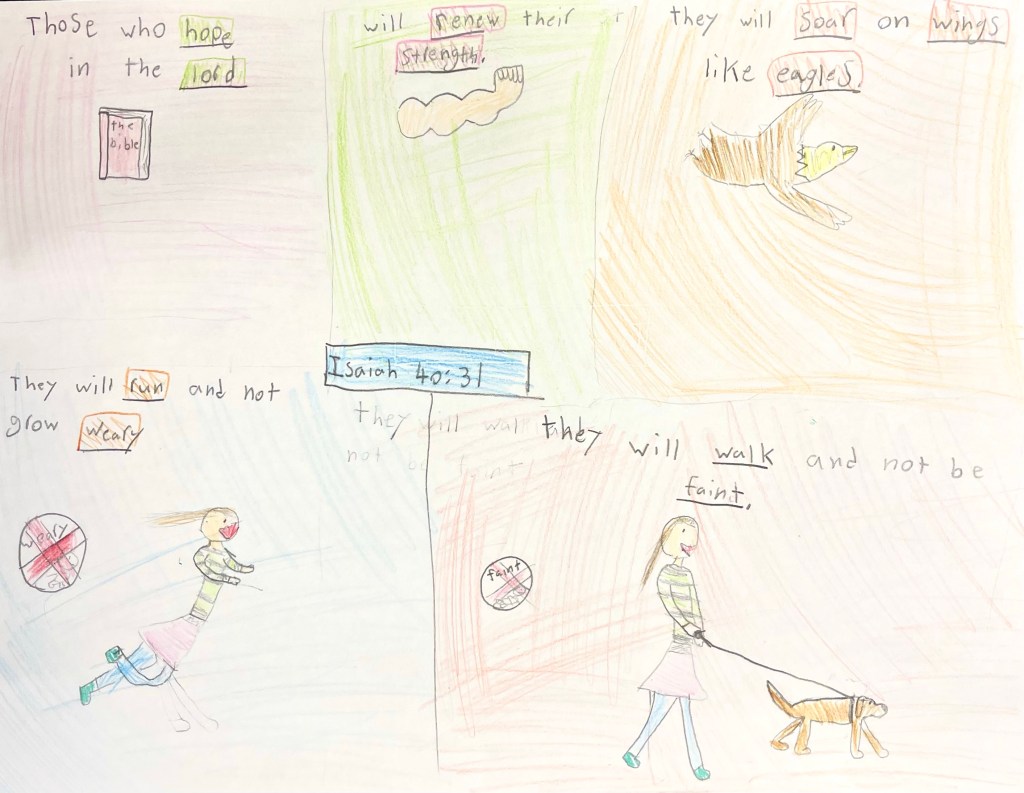
“…but those who hope in the Lord will renew their strength. They will soar on wings like eagles; they will run and not grow weary, they will walk and not be faint.”
– Isaiah 40:31
This term in Bible class, students have been learning more about what the Bible says and how to study it closely and meaningfully.
Our goals in memorizing Scripture are to help students grow closer to God’s Word, understand it more deeply, and empower students with transferable skills they can use for the rest of their lives as they read and interpret the Bible.
To support this, today we practiced a step-by-step strategy using Isaiah 40:31. Here is the process we followed:
1. Break the verse into meaningful chunks
We divide the verse into shorter lines so students can focus on one thought at a time.
2. Identify key words
Students highlight or underline the most important words in each line and discuss why those words matter.
3. Explore different translations
We look up how these key words are translated in different Bible versions. (e.g. We compared the NIV and ESV today). Students discovered that slight differences in translations’ wording can enhance and help reveal deeper meaning. (In the students’ NIV version it says “hope in the Lord,” while in the ESV version it says “wait for the Lord,” which means that one translation seems to emphasize trusting confidently in God’s goodness and promises, while the other seems to emphasize being patient and trusting God’s timing. Students are encouraged to think, pray, and check with their families to round out their understanding of each memory verse.)
4. Draw or symbolize each line in a Scripture Map
Students create simple illustrations or symbols for each line of the verse. This becomes part of a “Scripture map,” which helps them build a visual memory of the passage.
5. Build memory with both auditory and kinesthetic connections
Students create hand or body actions for each part of the verse. Both speaking a verse aloud while acting it out helps anchor the words in mind and body.
Reminder: There is no school on Monday, Nov. 10th (Pro-d) and Tuesday, Nov. 11th (Remembrance Day)
Also, there is no school on Friday, Nov. 21 for a pro-d as well.
This is the “Answer Key” for tonight’s homework. Student have brought home their marked quizzes today, and have the opportunity to rewrite them tomorrow if they have completed the preparation they need to show their growth.
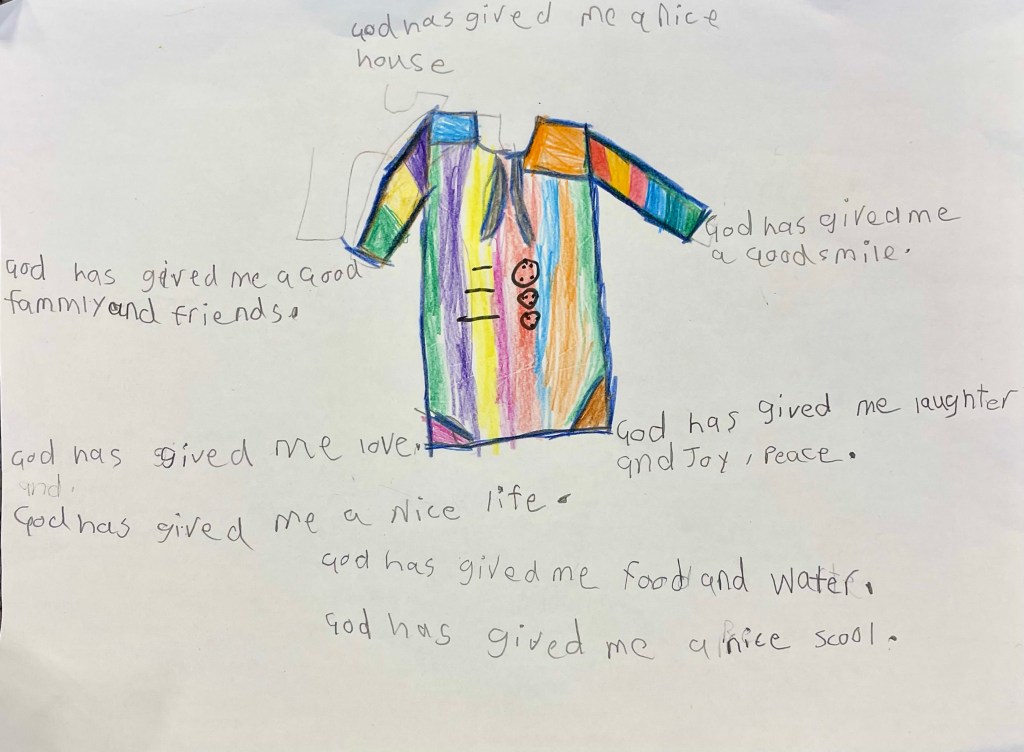
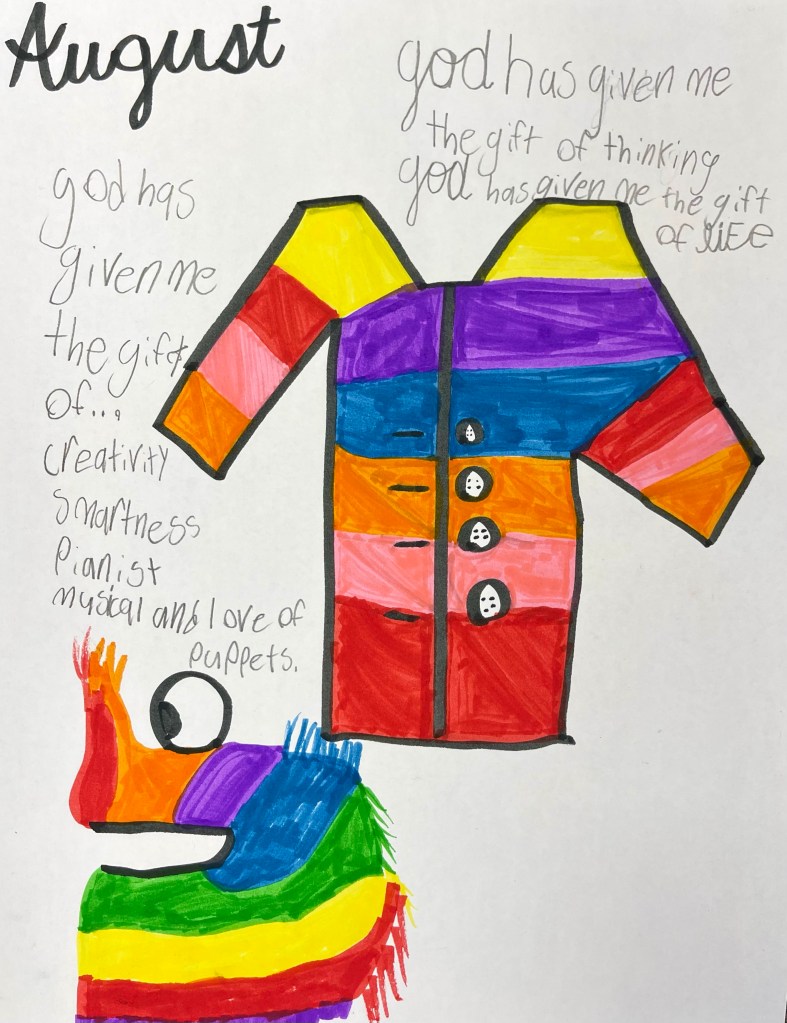
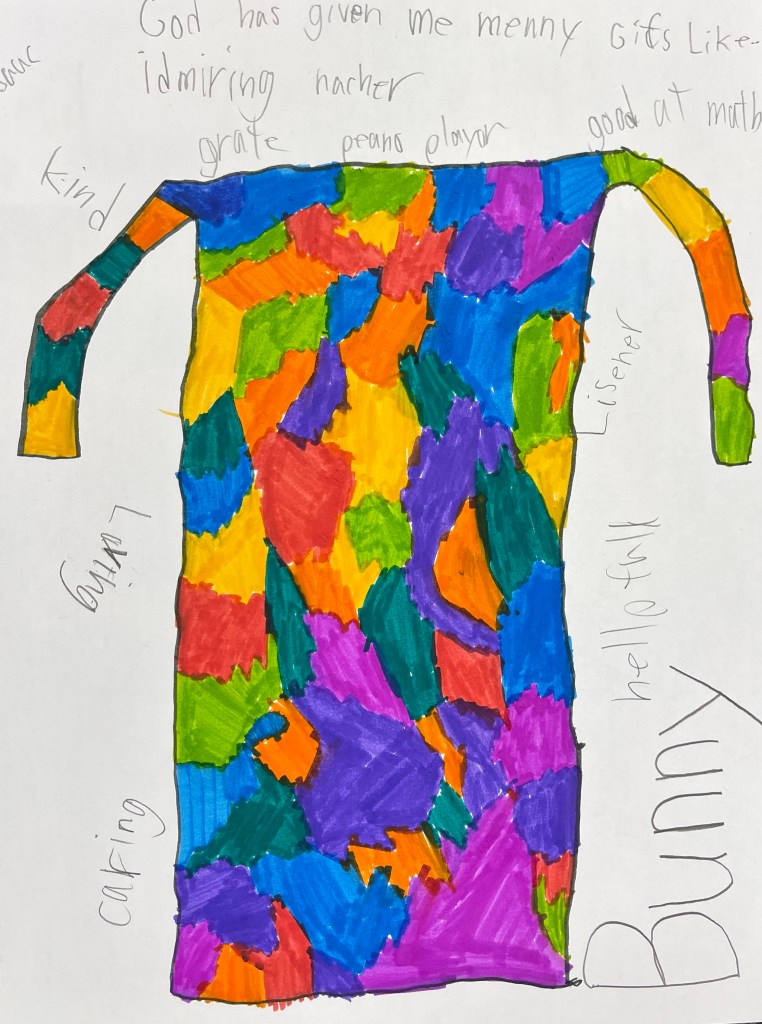
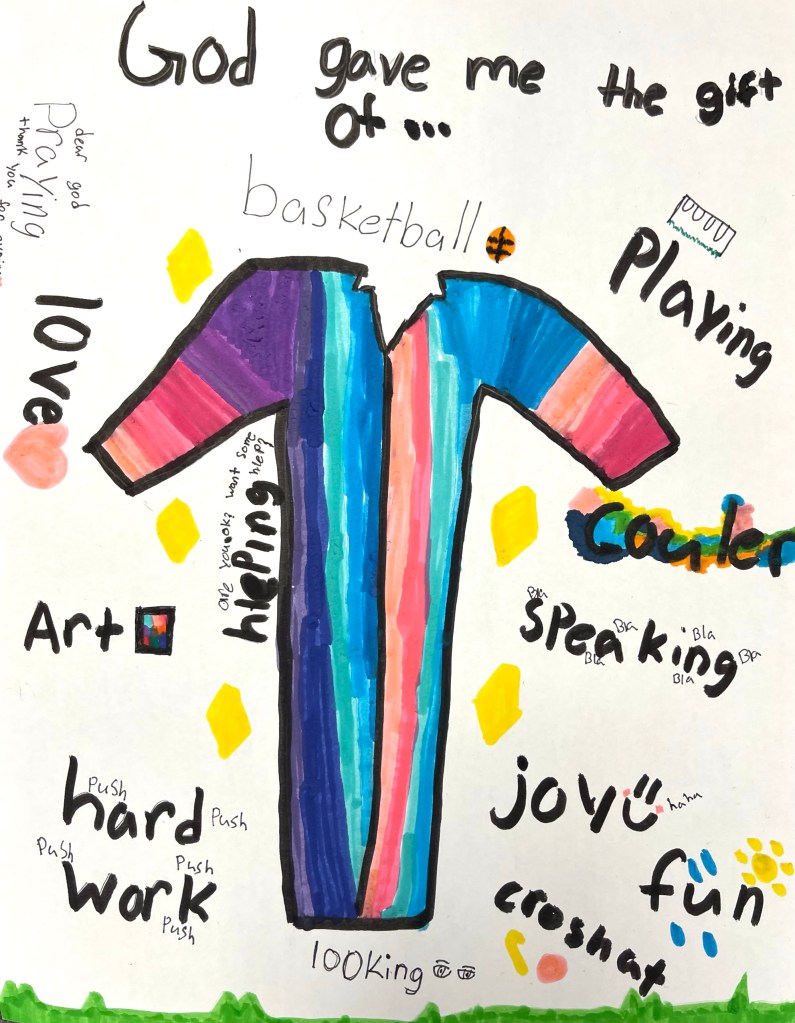
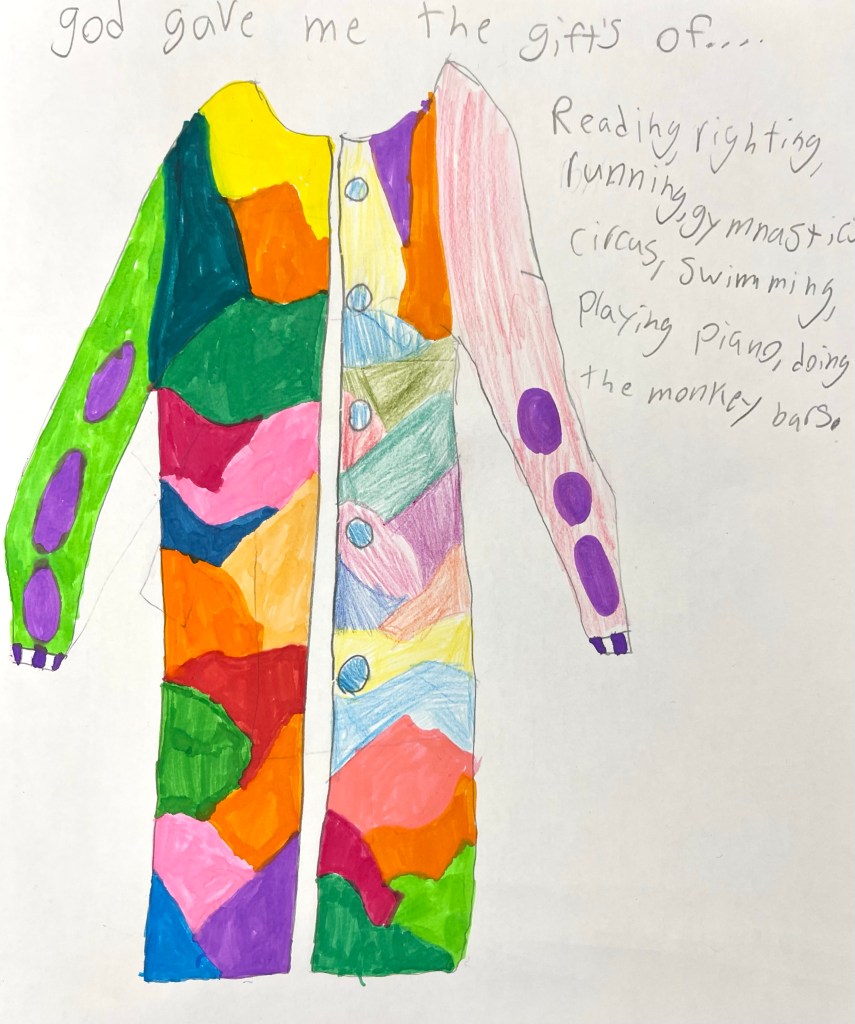
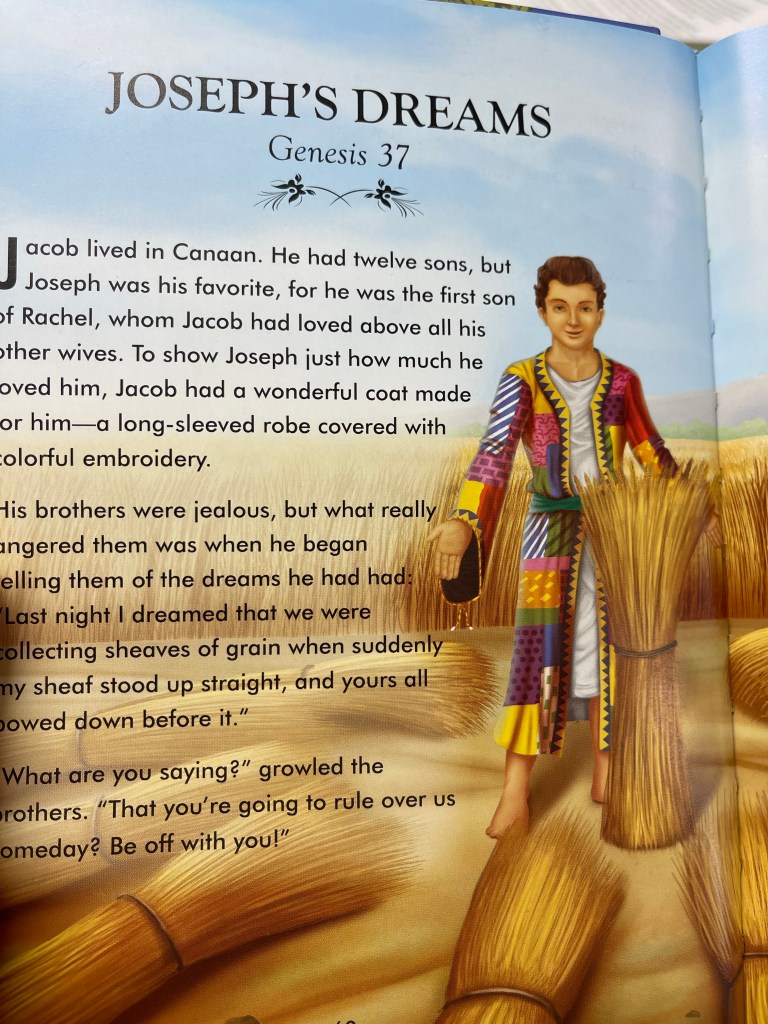
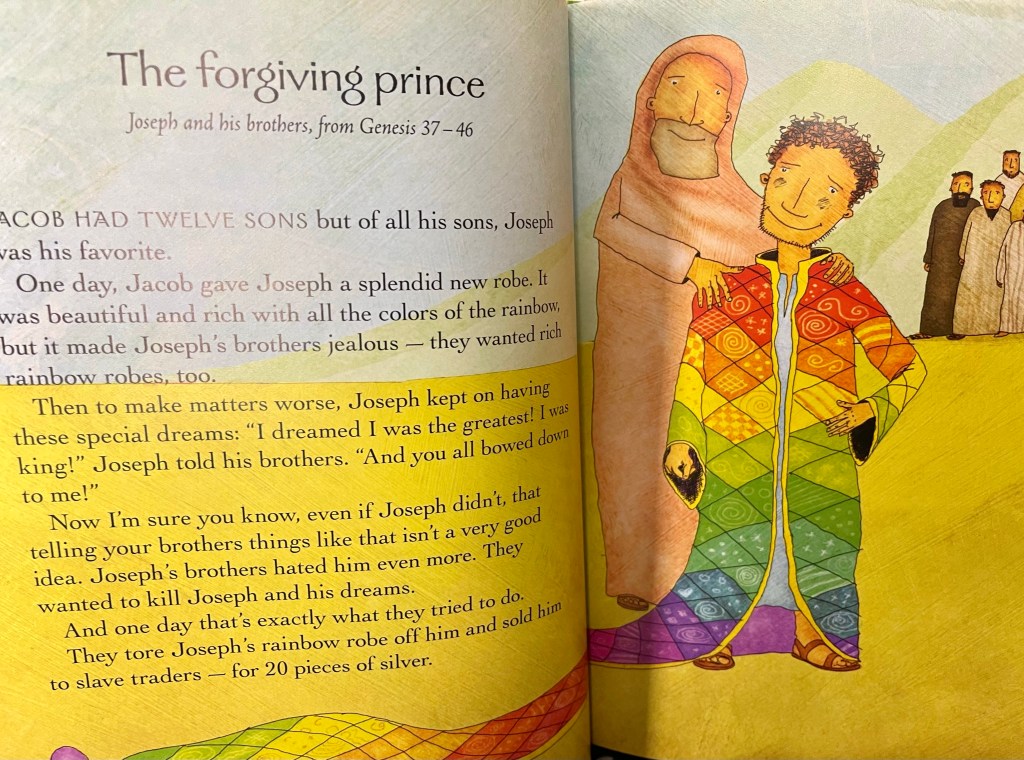
In Bible and Crew, we have been studying the story of Joseph and his coat of many colours and the many lessons we can learn from this Bible story. I asked students to consider what gifts they understand as blessings from God and how they might share them with others…
We’ve explored this story through the original Bible text and as well seen numerous other children’s Bible story book versions and online video adaptations.
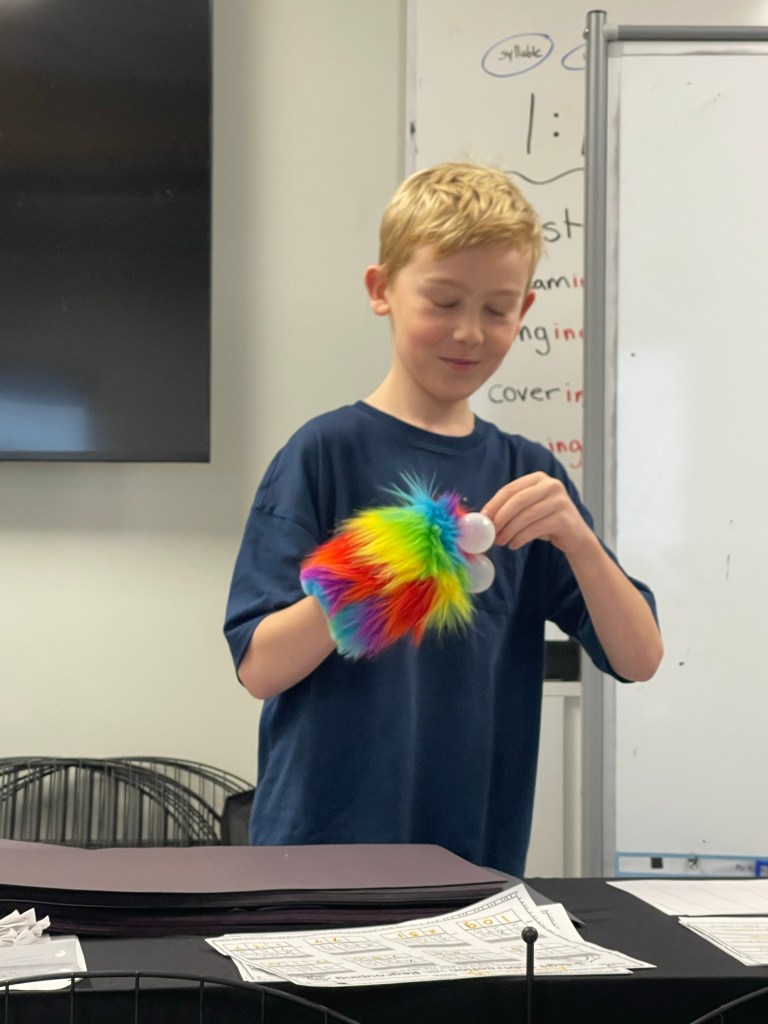
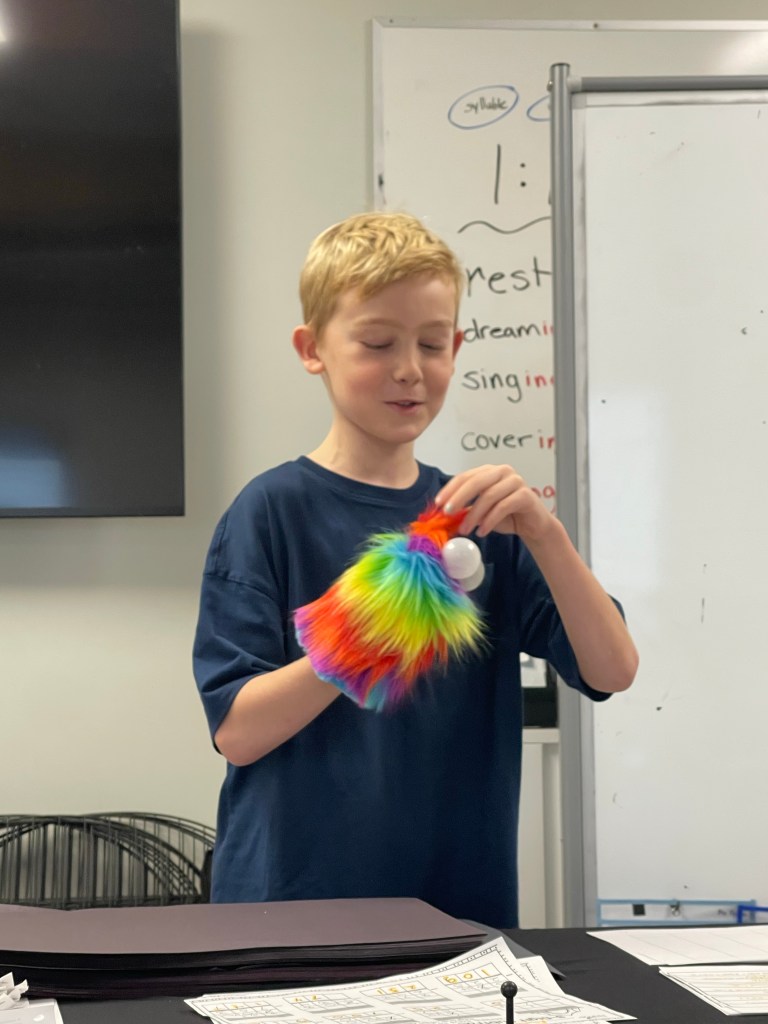
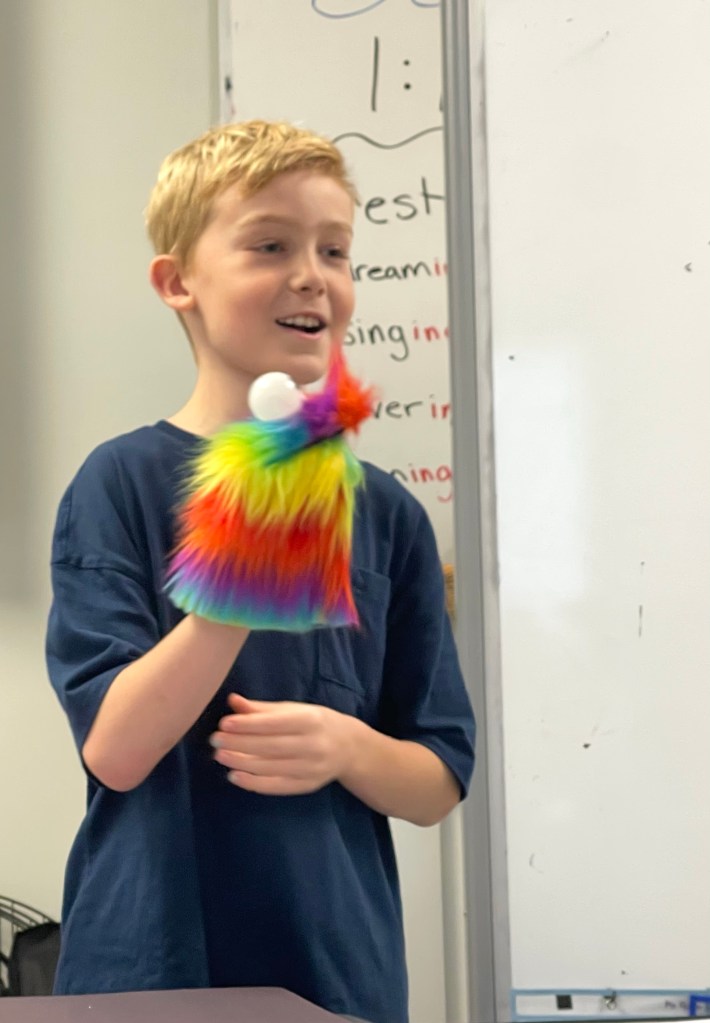
In keeping with our colourful morning, it was perfect timing that August brought in an adorable and brightly coloured puppet he made by hand as a part of his personal interest explorations. He gave a joyful puppet performance and talked about the puppet construction process. We love when students can share a glimpse of what they are working on for their projects!
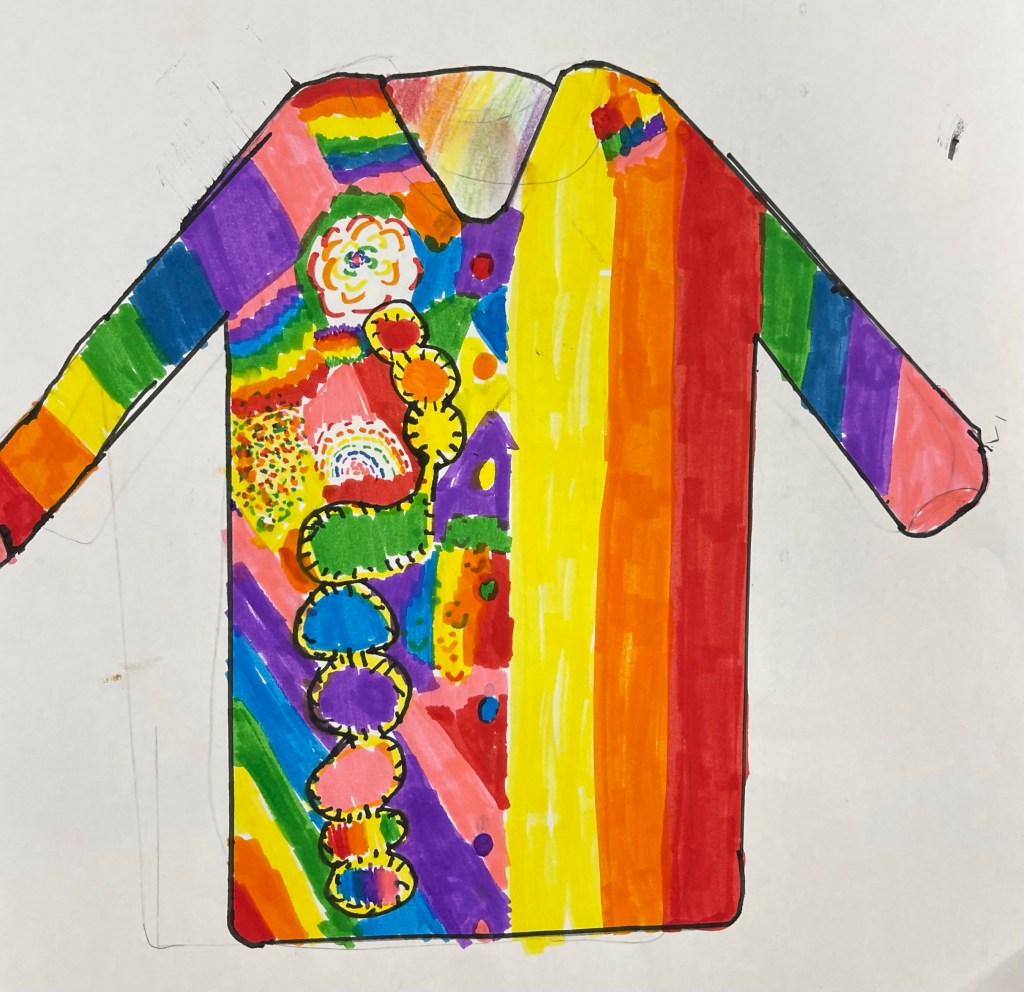
The Learning Coats Project…
In a few weeks, all the grade 4 classes are starting a yearlong inquiry called The Learning Coats Project. A letter is coming home tomorrow about this, and I have posted it below here too.
If you’d like to see how another local school experienced The Learning Coats Project, you can watch the video above.
Please Bring: Each student will need something to use as the base of a Learning Coat, such as an oversized white or light coloured, second hand dress shirt or lab coat.
Ideally, we would love to have all students ready to start decorating their coats on Monday, Nov. 24th
Who Will Be Prepared to Serve and Courageously Lead the Church in the Years Ahead?
In our Bible classes and Crew time, we’ve been exploring the opportunity each of us has to share the fruits of our biblical study, personal stories, and faith testimonies in ways that can inspire and encourage others.
We’ve been watching examples of sermons—including some given by young people—and discussing how the process of preparing and sharing God’s message can be a powerful act of worship, learning, and service.
As students begin thinking about their own faith talks or short sermons to share in our class or beyond, we’re learning how reflecting, writing, and speaking about what God is doing in our lives can draw us closer to Him and help others grow in faith as well.
Here is one example of a youth giving a thoughtful sermon with a meaningful personal connection.
Together, we’ve discussed how sermons proclaim God’s Word, point people to Jesus, help believers grow in faith and obedience, and build up the Church for God’s glory. Sermons often include personal stories or modern-day illustrations that connect with listeners—while humbly keeping the focus on what matters most: God’s truth and grace.
We are blessed with such a rich, wise, and experienced group of 4A families who can share insights about what makes a sermon meaningful and impactful. Please take time to discuss with your children what you believe makes an effective sermon.
My hope is to invite a few guests who have experience writing and sharing sermons to visit our class and talk with students about their process.
Here are the students looking over some sample sermon scripts to analyze how they are structured and to consider how they could be improved. A few students took the impromptu opportunity to adapt and personalize the sermon examples to present to the class. Lego creations continue to pop up and inspire in our classroom.
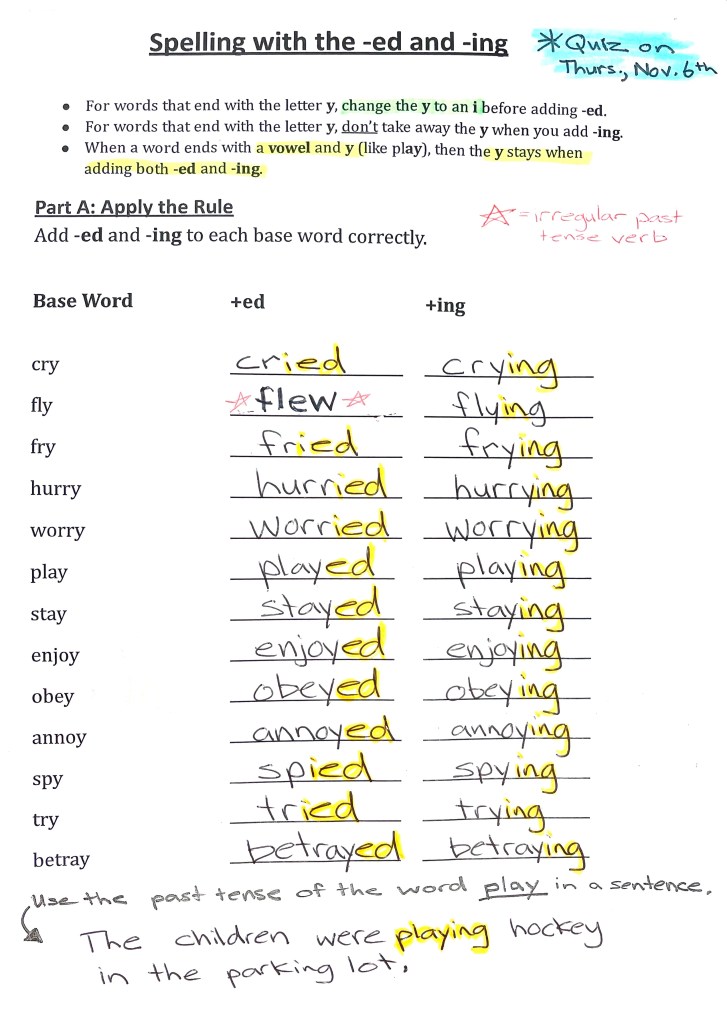
We’ve been learning spelling skills since September (especially contractions and homophones) but have waited until now to begin spelling quizzes so we could first focus on building confidence, classroom routines, and foundational reading and writing skills.
Lately, we have been learning how to add –ed and –ing to words ending in –y(for example: cry → cried, hurry → hurrying).
Our spelling quiz will be on Thursday, Nov. 6th, followed by a rewrite the next day on Friday.
Our spelling program focuses on understanding patterns and rules, not just memorizing word lists. By learning how words work, students develop strong spelling strategies that help them in all areas of reading and writing.
S.S. – The Fur Trade
Here are two videos that may be helpful for students in their review of term one Social Studies. The first video we created today when researching question: What impact did the European traders have during the Canadian fur trade?
The 4A class researched the impact of European traders in the Canadian Fur Trade.
As well, I hope to show students that more than doing tests and writing essays, there are many ways to share their Social Studies learning!
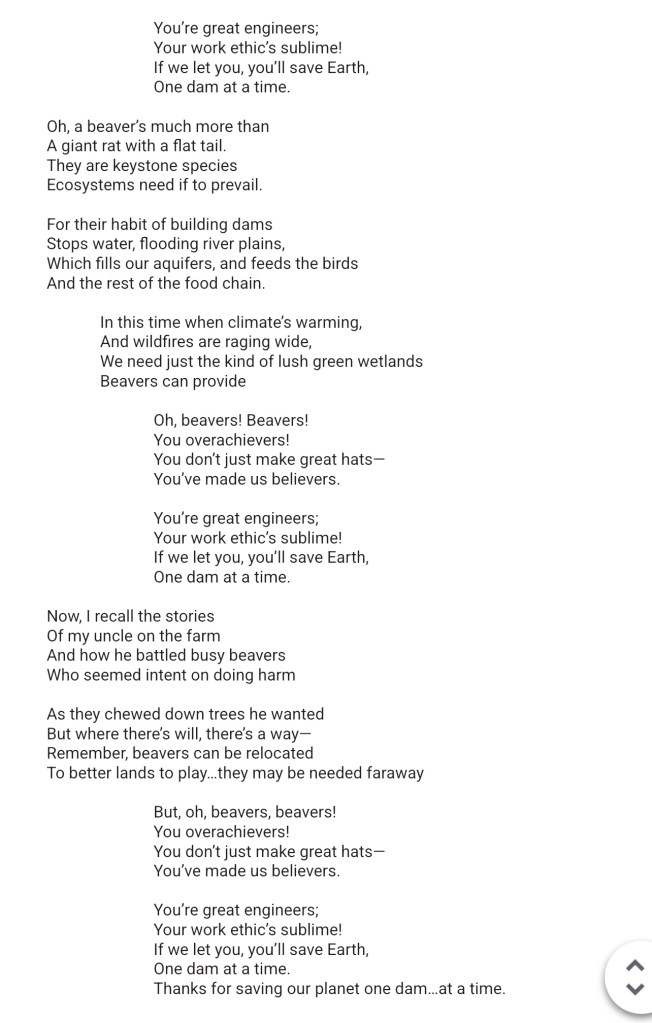
– THE BEAVER FUR TRADE SONG – In 2022, yes before ChatGPT (ha!), I tried to summarize the story of the Canadian Fur Trade in a song to help my students understand this important part of our country’s history. Please forgive the amateur vibes—I’m not a professional songwriter nor an historian. 🤣 I just hope it helps the students with their studying!
















































 Tiffany Poirier