Blog

Swan Lake Field Trip

Hello, 5B families!

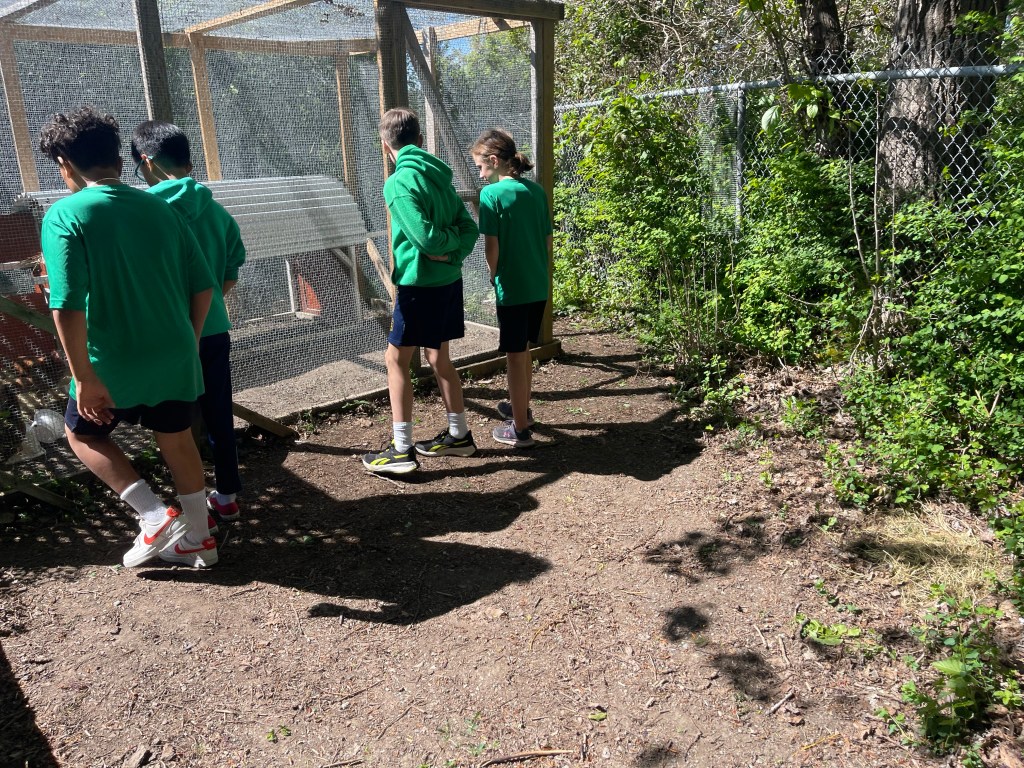
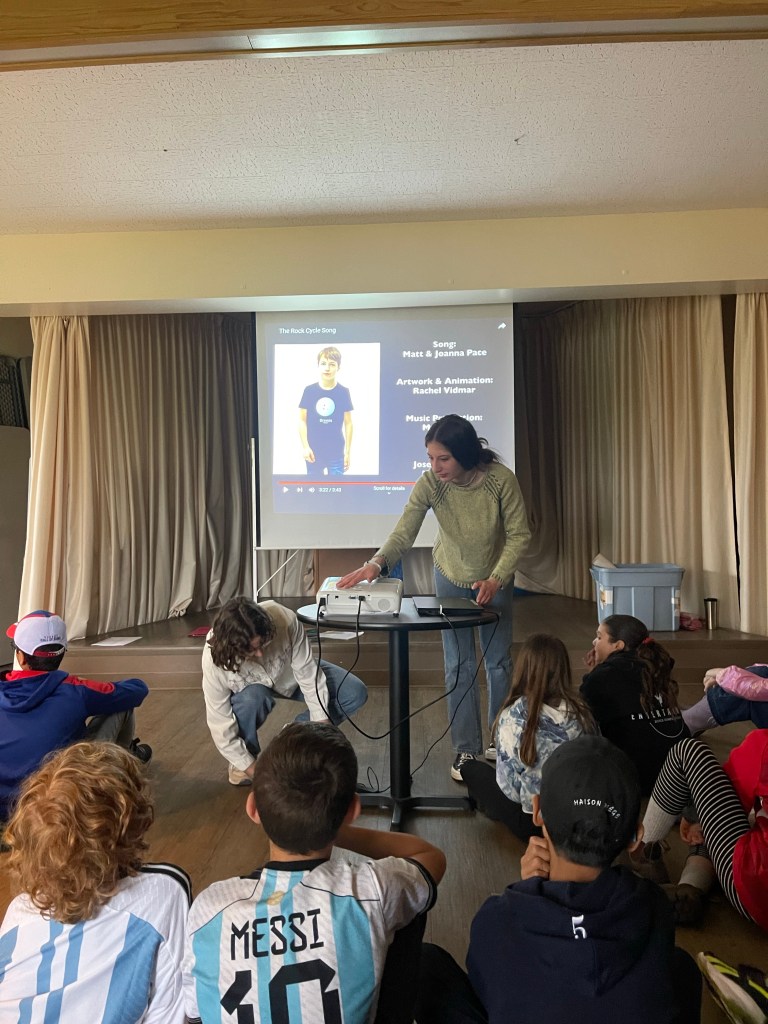
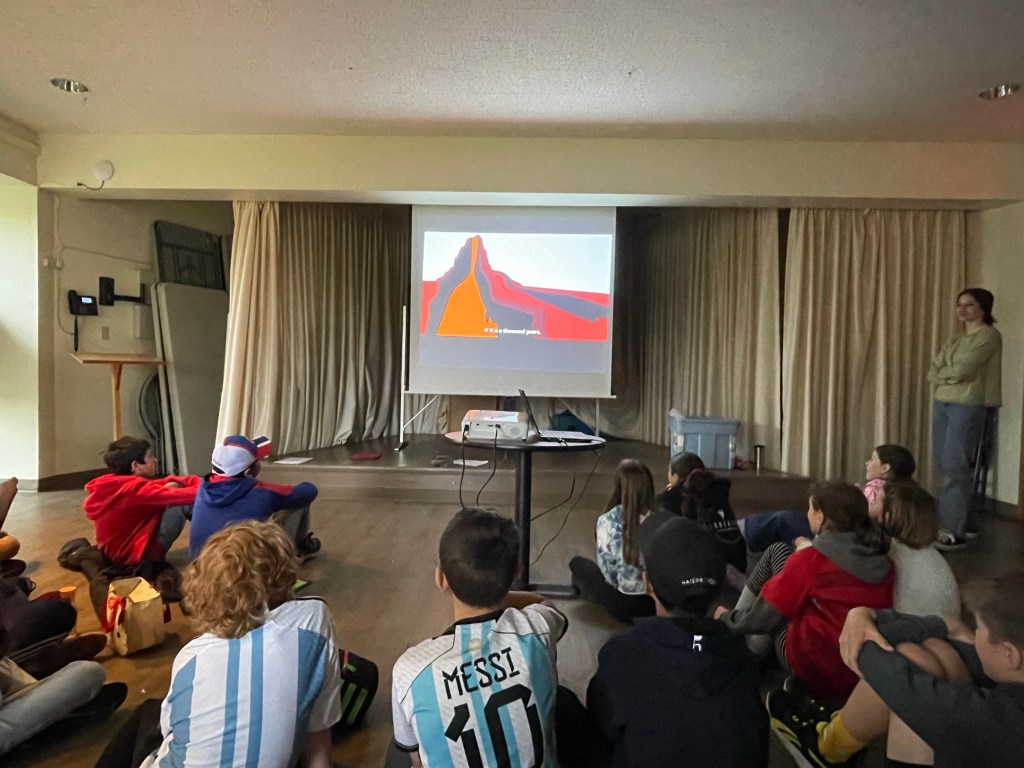
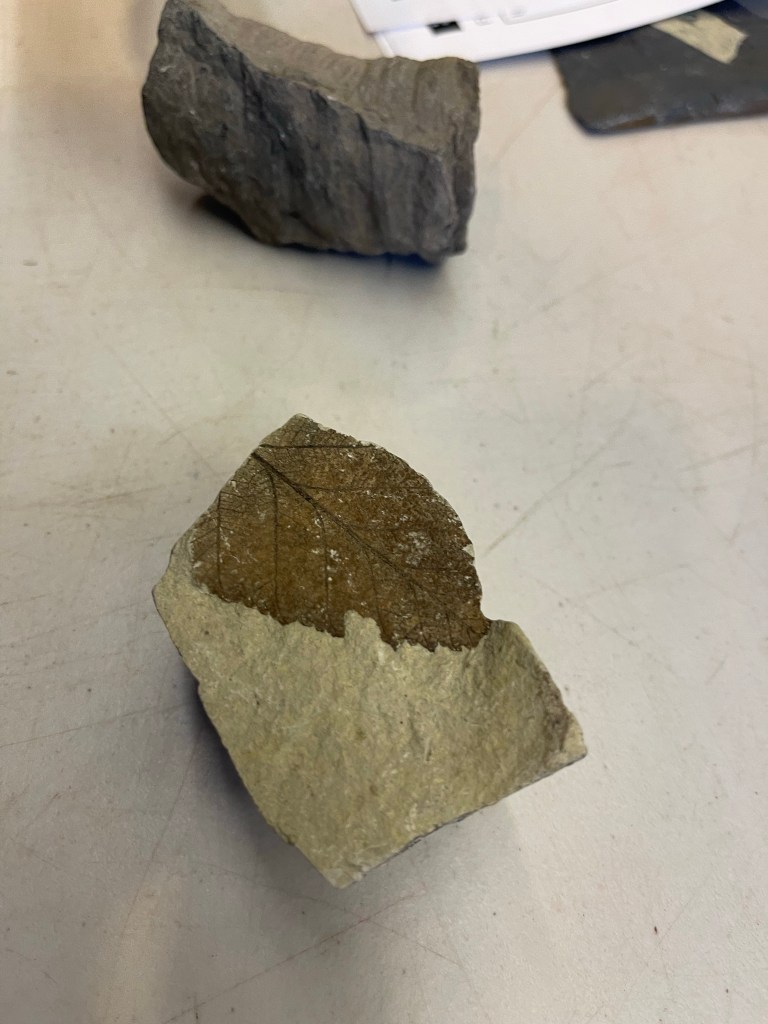
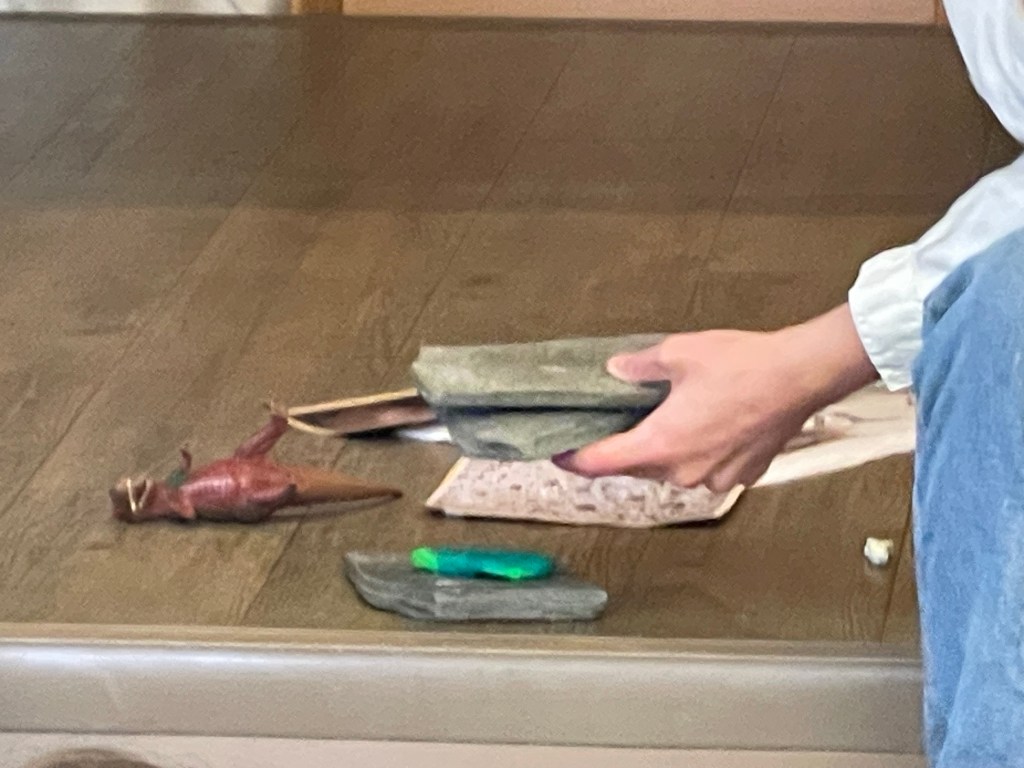
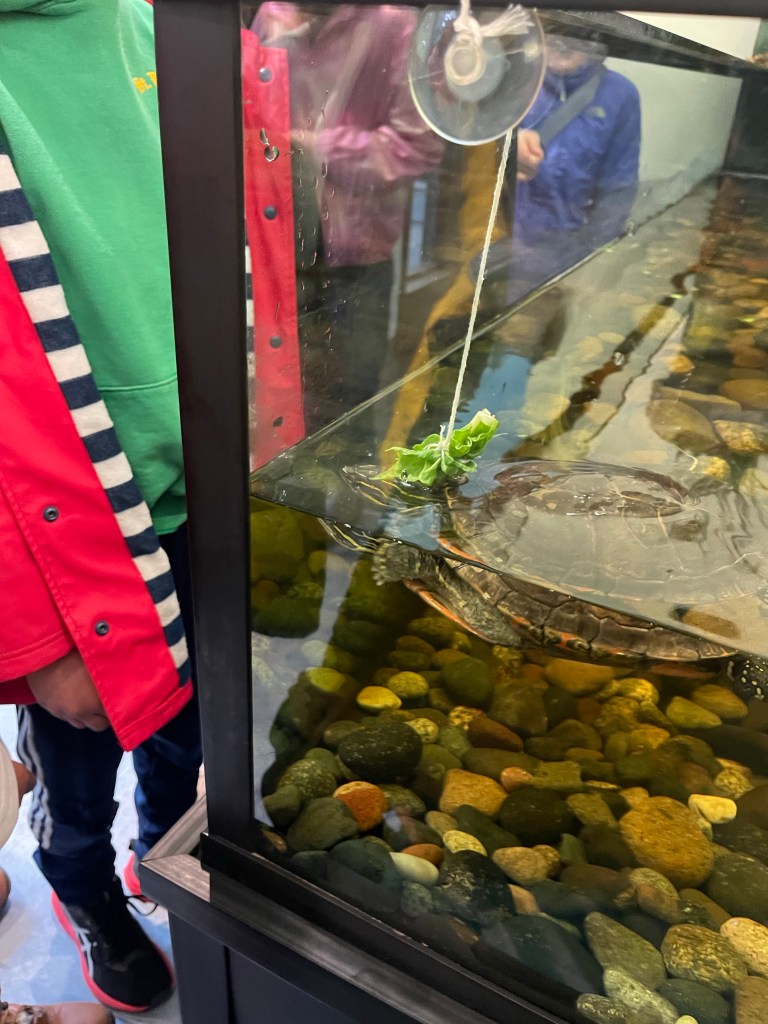
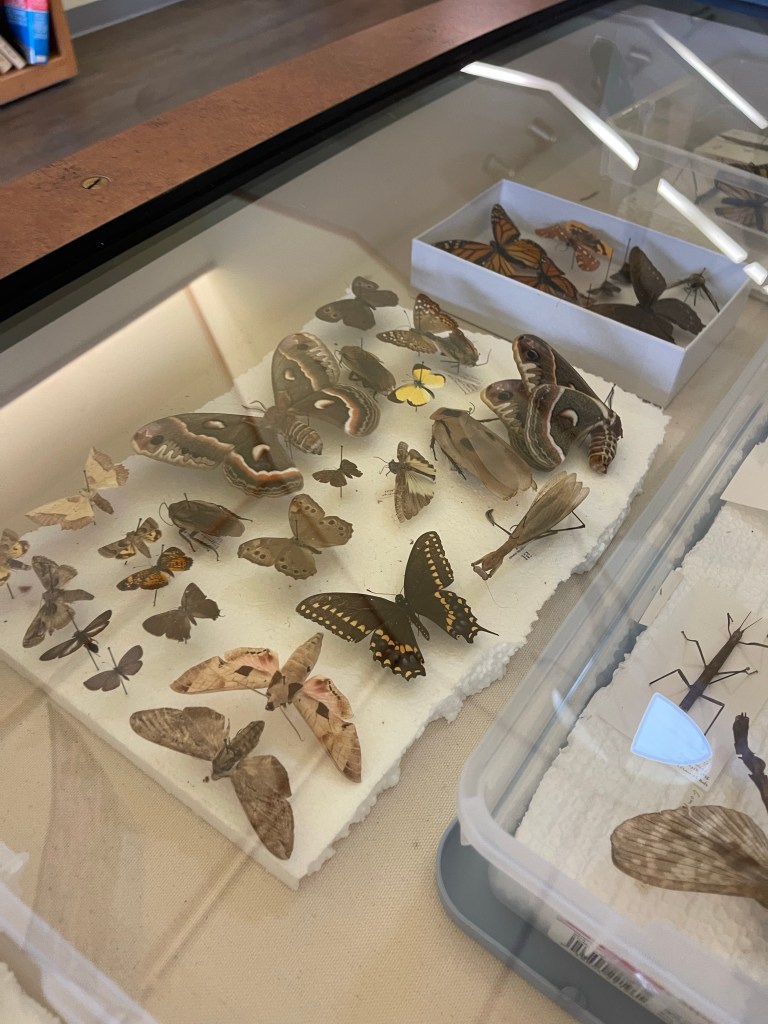
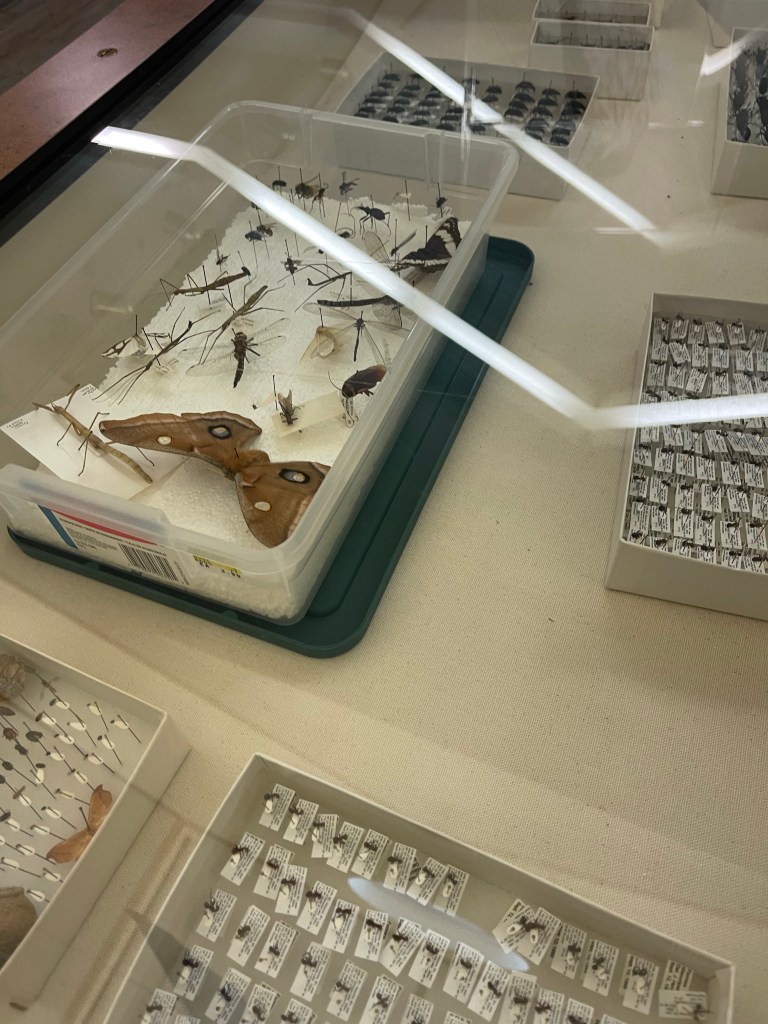
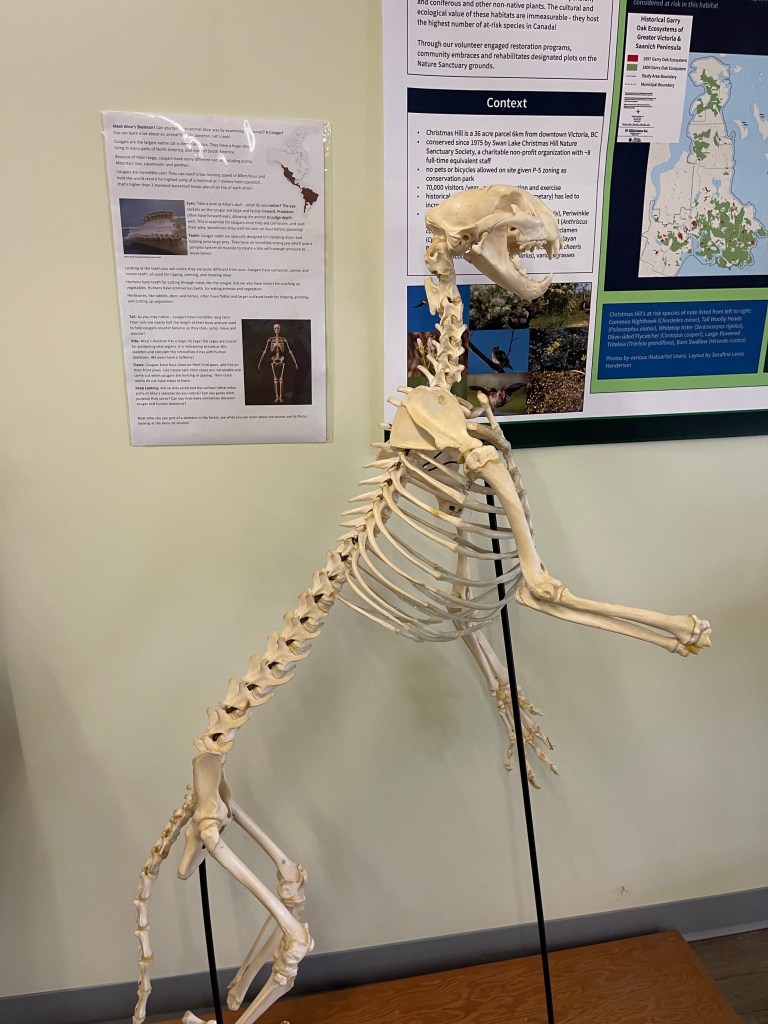
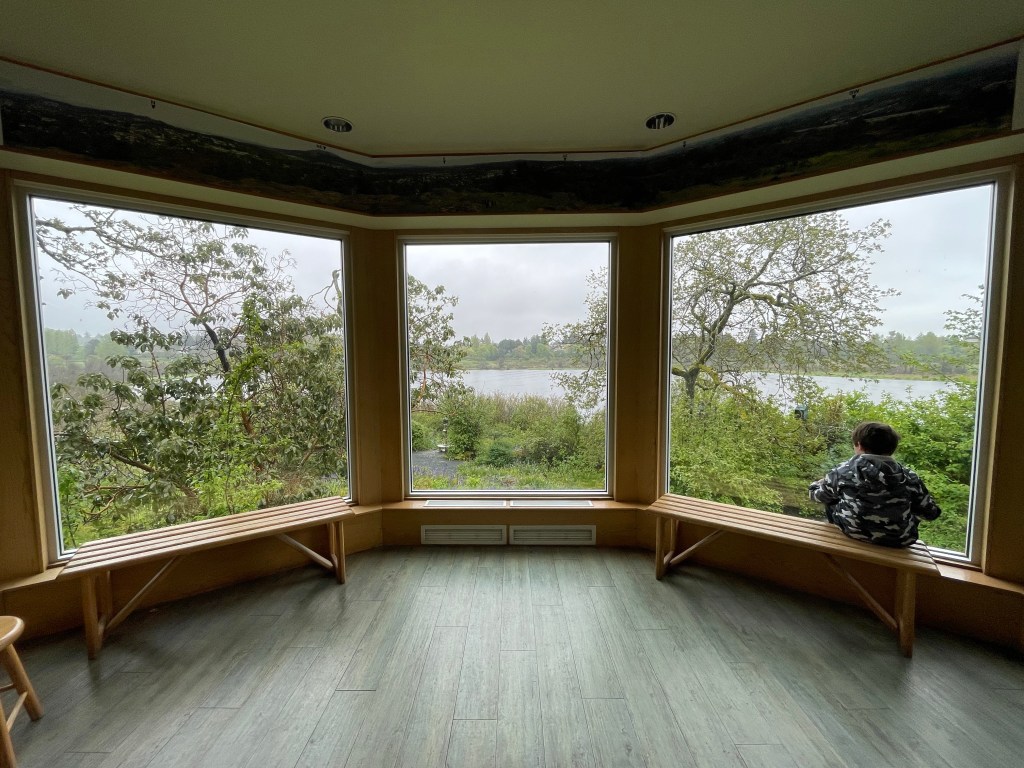
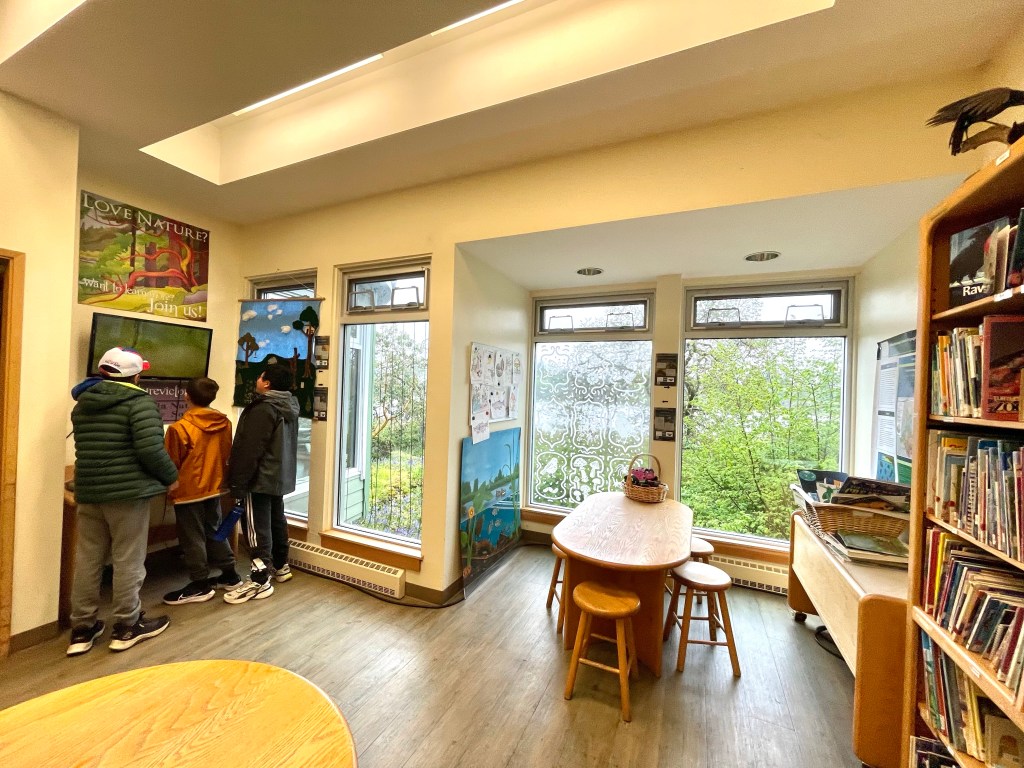
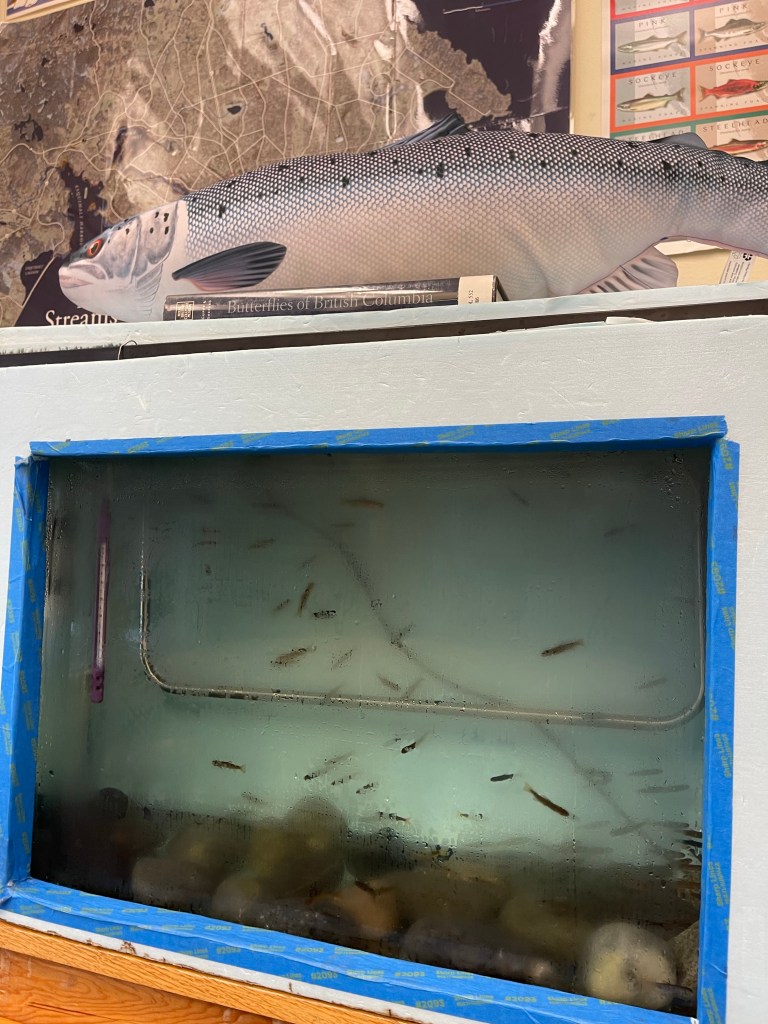
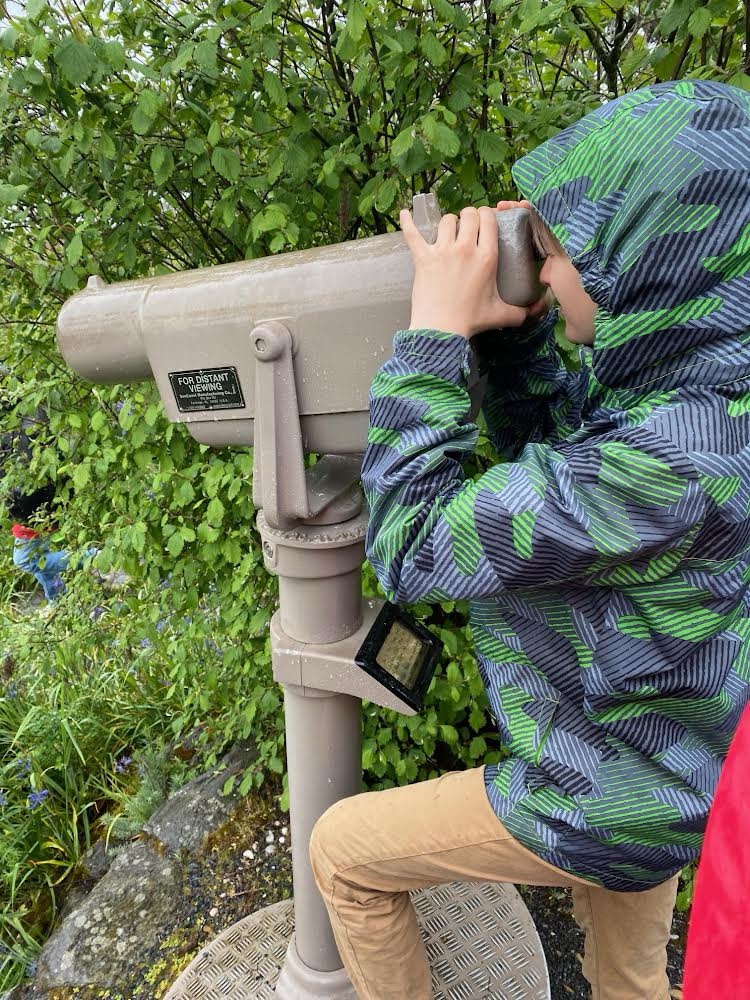
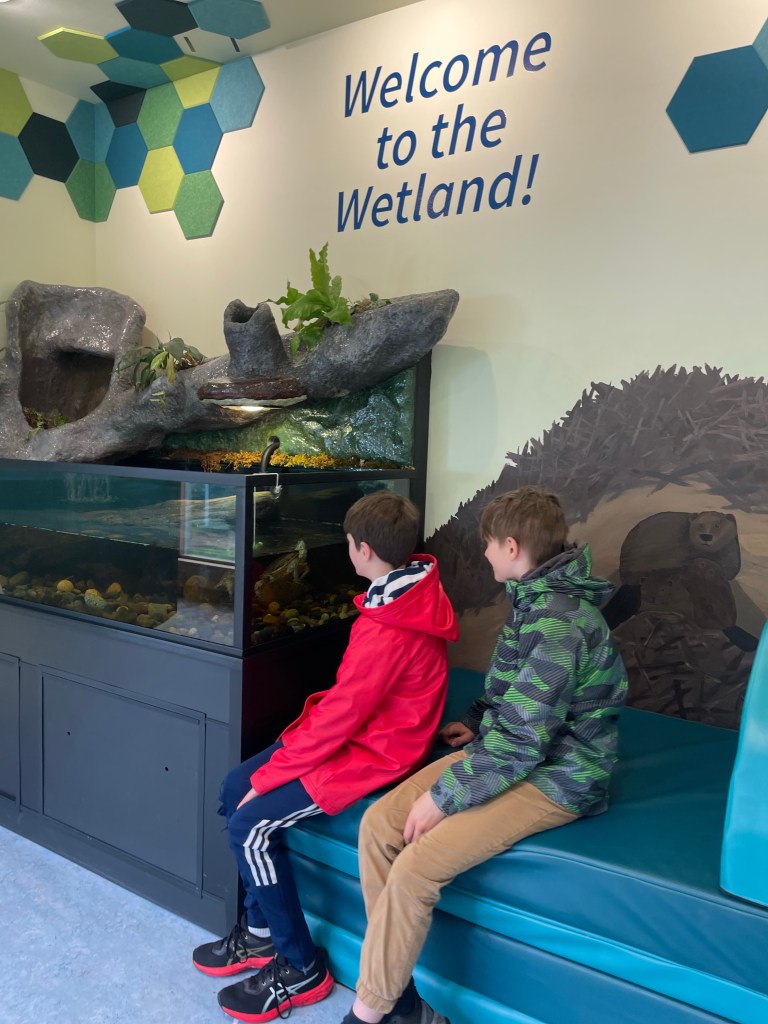
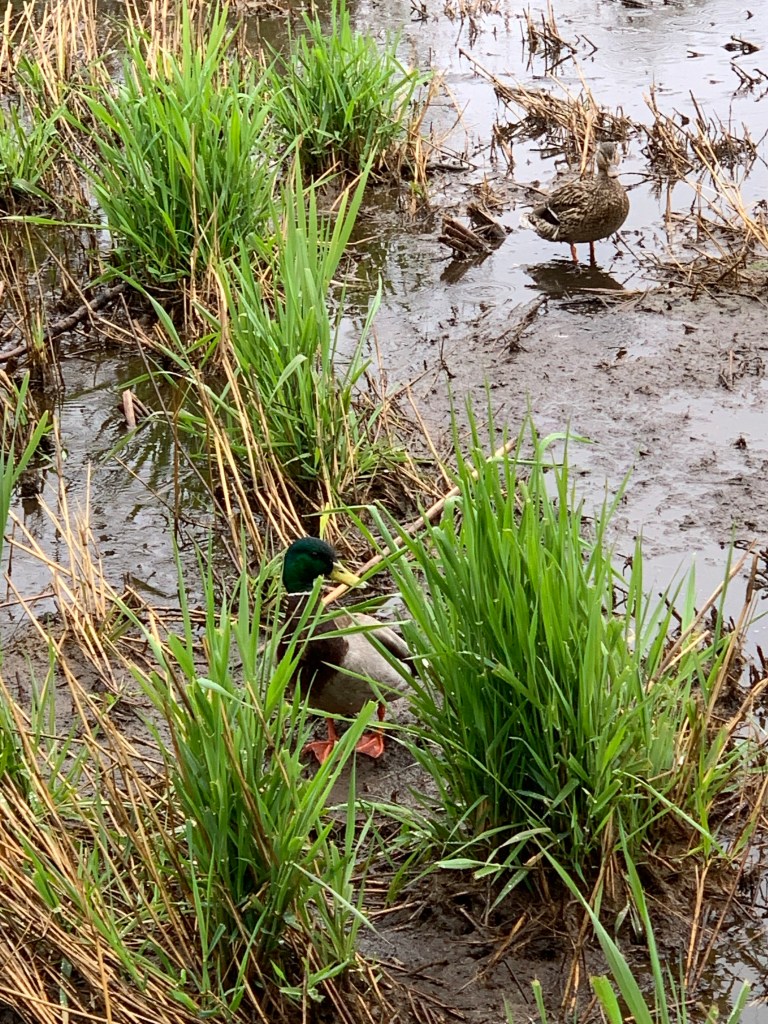
We had a wonderful morning at Swan Lake that started with listening to a barred owl hooting to welcome us! Then we enjoyed a one-hour geology lesson that included acting as “rock detectives” and handling some fascinating fossils. After that, we toured the Nature House galleries and observed the plants and birds while strolling near the lake. We hope you enjoy these photos that will tell the story of our learning today…

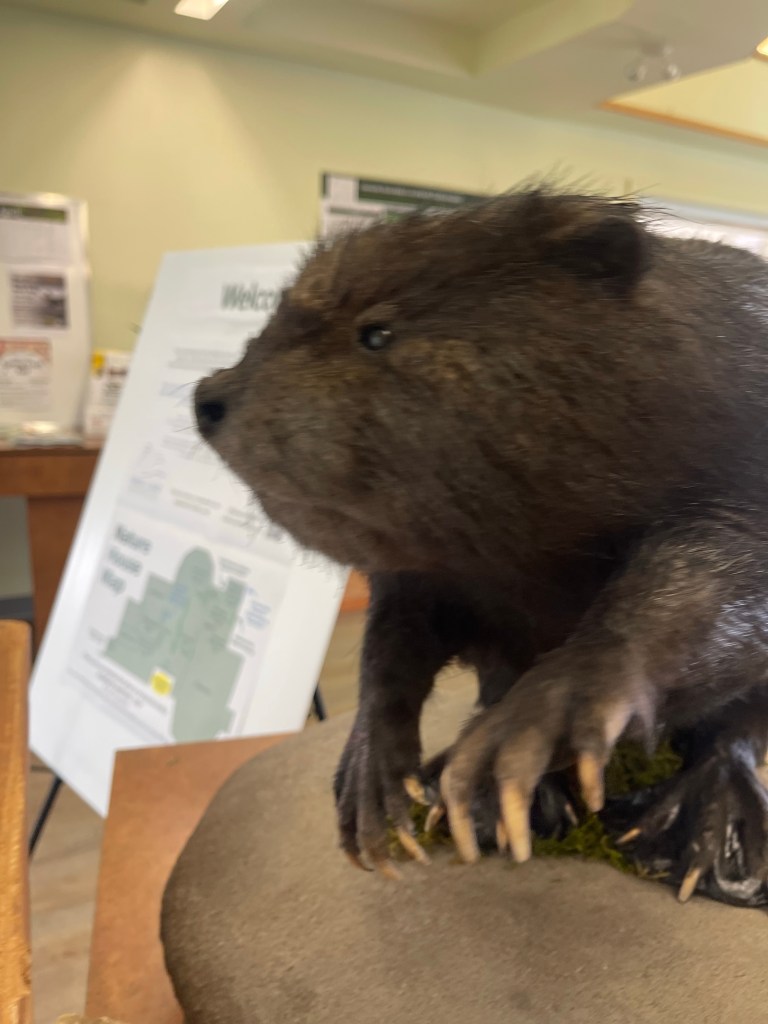
Here is an interesting discovery we enjoyed while walking the trails: evidence of beavers at work!

Evidence of beavers at work!

This is the charming rock cycle song we enjoyed today:

And here are some videos that review the new information we learned today about the different types of fossils…
Fractions, Bibliographies, Pencil Crayon Techniques, Writing Dialogue, the Rock Cycle & more!

Hello, 5B families!

Scroll to the very bottom to see amazing new art!

In Language Arts, students have now brought home their spelling tests, homonym quizzes and their quotation marks quizzes. Please look at your child’s rewritten “dialogue between two characters”. For practice, I asked students to rewrite their dialogues to incorporate the specific feedback I gave them on their quizzes.

Next week, I am offering a rewrite of the “quotation marks and dialogue writing” quiz.

In Social Studies, students have been developing their research skills (note-taking, bibliography writing) during our Time Travellers’ Project work periods. They have been using both print and online resources. I recommend students also visit the public library to find books.

We have been reinforcing students’ skills when using Google Drive. By now, all students should be able to login to their accounts, locate Google Drive, create and rename a new document, and copy and paste content and web addresses using the CONTROL+C and CONTROL+V function. As well, all students should have created a document called “SS Bibliography” and entered at least one of their digital sources.

We are going with a very simple bibliography format. Please see the example below. A minimum of three different sources is expected for this project but 5 is preferred.

*A way you can help your children at home with Social Studies is to have them log into their Google accounts and show you that they know how to make a bibliography entry. As well, please help them to find new sources of valuable information on their time and place of study, either in print or digital form.

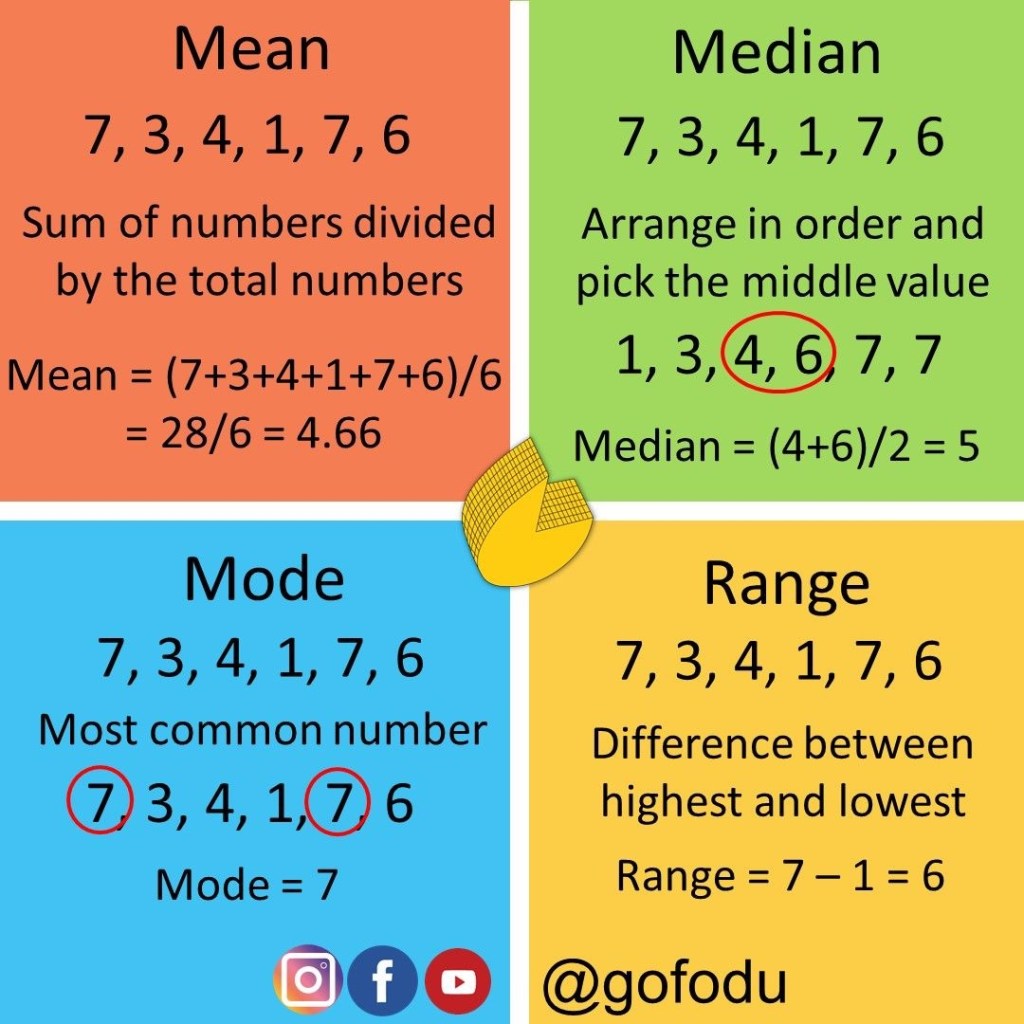
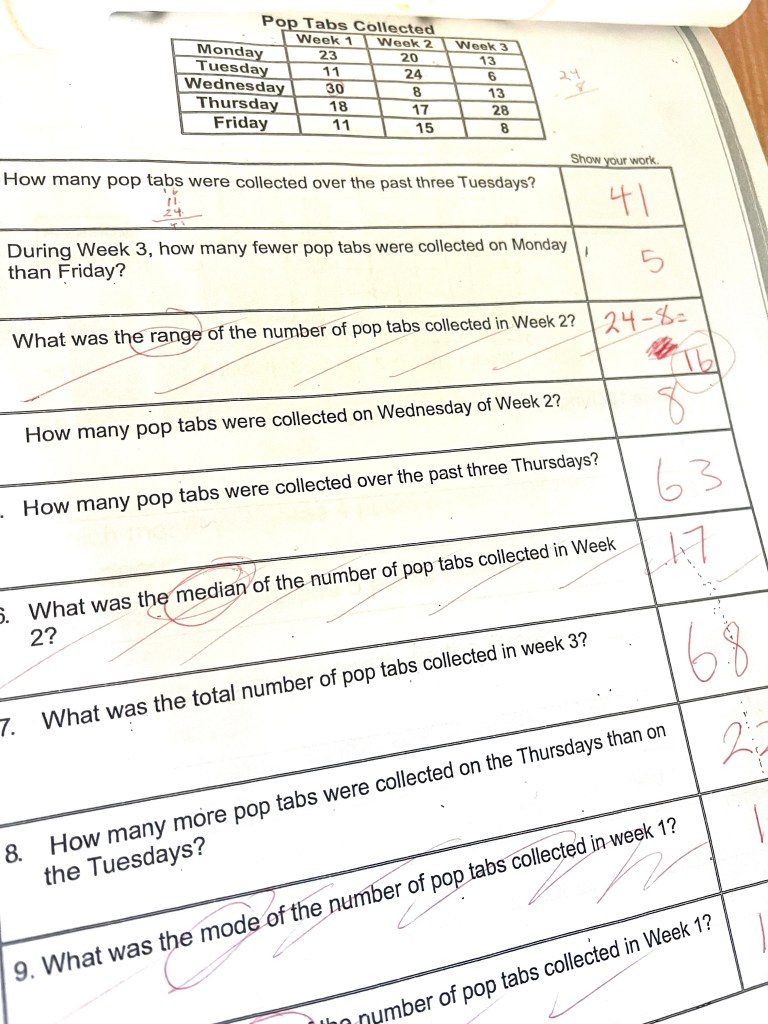
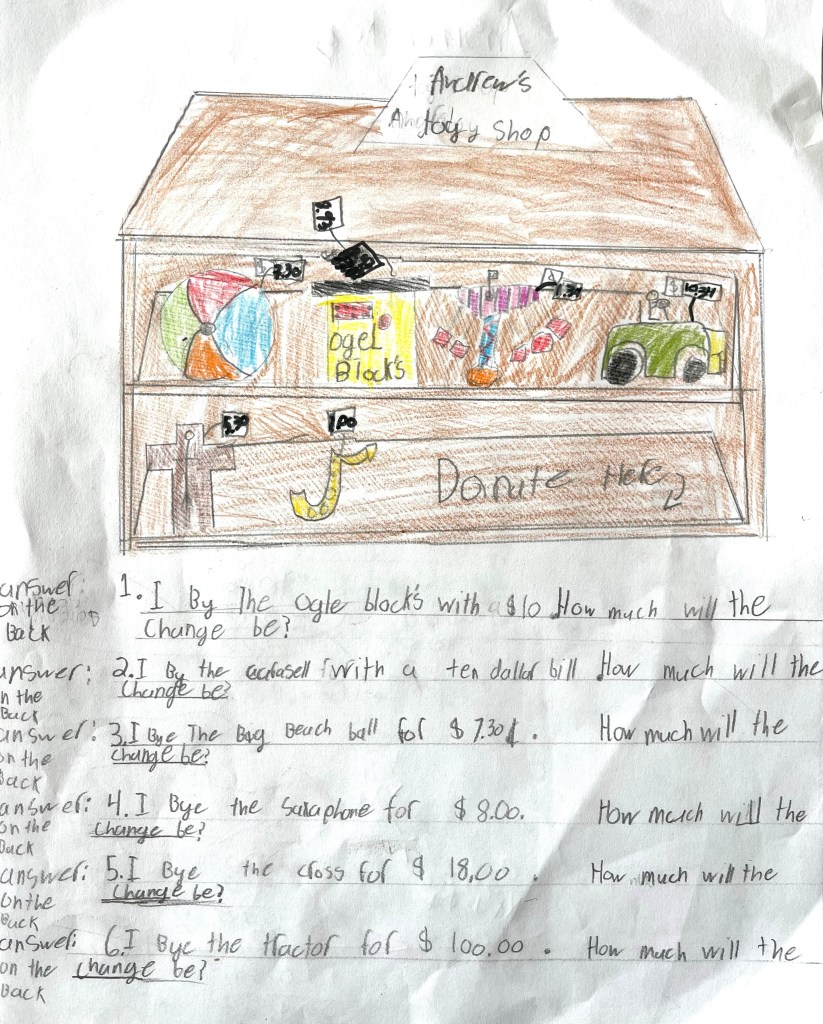
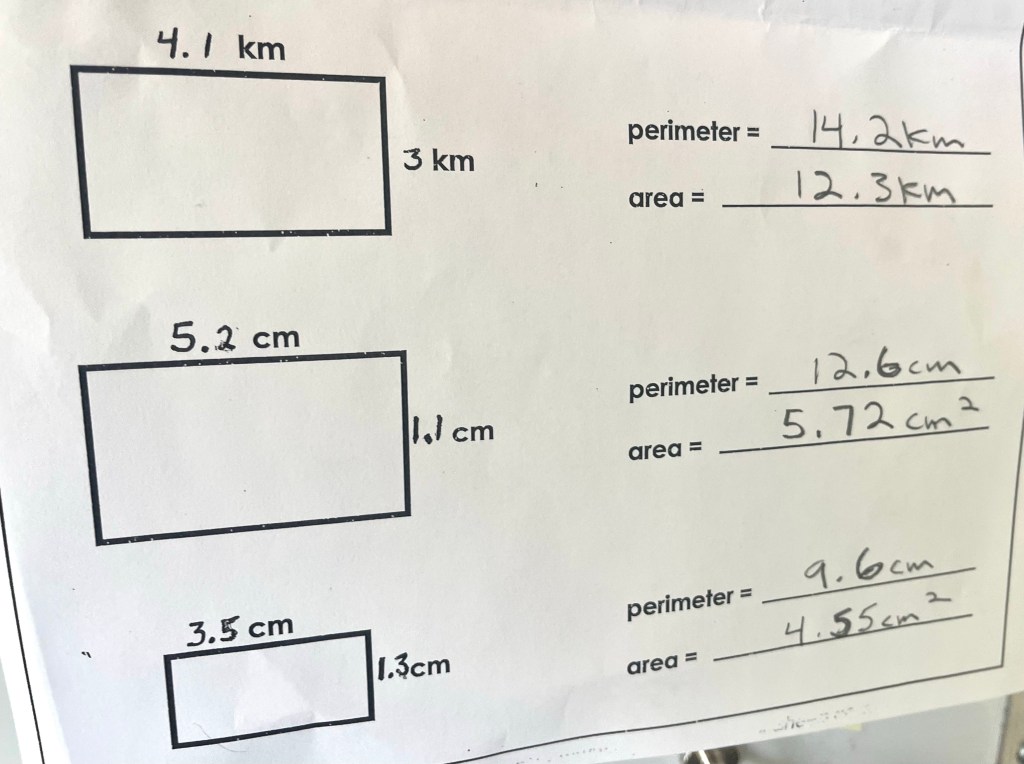
In Math, we are enjoying our fractions unit and the photos below show the kinds of questions we are doing. We did a check-in quiz today, and I asked students to bring them home to show you.

In Science, we have started learning about geology and the rock cycle.

In Health Education, we started our “Fully Alive” program. If you would like to see the exact textbook we are using, please send me an email, and I will arrange to loan a copy of the textbook to you. Or, you can come in and look at it in our class. Please let me know if you would like to stop by.

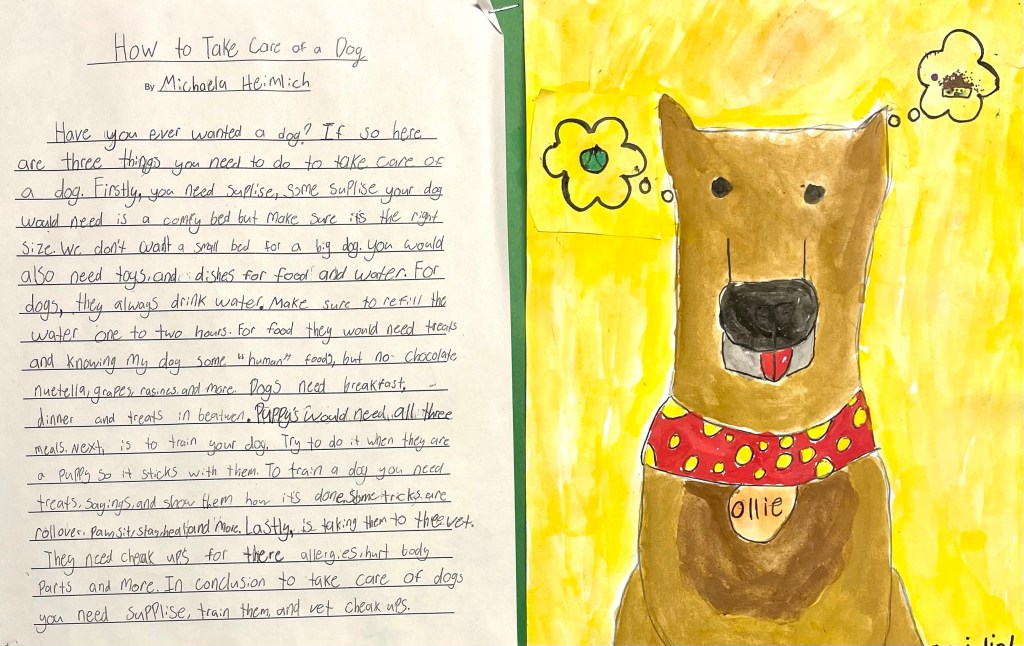
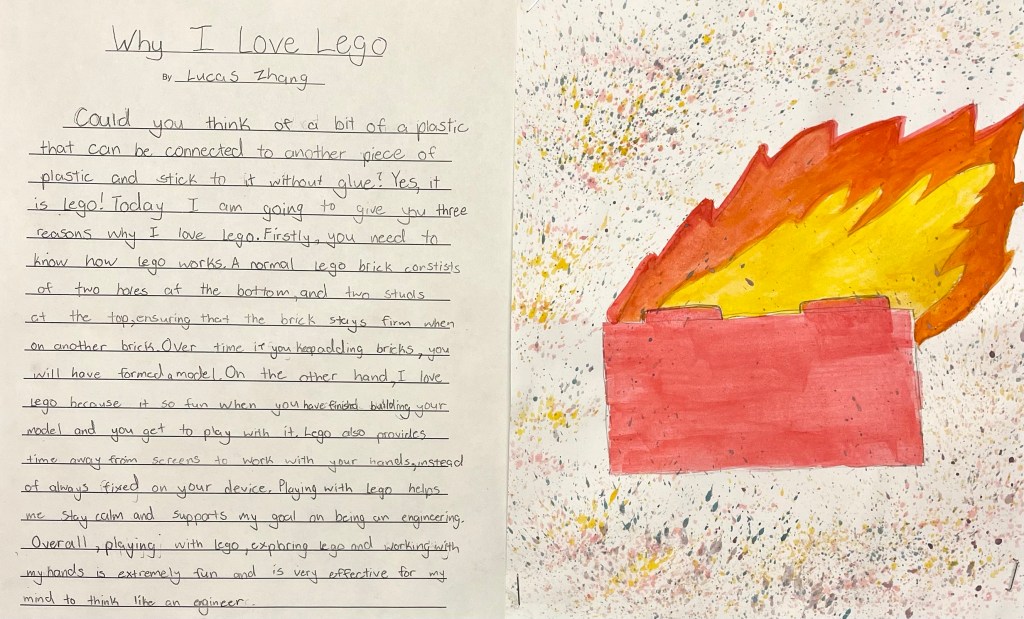
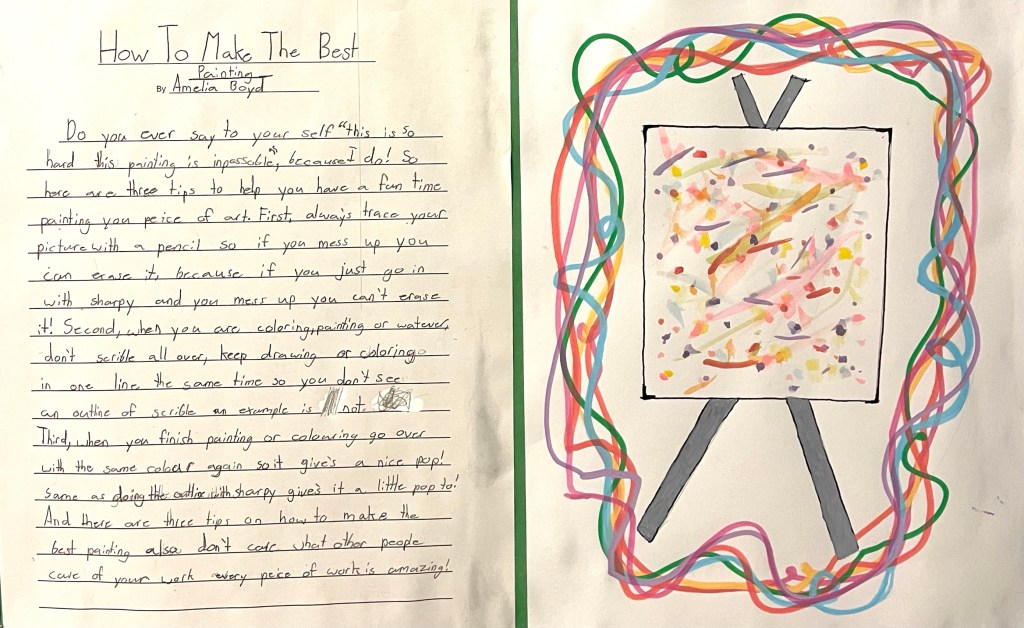
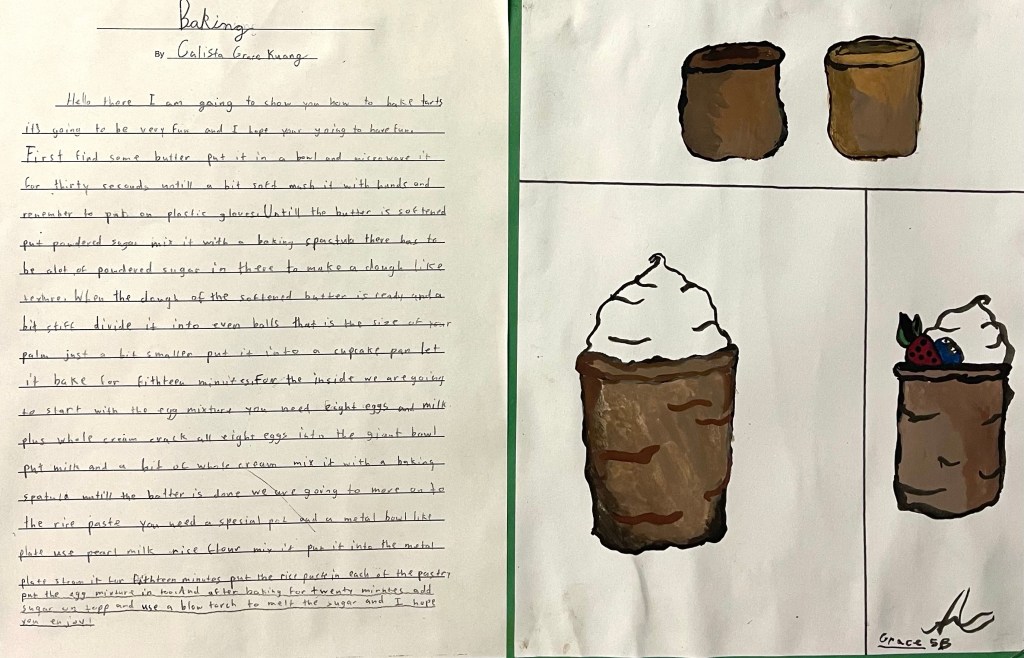
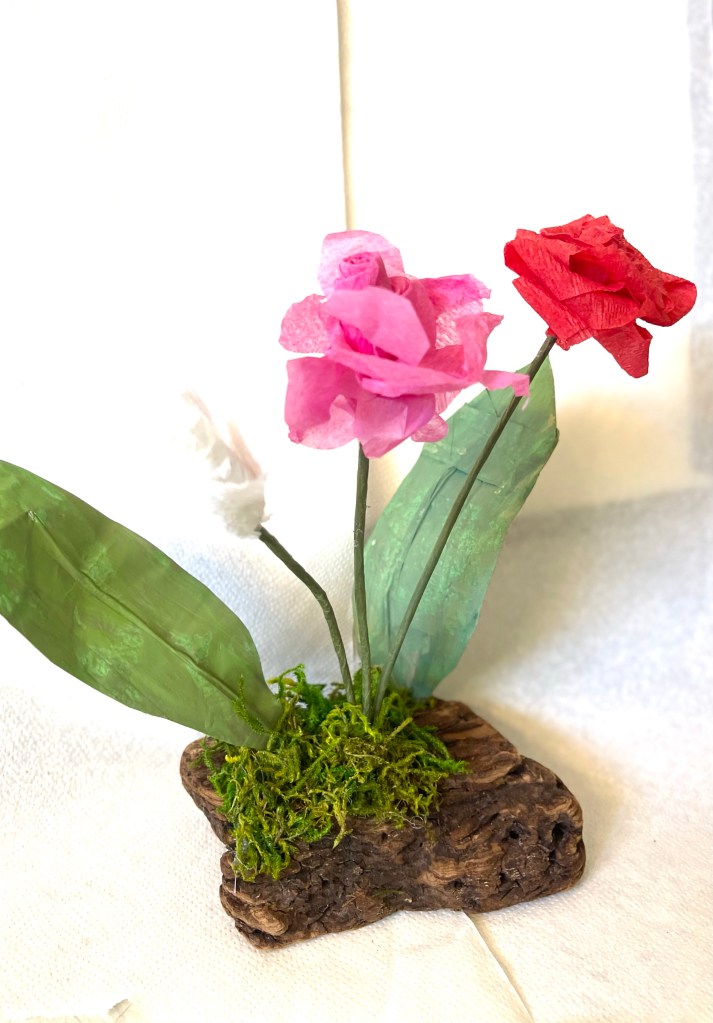
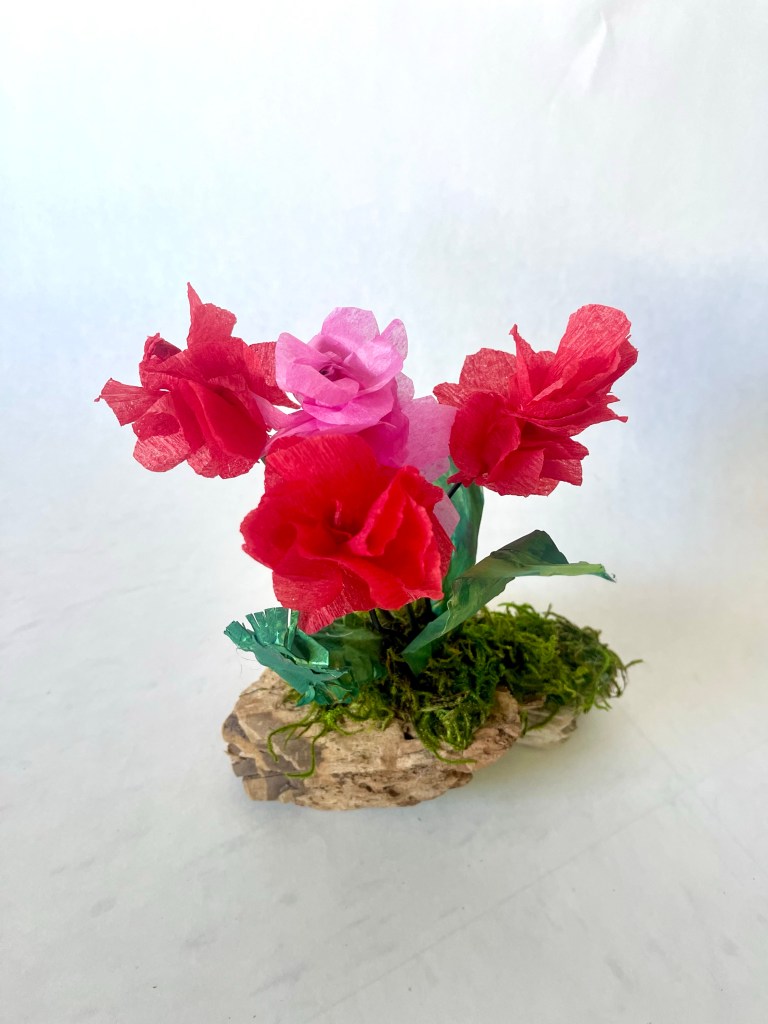
In Art, we just finished up a project that developed students’ techniques with pencil crayons. We focussed on blending, shading, and varying the colour value when making 8-square artworks celebrating the diverse beauty of various animals, birds, insects, reptiles and more.

Beautiful spring jewelry made on the St. Patrick’s field! Well done!

Matter, Decimal/Fraction Models, Government, P.I.P. & Feeding the 5000

Hello, 5B families!

It’s wonderful to be back to school and to see all these big kids who all seem to have grown so much in the last few weeks of Spring Break!

Here is what we have been exploring and a preview of what’s to come…

In Math, we have introduced the relationship between decimals and fractions using models.

As well, for optional enrichment, I introduced (for students who chose to join in) the basics of algebra. We talked about how variables are symbols that represent numbers and modelled how to solve one step equations.

Another favourite enrichment challenge students have enjoyed in class is our deck of “geometric riddles”. Here are some sample questions—how amazing that students have been able to work together to find solutions to some of these!

In Science, we have been exploring states of matter.

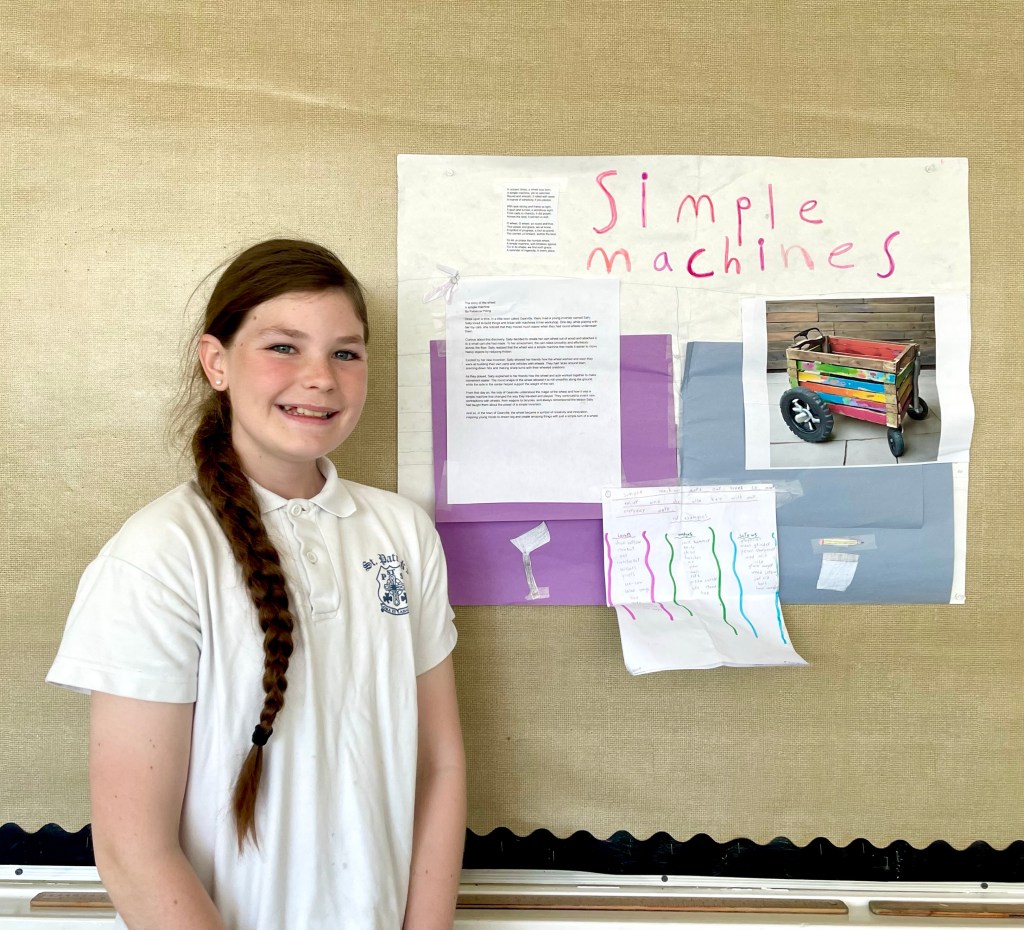
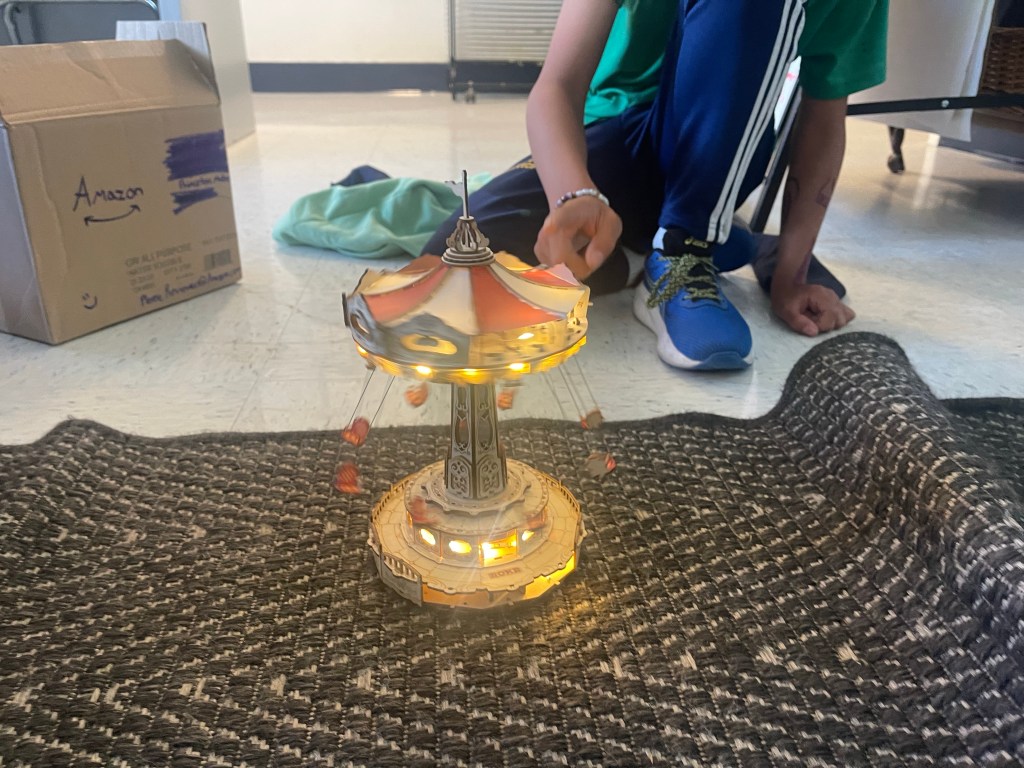
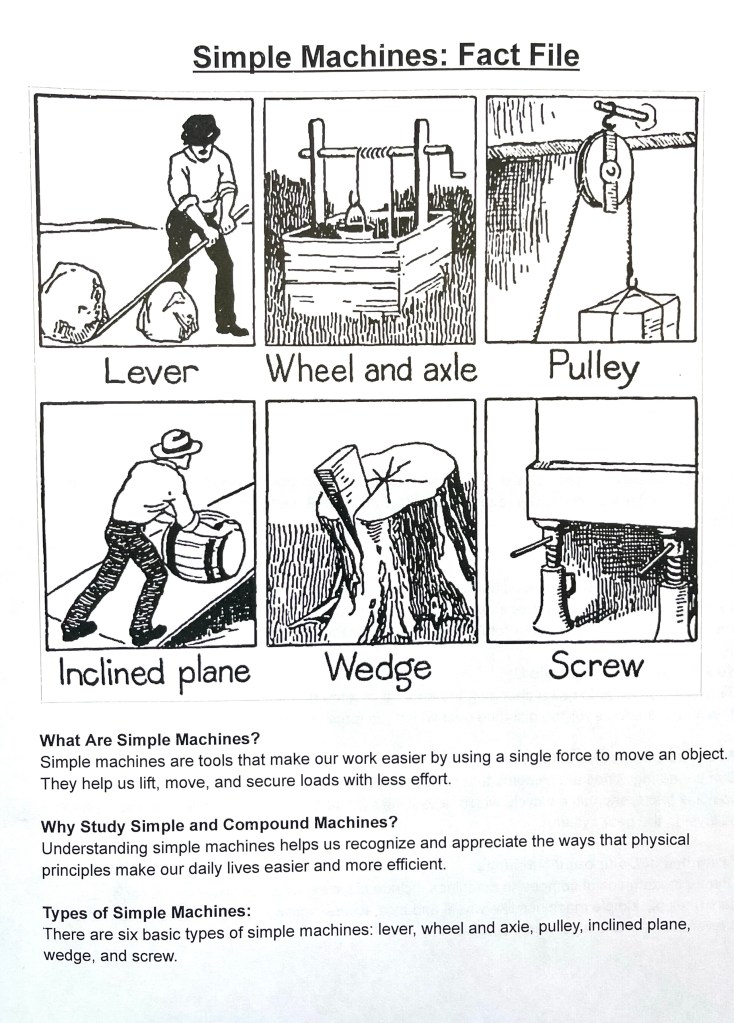
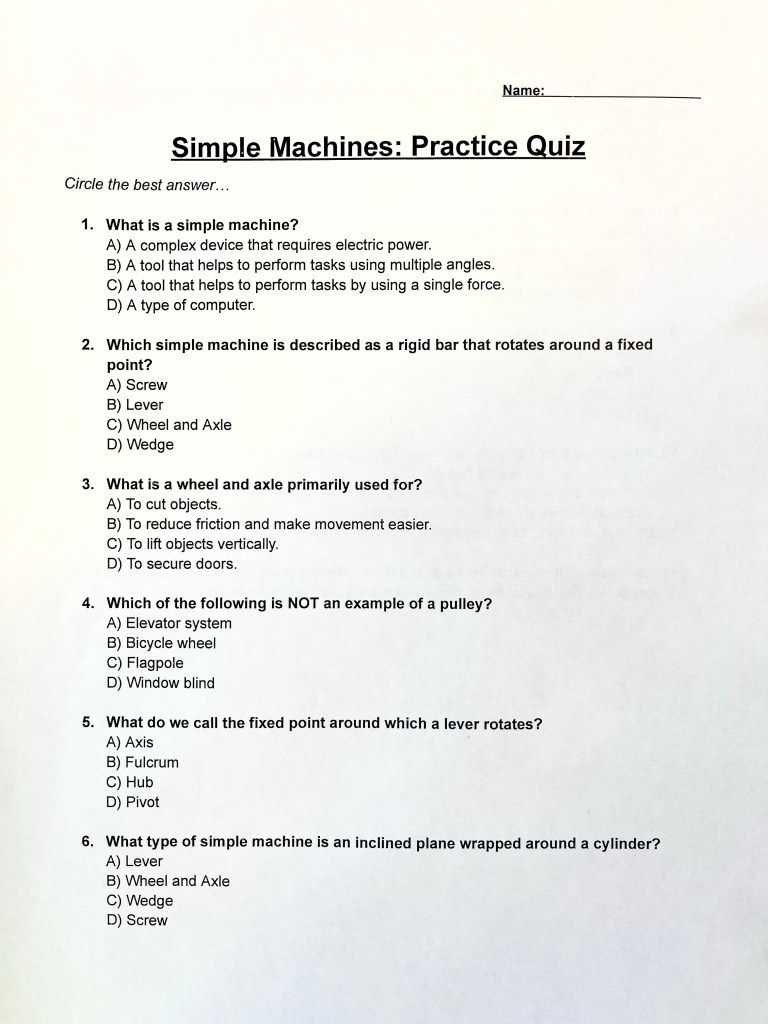
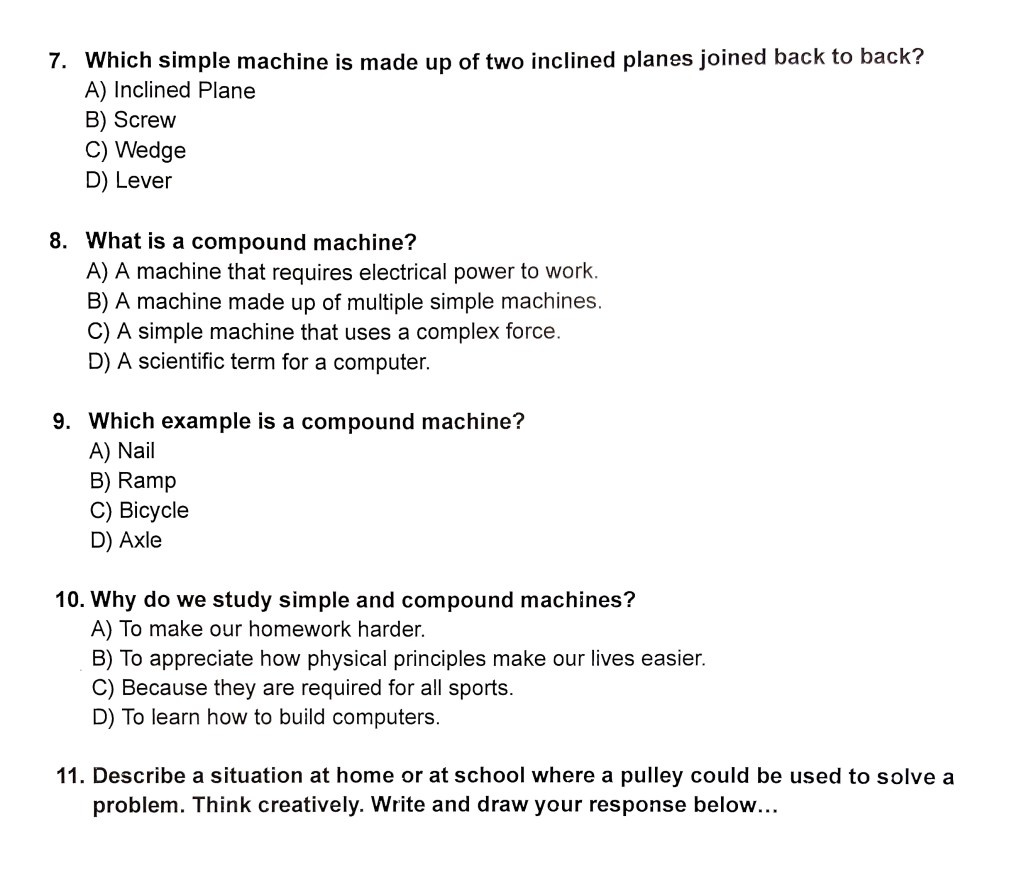
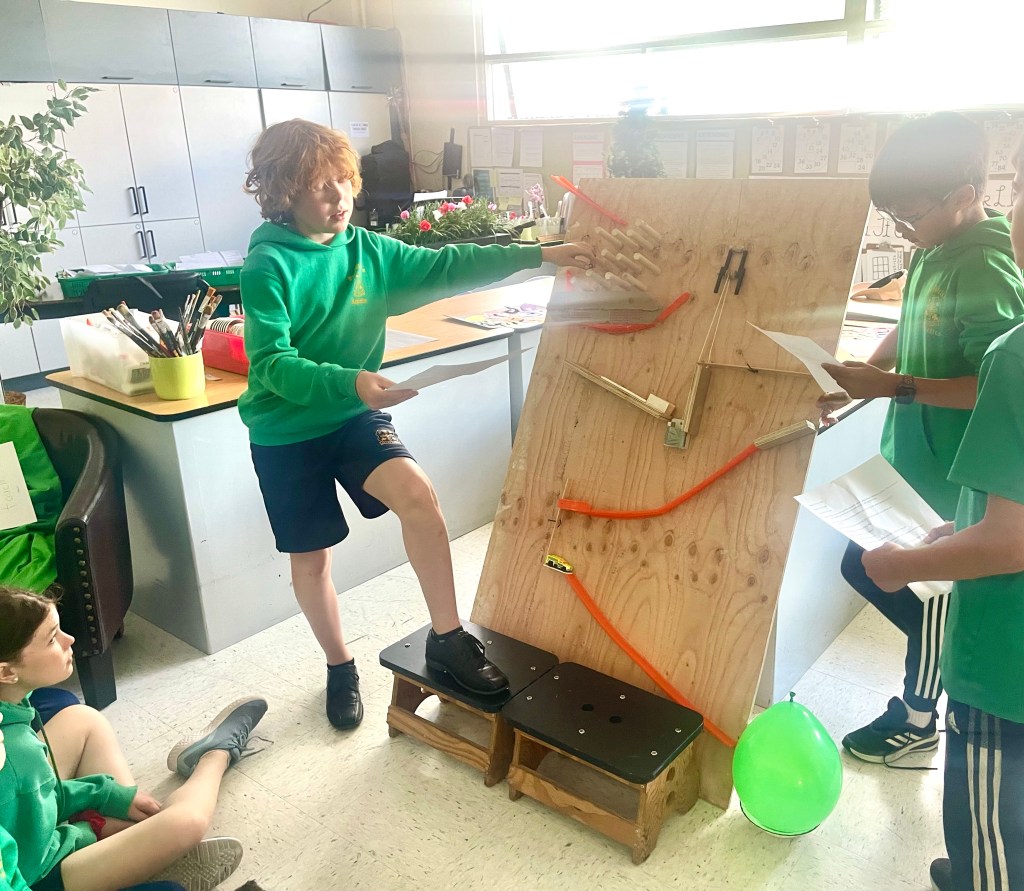
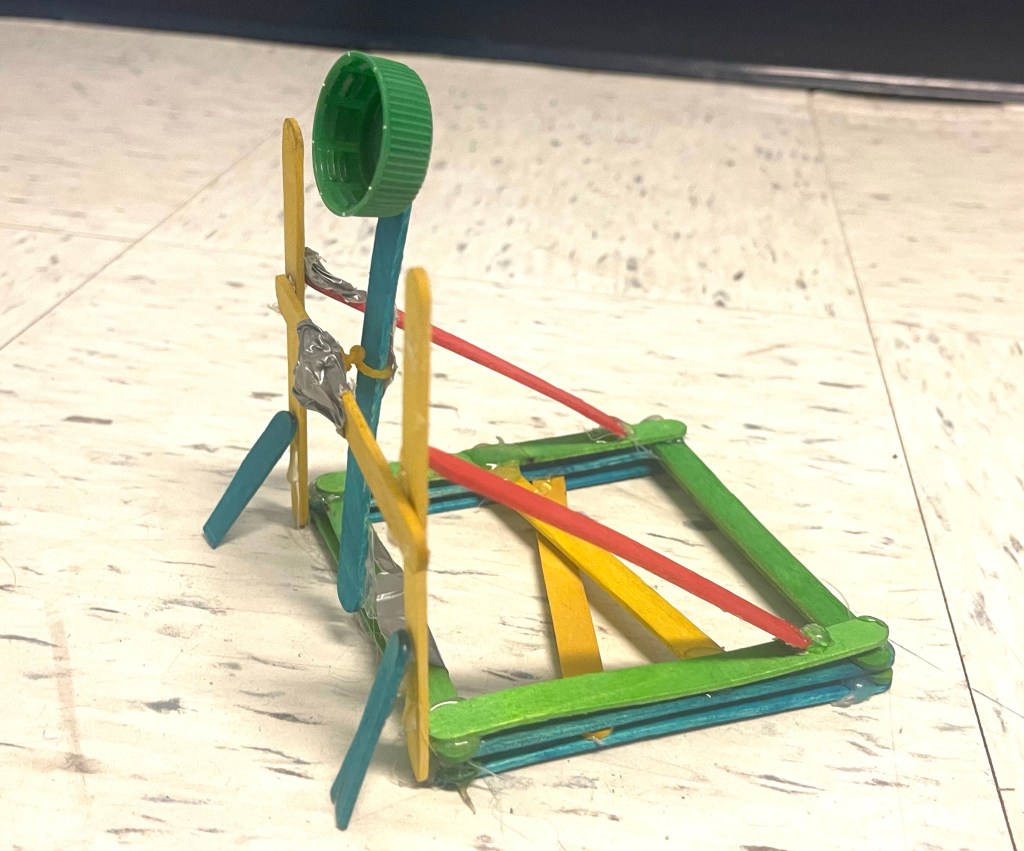
Coming up on April 25th, we will go to Swan Lake Nature Sanctuary to see the wildflowers and birds and for a workshop on how to identify different types of rocks; this will support our Science units on Geology and Natural Resources. Following that, we will do a short unit combined with ADST learning standards on the topic of simple machines.

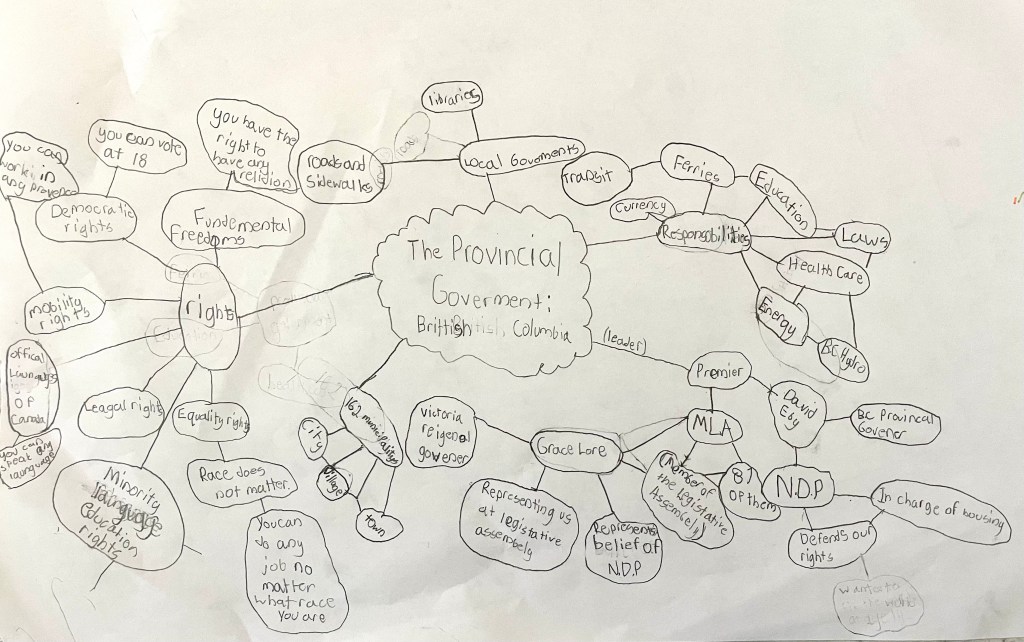
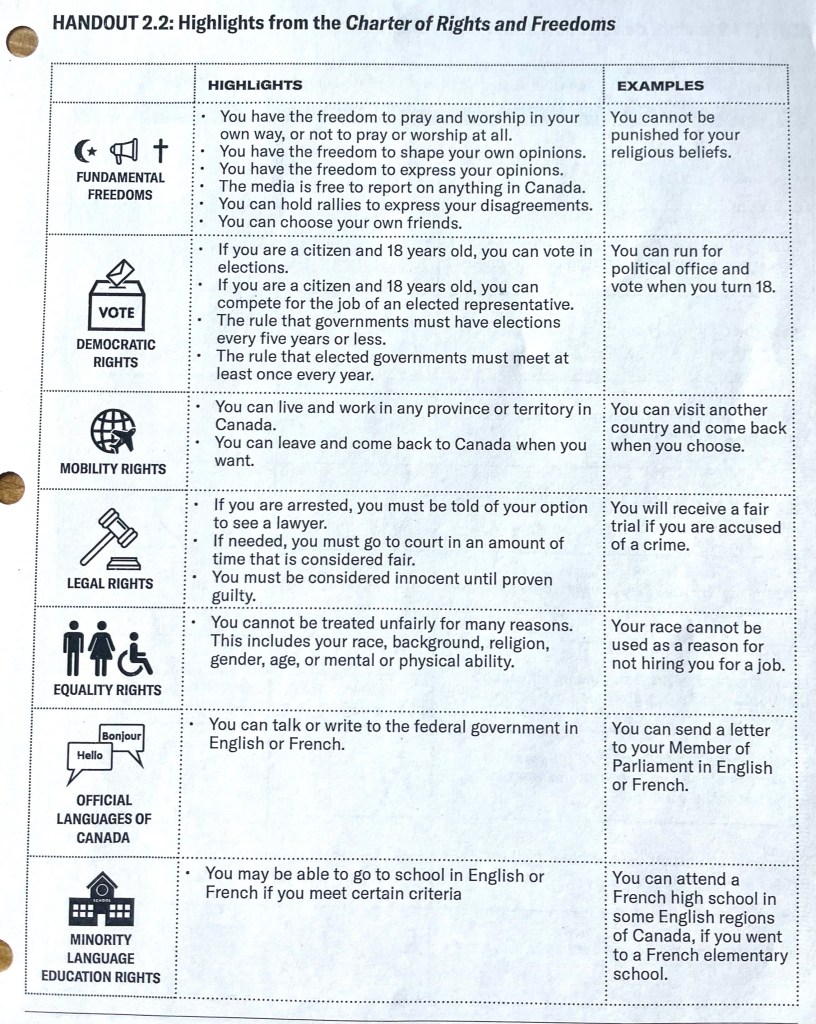
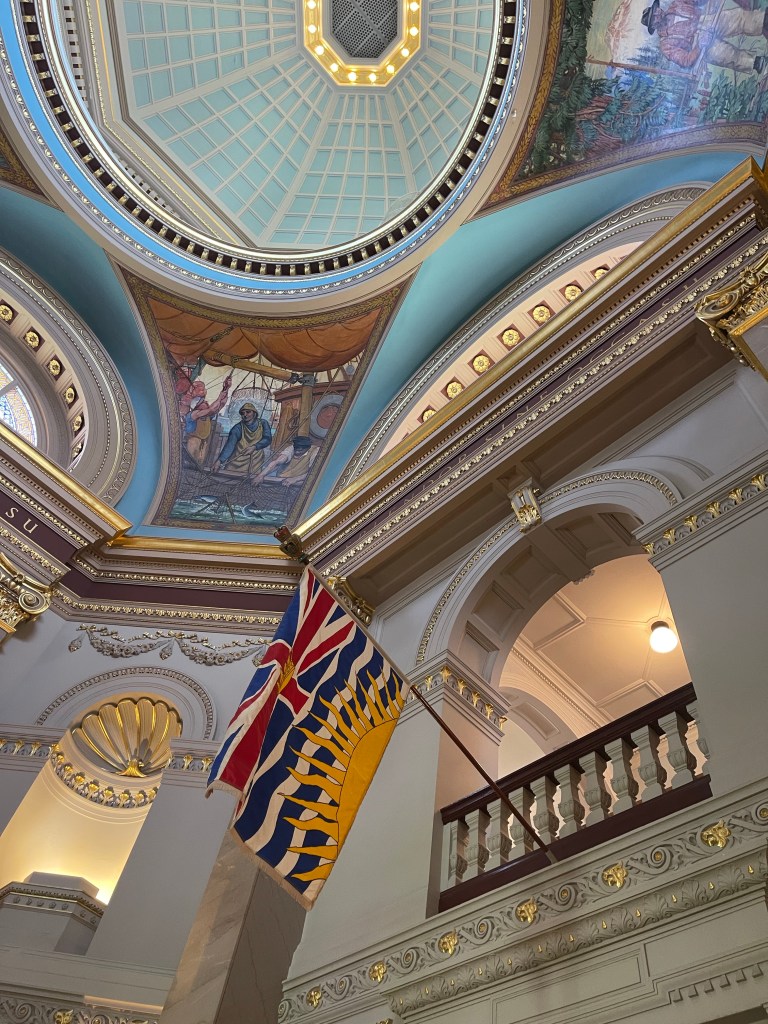
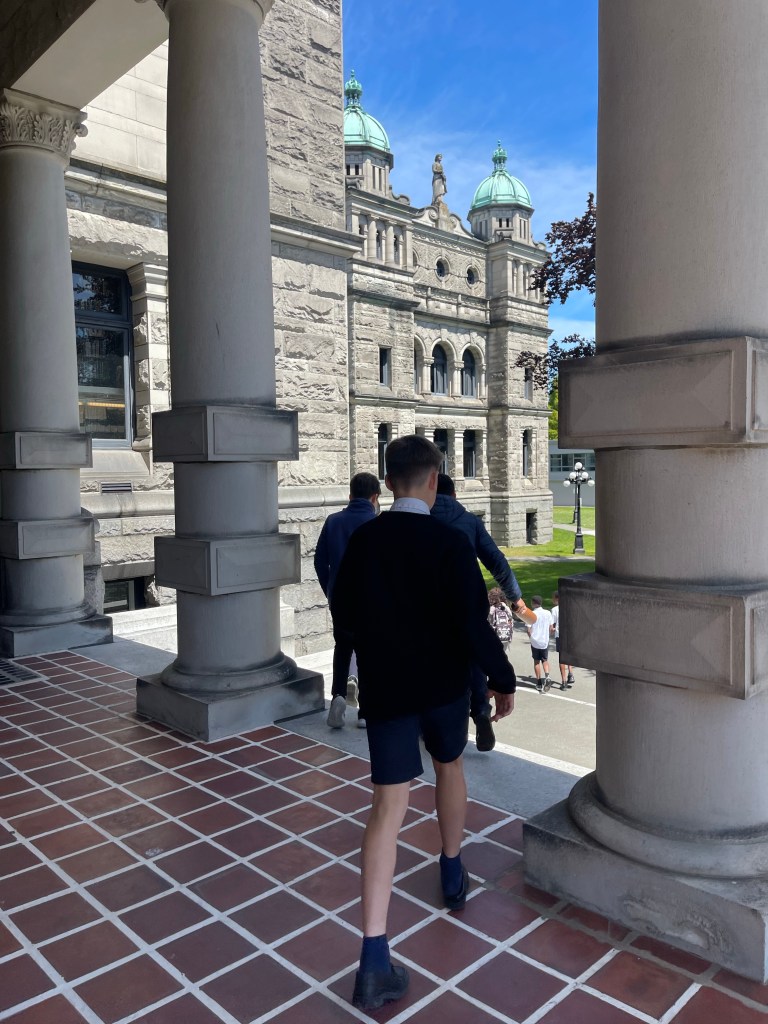
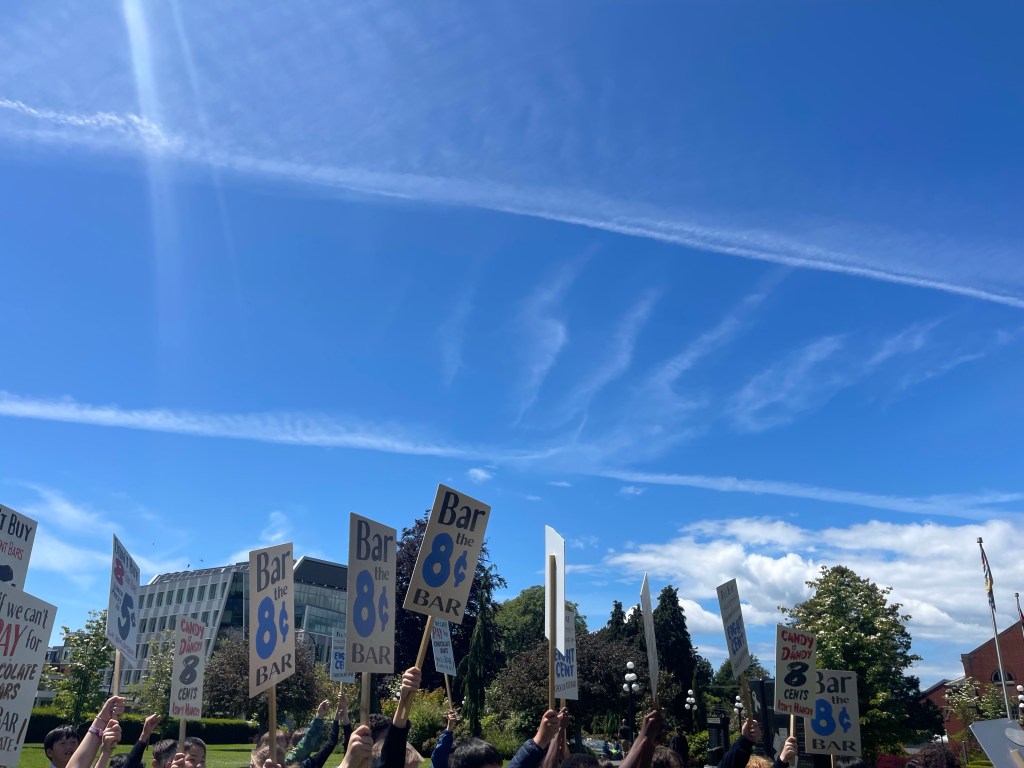
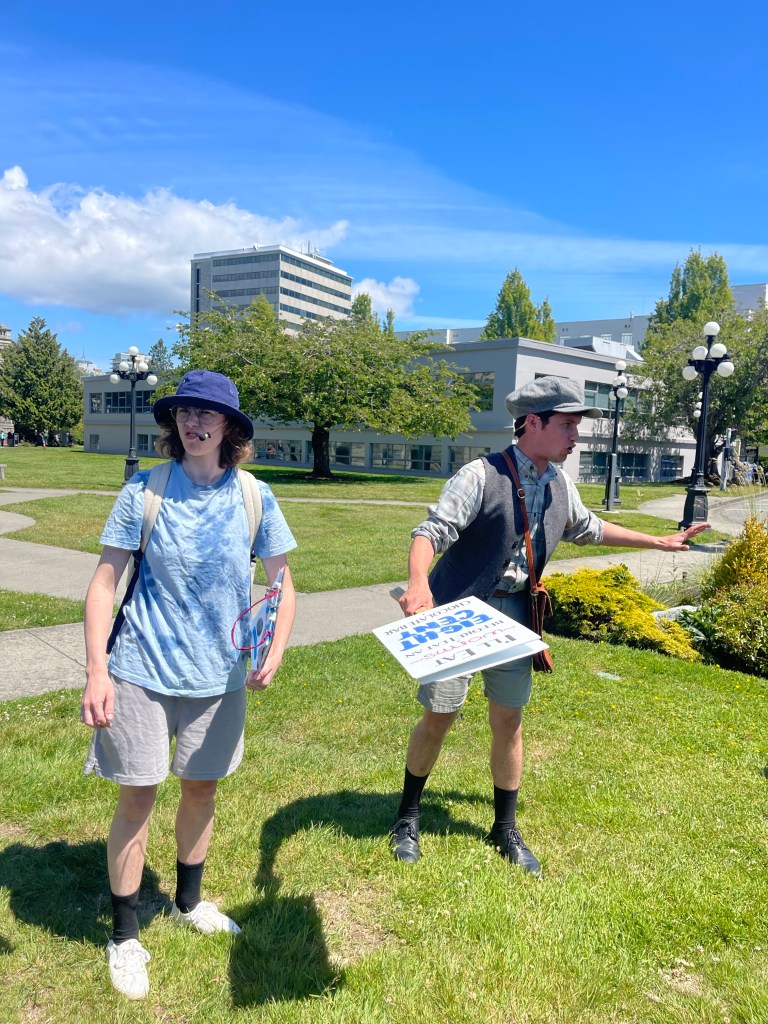
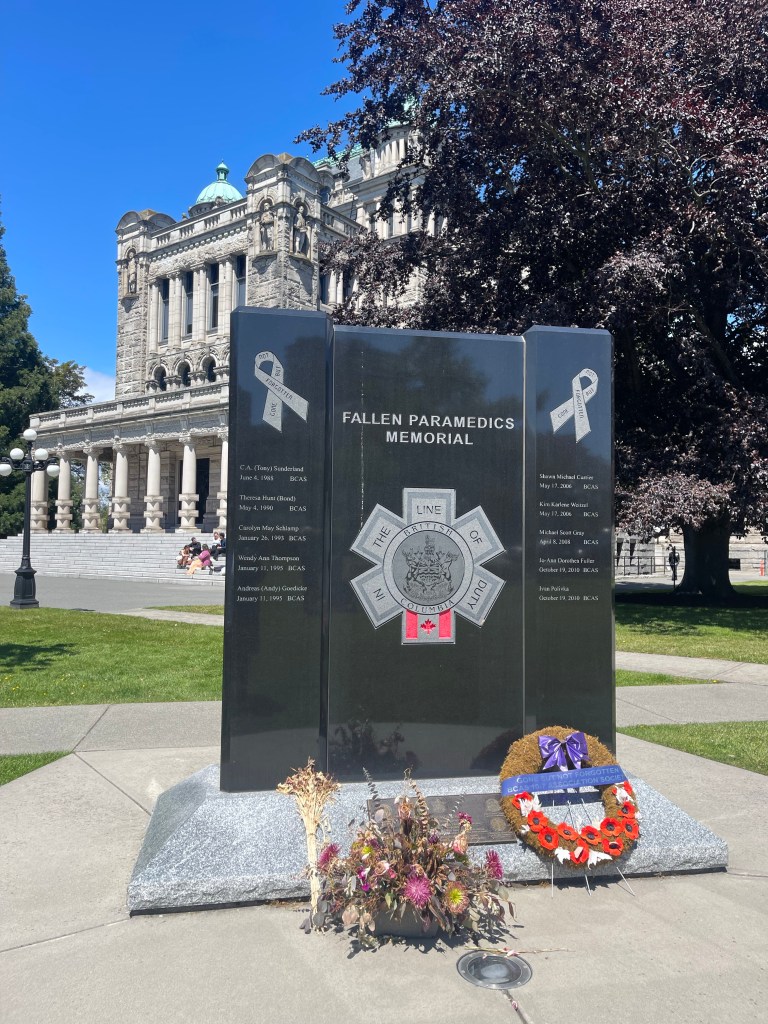
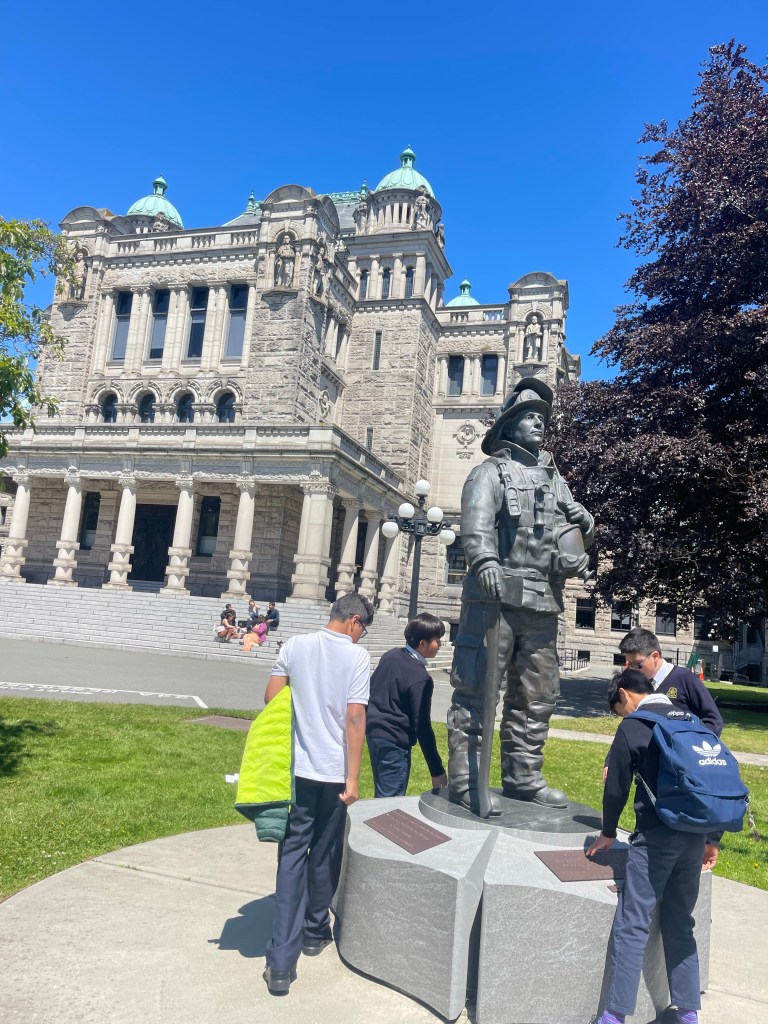
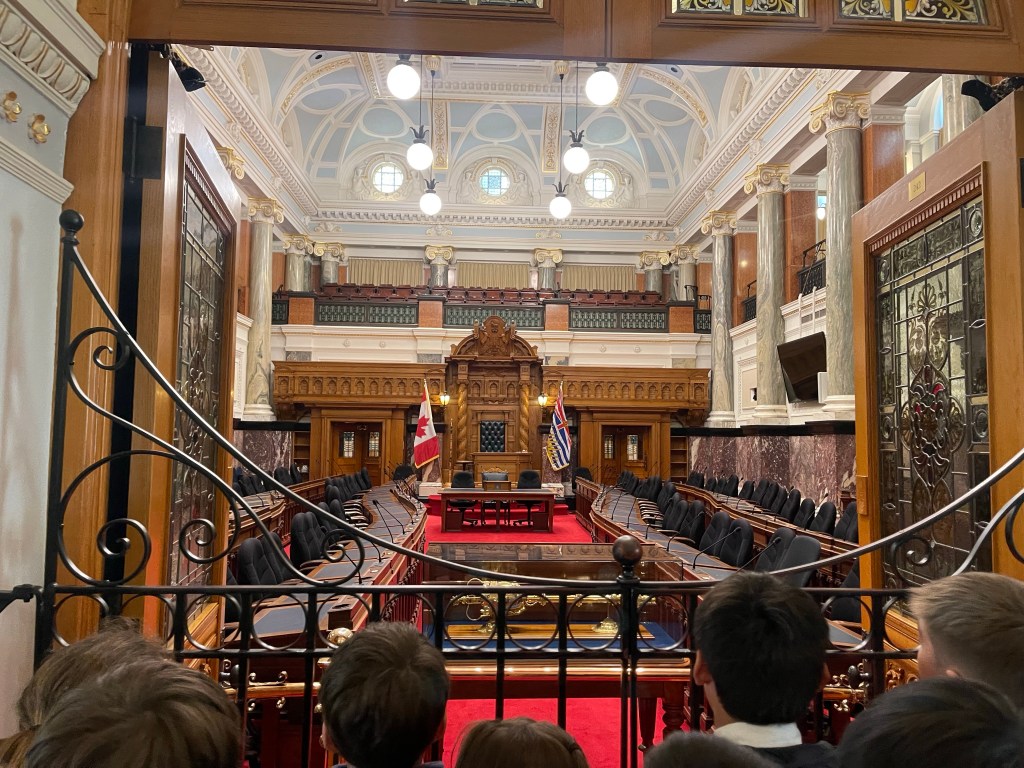
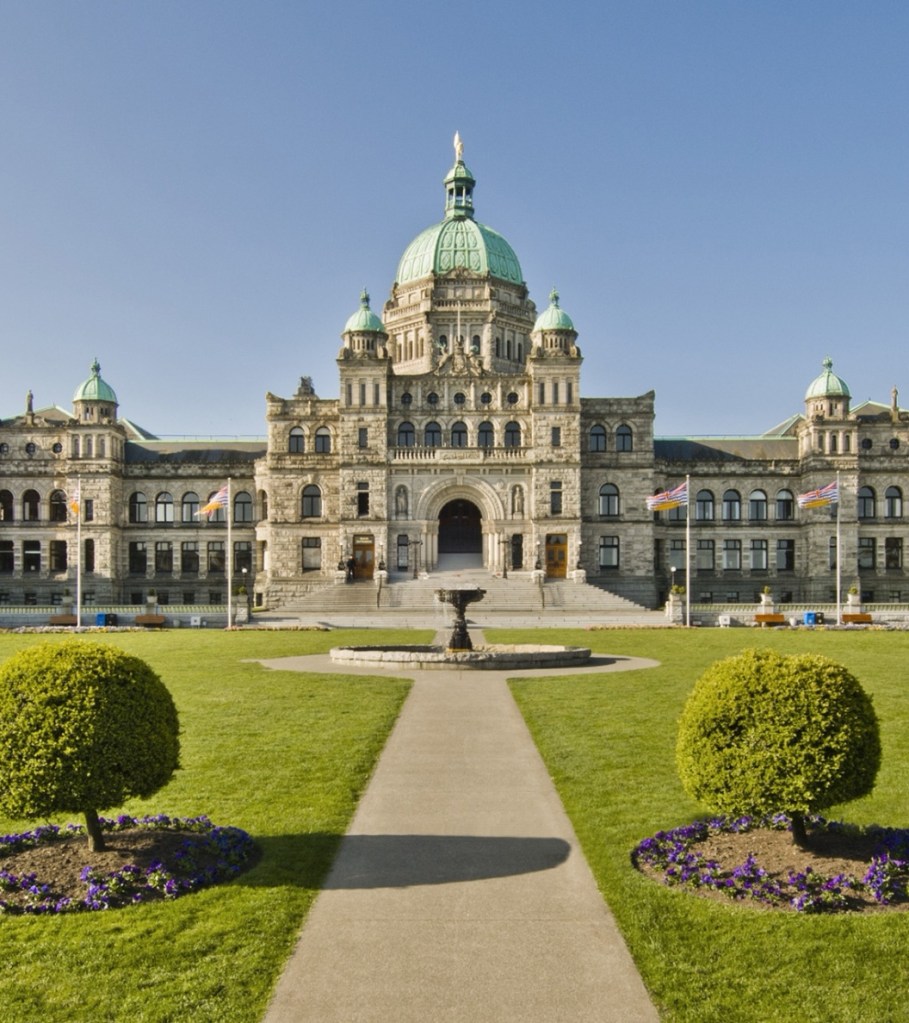
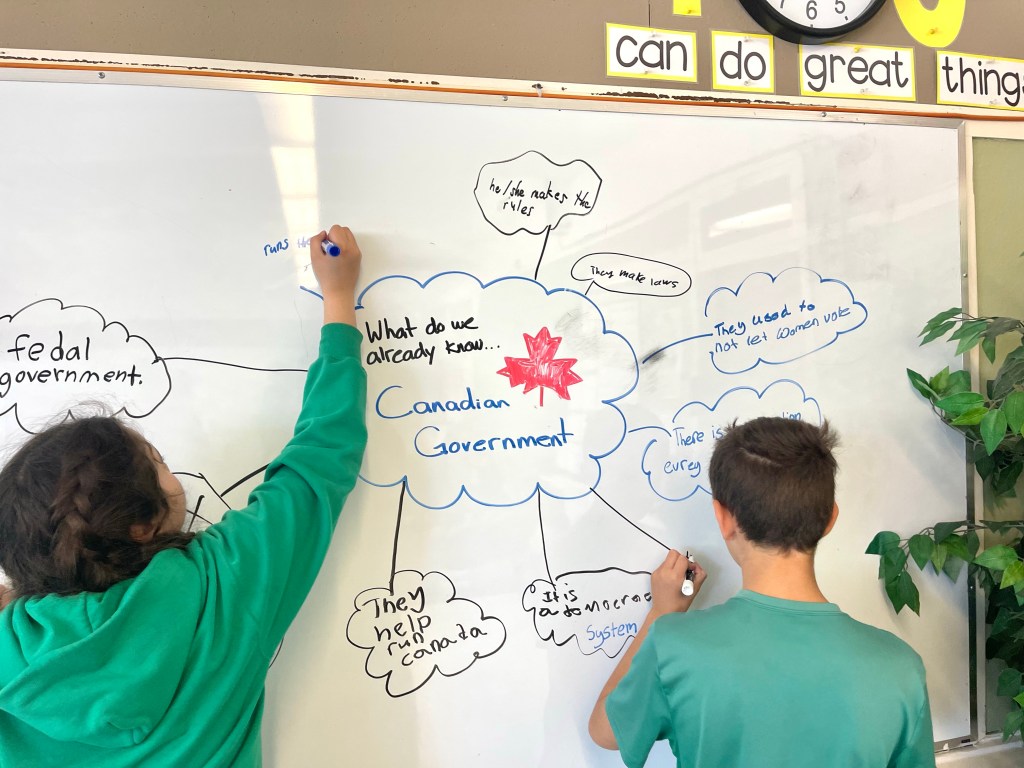
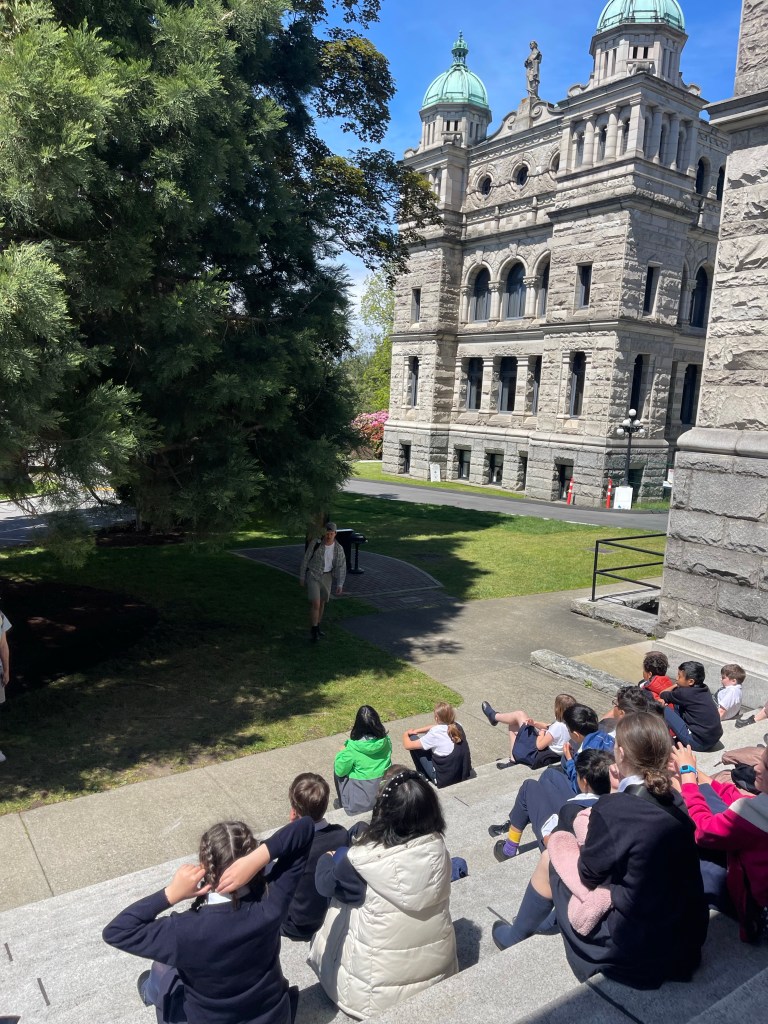
In Social Studies, we have been looking at the history of British Columbia and Victoria (check in assessment on that tomorrow), and next week we start a unit on government. We will have a field trip to the BC Parliament Buildings on Thursday, May 30th for a tour, information session, and to watch an award-winning historical play entitled “Our Place in Politics”—more information to come next week.

In Language Arts, this week we have been tightening up grammar and word usage and moving on to how to correctly punctuate dialogue with quotation marks tomorrow.

As well, our new Spelling list is posted below and students were instructed to bring home their Spelling duo-tangs for further practice with the word worksheets assigned. Continuing our practice from before the break, I ask students to practice the word list in both printed and cursive form.

Spelling Test on Friday, April 12th

In Religion, we have continued to expand our Bible knowledge. We have been analyzing the lessons in Bible stories, including Noah’s Ark and Feeding the Five Thousand. We watched and discussed the dramatic interpretation of the latter story as well from “The Chosen” and have begun plans to do our own class retelling as well.

In Career Education, the focus this term is on guided independent inquiry in students’ areas of passion which may connect to their future career aspirations. All students are invited and supported to plan and carry out their own “Personal Interest Projects” (P.I.P.) on topics of their choosing. At the end of June, all students will practice their speaking and leadership skills by doing a short presentation for their class to share what they have been working on—some students may have completed finished products of learning to show (like a booklet of poems, an invention, a song, a graphic novel, a new board game, etc.), while others may simply share their progress (like “here is the first edited chapter of a novel I am writing about dragons”)

Before the break, students brought home a written plan of their project ideas after we did several planning sessions in class. This project can be done entirely in class time at school—yet a hope is that they will be so excited in their work that they will be motivated to expand their explorations at home. For a decade I taught a “Personal Interest Projects” course as extracurricular enrichment and I have made available to students my P.I.P. course video library in the form of a YouTube Playlist. For your reference, here are some of the videos we have discussed in class. They explain what a P.I.P. is, why they are helpful for students, and how to narrow a topic form an inquiry question and carry out independent research.

Social Studies: Time Travellers

Hello, 5B families!

A major theme of term three is TIME TRAVEL!

Welcome to term three Social Studies!

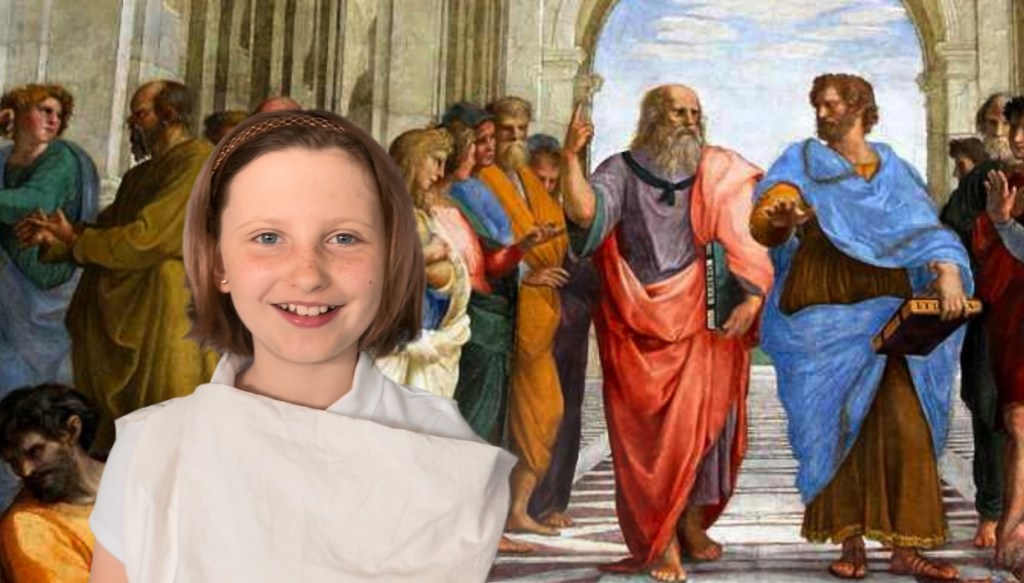
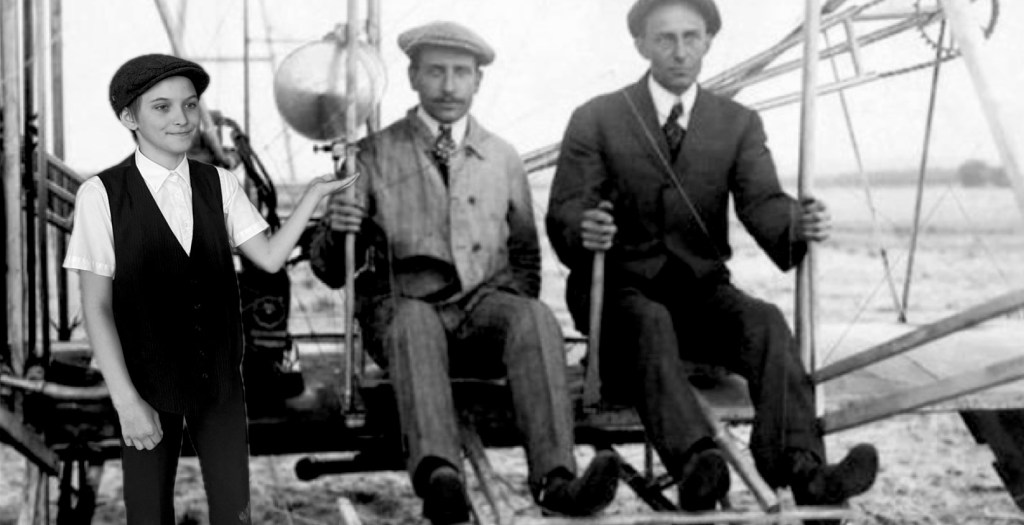
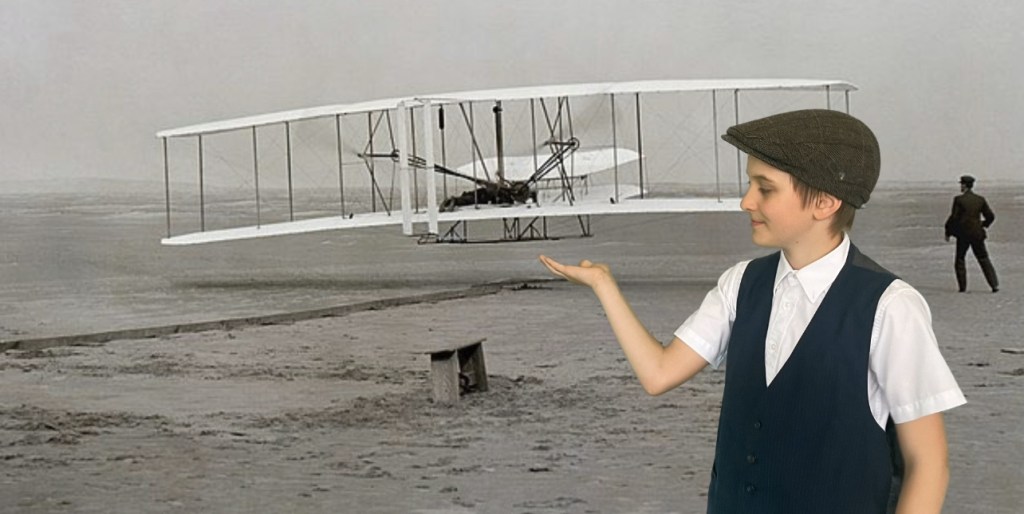
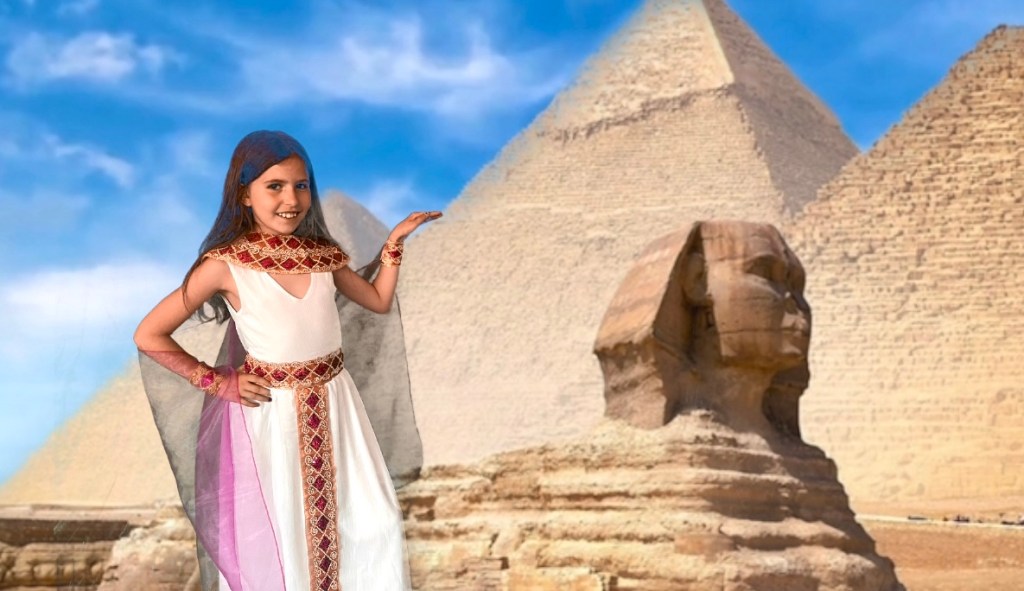
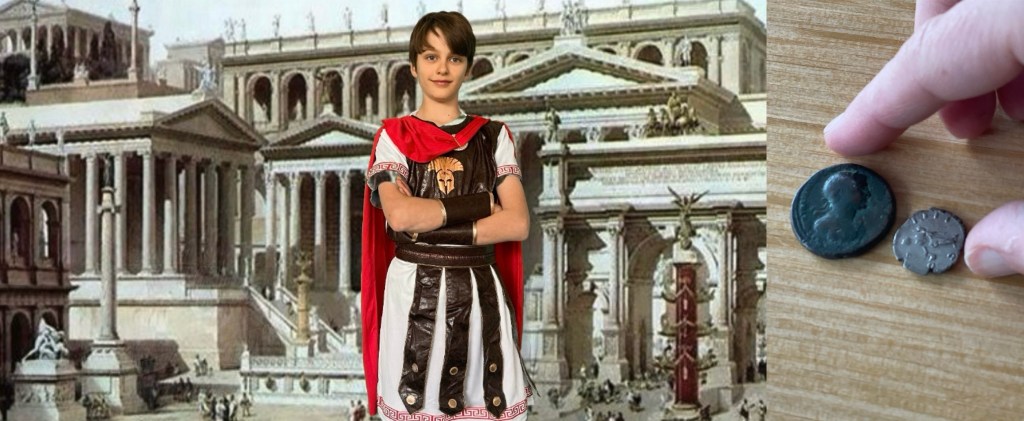
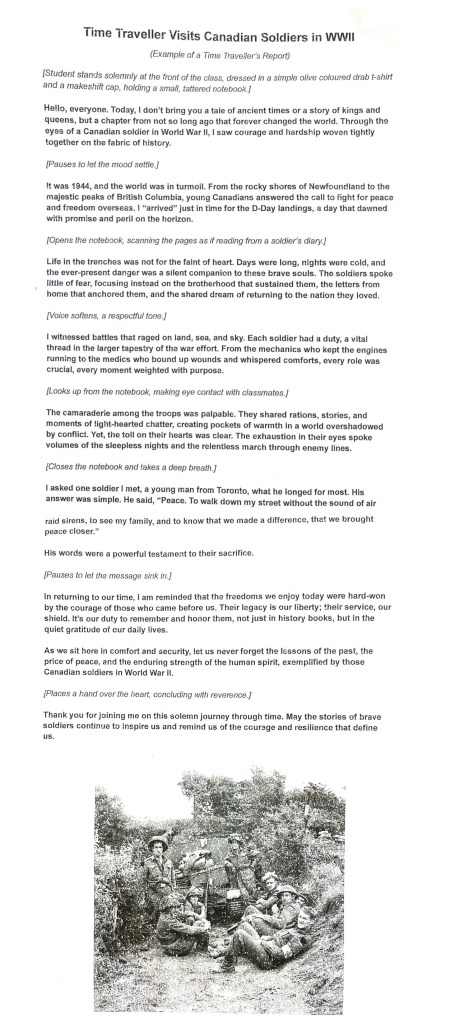
Heading into Spring Break, today I planted a seed for students about the fun we will have in term three of Social Studies! To foster an historian mindset, I am asking students to imagine they have access to a time machine to go on field trips to times and places in the past. Students will research and develop their expertise in their chosen area and perform a time traveler’s report for the class. They will be encouraged to dress in either a “time traveller” costume or a costume relevant to their chosen time period (where possible and appropriate), and guidelines will be given for that to ensure sensitivity and respect.

This project will further develop students’ skills in research (evaluating the trustworthiness of sources, creating a bibliography, note taking, transforming notes into authentic texts), storytelling/public speaking, and acting for the stage or screen. Students will be responsible for curating 3-5 images/photos to share of the time/place they visit (digital or print), and they must properly credit the source of each image in their final presentation.

We will explore what it means to create an authentic work versus a plagiarized work, copyright issues, and fair use law. We will also discuss the concepts of bias and cultural appropriation with the goal of ensuring all presentations meet learning objectives and present perspectives grounded in evidence.

In early April, I will teach students the specific skills they need to succeed in this project in a step-by-step way and with modelling. Projects will be presented in the last two weeks of May.

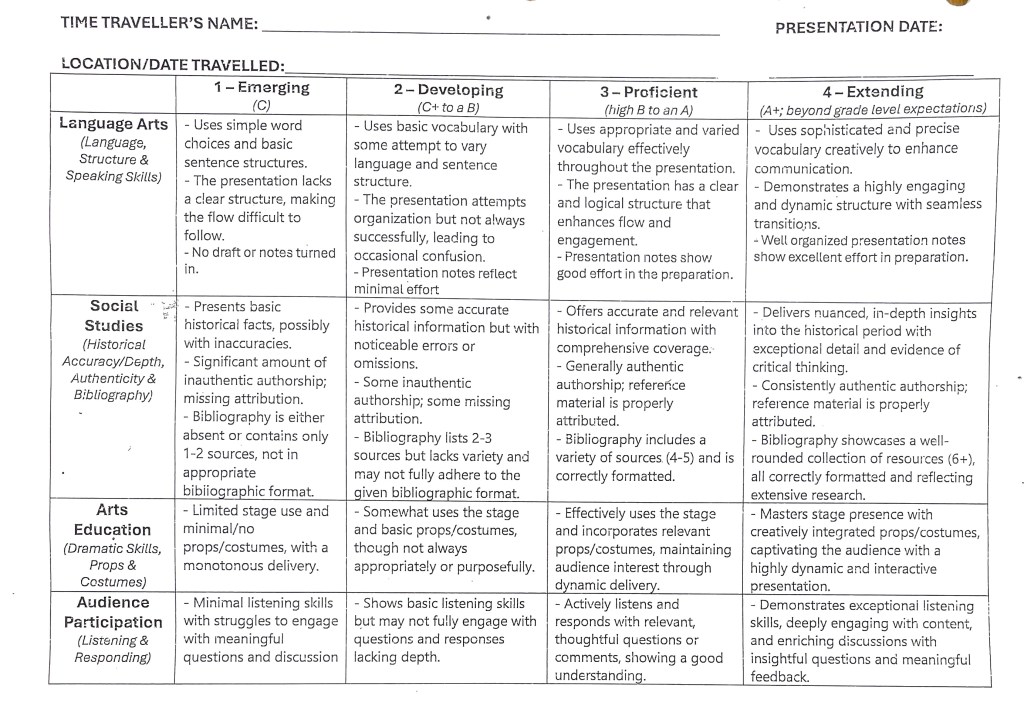
This is the rubric I will use to assess the Time Traveller presentations. Students develop skills and earn credit in three academic subjects for this project.

Students who are eager to get started now can begin finding and making a list of books, magazines, websites, documentaries and other sources of information in their chosen historical time period.

Students should choose a time period that is a least 20 years in the past—so earlier than 2004. They should choose a time/place/event of historical significance. So while “my cousin’s birthday party” may have been a cool, memorable event in the past, we may need to challenge students to think in broader terms and grow as historians.

I am so excited to find out where our creative students will take us in term three!

On Tuesday, April 8th, students must be ready to name and commit to the time and place they have chosen to research for the remainder of the project.

The full project presentation due date is Thursday, May 30th, but there will be a series of of smaller deadlines of project components leading up to this date to ensure projects are well organized and developing on time.

Bible Storytelling & Reenactments…

Hello, 5B families!

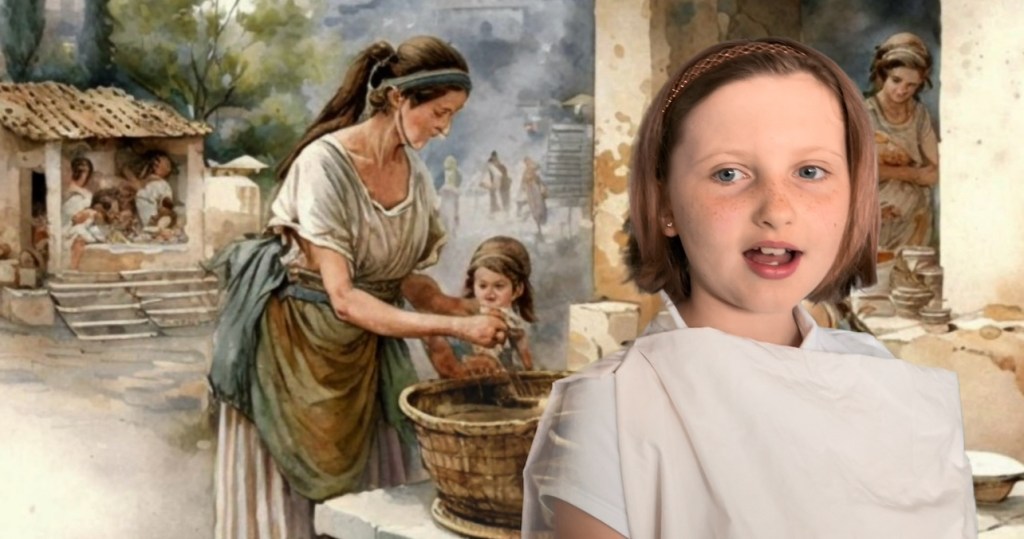
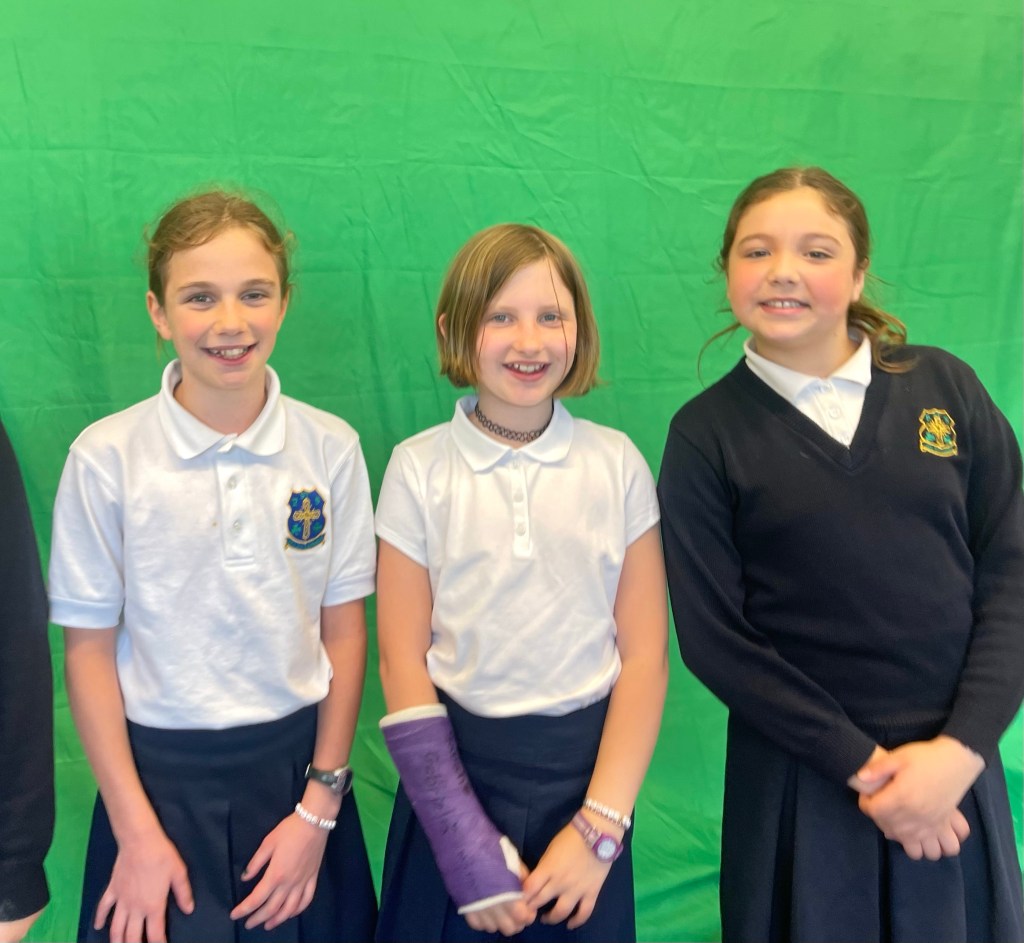
We’ve had a lot of drama in our class lately! Students have been experimenting with handmade dioramas, puppets, props, costumes and a green screen as they retell and reenact many great Bible stories. They have been strengthening their creativity, confidence, and skills on the stage.

We have been discussing the powerful messages of each Bible story and thinking critically about how we can apply these Biblical lessons to our lives today.

Using iMovie, we superimpose some interesting backgrounds onto our green screen to further enhance the stories and inspire the imagination. Do you recognize the Biblical scenes below?

“The Prodigal Son”
“Mary Magdalene Encounters the Resurrected Jesus”
“Noah’s Ark”
“The Good Shepherd”
“Wandering in the Desert”
“The Tower of Babel”
“The Creation Story”

Students who would like to participate in our photographed and videoed Bible story reenactments yet not appear recognizable on the blog are invited to bring a beard/wig to class in term three. We are in need of students to play characters like Moses, Noah, Abraham, John the Baptist, etc. Participation is optional 🙂

As for costumes, I have a collection of “Biblical times” costumes students can use in class (basically just a bunch of clean, earth-toned bed sheets, pillowcases and scarves): however, feel free to have fun putting together your own era-appropriate costume to keep at school for the theatrical productions we will do in April and May. For ideas, you may want to watch the series called “The Chosen”—imagine you were going to be an actor in that series.
“Noah’s Ark”
“Noah’s Ark”
“Jesus Calms the Storm”
“Noah’s Ark”
“David Defeats Goliath”
“The Wedding at Cana”
“The Creation Story”
“Noah’s Ark”

Friday, March 15th is
Green & Gold Civvies day! It is also a NOON DISMISSAL.

Reminder:
We have our Spelling test tomorrow too. Please bring in your signed permission form and $5 payment (or Etransfer) for the Swan Lake field trip.

Return to school after Spring Break on Wednesday, April 3rd.


Salish Sea Boat Trip

Hello, grade 5 families!

We’re back! Congratulations on your role in helping us have a fabulous Salish Sea adventure!

A little “documentary” of our adventure!

We saw sea lions, an elephant seal, harbour seals, eagles, cormorants, bull-kelp, Race Rocks and more! Here are some photos and videos…

Thank you, students, for such a lovely card and artwork! Ms. McKeown and Mrs. Lindstrom, I thank you for being my helpful, adventurous teammates!

Clover Point Field Trip…

Hello, grade 5 families!

In anticipation of our Clover Point field trip here is some information about the area and what you may see here. As well, please review our safety guidelines and sustainability practices at the bottom of this post.


WHAT IS OUR ITINERARY?

10:00am Bus leaves school

10:20am Arrive at Clover Point (students will be put into three groups and then eat snack)

10:45amFirst Rotation

11:25amSecond Rotation

12:05pmEat Lunch

12:25pmThird Rotation

1:10pm5-Minute Wrap Up

For this trip, we will the following educators: Tiffany Poirier, Marylee McKeown, and Lanilyn Lindstrom.

We will also have the following parent supervisors: Silvana, Julia

Our Eagle Wing Tour guides will be: Izzy, Lili, and Sam.

Students will be in three groups, each led by an Eagle Wing Tour guide and another educator.

Each group will rotate through three sessions: rockpooling, sustainability/interconnectedness scavenger hunt, and wildlife watching with binoculars.


WHAT DO WE BRING?

Please dress warmly in layers. This is a day to be comfortable in your St. Patrick’s gym strip and then add layers on over top such as rain pants or snow pants and a warm coat that will repel water. You must have comfortable walking shoes or boots too. A toque and gloves may come in handy. Students will bring a backpack with their water bottles, snacks and a pencil and paper for the scavenger activity. The weather forecast does not suggest rain, and students should leave their umbrellas at home as these are not appropriate for a potentially windy shoreline experience where two hands are needed for activities. However, if a student is concerned about rain, he/she can wear a rain hat and rain suit.


WHERE IS CLOVER POINT?


WHAT CAN I SEE AT CLOVER POINT?

Leave everything you find at Clover Point at Clover Point—but feel free to take pictures!

WHAT CAN YOU TELL ME ABOUT CLOVER POINT?

Clover Point, located in Victoria, British Columbia, is a prominent headland offering panoramic views of the Strait of Juan de Fuca and the Olympic Mountains. Its history is layered, encompassing Indigenous heritage, wartime significance, and modern developments, including waste management.

Environment & Biodiversity

Clover Point offers a unique blend of environmental elements and biodiversity. Its coastal environment, characterized by rugged shorelines and sweeping views of the Strait of Juan de Fuca, provides a habitat for a diverse array of flora and fauna. The grassy areas above the beach are adorned with wildflowers and native plants, while the rocky intertidal zones below teem with life, including sea anemones, barnacles, mussels, and various species of seaweed. Seasonal migrations bring a variety of bird species to the area, making it a popular spot for birdwatching. Clover Point’s mix of terrestrial and marine ecosystems supports a dynamic balance of life, where the rhythmic ebb and flow of the tides shape the daily rhythms of its inhabitants. This beautiful locale serves as a reminder of the natural beauty and ecological richness found along the coast of British Columbia.

Indigenous Heritage

Before European settlement, the area around Clover Point was inhabited by the Lekwungen (Songhees) people, part of the Coast Salish. The Lekwungen used the area for its rich resources from the sea and land. European settlement dramatically altered their way of life, but the importance of the land to local Indigenous peoples remains recognized today. European Naming and Use The point was named by the British during the early period of colonization in the 19th century, likely for the clover that grew there. Victoria itself was established as a fort by the Hudson’s Bay Company in 1843, with Clover Point lying in close proximity to the fort. Its natural beauty made it a popular area for recreation and leisure as the city of Victoria grew.

Wartime Significance

During World War II, Clover Point became part of Canada’s coastal defense system. The Canadian military installed gun batteries and searchlights at strategic points, including Clover Point, to defend against potential Japanese attacks. These installations were part of a broader network of defenses along the British Columbia coast. After the war, the military installations were removed, and the area was returned to public use.

Waste Management

In more recent times, Clover Point has been connected to waste management issues due to its proximity to the Clover Point Pump Station. The pump station is part of Victoria’s sewage treatment system, which has been the subject of significant public and political discussion. Efforts to upgrade waste treatment facilities in the region, including near Clover Point, have aimed to improve environmental outcomes for the area’s marine and shore ecosystems.

Modern Usage

Today, Clover Point is a popular spot for residents and visitors alike, offering walking paths, green space, and unparalleled views. It is also a favoured location for kite flying due to the open space and consistent winds. The area around Clover Point continues to evolve, reflecting both its natural beauty and its significance within the urban fabric of Victoria.

Clover Point has been site of Indigenous significance and strategic military location, and it is also a beloved public space representative of the beauty and diversity of Coast Salish region.


HOW CAN I LEARN MORE ABOUT THE HISTORY OF CLOVER POINT?

https://www.victoriabuzz.com/2021/06/this-photo-combines-the-clover-point-park-of-the-past-with-the-present/?amp

https://coastview.org/2021/03/28/clover-point-ross-bay/#:~:text=The%20point%20was%20named%20for,north%20to%20reach%20Fort%20Victoria.


WHAT SHOULD WE DO TO ENSURE A SAFE, SUCCESSFUL EDUCATIONAL EXPERIENCE AT CLOVER POINT?

General Conduct

• Maintain a respectful and calm academic demeanor. Keep a learning mindset and listen carefully to educators and supervisors.

• Represent our school positively. Display ethical and appropriate behavior at all times. Remember our school code of conduct—it applies on field trips as well!

Environmental Respect

• Interact with wildlife respectfully. Do not touch or disturb any living creatures, including sea anemones. Gently handle non-living elements only. You may pick up rocks or shells without disturbing their placement but please return them exactly where you found them.

• Do not take anything from the beach.

• Avoid throwing stones into the ocean for safety and to maintain a calm environment. We are here to study the shoreline!

• Do not leave any personal belongings or garbage behind. Ensure you take everything you brought with you to preserve the cleanliness and natural beauty of the environment.

• Respect all signage. Follow any posted signs or warnings, including wildlife protection or restricted access areas.

• Avoid feeding wildlife. Do not feed any animals to avoid disrupting their natural behaviors.

Personal Safety

• Walk at all times, no running. Be mindful of each step, as seaweed and wet surfaces can be very slippery!

• Do not go into the water.

• No jumping off tall structures or the walkway. Such actions could lead to slipping or injury from falls.

• Refrain from trying to build structures to play in or on by using the driftwood. You could slip or hurt yourself if the wood shifts unexpectedly.

• Practice hygiene. Wash your hands before eating.

• Dress appropriately for the weather and terrain. Wear sturdy shoes or boots and bring layers or rain gear as needed.

• Stay within designated areas. Always remain in areas designated by the field trip supervisors to ensure safety.

• Steer clear of the off-leash dog area. Do not touch or interact with dogs for your safety and theirs.

Group Dynamics

• Use the buddy system. Always stick with a buddy or in small groups to ensure no one gets lost. Make sure your group leader knows where you are and can see and call to you at all times.

• Report any incidents immediately. If you get hurt or notice anything dangerous, report it to an adult right away.

• Use the washroom responsibly. Go to the washroom building with at least one other person and inform an adult supervisor.

• Avoid roughhousing. No pushing or shoving, and use common sense in all actions.

• Educators and parent supervisors are encouraged to take photos of the environment; yet please do not take photos of students unless you have permission to do so.

Public washrooms are available at Clover Point. Bring a buddy with you and tell a supervisor before your go.
SAFETY FIRST: Do not try to jump off or do parkour type moves off of the steep walkway during this school field trip.
Please be kind and do not touch the aggregating anemones unless you are instructed to do so—we thank you for being a respectful observer.

Salish Sea

Hello, grade 5 families!

This blog post contains some details about the Salish Sea field trip we are going on together. For privacy reasons, some specifics about location and date are not included here and you can refer to the previous emails sent.

Here are some photos and a video clip from our Salish Sea preparation session today:

Here is a video of what it looks like to be aboard the “Wild 4 Whales” boat:

Here is a photo of what the boat looks like:

As well, here is a summary of what guests aboard the “Wild 4 Whales” boat should know and try to do to prepare for a safe, comfortable trip:

-Dress in many, many warm layers (as if you were going on a ski trip). For example, wear a base layer or “long underwear” type garment underneath your pants. It will be VERY COLD, WINDY, AND WET! *No need to wear school uniform—treat it like a WARM CIVVIES DAY!

-Wear waterproof or water resistant rain jackets and rain pants if you can. Ski pants and ski jackets work well!

-Wear winter boots or rain boots—or any footwear that will keep your feet dry and warm.

-Wear warm headwear that is not likely to blow away (no ball caps). A toque and a scarf or neck warmer would be good. Your face will be cold from the water and wind!

– Gloves are a good idea. 

-Bring your water bottle and your pocket snack.

Warm layers are a must! Cover your head and face—it will be windy, cold and wet!

***Students should NOT BRING PHONES, CAMERAS, TECHNOLOGY or other valuables that could be lost or damaged at sea. (Adult volunteers may bring cameras or devices and resume responsibility for them. However, my caution is that I almost lost my iPhone in the ocean on a Salish Sea trip. So this time I will bring my phone in a clear “wet bag” wear it on a string around my neck.)

Other notes:

There is one bathroom available to us aboard the boat. 

There are enough life jackets available for everyone, but they will be stored unless needed (just like on a ferry).

There is strict safety protocol and guests must show they can be listening closely to follow all safety instructions. 

If you are concerned about the possibility of sea sickness, of course it is a family decision whether or not to take certain preventative measures.

The staff of Eagle Wing tours are experienced in supporting anyone who may feel unwell when on board the boat. 

Father William Visit, Lent, and more…

Hello, 5B families!

Today we had the privilege to host Father William as a guest speaker in our Religion class. He so graciously answered our questions and shared moving stories about his journey with faith and priesthood and pastoral care. The students were so engaged and excited ask their powerful and challenging questions that the hour went by all too fast! It was very enriching!

Please Note:
PINK SHIRT DAY is Wed., February 28th—the same day as our Salish Sea trip. This day is a Civvies day for grade 5 since students need to be dressed for the boat trip. Students are encouraged to wear their pink shirts in the morning of the can and wish to do so.

We have been learning about the season of Lent. We looked at the history of Lent and done daily devotions and readings from ’Twas the Season of Lent.

In Math, we are working on adding and subtracting decimals to the thousandths place. Thank you for supporting students on the homework they brought home this weekend. We will do another check-in quiz on this context tomorrow.

In Social Studies, we have continued our inquiry about our relationship with water. Assessment of learning in this unit takes place through students’ discussion in class, their written reflections in their Oceans, Freshwater, and Us booklets, a self-made quiz they will design based on the content we have been studying, and another comprehension quiz I will give at the end of term. During our Salish Sea boat trip and Cattle Point trip, our Salish Sea tour guides from Eagle Wing Tours will also be making connections to Social Studies curriculum, specifically around sustainable resource practices and local Indigenous groups’ historical and present day interactions with the Salish Sea.

In Language Arts, we have now completed our novel study of Hatchet. Students have been working on a creative reading response project to write a “five senses poem” from the perspective of the protagonist, Brian. The assignment details are listed below, and the good copy (printed neatly or typed and proofread) is due Monday, Feb. 26th. This assignment sheet was given out last week.

Reminder that the Jonah group plays are due and should be performed in class before the end of day on Monday, Feb. 26th—I gave the students an extension on this.

The individual Bible storytelling projects are due to be presented before the end of day, Monday, March 4th but students are welcome to present them anytime now. We have already enjoyed a creative presentation of the story of Esther.

Here is a reminder of the assessment criteria for the individual Bible story presentations below. Students do not need to write scripts, and they are welcome to just speak from their heart. Students may read from their own written versions of Bible stories if they are more comfortable doing that. A learning goal is for students to understand their chosen stories well enough to put them into their own words and speak about the meaning.

For fun, here is a link to the video I showed in class today of my two sons dramatizing the Bible story of David and Goliath. My son, Ben (grade 1) told me what he remembered of the story at bedtime on Friday, and I recorded it for fun. On Sunday, we realized it would be even more fun to act it out as an example for my students of how we can retell Bible stories and their meanings in our own words and create costumes from materials we find around our homes. I look forward to working with the students to create something like this on the story of Jonah.

Reminder that our Spelling Test is this Thursday, Feb. 22nd on the first 20 words of the above list.

Please note that while it may sound like there are a lot of things going on in class, I am careful to calculate to give lots of time in class for students to complete their projects in class. In fact, many students do complete all of their assignments and study solely during class time.

However, some students like to spend a lot of time adding extra detail and/or they do not use their class time as efficiently as they could and so if you child says they have a lot due right now and feels overwhelmed, please connect with them about how they may have fallen behind and how they can structure their time to stay on top of their work. I always try to accommodate students who have absent or who have unique needs, so they lease reach out if your family needs some accommodations or has questions.

REMINDER:
Please complete the online waivers for your child for the Eagle Wing Tours Salish Sea field trip as soon as possible. I emailed you a reminder about this with the link.

As well, please make sure you have sent in the $45 payment for your child via Etransfer, cash or cheque. Thank you so much!

Decimals, Bible Story Project & Jonah Resources

Hello, 5B families!

Happy Chinese New Year (Lunar New Year)!

In Math we have started a new unit in understanding decimals (working to the thousandths place). We will be adding and subtracting decimals this week—and I taught and enrichment lesson on the multiplying and dividing decimals (gr.6 level) for interested students. Here is a video that reviews the concepts…

Please note that the official final date for presenting individual Bible stories for credit on the term two report card is MARCH 4th (which is my report card due writing due date). However, I encourage students to present their stories any date before that.

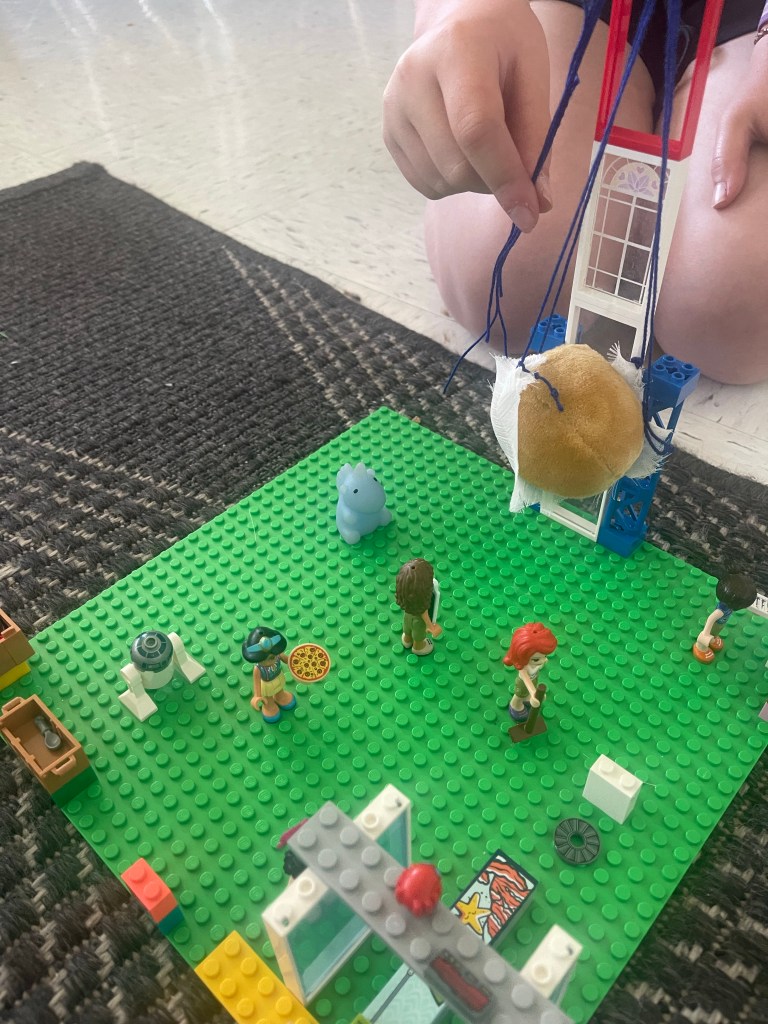
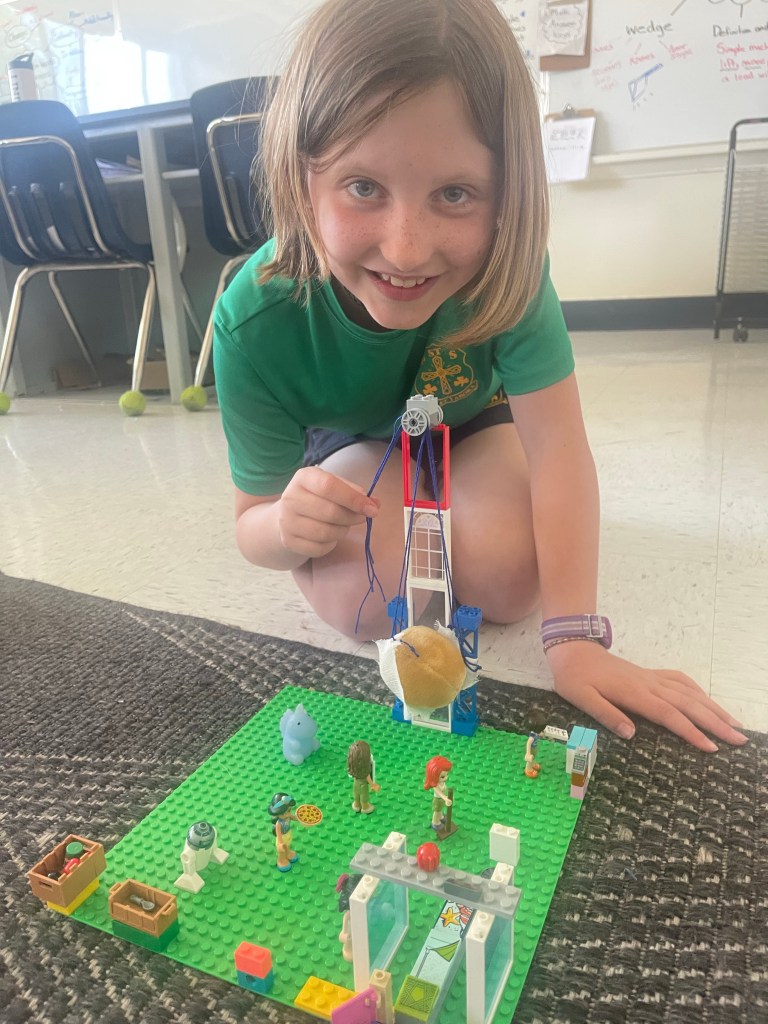
It is exciting to see the creative props students are making and bringing in to support their story retellings. As you can see here, Asher’s wonderful handmade stick puppets and detailed diorama give an exciting glimpse into the Noah’s Ark story he will share with us soon!

In addition to the individual Bible story project, students are working in small groups to prepare to present dramatizations of the story of Jonah. In preparation, we have studied the original Biblical text and did a dramatic reading of a play version along with reading over 8 different retellings and we watched numerous versions on YouTube. Two goals are to teach students what deep research involves and to show them the range of creative interpretations that exist in Biblical storytelling, which may spark their own insight and innovation in interpretation.

Notice the way storytellers can use props to symbolize the major elements of the story. What can you learn from this? Do you have toys, blocks, action figures, natural items and/or pieces of fabric (or bundled up clothing) that you could use to help you retell your own chosen Bible story?
See this commercial above and the video below showing an elaborate theatrical production of the story of Jonah. Notice the wonderful costumes, props, and set design elements—how might this inspire you in creating your own retelling of the story of Jonah using borrowed clothing and other items you can find around your home.
Please note the extended testing date for this week’s Spelling List: Thursday, Feb. 22. M