Hello, 5B families! We’ve been up to so many exciting things…
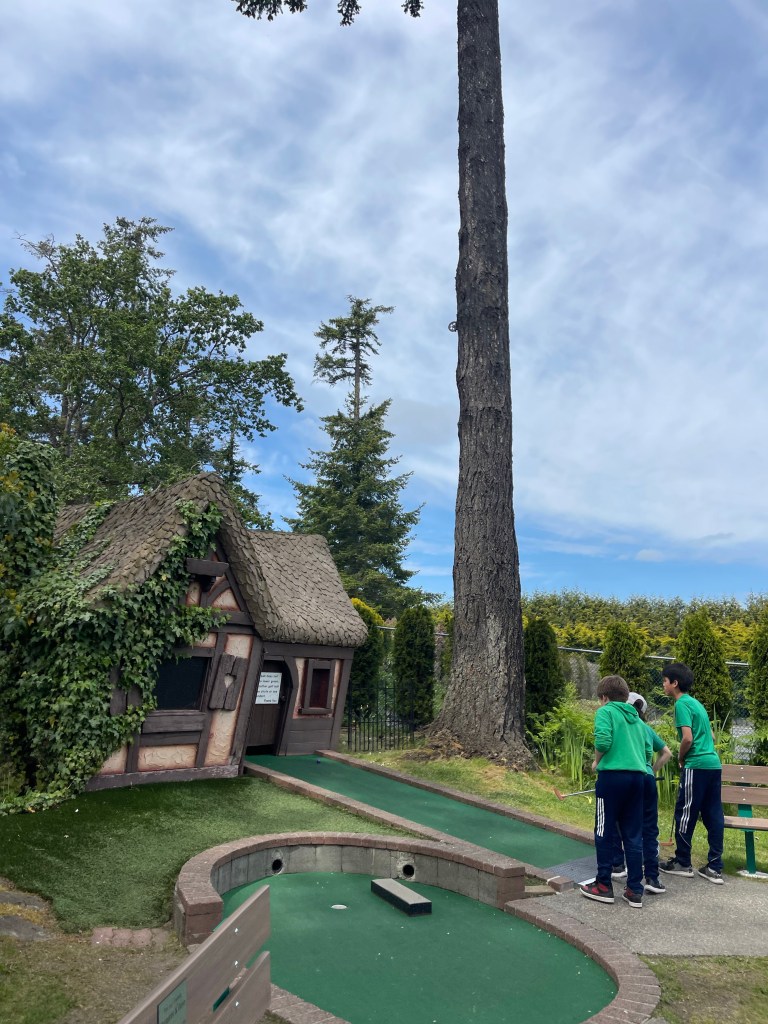
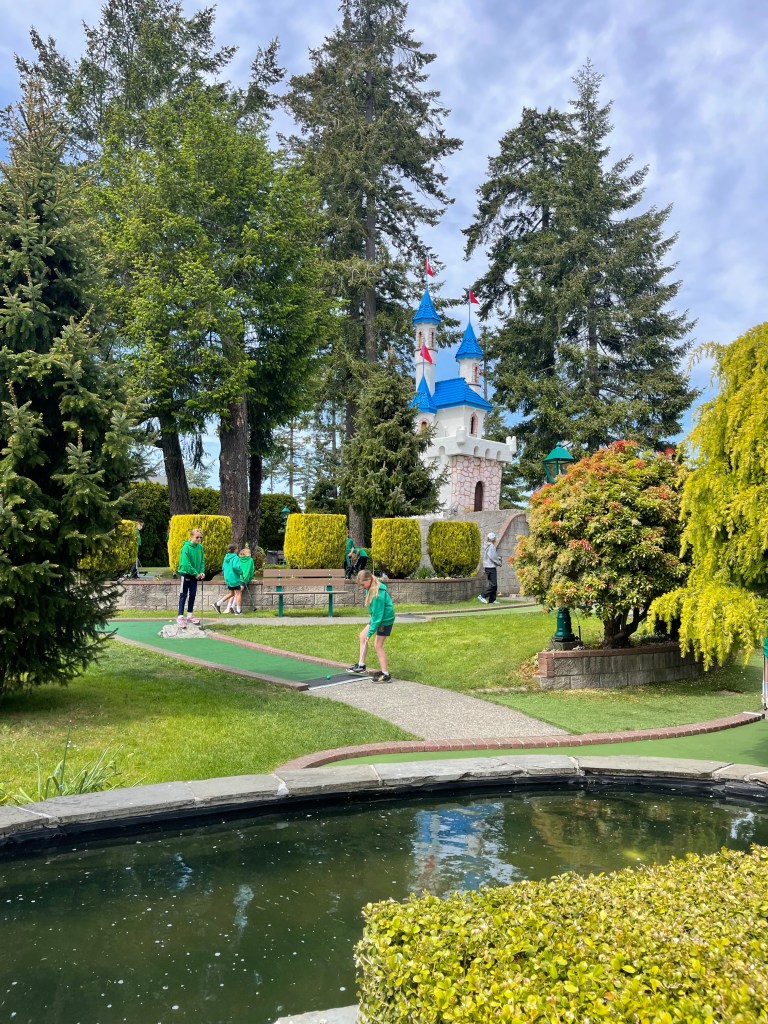
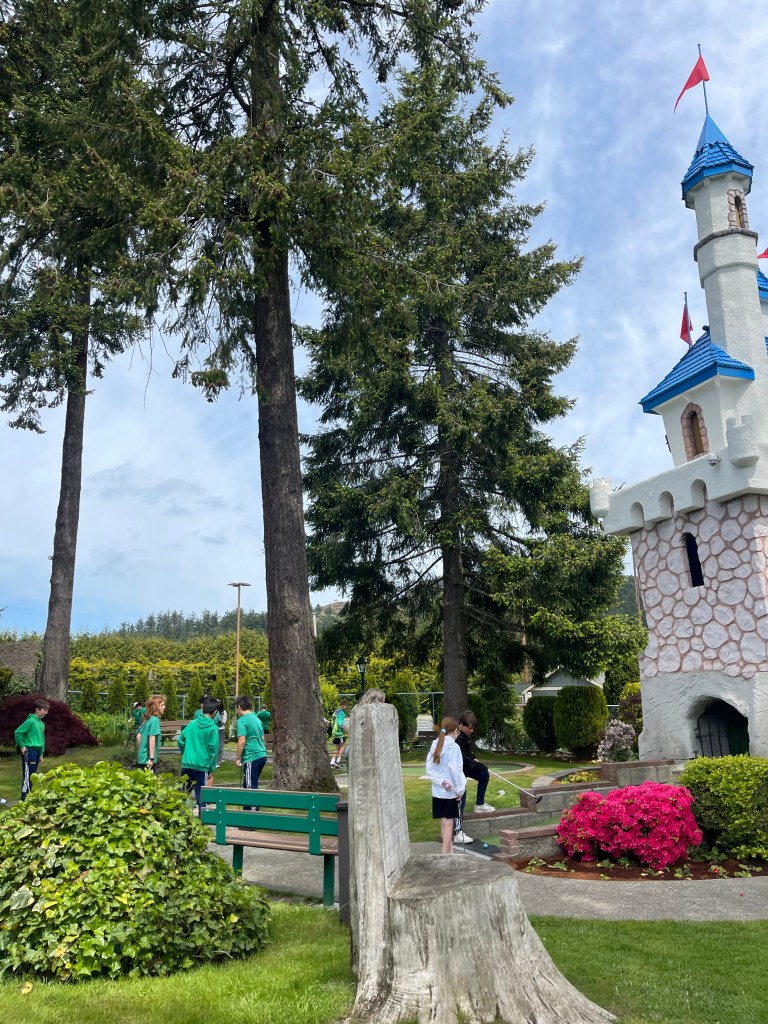
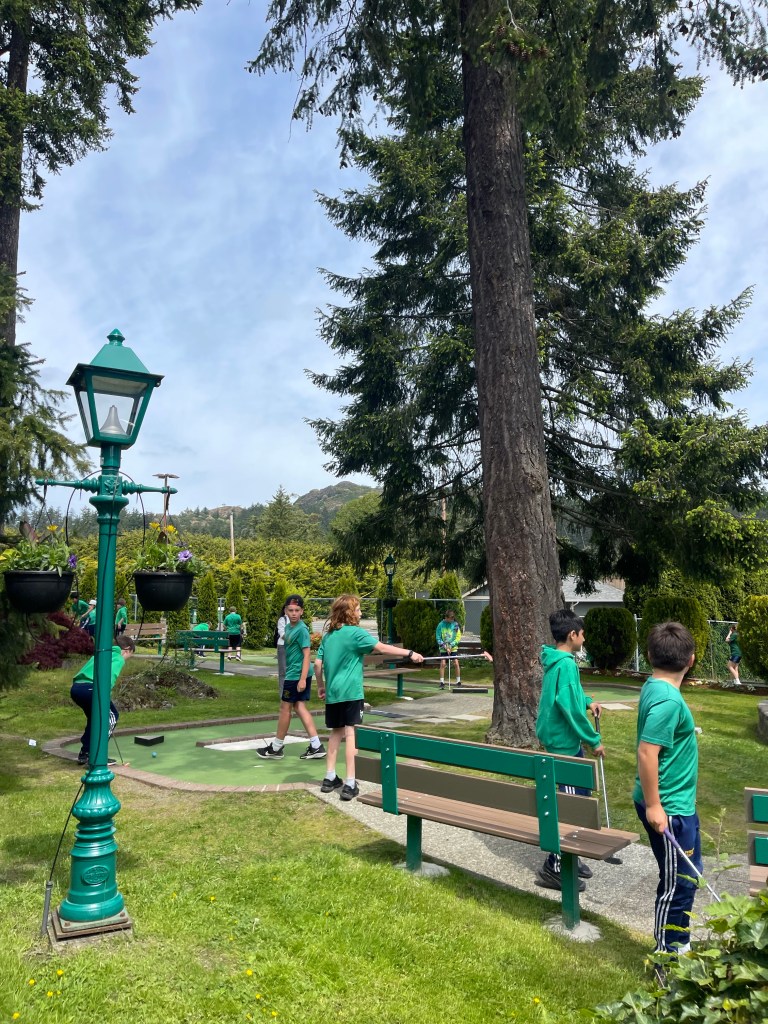
Our field trip to Blenkinsop Mini Golf was so much fun! Thanks to our parent volunteers and awesome students for making this a success!
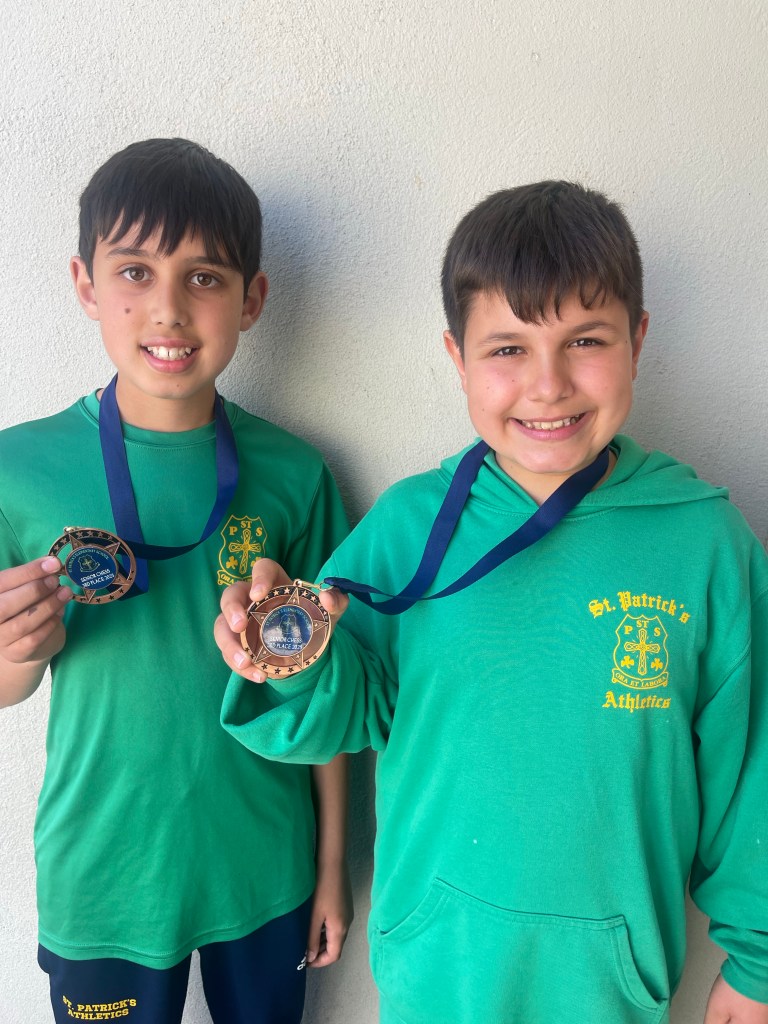
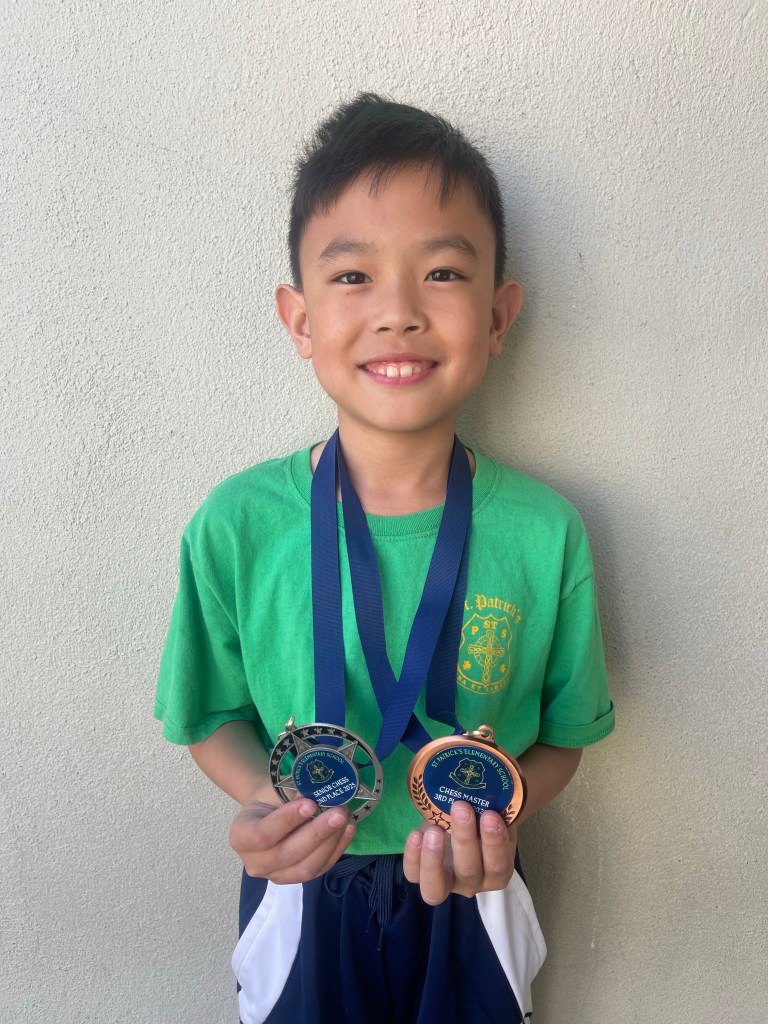
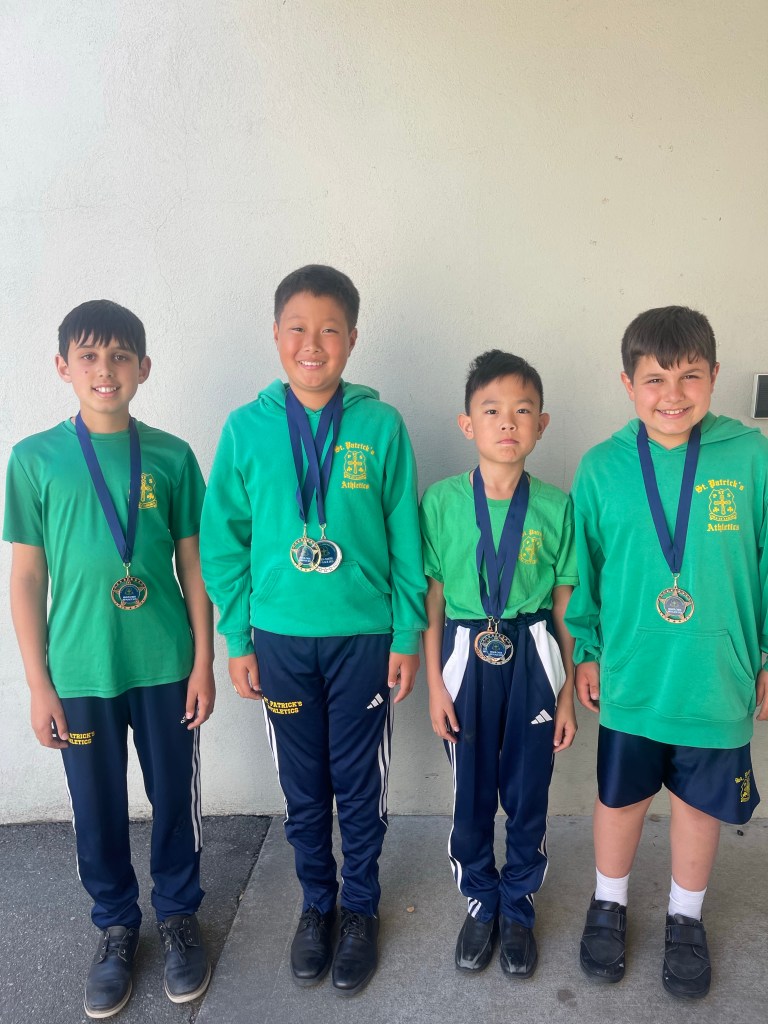
Congratulations to all the students who participated and challenged their skills in the Chess Club this year! Here are the 5B students sharing the joy of their medals! Our 5B students dominated at the intermediate level school-wide by taking home 1st, 2nd, and 3rd (tie) place!
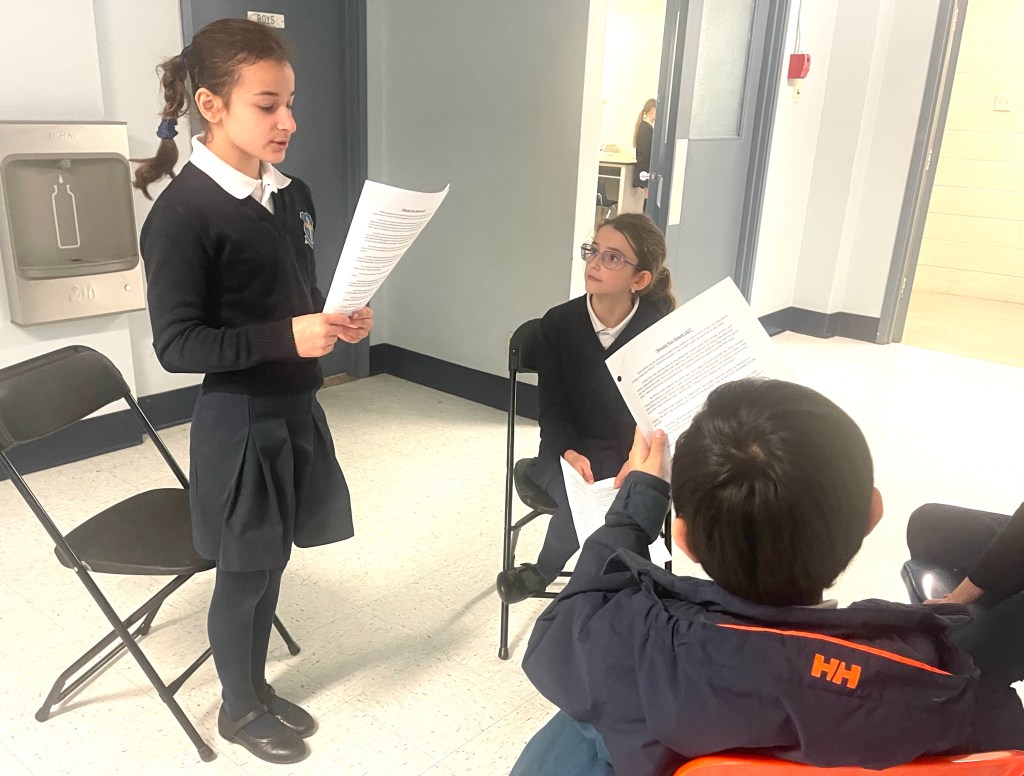
Congratulations to all the students who worked hard, grew their skills and courage, and participated in the class, grade, school and district public speaking competition this year! Everyone has shown so much improvement! This was an outstanding year! Two 5B students clinched the top two grade 4/5 spots at the school level of the competition and are off to represent us at the district competition tomorrow!
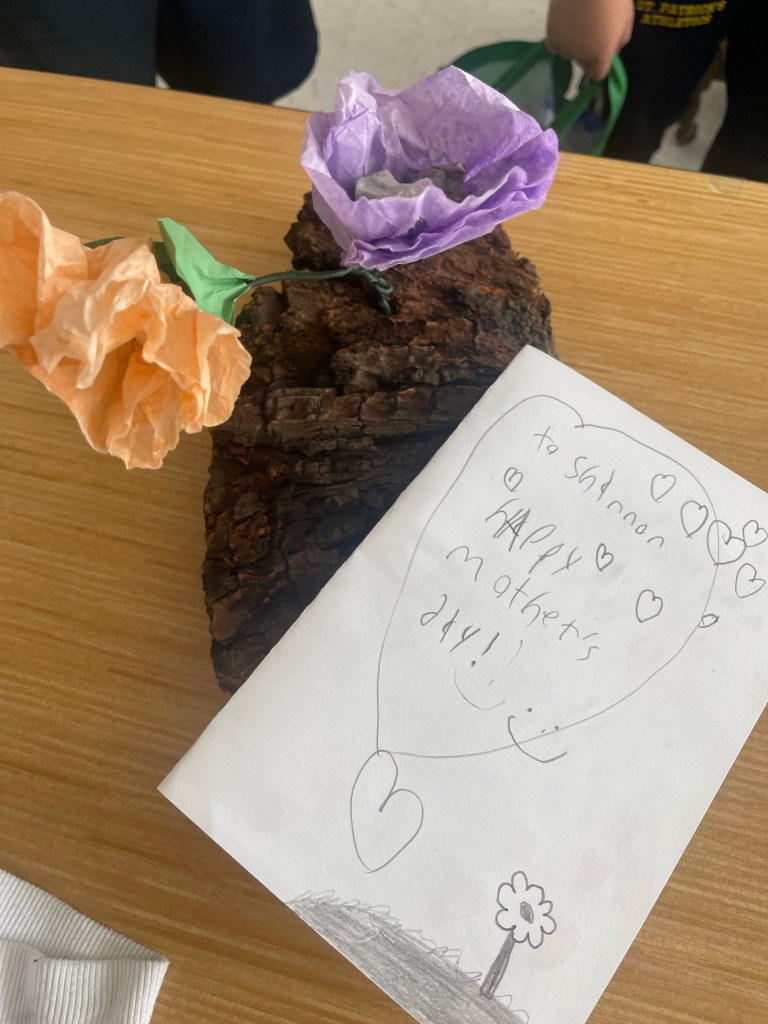
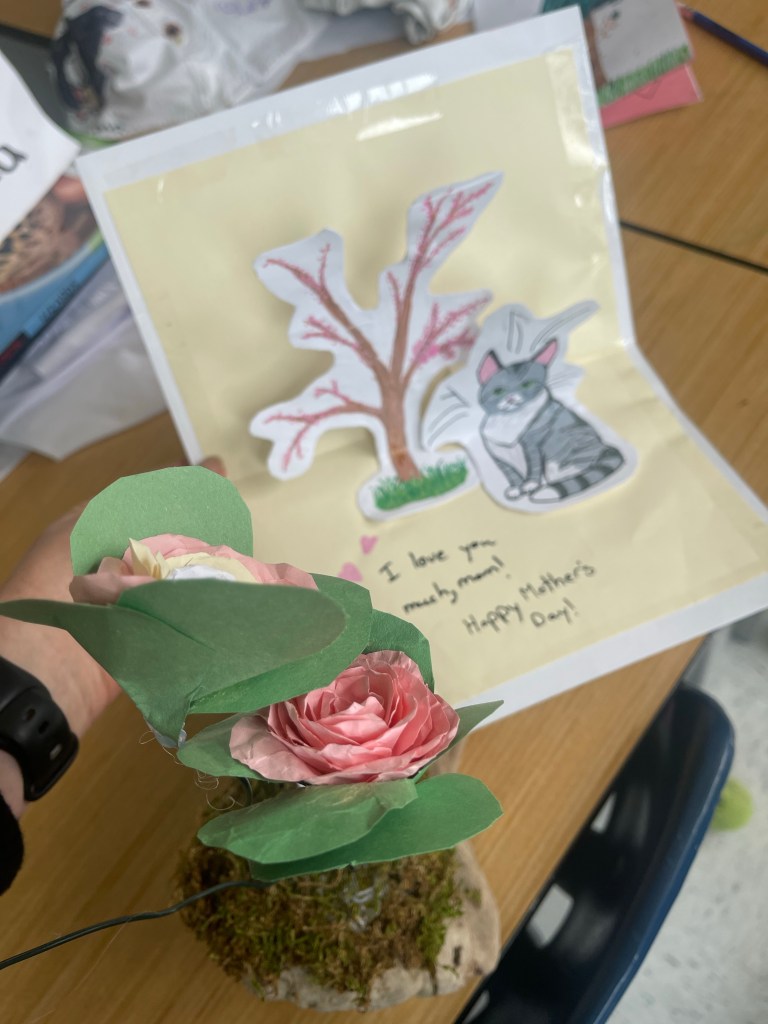
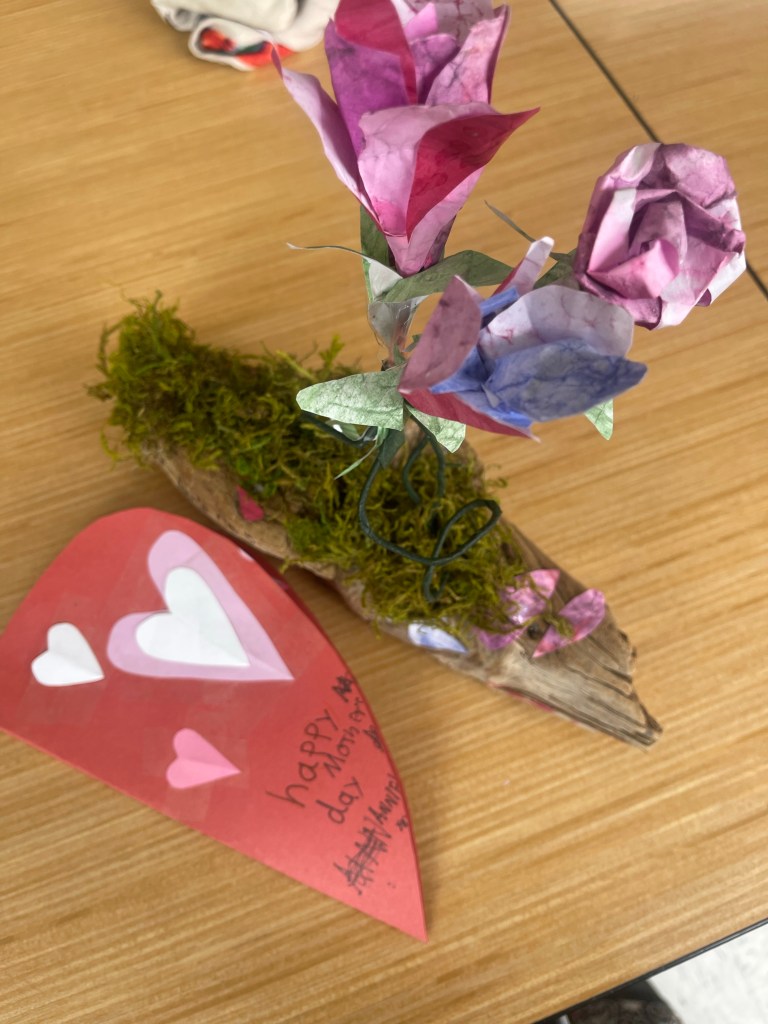
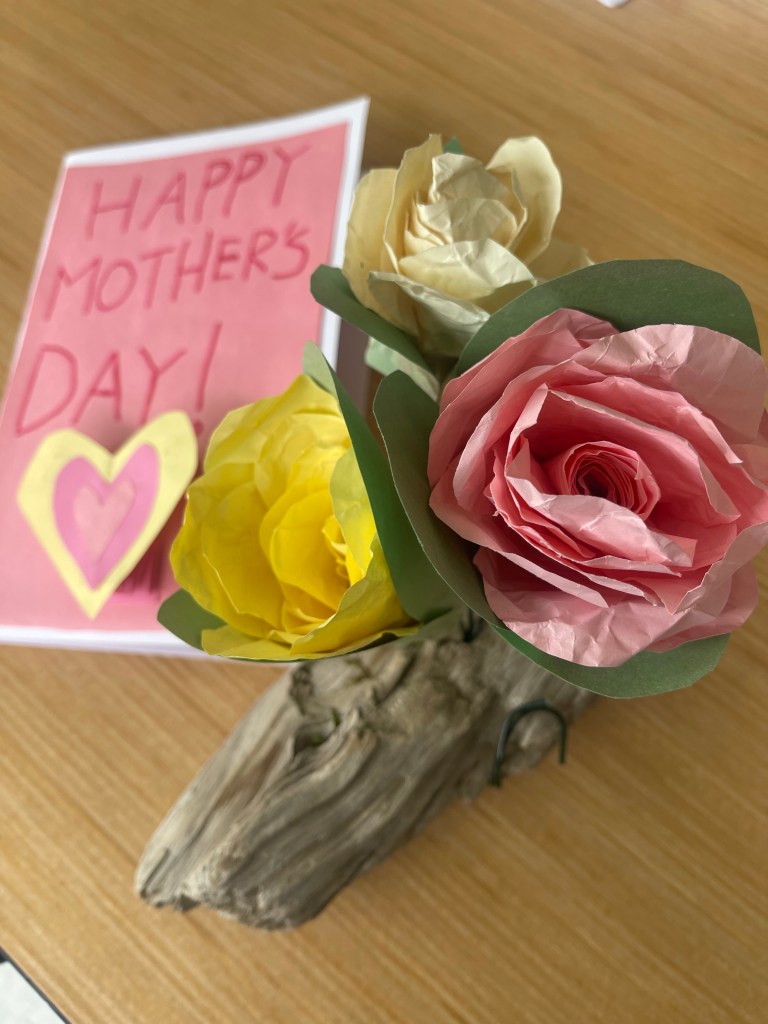
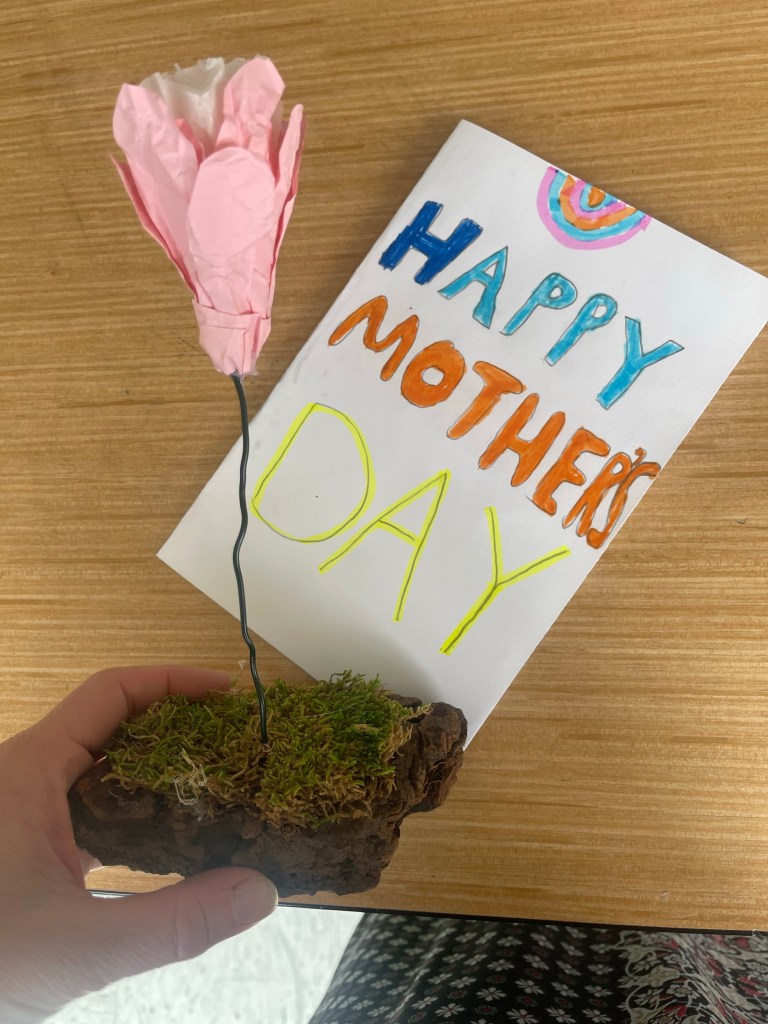
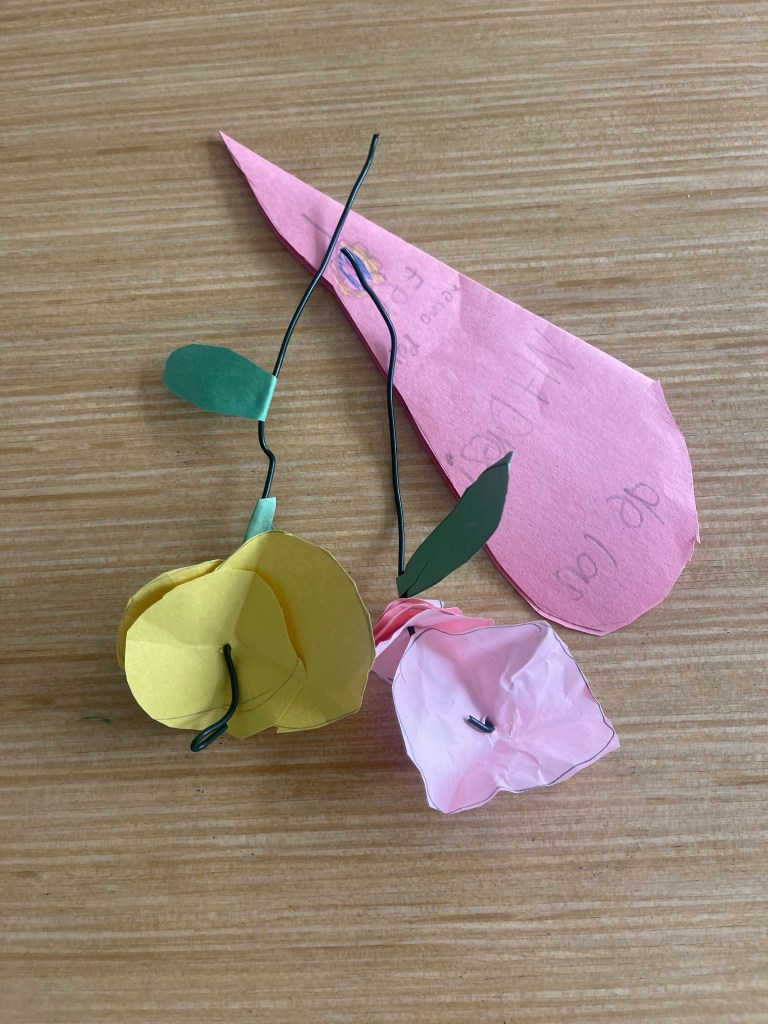
The 5B students worked so hard and with so much love on their Mother’s Day gifts of 3D paper flower sculptures and cards. We love our moms!
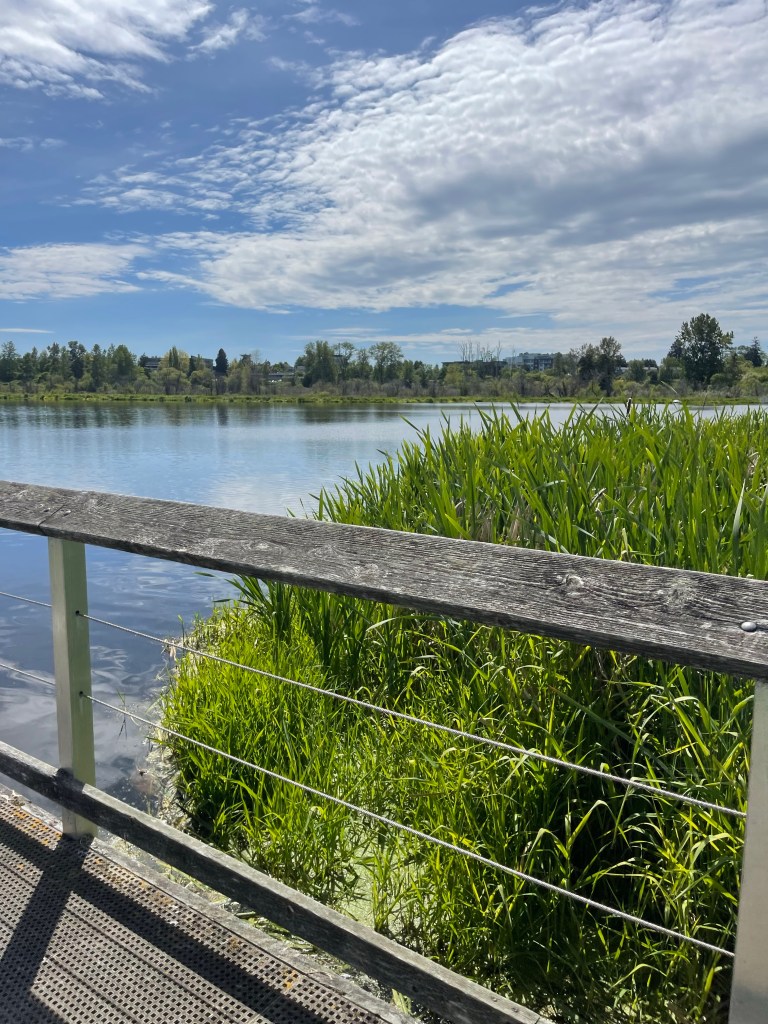
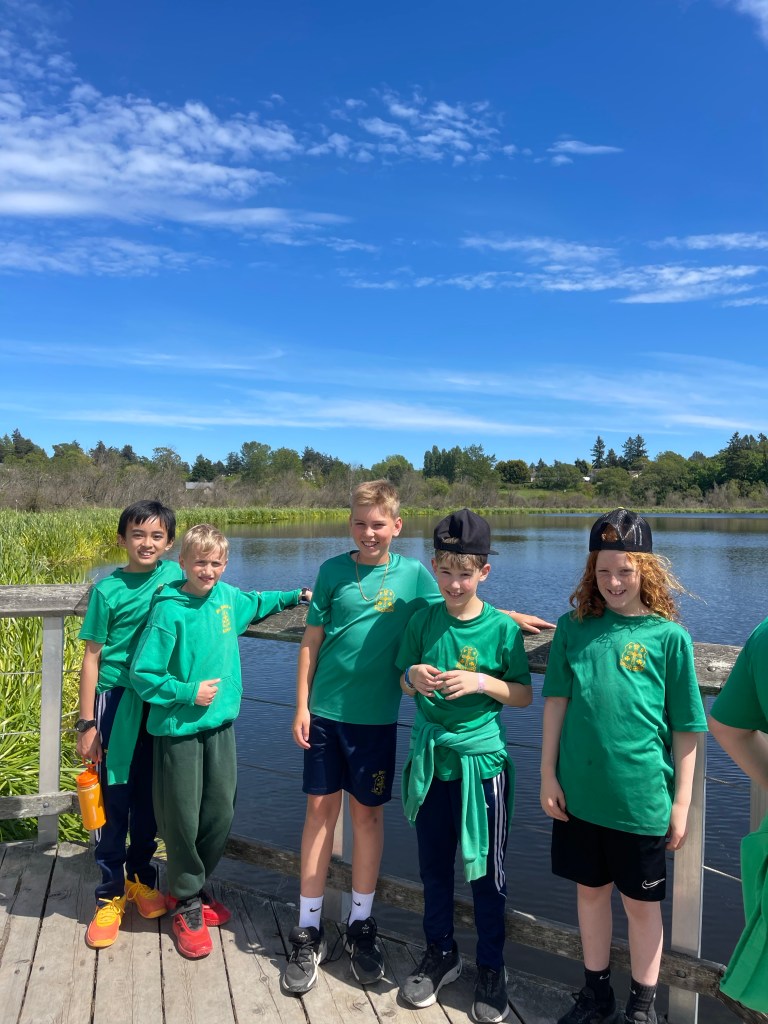
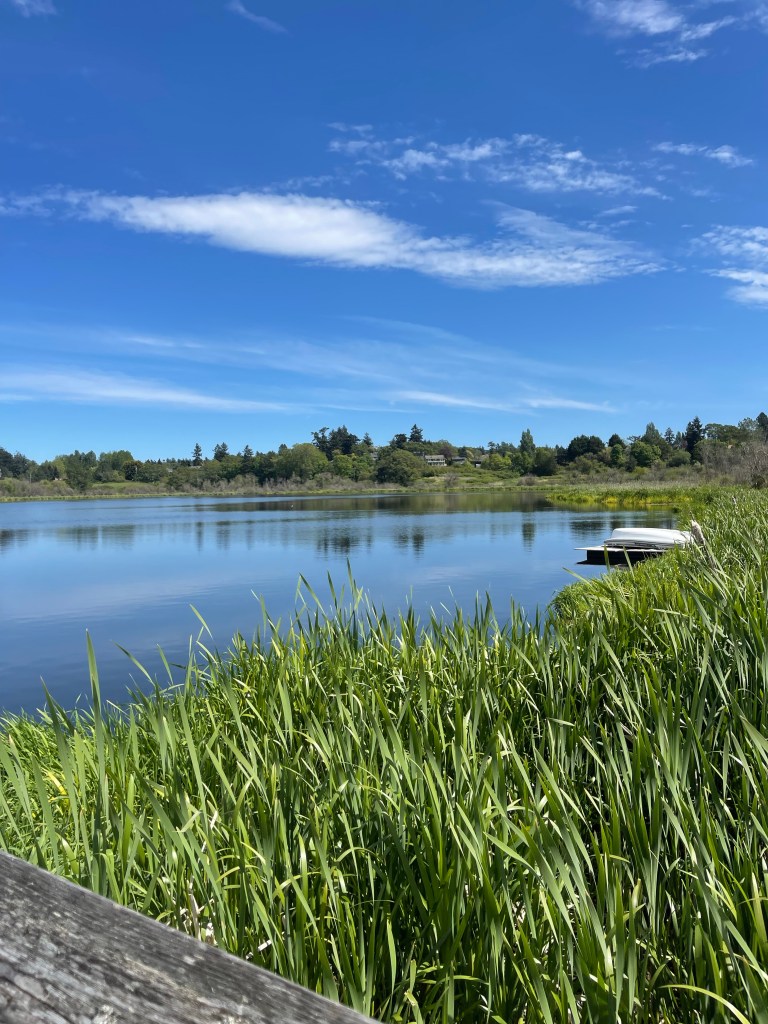
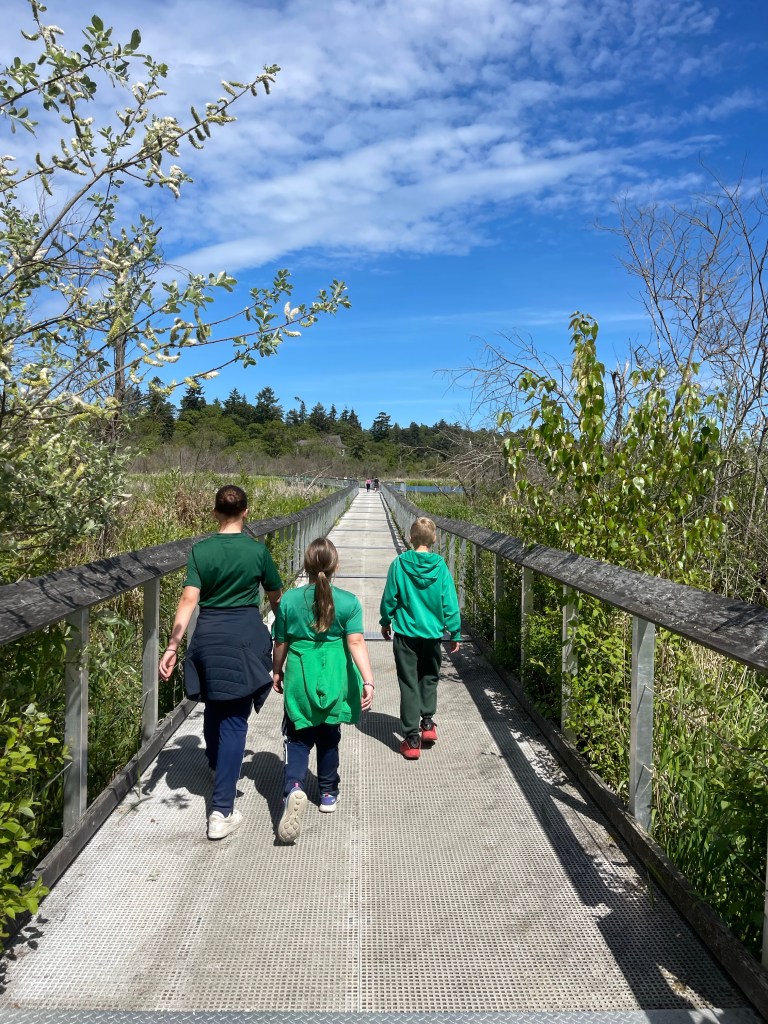
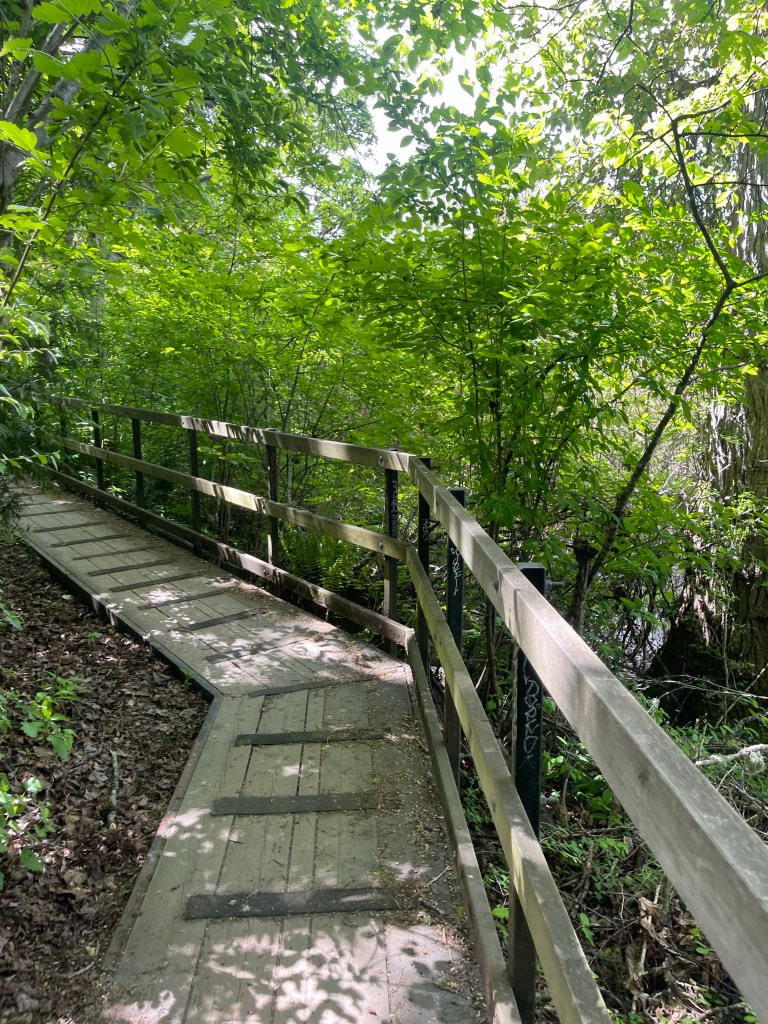
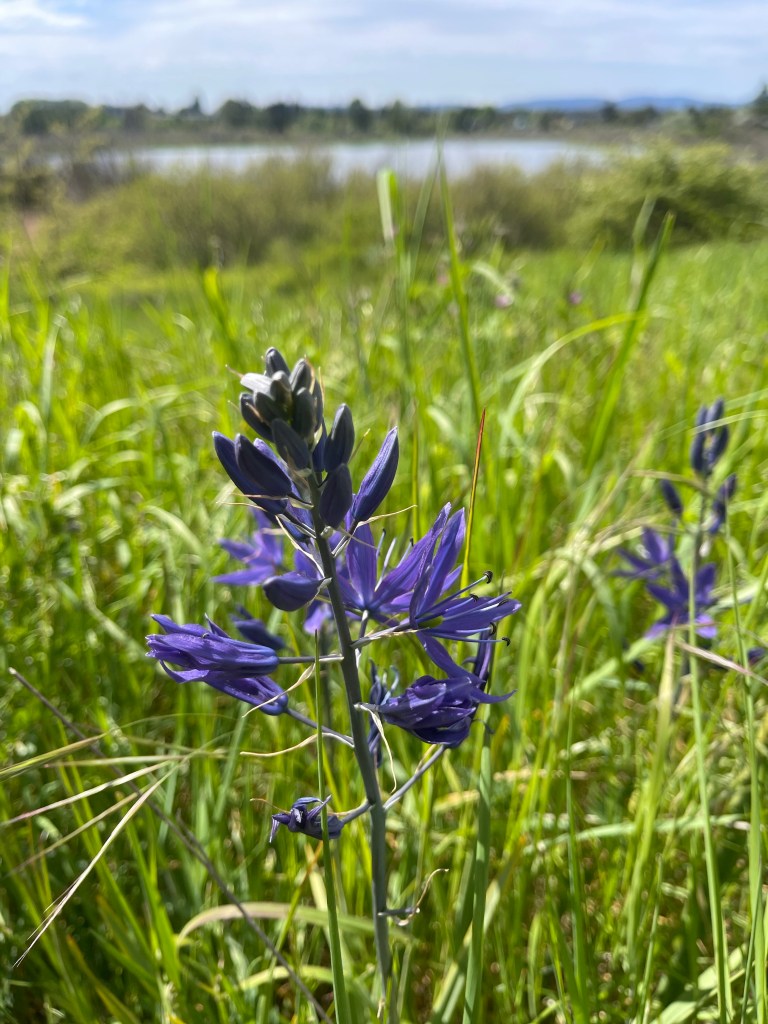
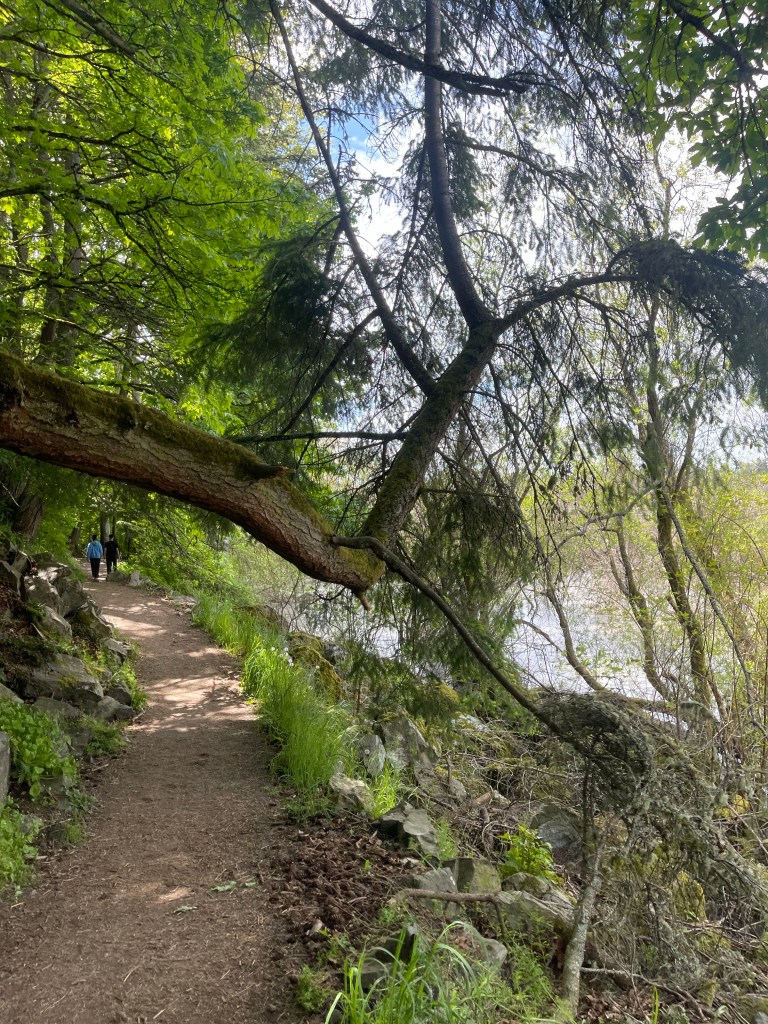
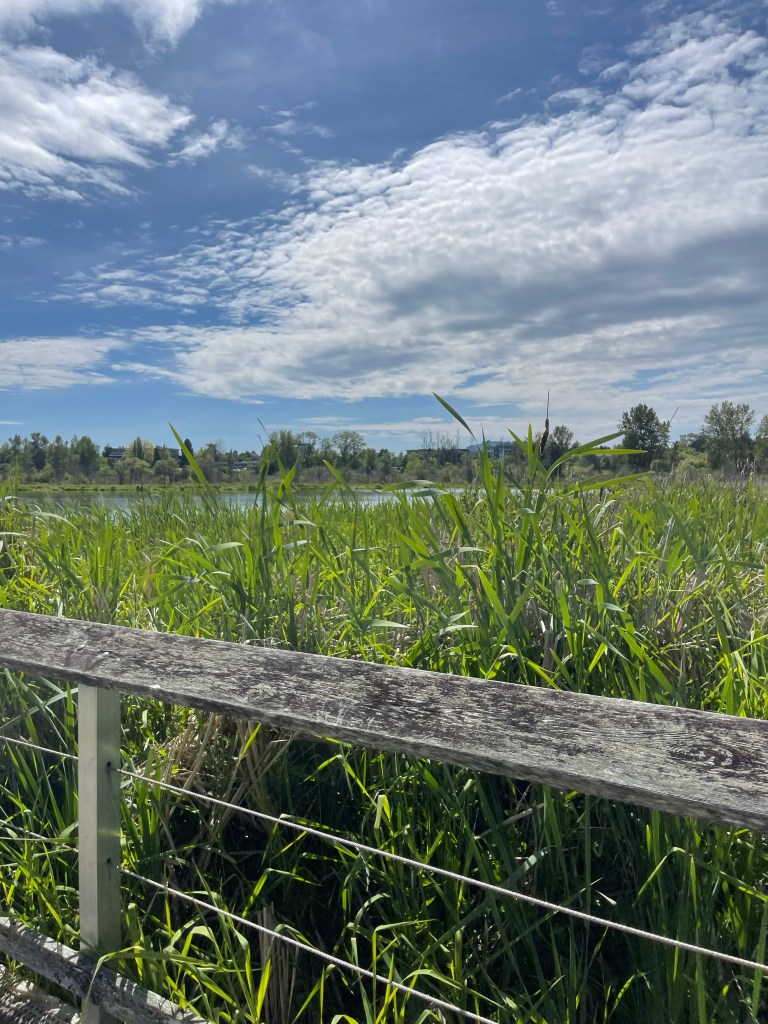
Our field trip to Swan Lake was so beautiful, peaceful, and educational!
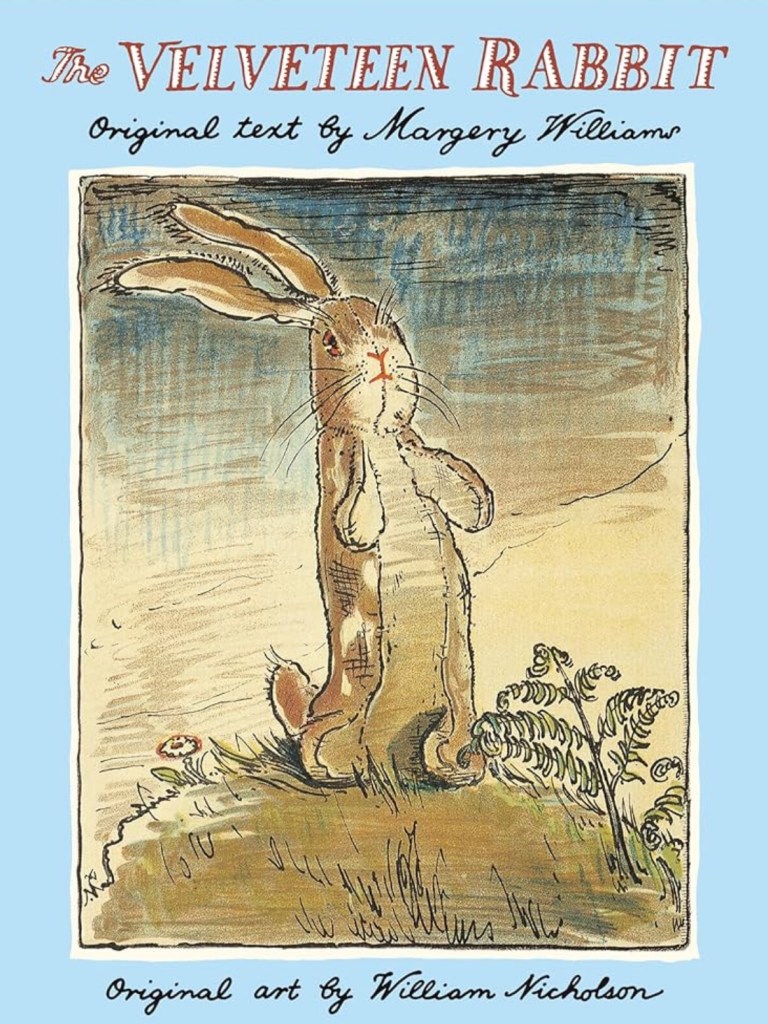
In Language Arts, we are working through a novel study on “The Velveteen Rabbit”. If you can, watch the wonderful movie version that is available on Apple+ since we don’t have the license to watch it at school. Students have just finished writing a literature response essay on the major themes in this book. We hope you’re having fun with your research and planning for your “Time Traveller” presentation! We can’t wait to see it!
We have made great progress in our Math unit on calculating perimeter and area. Here are some videos to reinforce skills taught in class….
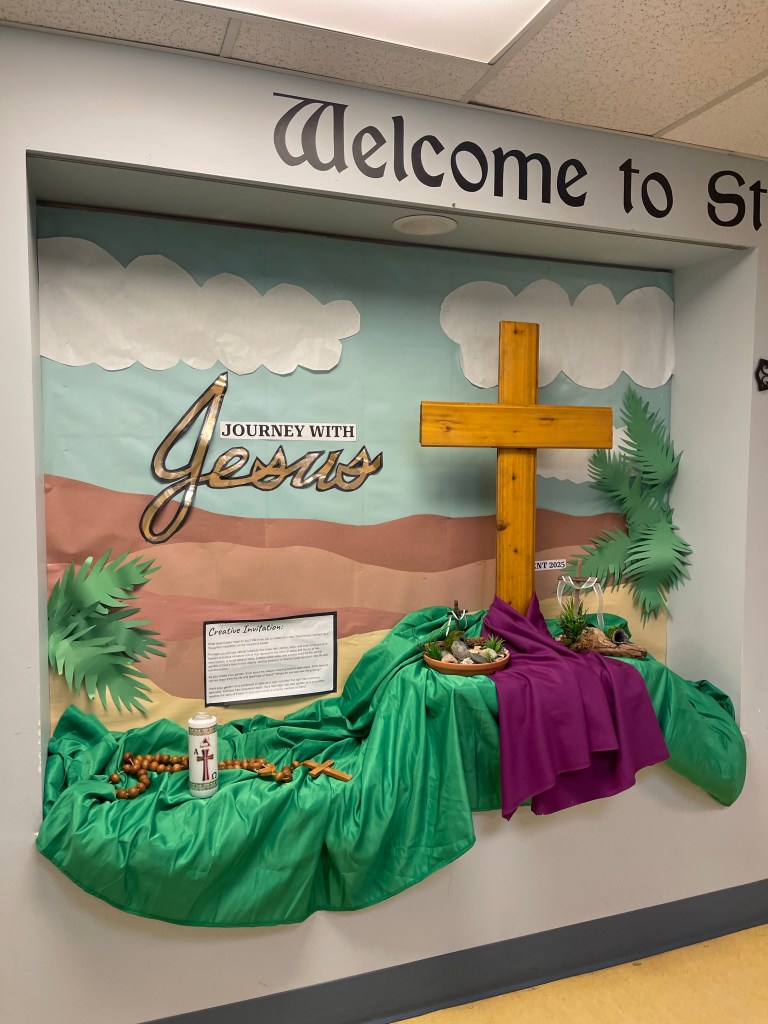
Wishing 5B families a wonderful blessing-filled Easter weekend and time for reflection. 💐✝️
(Original video posted on Instagram.)
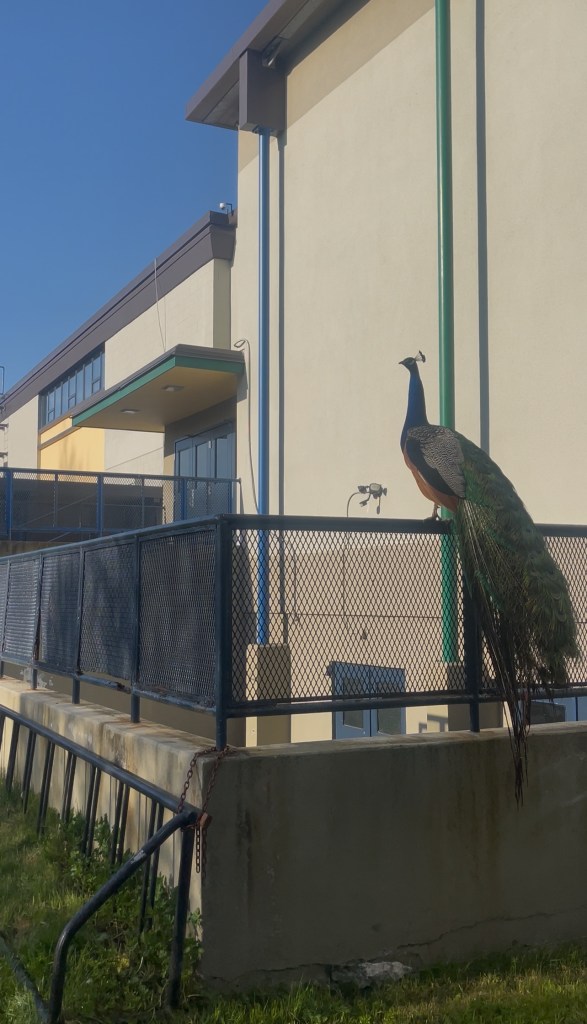
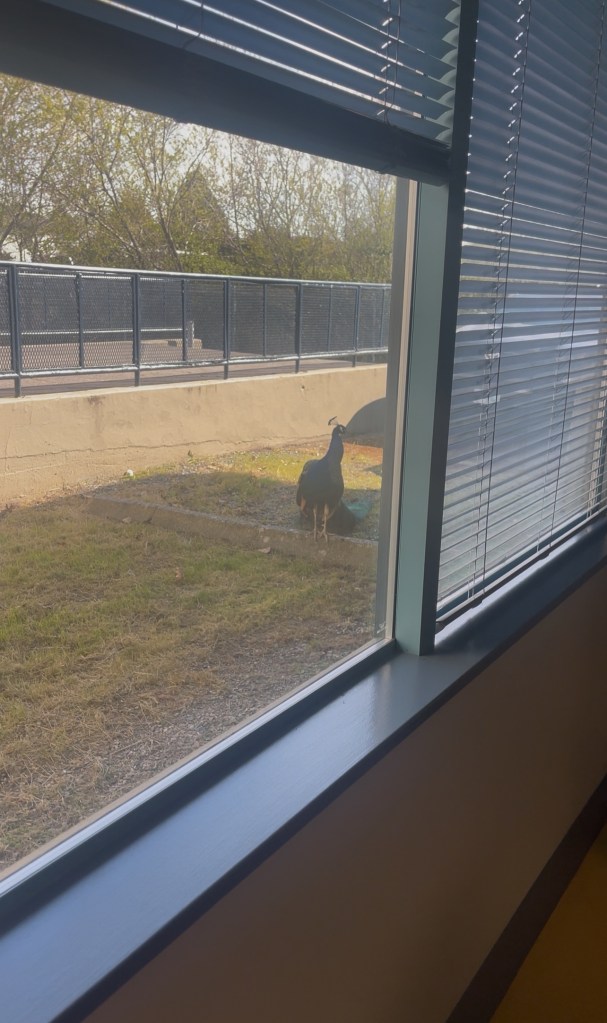
Presenting: The St. Pats peacock! 🦚 Could this be another new mascot? This curious and confident fellow was snooping around the school grounds yesterday, spying in the windows and perhaps looking for his Mrs. Peacock. We wondered if he was drawn in by the school’s pillars painted bright blue and green—just like him. Or did all of the students in green uniform seem like a friendly new flock to join? We wondered about his backstory and reasons for exploring beyond his territory. A great creative writing prompt! What do you think is this fellow’s story? Where will he go next?
Class photos happen on Friday, April 11th! Please wear your FULL UNIFORM with tie on this day!
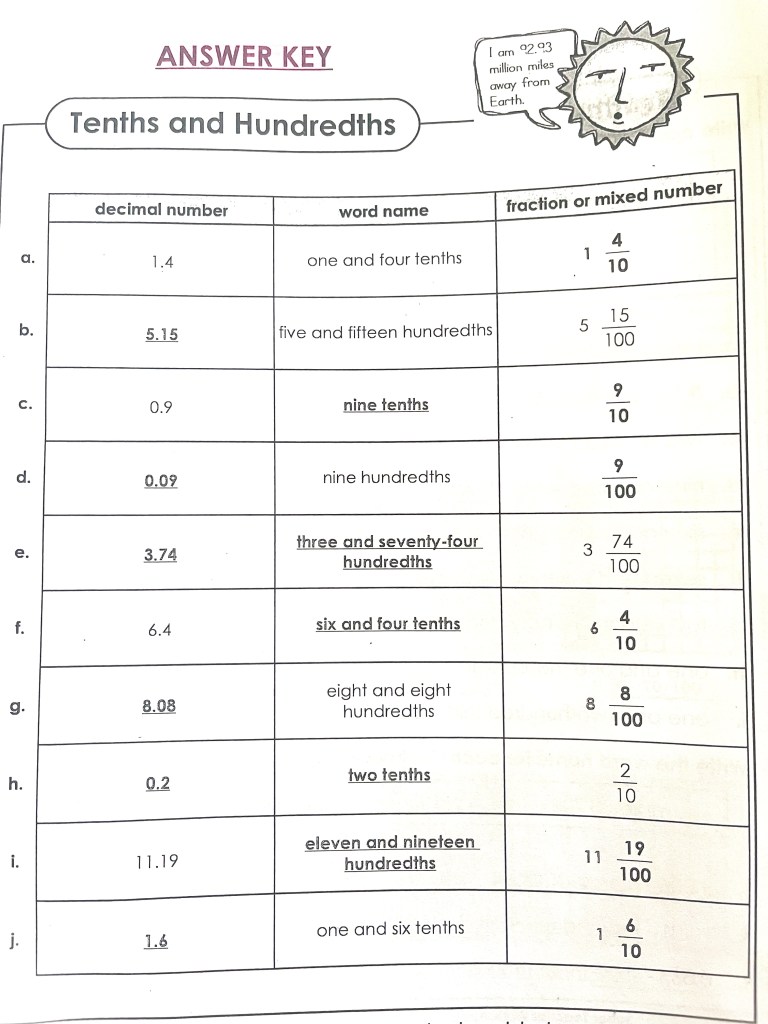
In Math, we have wrapped up our unit in equivalent fractions and are now exploring decimals. See below for an introductory video.
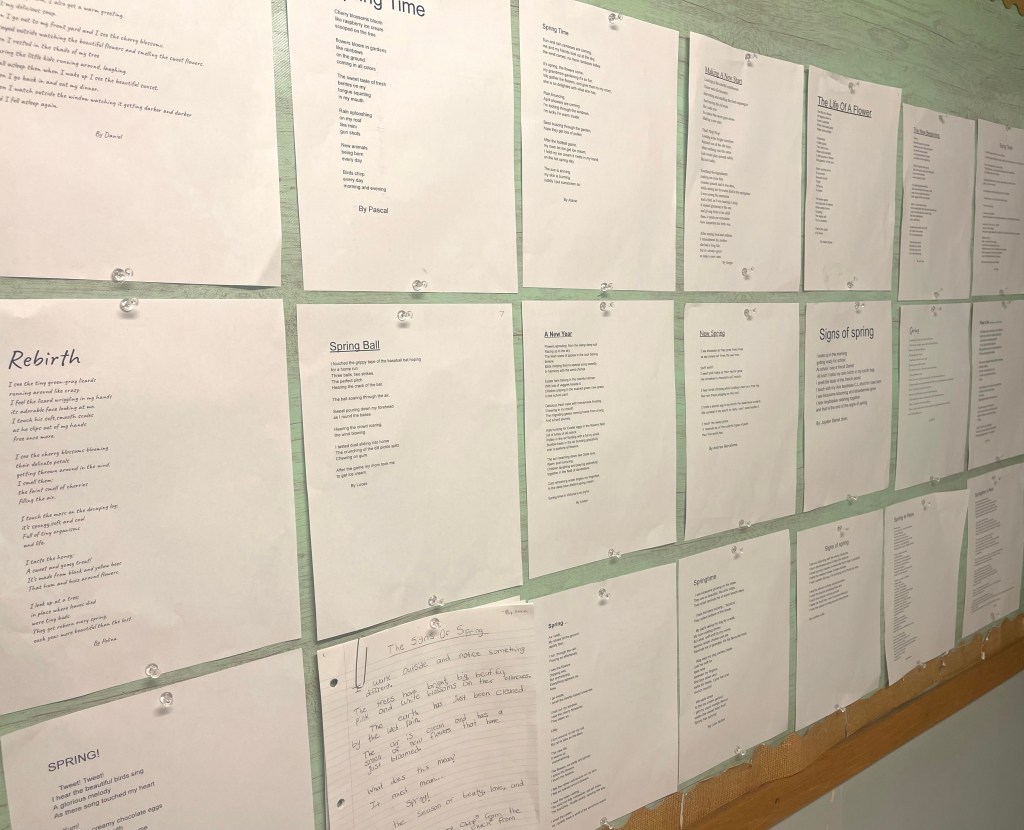
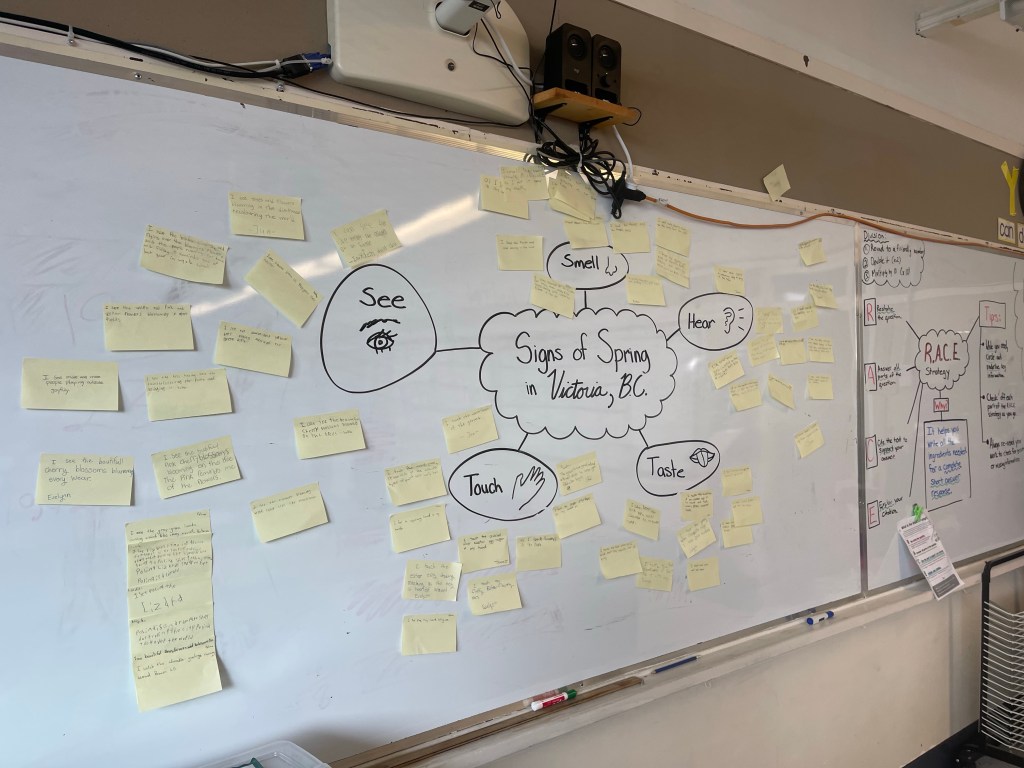
In Language Arts, students have just finished writing some wonderful five senses spring poems and reflective writing about spring break, and they are deep into a grammar unit and having fun with “Mad Libs”.
As well, Ms. Hicks has launched a personalized spelling program for students which will involve weekly spelling quizzes on Thursdays.
In Language Arts we are also preparing for the public speaking season! There will be opportunities for students to compete at the class, school and district level this May. Stay tuned for a full blog post about the speech criteria and tips. Students have been asked this week to begin thinking about topic ideas and have been analyzing example speeches. Students should be ready to present a 2-4 minute speech in class on April 29th, with or without notes.
We have an upcoming group novel study on “The Velveteen Rabbit”, and students are also working on doing the reading and planning for presenting their own book talks either in a live presentation or on video, due on June 3rd.
Here is an example of what a book talk would include.
We discussed book talks last term, and I have taught about each section step-by-step in class, and I will work to support students further. However, at this stage in the year, the hope and expectation is that a student can produce a book talk with increased independence. Lots of class time is available for this work, both the novel reading and book talk writing.
In Art and Career Ed., students have been working on making their own Learning Coats that will be presented on June 10th. The video above explains more about the project. Please make sure your child has a “coat” (old or secondhand t-shirt or dress shirt) to decorate. Personal Interest Project work is also continuing now until they are due for presentation on June 9th.
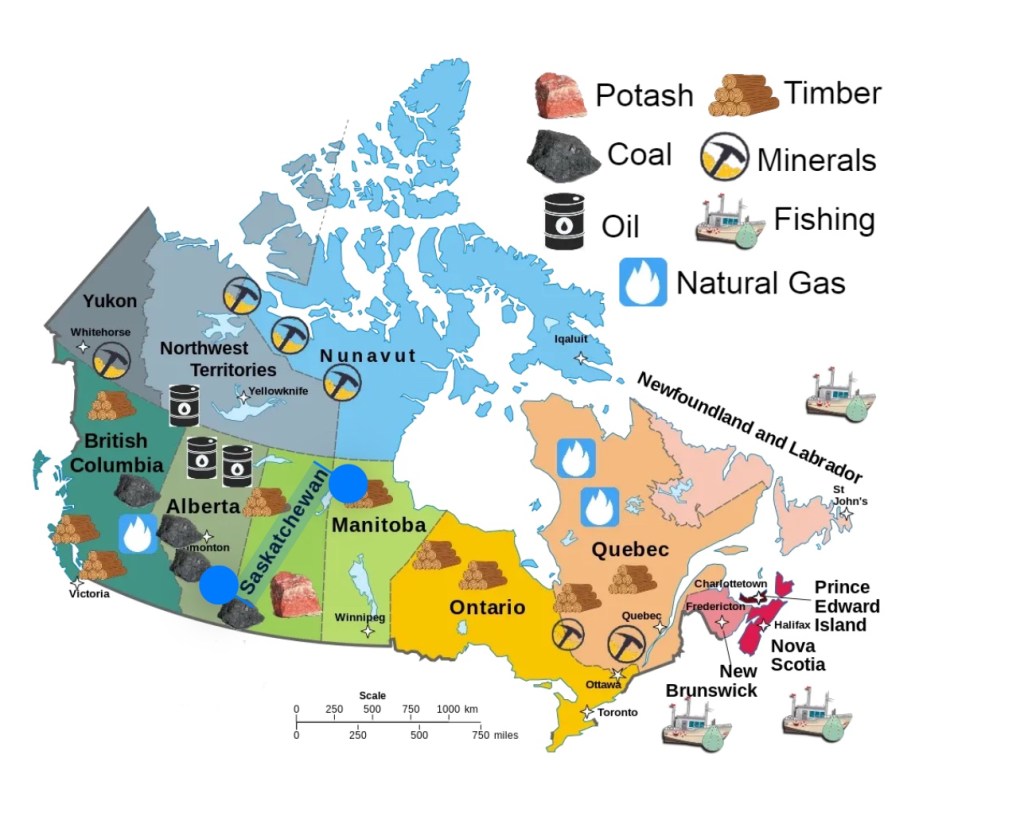
In Science and Social Studies, are exploring a cross-disciplinary unit on the natural resources in Canada and especially British Columbia.
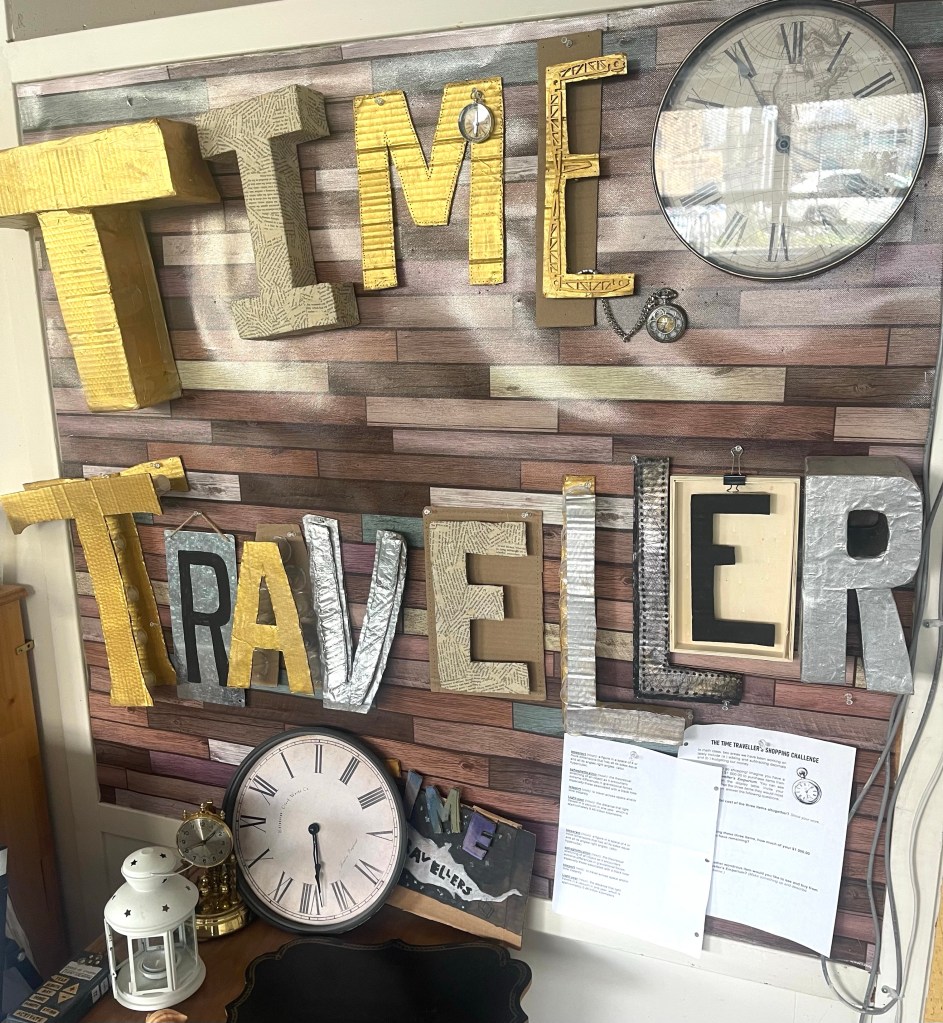
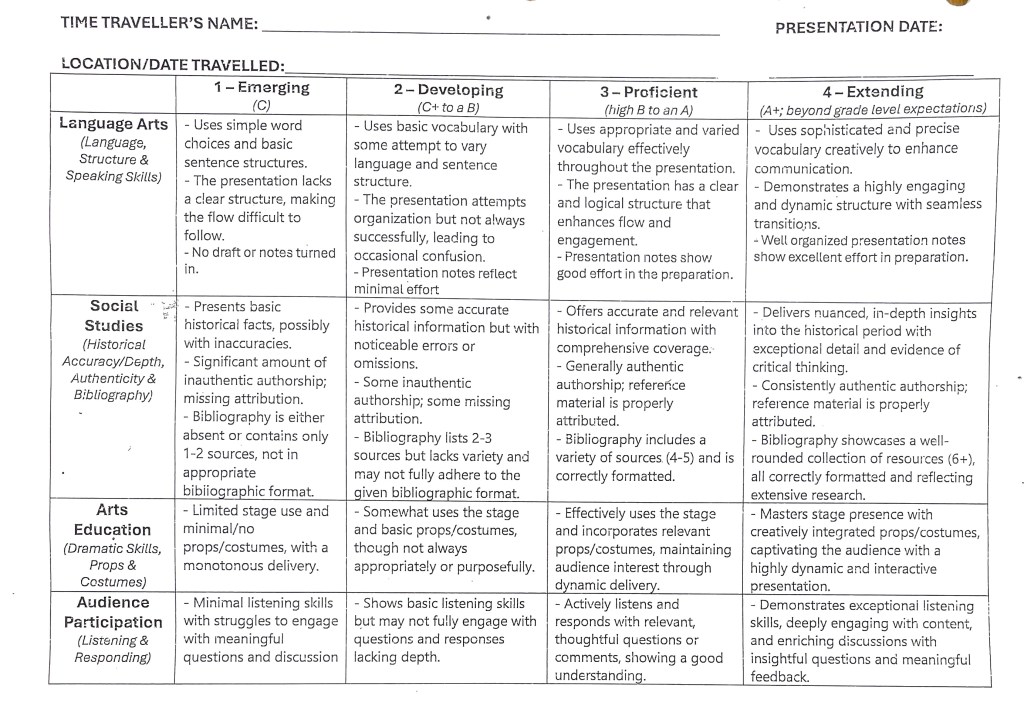
As well, in Social Studies, students have begun research for their own “Time Traveller’s Visit”. This inquiry project supports students to learn in depth about a historical time and place and imagine they have visited this place when reporting to us in a live presentation or video. This project is due to be presented by May 28th.
Watch this video for an overview of the project!
*I will make another blog post dedicated to this project in two weeks. For now, what students can do at home is continue learning about their chosen time and place through books, videos and other resources to increase their knowledge so they will be prepared with enough background to be creative when it’s time to write their presentations plans in class in a few weeks.
WHAT’S COMING DUE IN TERM 3?
Speeches – Due April 29th
Flower Art – Due May 9th
Time Traveller Presentation – Due May 28th
Book Talks – Due June 3rd
Personal Interest Projects – Due June 9th
Learning Coats – Due June 10th
Note: Our 5B Celebration of Learning will take place on Tuesday, June 10th from 2:00-3:00pm. This is a time when parents and guardians are invited to come to our class to see students be presented with certificates, model their Learning Coats, and each give a 30 second speech. We will share highlights from our school year together and there may be some plays presented.
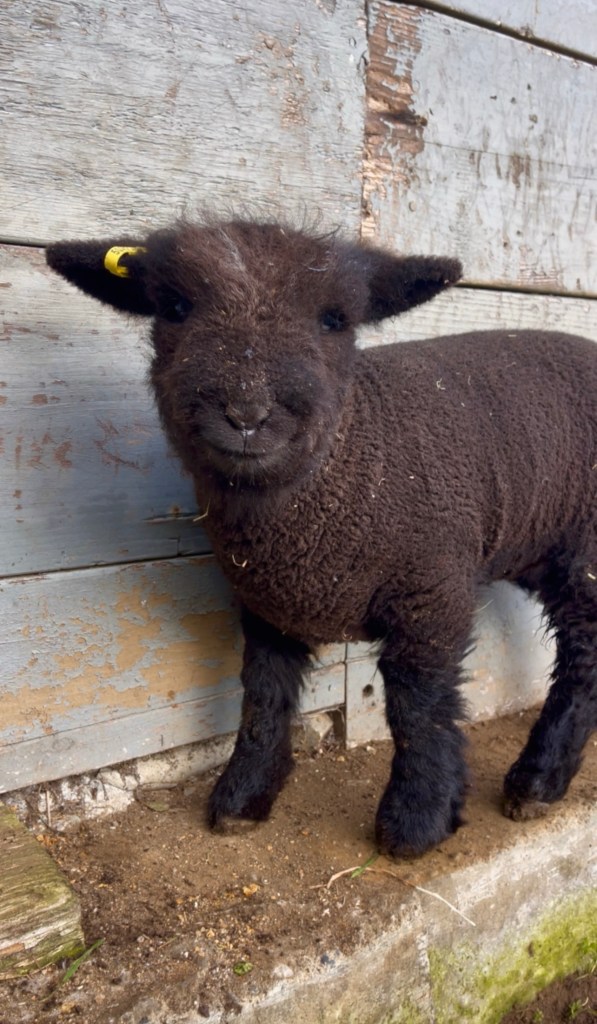
I hope you all had a joyful and restful spring break! I’m so excited to welcome everyone back to begin our final term together. It was lovely to hear students sharing about their recent adventures, and I’ll be sharing with the class tomorrow a little about my own spring break too—my family officially became farmers!
In Religion class we continue to deepen our understanding of the Easter story and Lent.
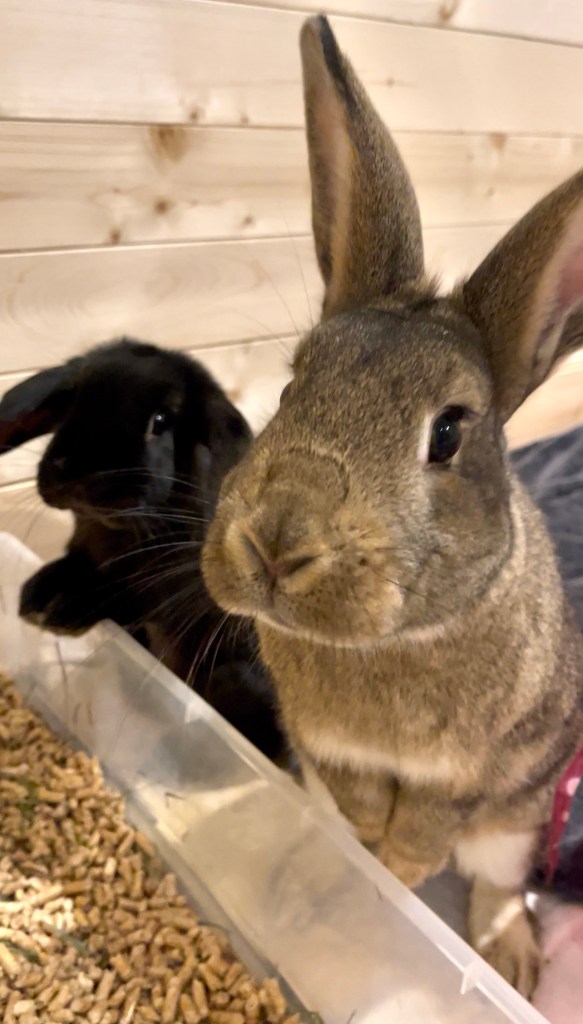
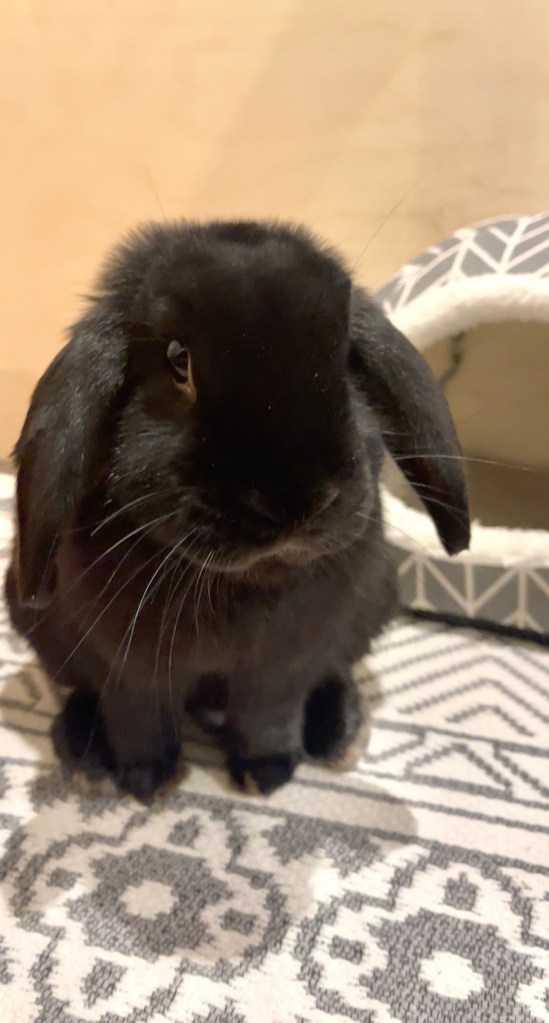
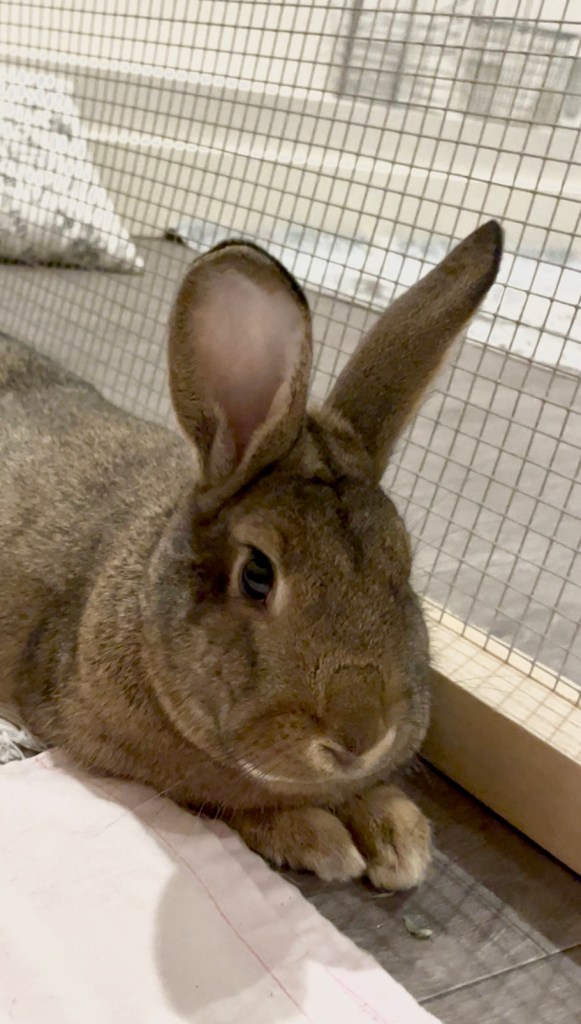
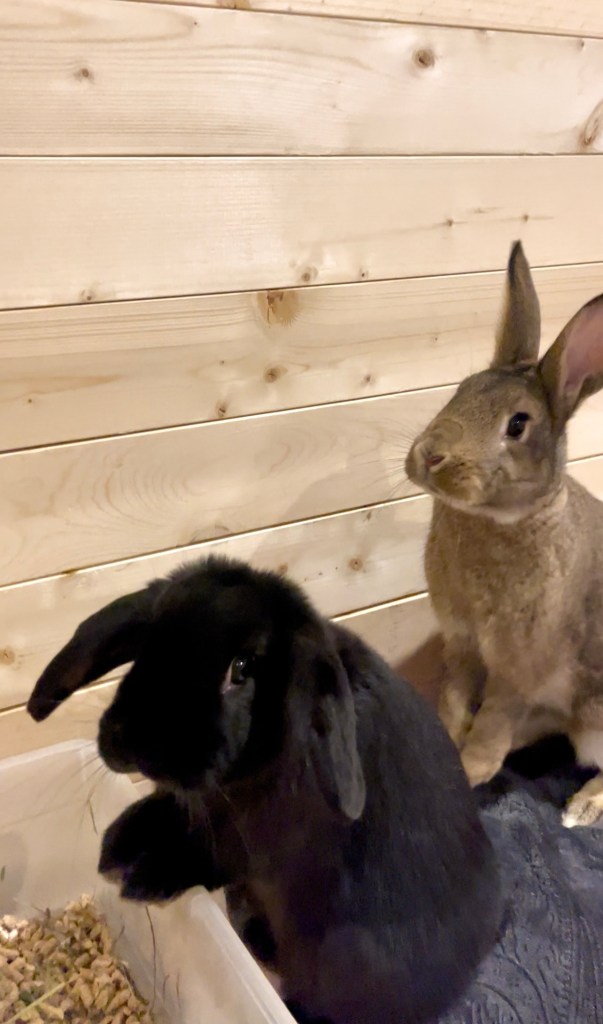
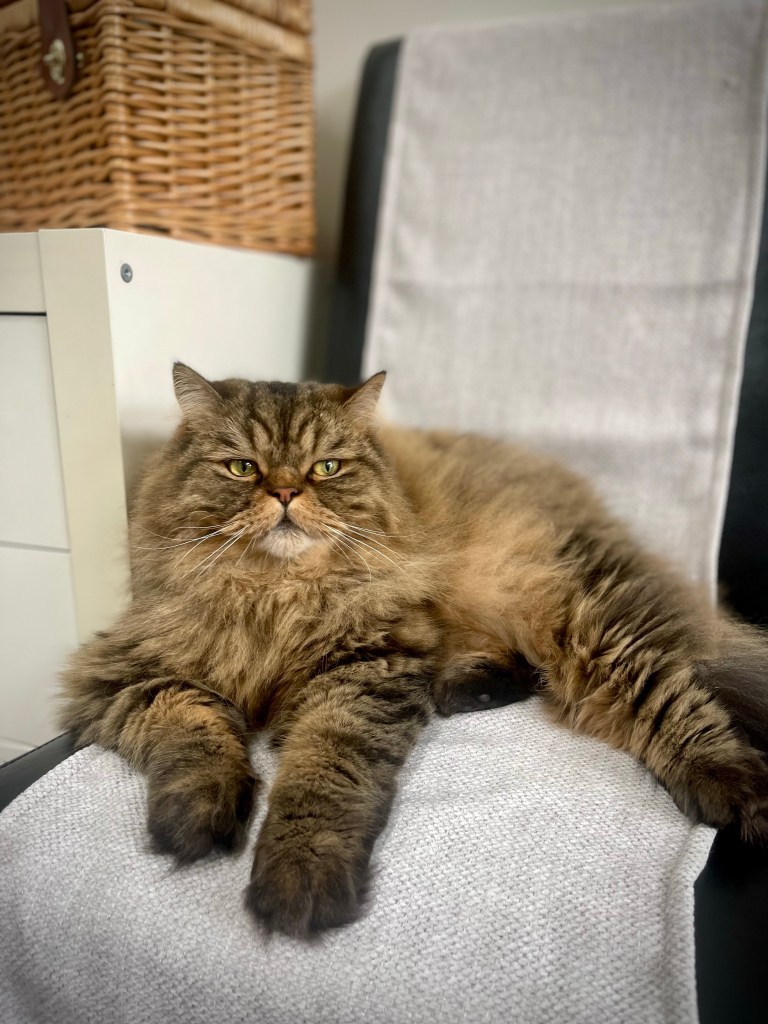
Over the break, my family and our two cats welcomed three sheep (a mother and her two lambs) and two bunnies, adopted through Amy’s Bunny Barn, a wonderful rescue organization.
I’ll be posting more photos and videos on our class blog in the coming days—stay tuned!
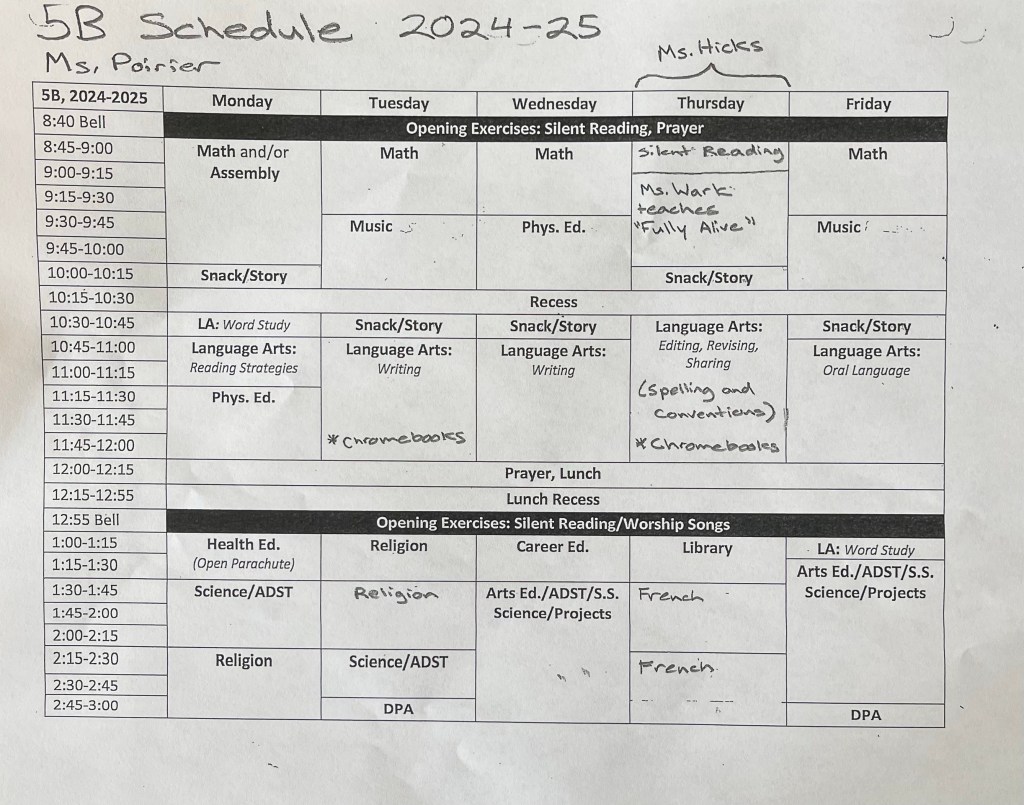
Important Thursday Schedule Update:
Beginning this week, there will be a change to our Thursday schedule:
• Mrs. Catherine Hicks, our French teacher, will now be with 5B for the full day on Thursdays.
In addition, we’re happy to welcome back Ms. Brianna Wark, who has returned from maternity leave. She will also be teaching in our classroom on Thursdays from 9:00 to 10:00 a.m., leading the Fully Alive program, which beautifully connects concepts from our Religion curriculum with our Health education, including body science and healthy living. Ms. Wark will be reaching out to families in the coming week to introduce the program and what to expect.
Here’s our updated Thursday schedule:
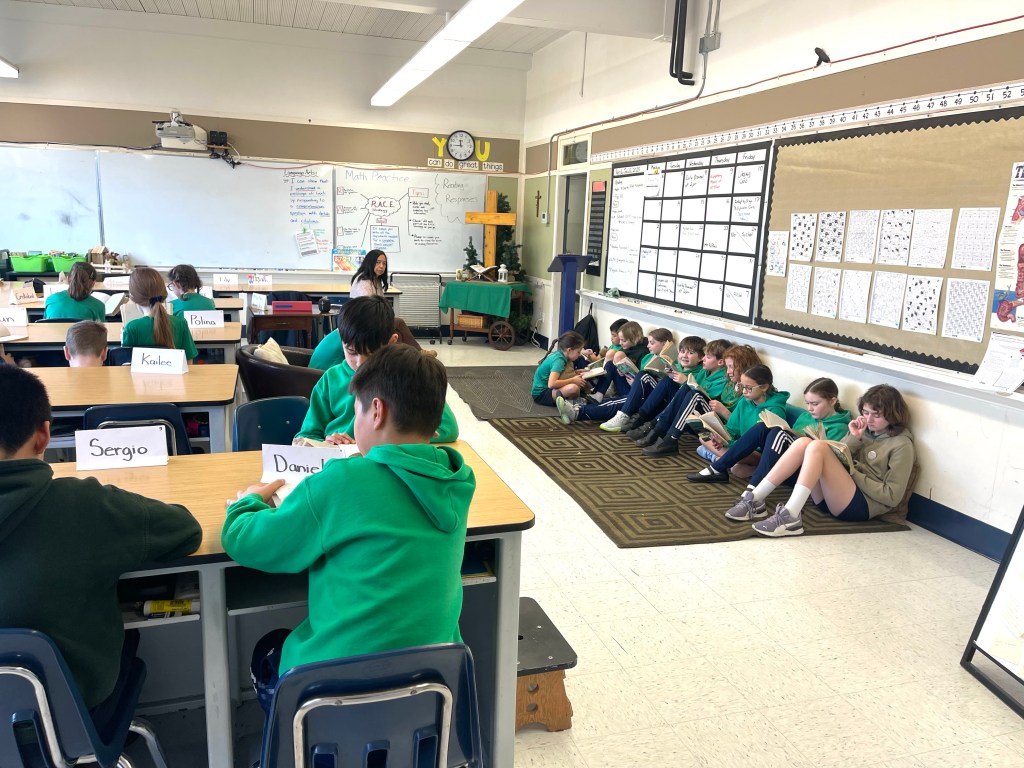
• 8:45–9:00 – Silent Reading
• 9:00–9:30 – Fully Alive Program with Ms. Wark
• 9:30–10:00 – Language Arts project work block Ms. Wark
• 10:00–10:15 – Snack & Prayer
• 10:15–10:30 – Recess
• 10:30–11:45 – Language Arts with Mrs. Hicks (focus on spelling, grammar and conventions)
• 11:45–12:00 – Clean-up, Hot Lunch Prep & Prayer
• 12:00–12:15 – Lunch
• 12:15–12:55 – Recess
• 1:00–1:30 – Library with Mrs. Taylor
• 1:30–2:45 – French with Mrs. Hicks (double block)
• 2:45–3:00 – Clean-up & Daily Physical Activity
Track & Field Reminder:
If your child is interested in participating in Track and Field, please remember to return the permission form. We are committed to ensuring that every child who wants to participate will be supported so if financial assistance would help your family, please don’t hesitate to reach out to myself or the office.
What We’re Working On:
We’re jumping right back into learning this week! Students are:
• Reviewing equivalent fractions in Math
• Writing Five Senses Spring Poems
• Creating 3D sculptural art pieces for a very special Mother’s Day project
• Sharing spring break highlights in oral and written reflections
I’m looking forward to all the growth, creativity, and fun ahead!
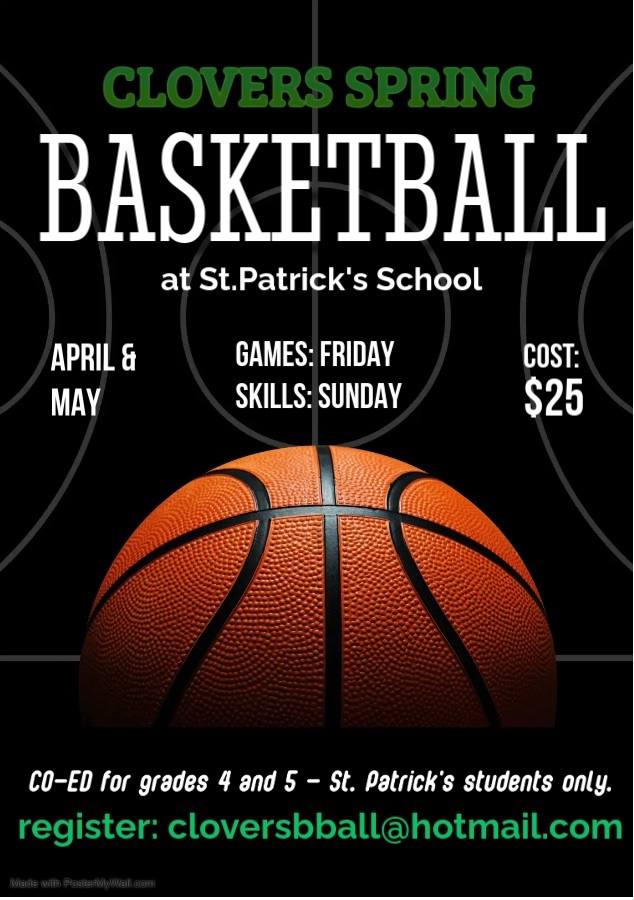
BASKETBALL: Also, anyone interested in extracurricular basketball taking place at our school should refer to the following information and send an email of interest to cloversbball@hotmail.com
We’ve had an exciting and productive end to Term 2! Here’s a little update on what we’ve been working on in class:
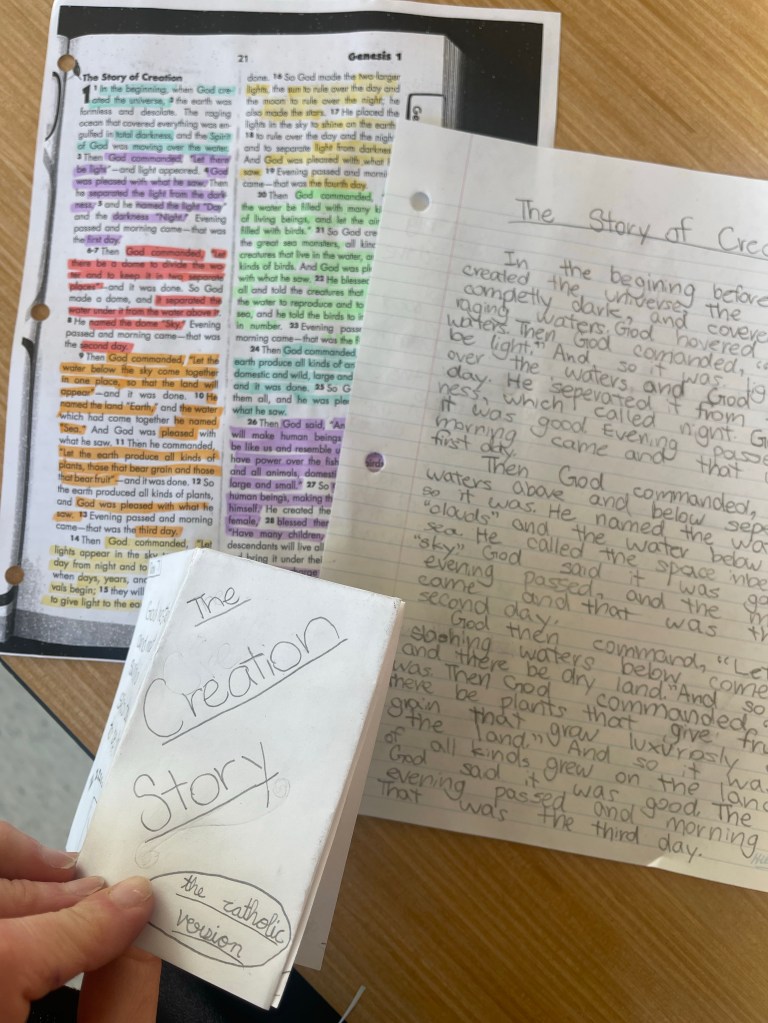
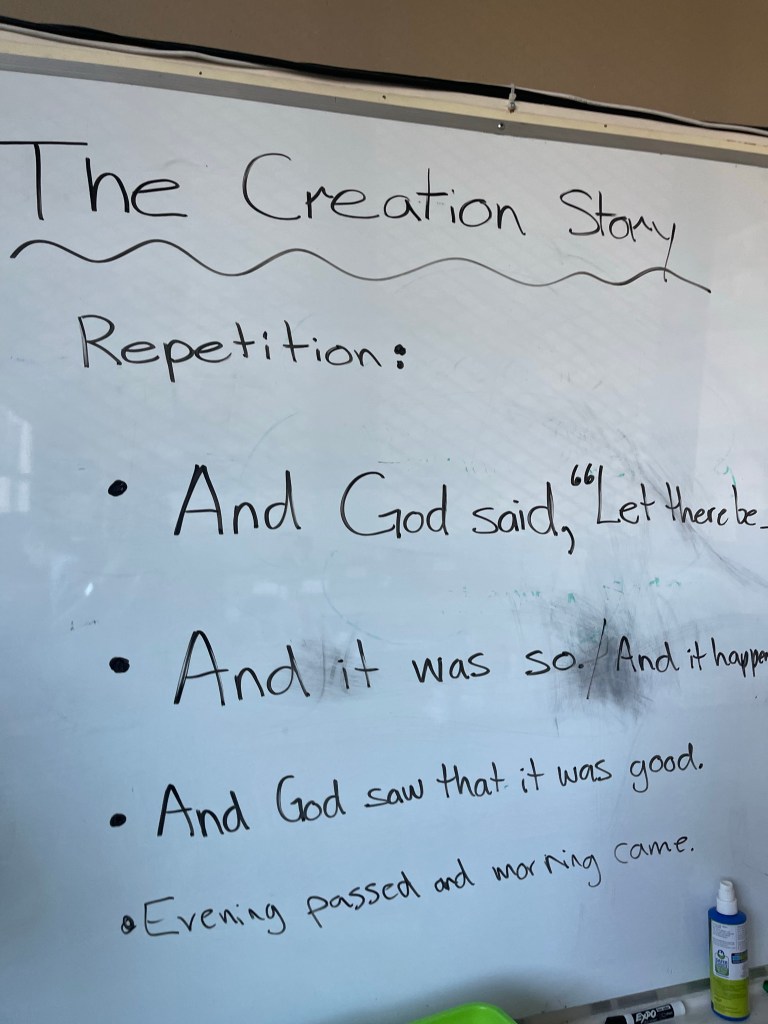
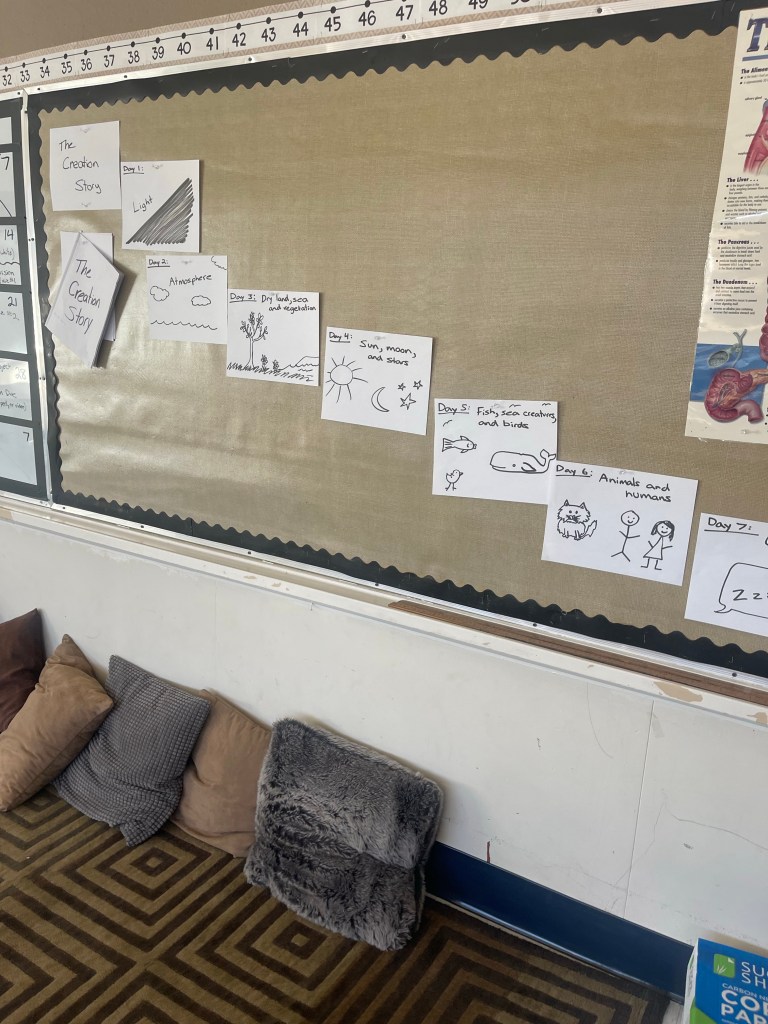
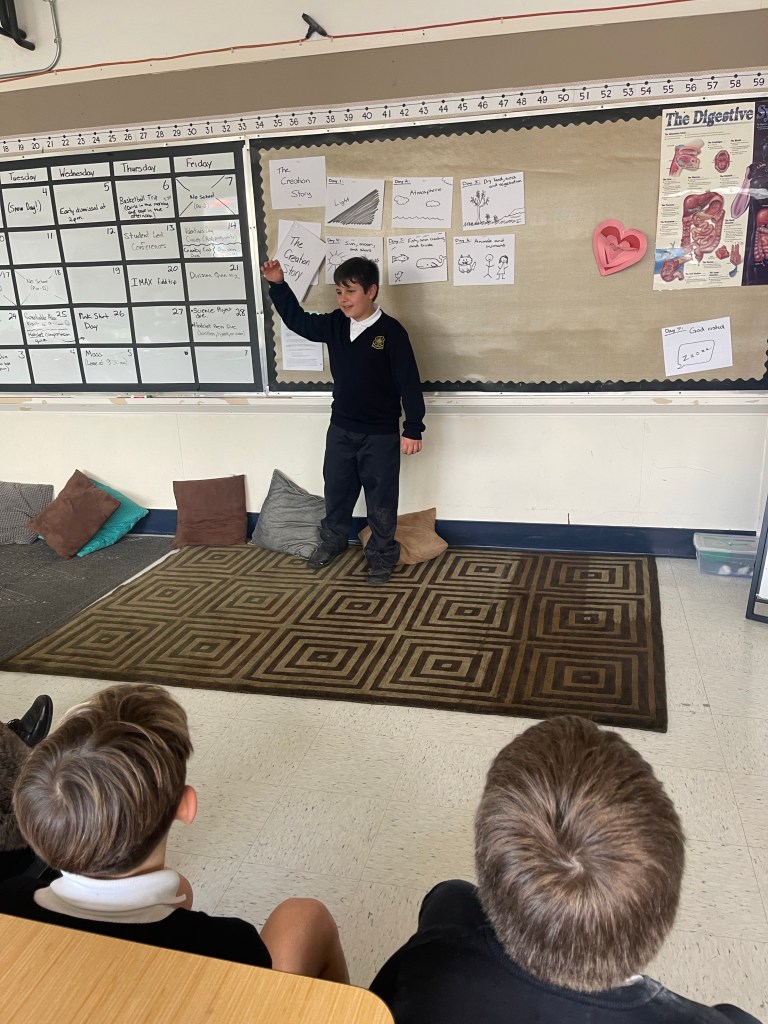
• Religion: Students have been retelling the Creation Story using various dramatic techniques to bring it to life.
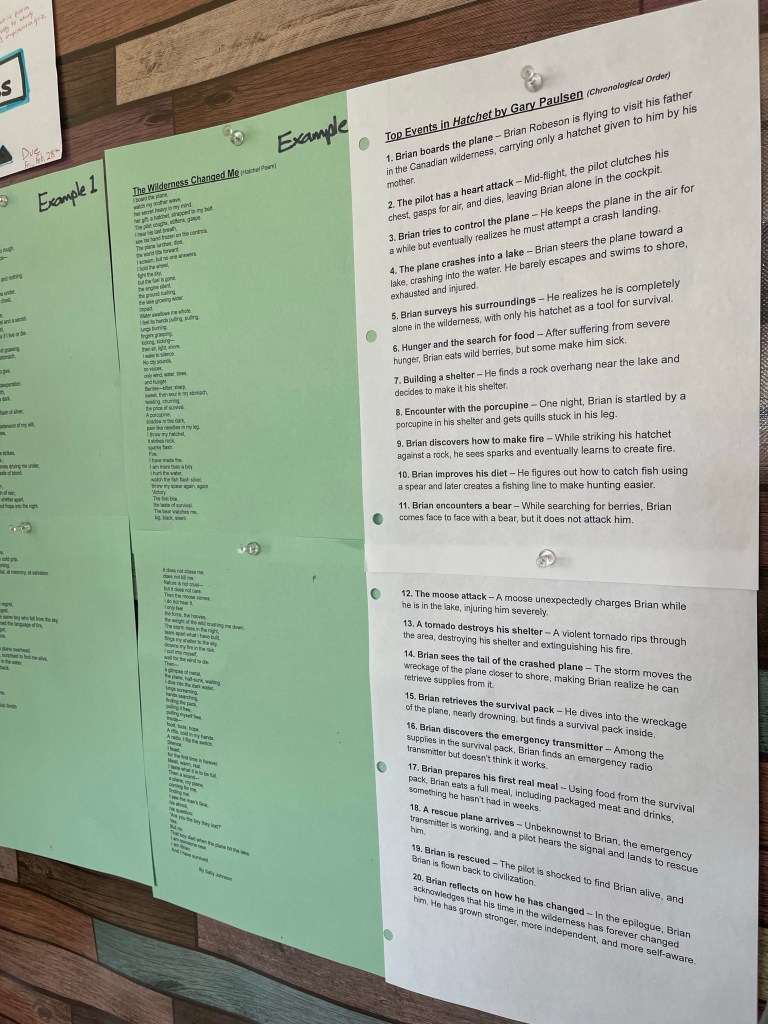
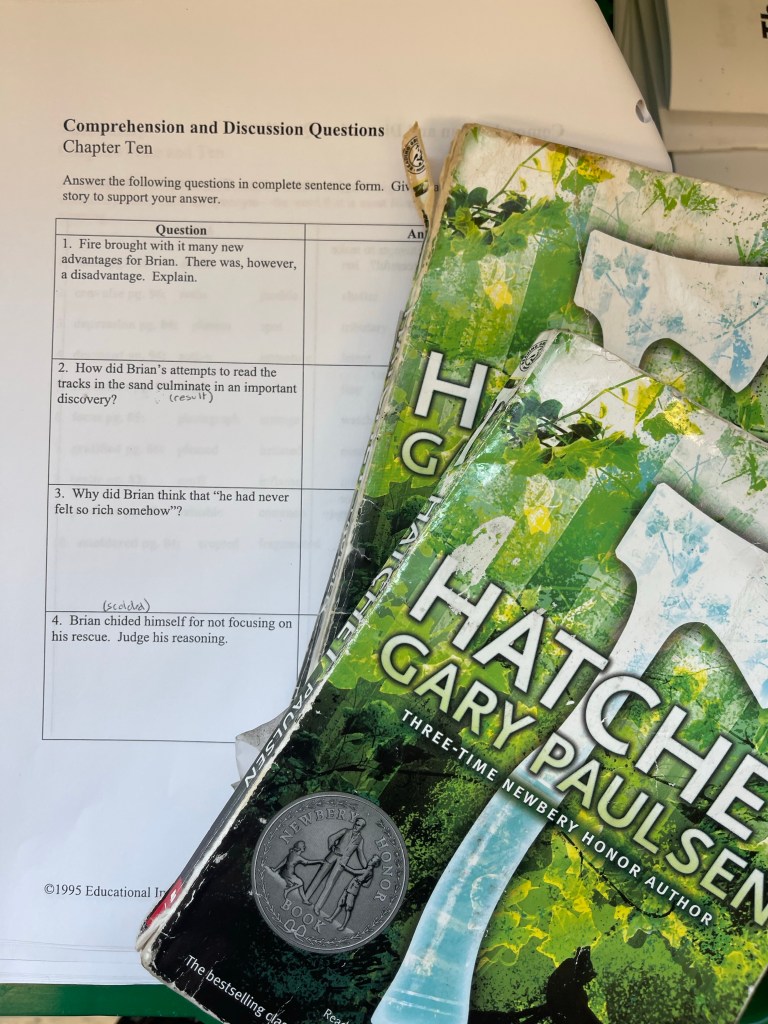
• Language Arts: We’ve wrapped up our novel study on Hatchet by Gary Paulsen. Students have handed in their reading response paragraphs and have been preparing for their comprehension quiz tomorrow through creative and interactive study methods. They are also working on writing a five-senses survival poem from the protagonist’s perspective, using poetic techniques, literary devices, and rich vocabulary from the novel.
• Reminder: Hatchet poems are due this Friday, February 28th.
• Science: For the past two months, students have been working on their digestive system board game projects, designing engaging ways to teach their classmates about this important body system.
• Reminder: Science projects are also due this Friday, February 28th.
• Math: Students recently completed their division quiz rewrites, which will be sent home on Friday as I finish scoring them. While quizzes are a common format for assessment, we continue to provide students with various ways to demonstrate their learning. Our focus remains on building strong self-advocacy skills and helping students develop strategies for understanding and organizing information across subjects.
Upcoming Events & Reminders:
• Pink Shirt Day – Tomorrow (Wednesday, February 26th): Students are invited to wear a pink shirt to support anti-bullying initiatives. They may wear it with or over their regular uniform at their discretion.
Thank you for your continued support! Please feel free to reach out if you have any questions.
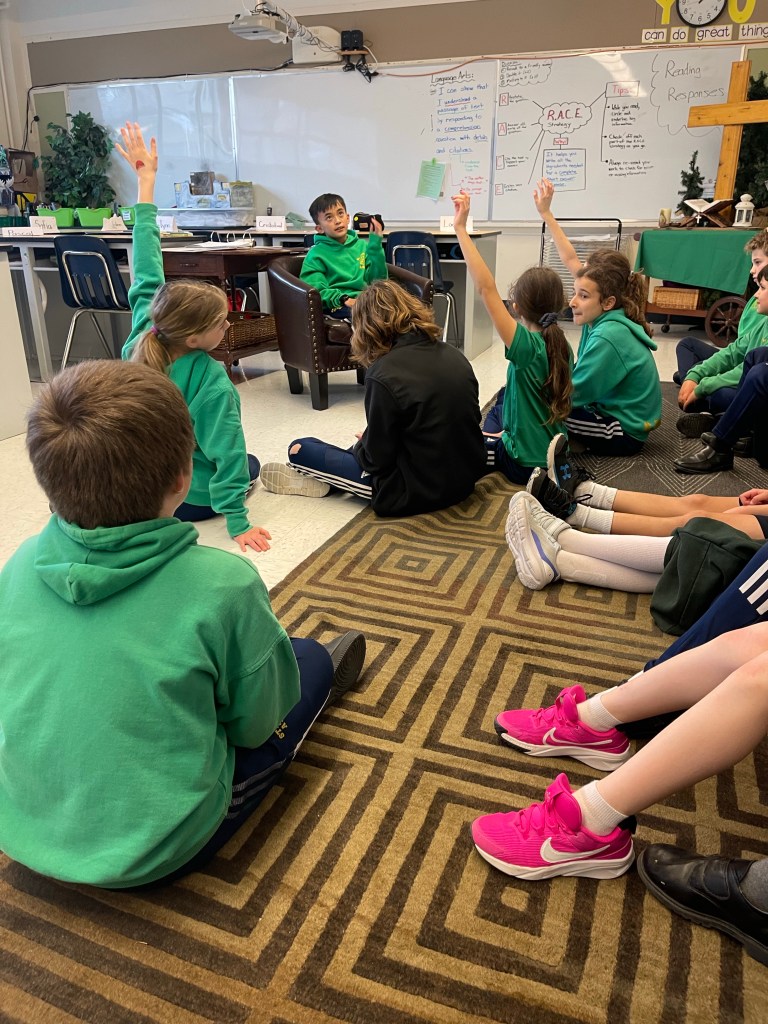
Andrew did an awesome job leading our Social Studies class by telling us about his extended travels in the Philippines and giving us a geography lesson.
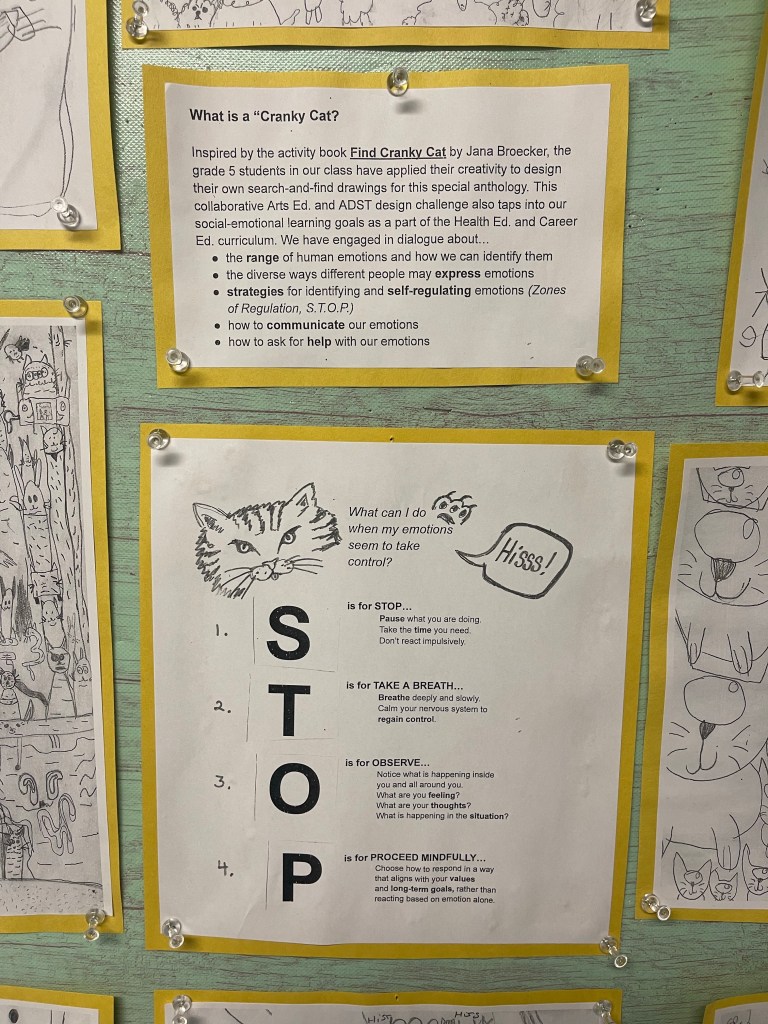
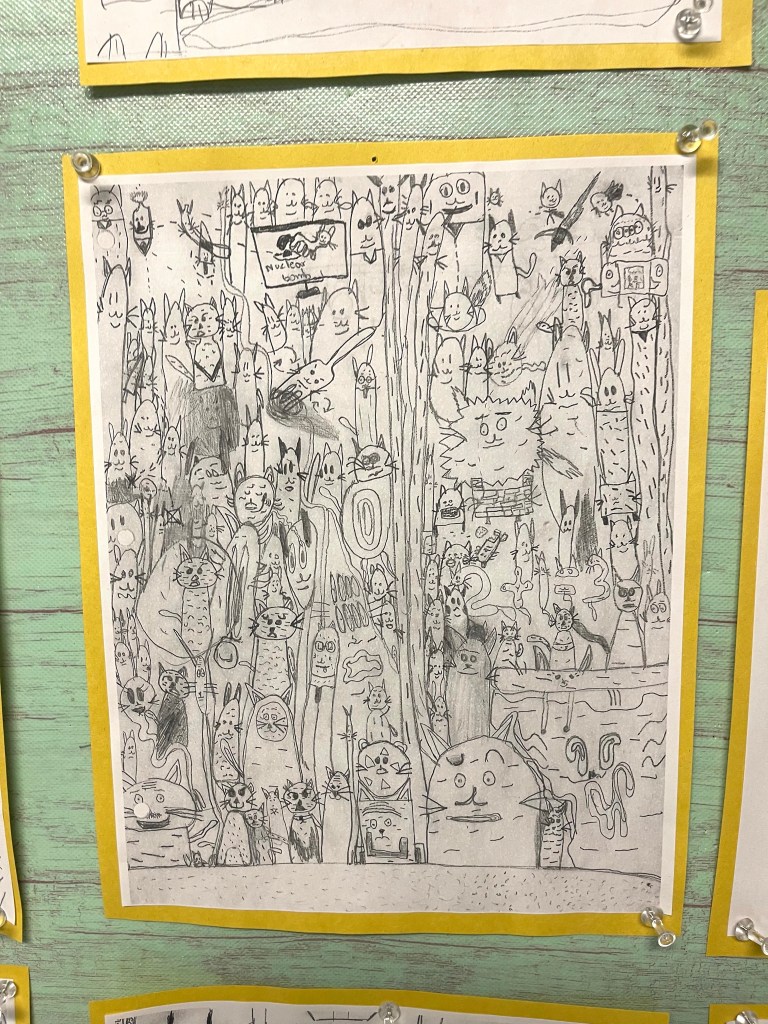
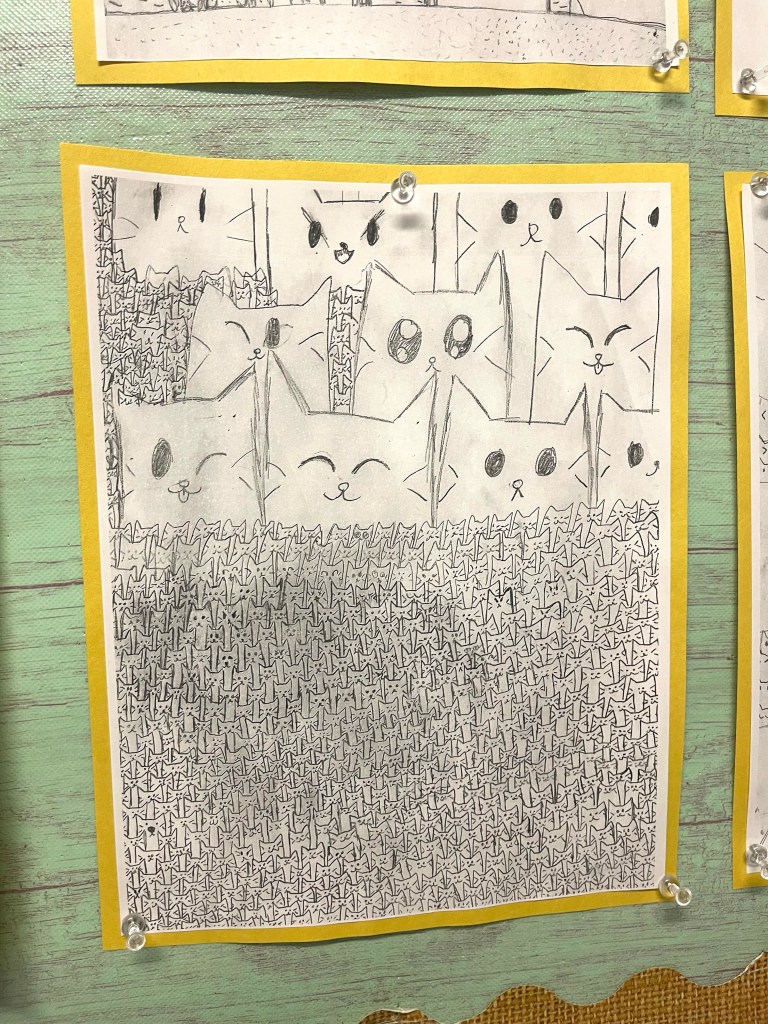
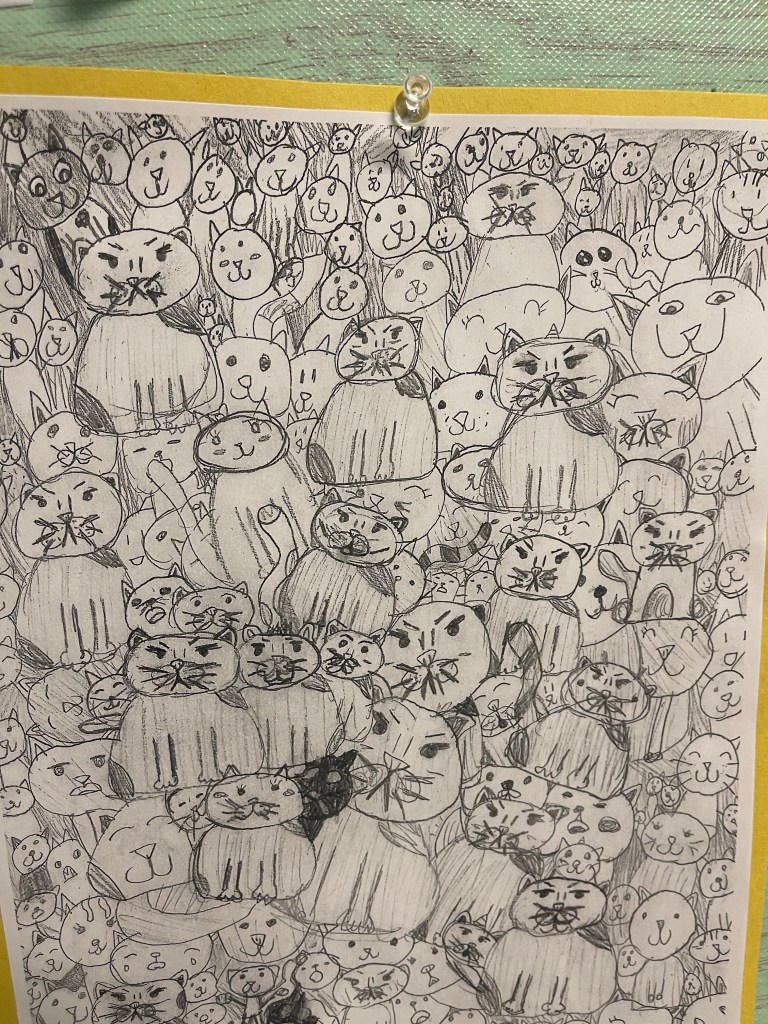
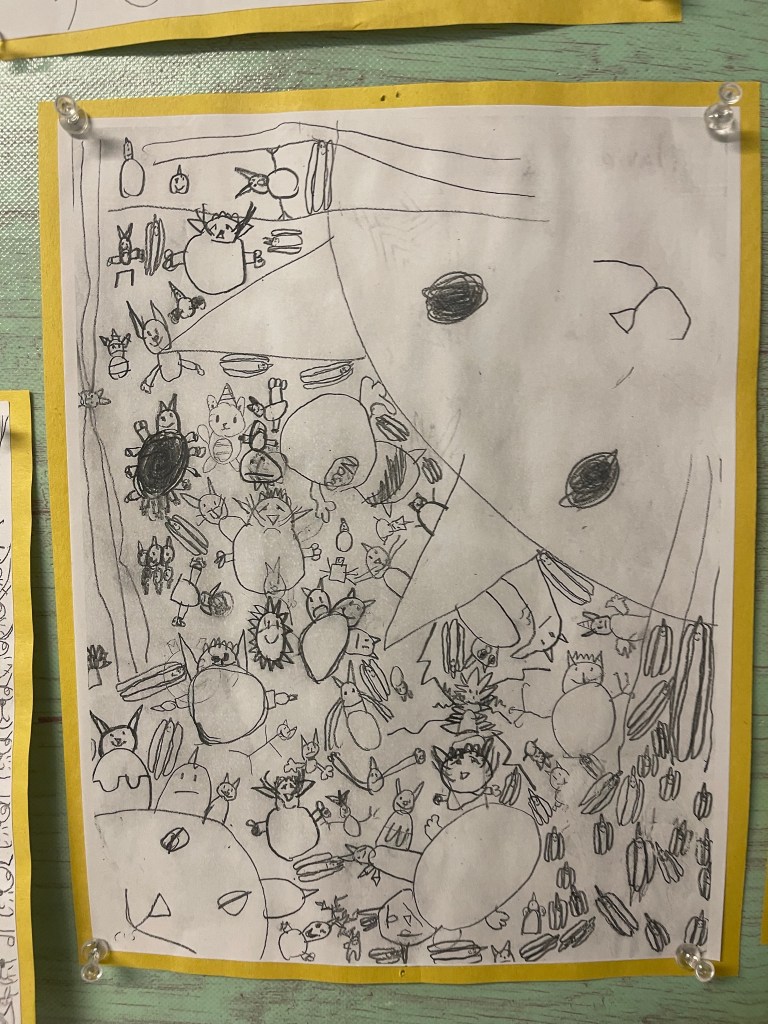
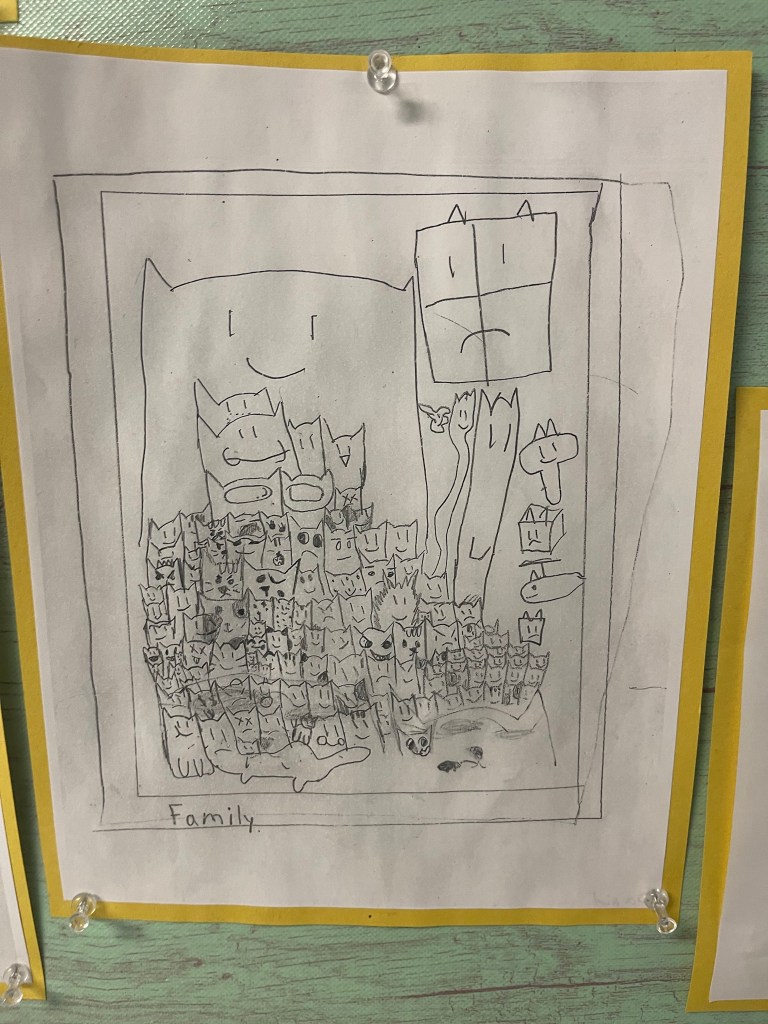
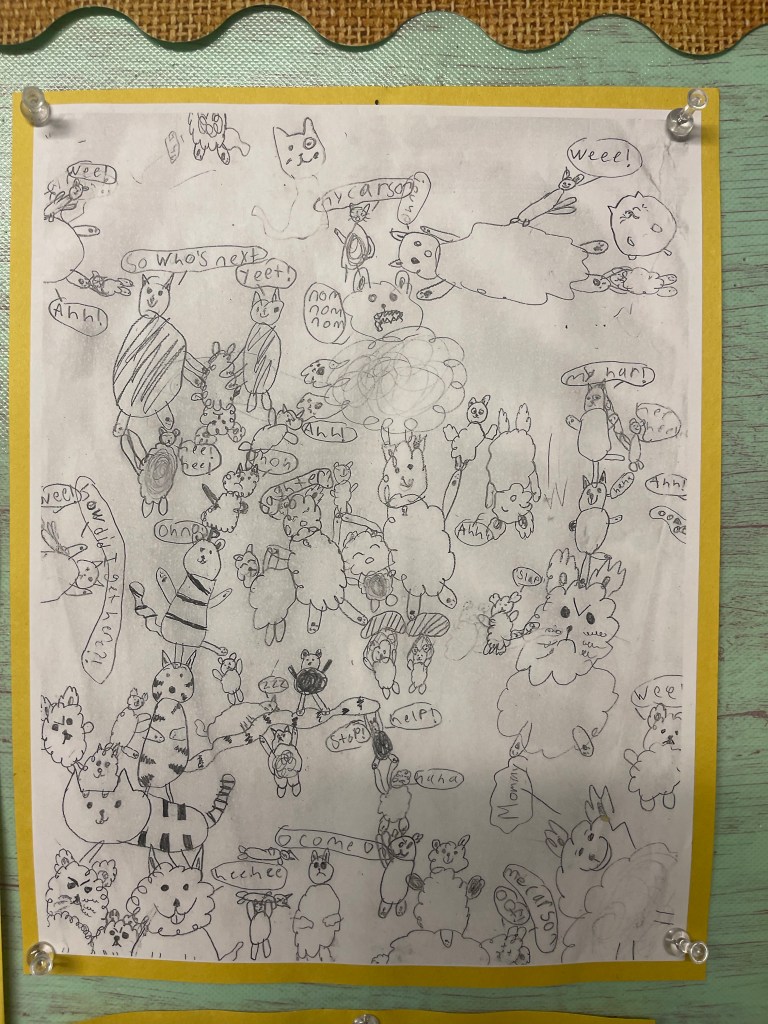
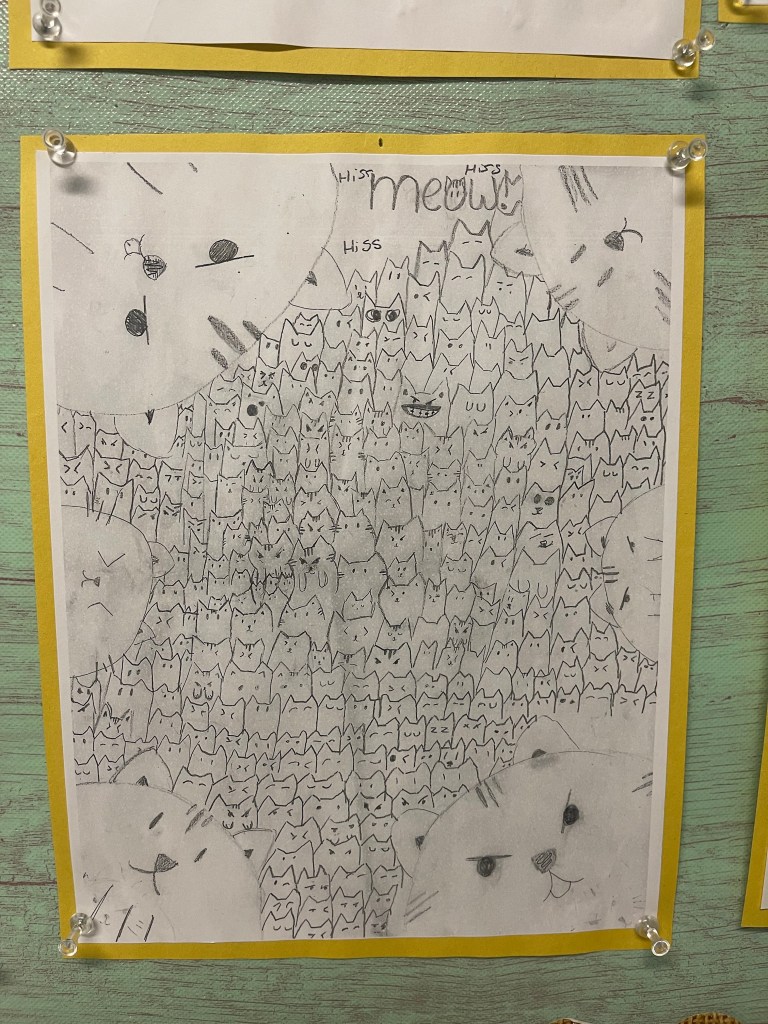
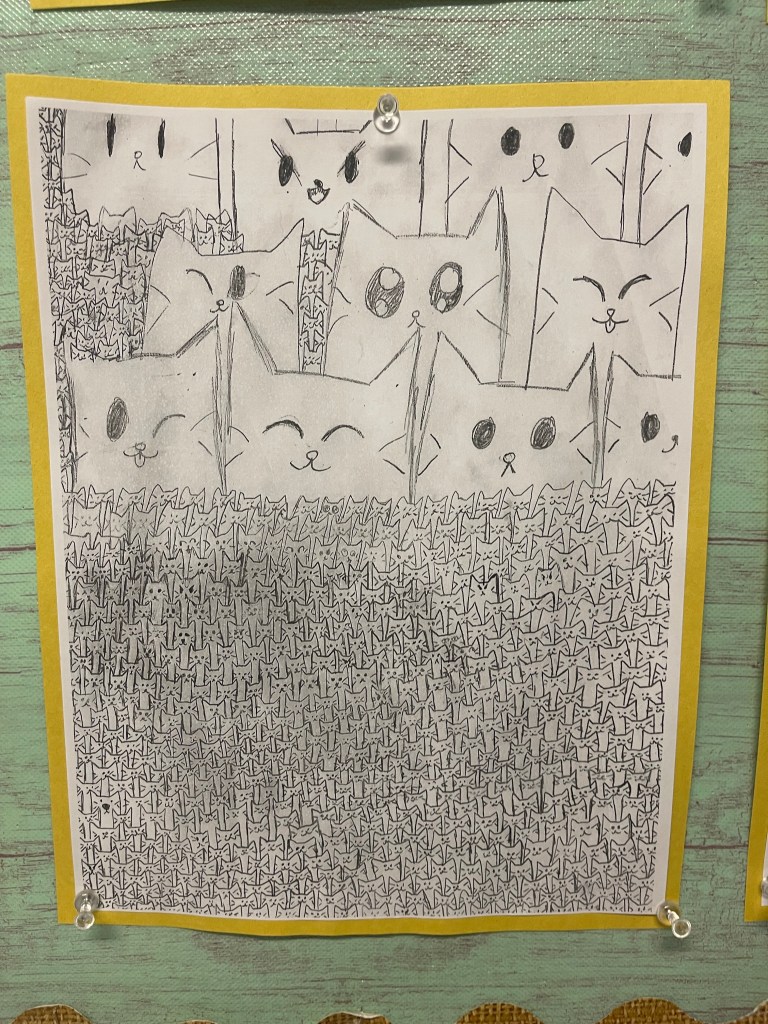
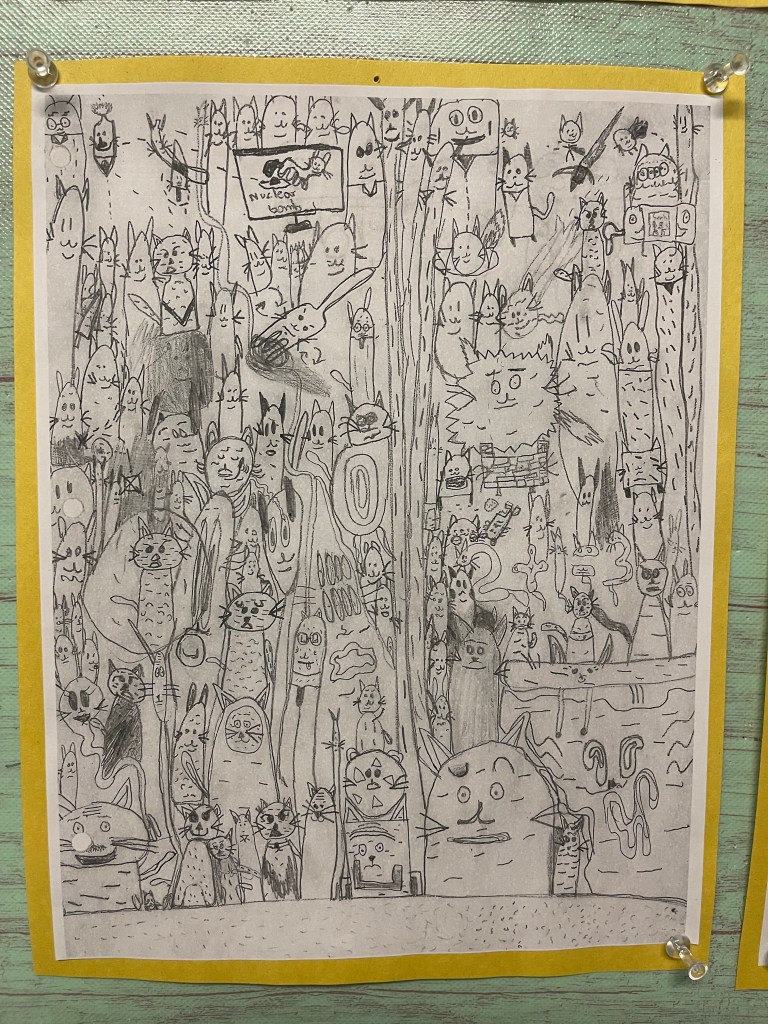
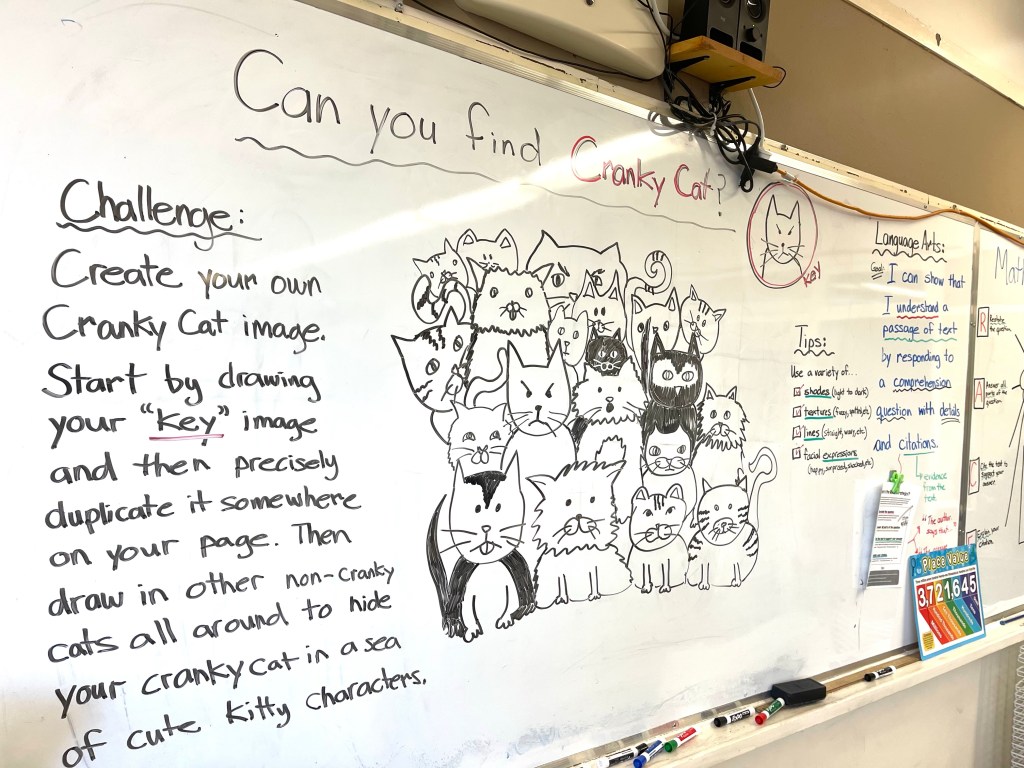
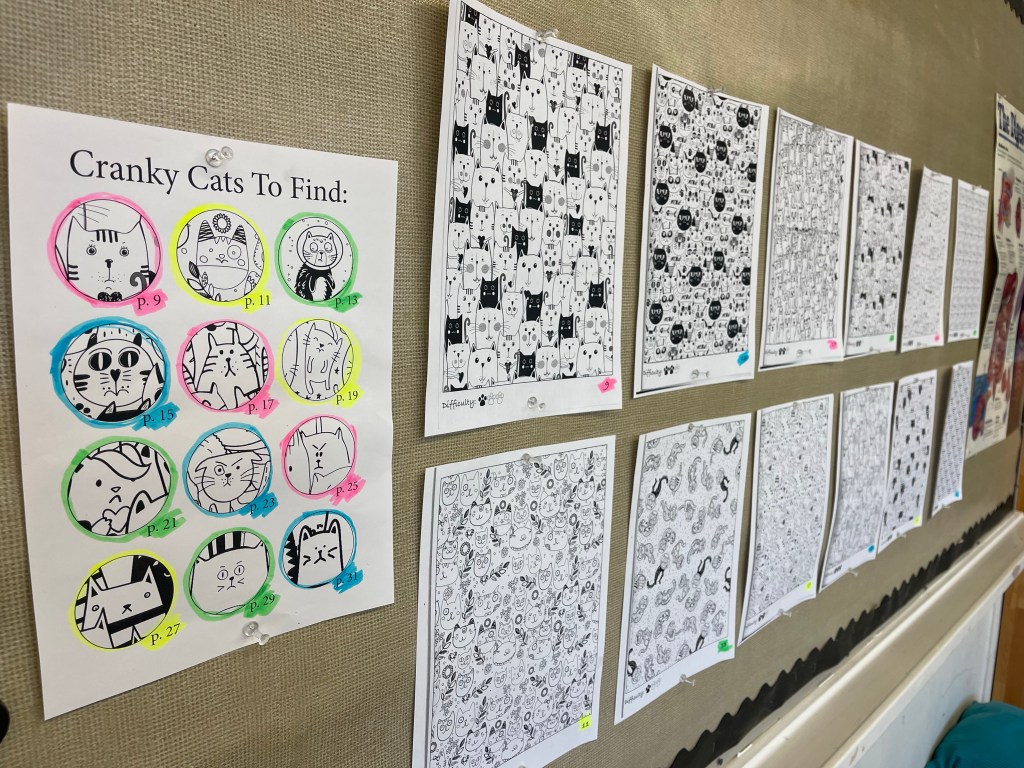
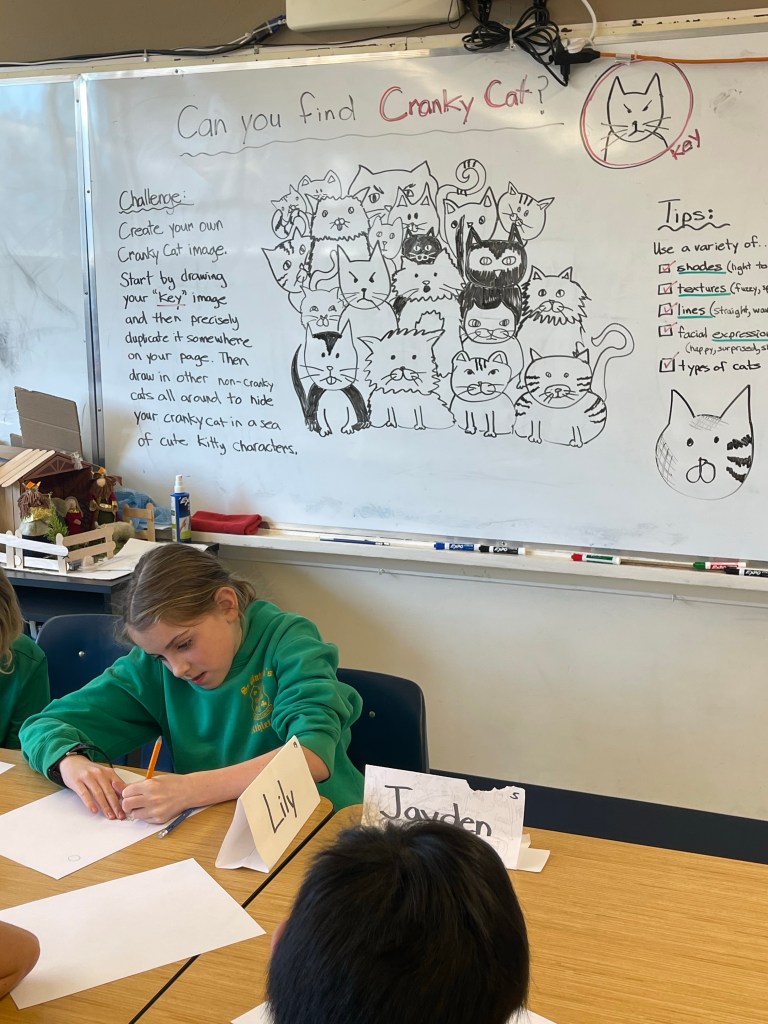
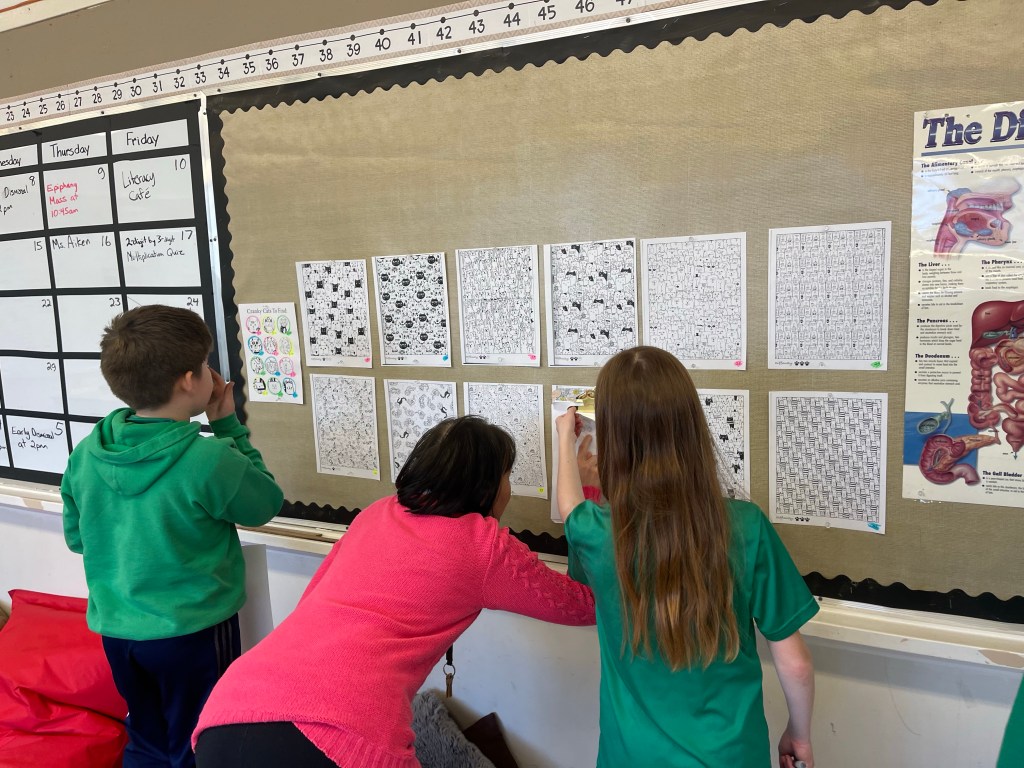
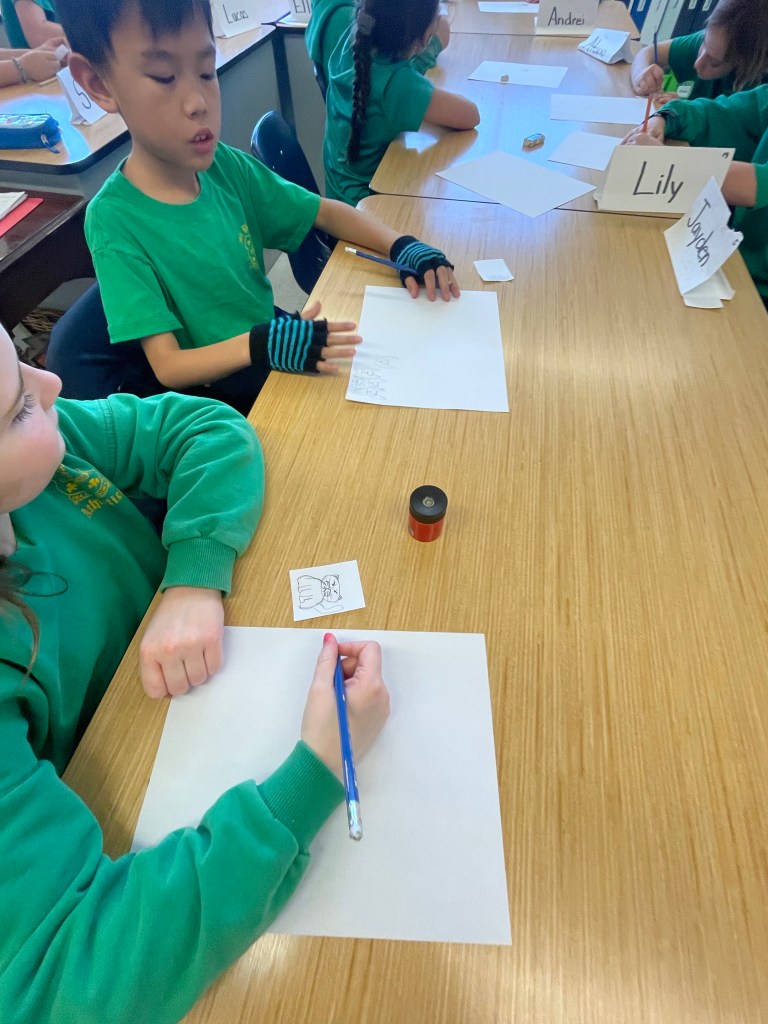
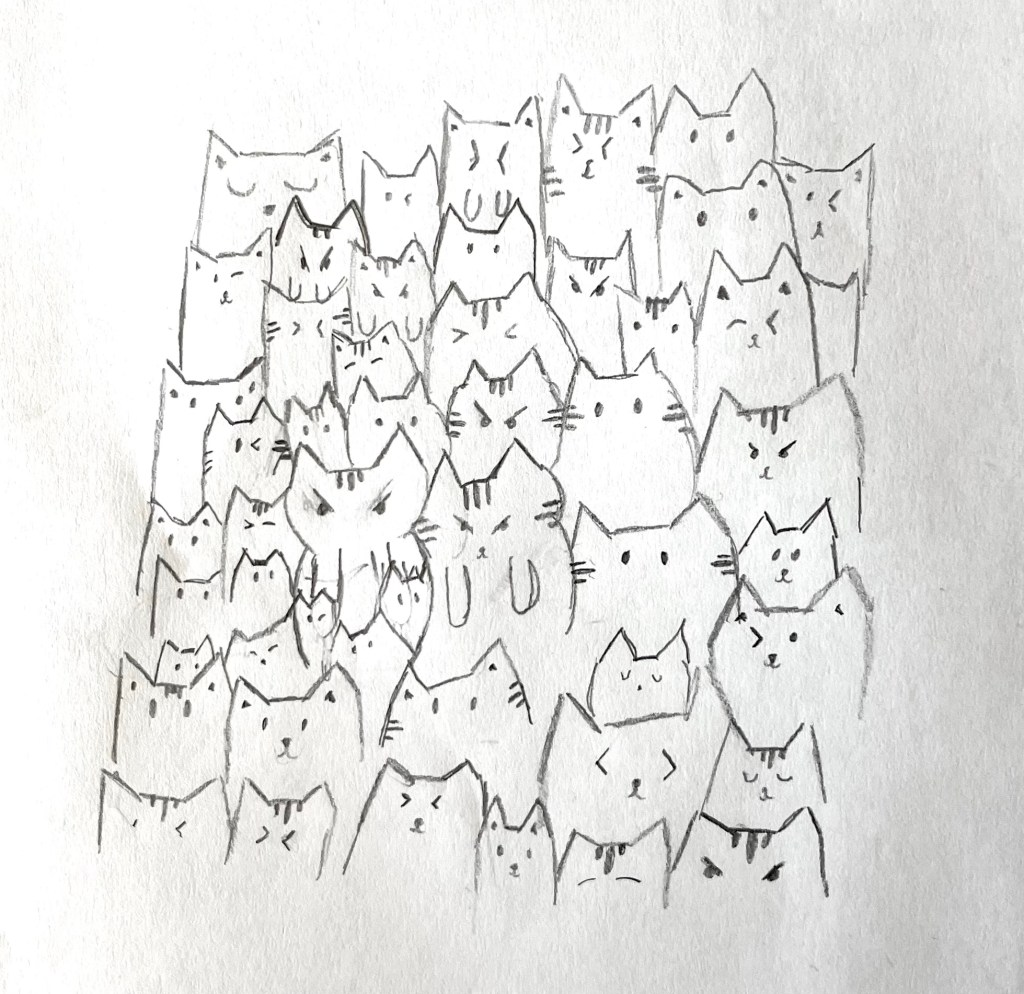
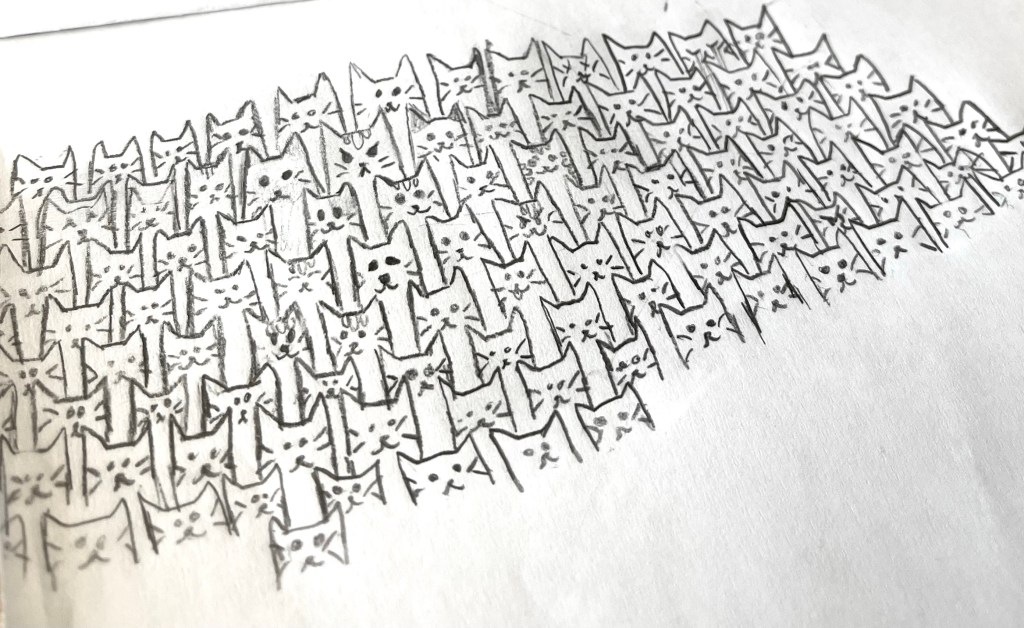
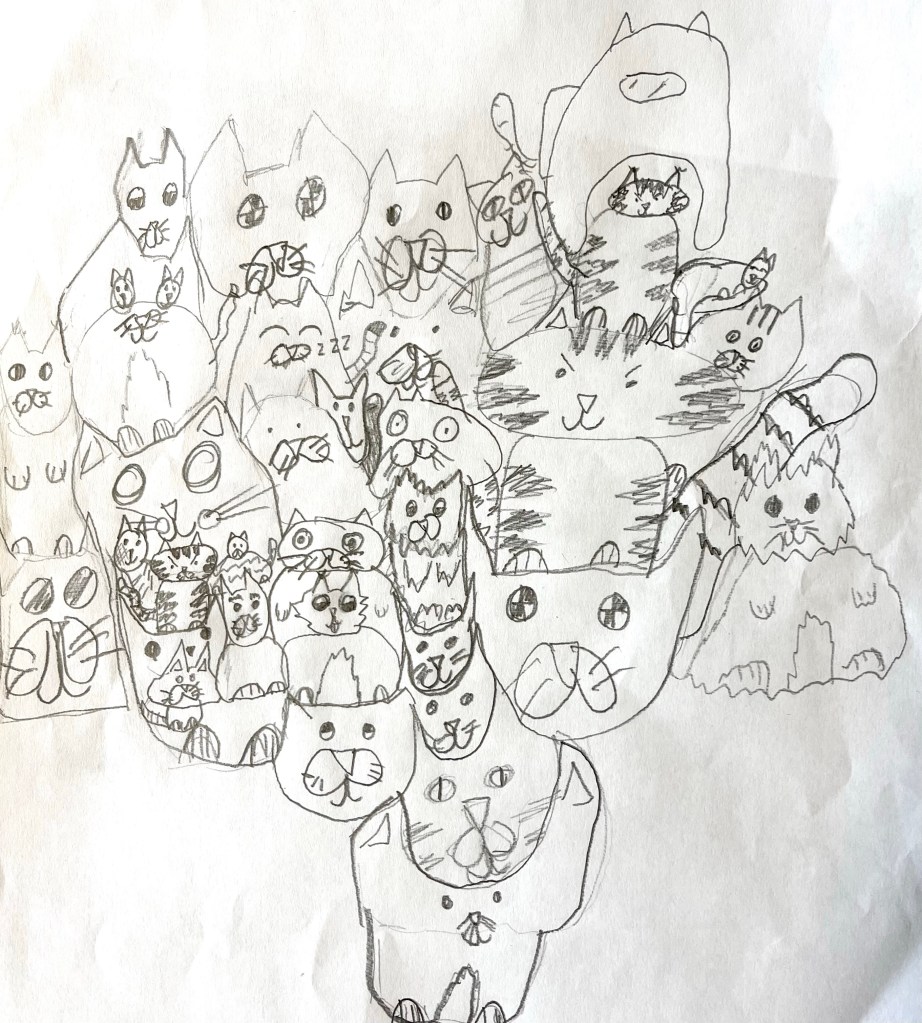
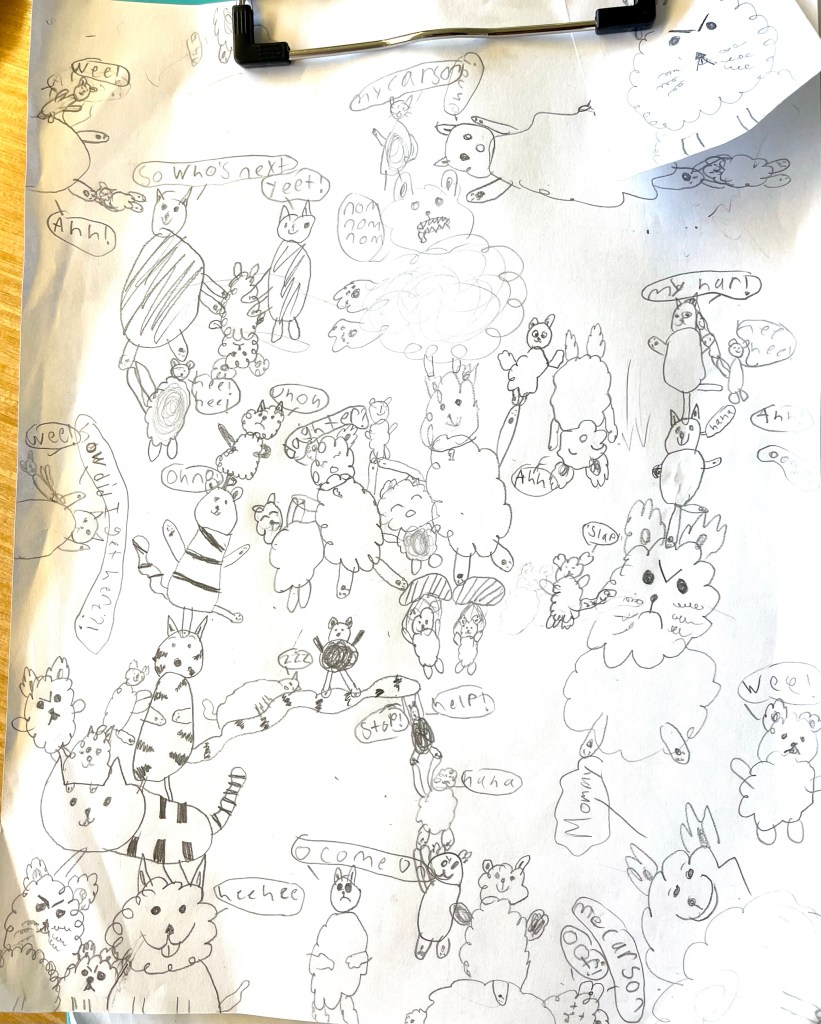
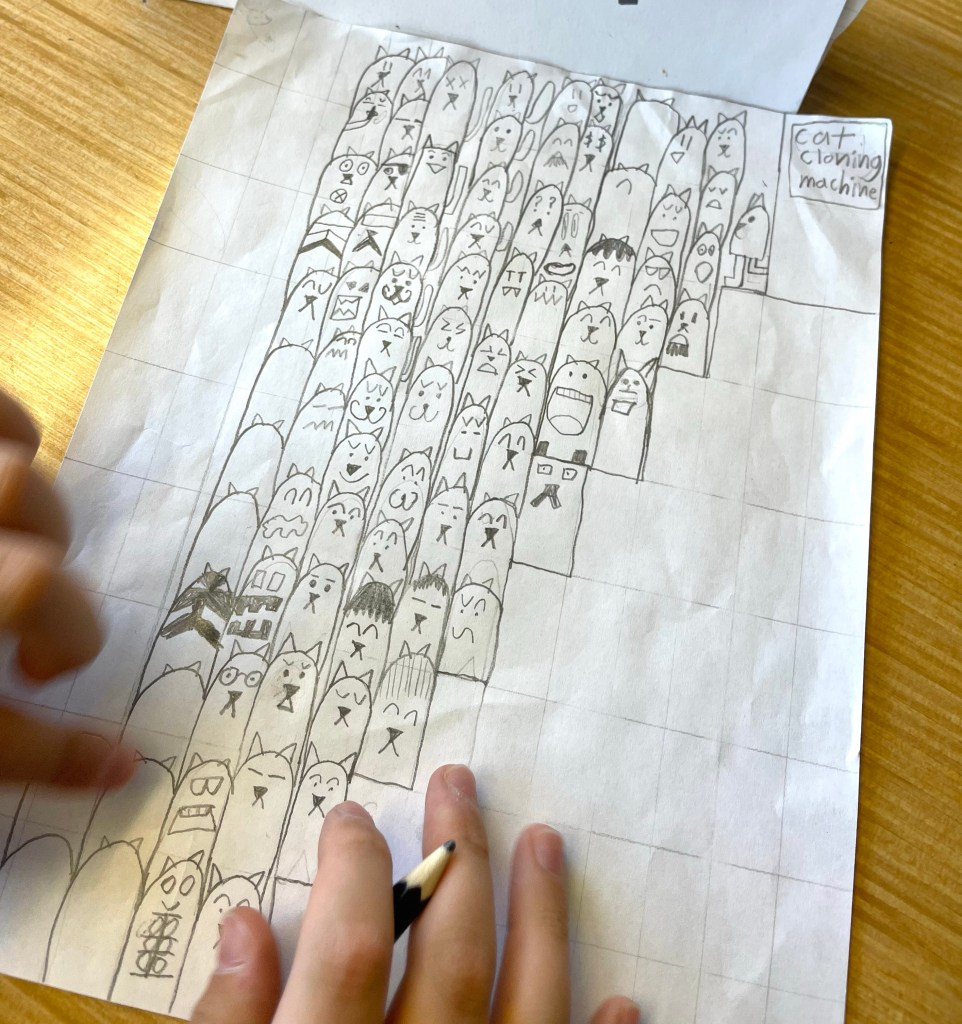
In Health Education this term, students have been exploring emotions and self-regulation strategies. One of our engaging projects was the Cranky Cat Search-and-Find creative drawing activity, where students created detailed illustrations and then wrote or told a creative story about a grumpy feline who learns to manage his emotions. Through the story, the cranky cat uses self-regulation strategies to transform his experience and outlook, with the encouragement and support of his fellow cat friends. This project allowed students to reflect on emotional awareness in a fun and meaningful way, reinforcing strategies they can use in their own lives.
In anticipation of Pink Shirt Day, we enjoyed an anti-bullying workshop with Constable Alex and Constable Mike today, and also talked about making good choices and being safe in the community. Students continue to make exciting progress on their Personal Interest Projects.
Reminder: Tuesday, March 4th is Shrove Tuesday. We will be enjoying a pancake breakfast at school on this day. Please send in reusable cutlery and a plate or container to help us reduce waste from the event.
What will you do to take advantage of this special snow day? I hope you can enjoy some fun outside and some cozy time warming up indoors!
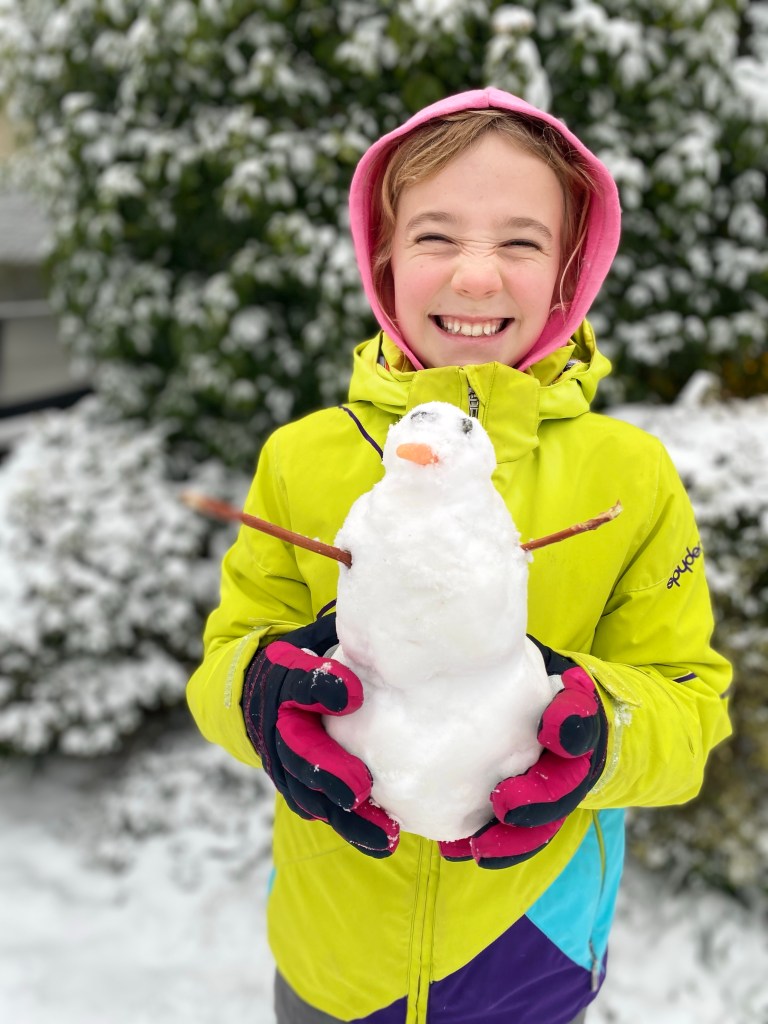
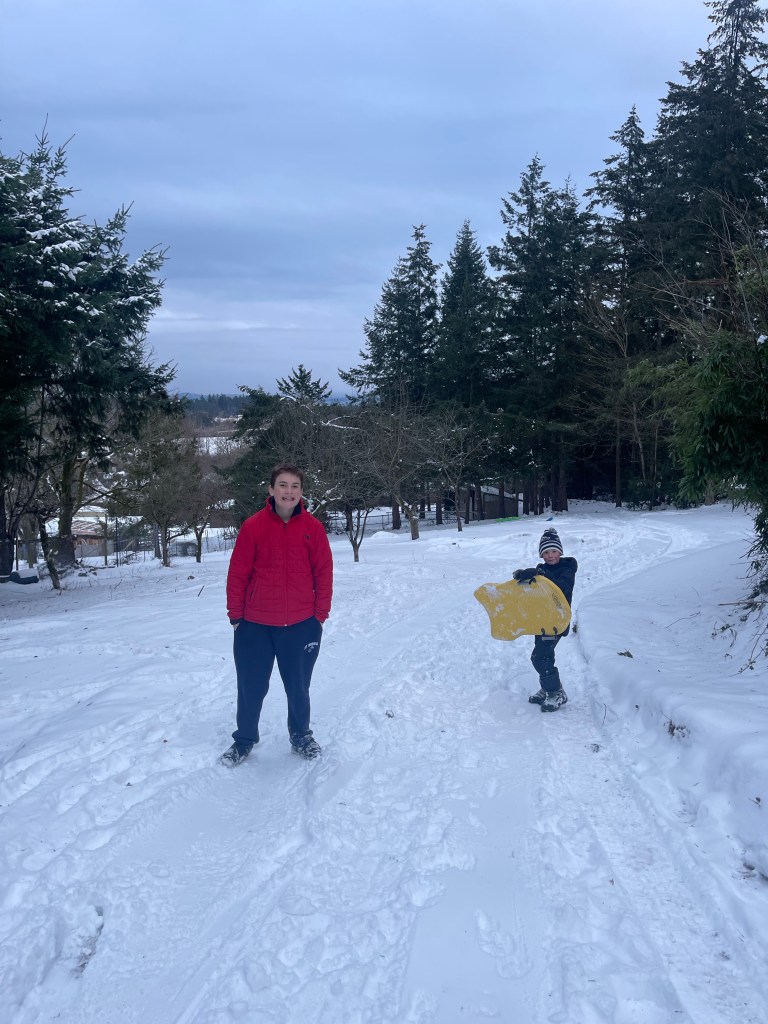
Some snowy highlights from yesterday afternoon at our place…
Alas, my family doesn’t own any sleds, but we were able to make our kids’ kayak do the trick for some tobogganing down the driveway.
If you’d like to share your photos or videos of your winters adventures on this blog, feel free to send them to me by email at tpoirier@cisdv.bc.ca and I will post them below…
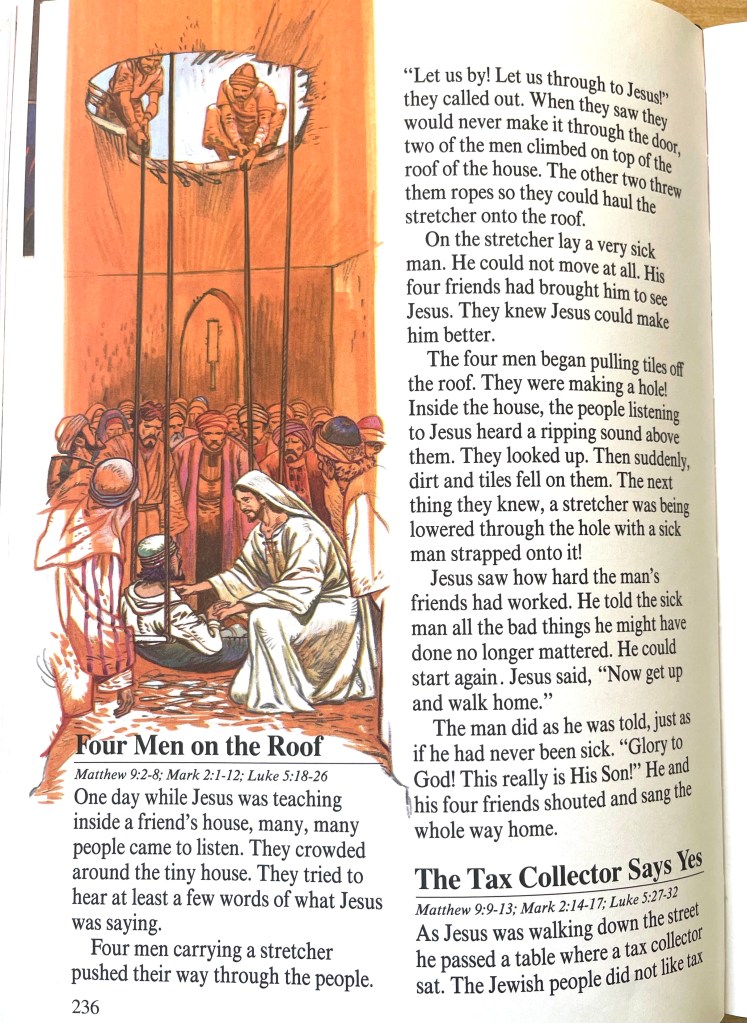
In our Religion classes, one of our goals is to deepen our understanding of the lessons Bible stories can reveal.
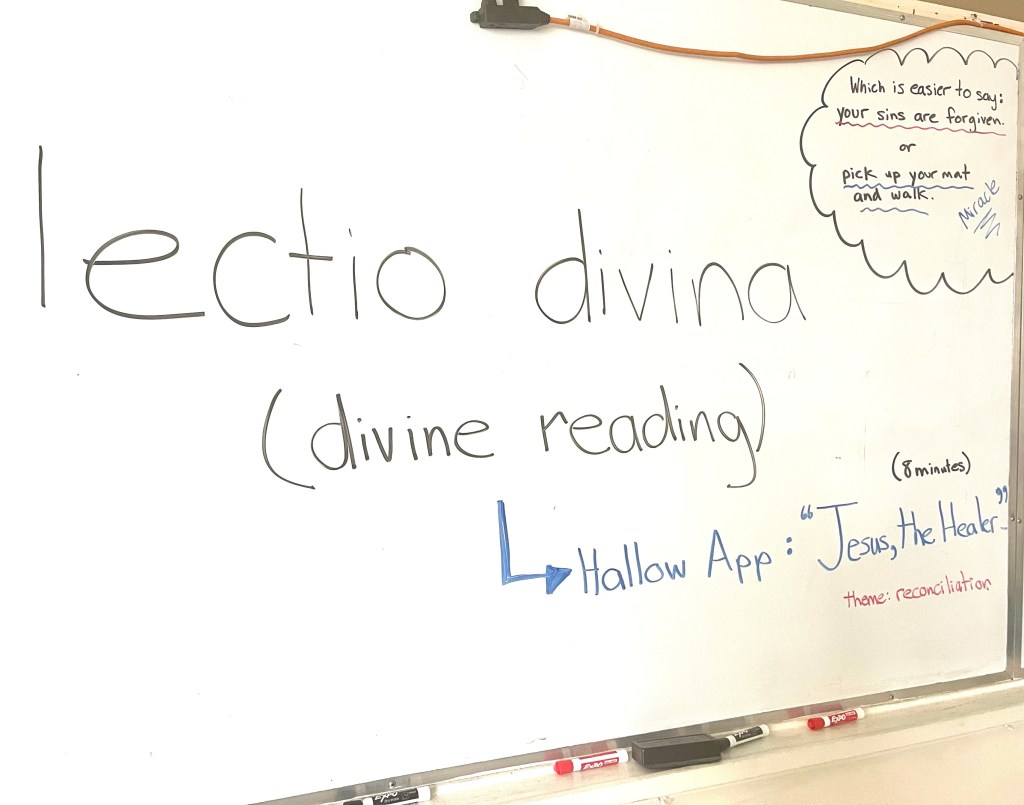
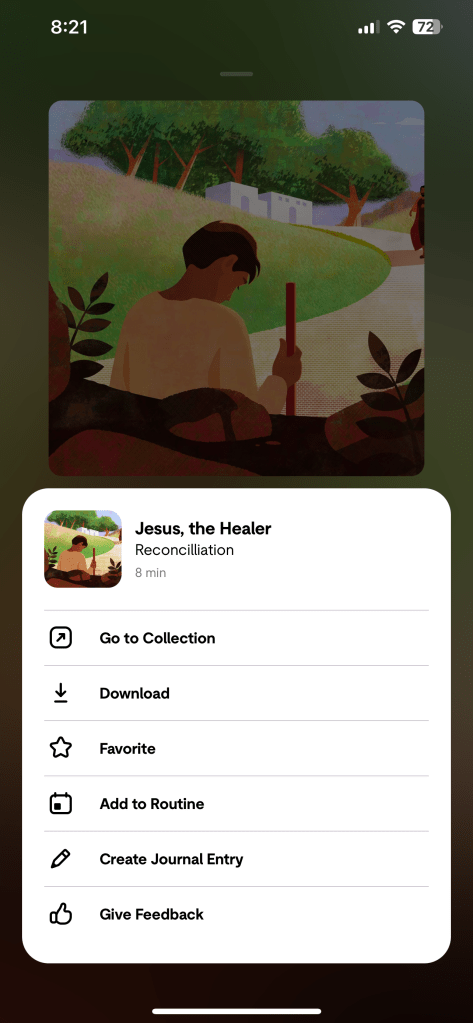
We take various approaches and come at studying the stories from different angles: reading and analyzing the original text, reading children’s Bible story versions, seeing video re-enactments (such as excerpts from the series “The Chosen”), doing our own dramatized readings and re-enactments, using the Hallow app to assist with a lectio divina approach, praying for insight on the story, having class dialogue about our connections and questions, making artworks inspired by Bible stories, and more.
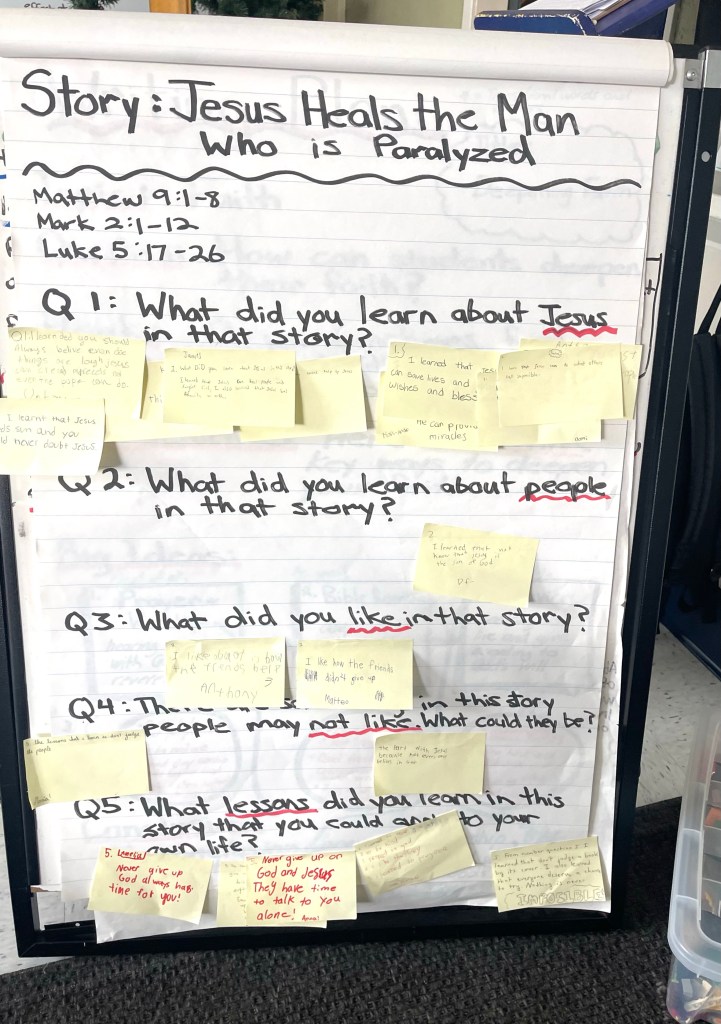
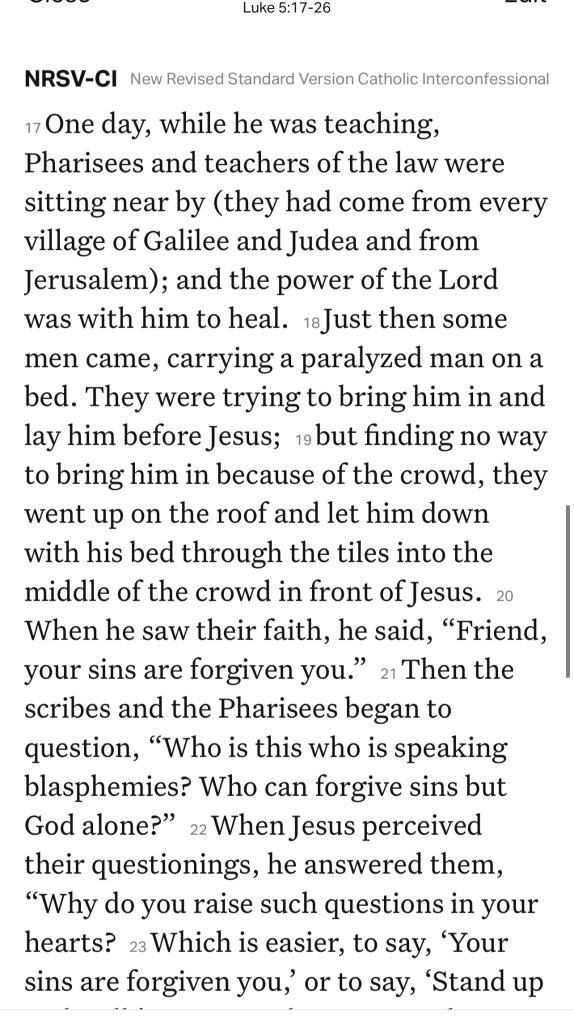
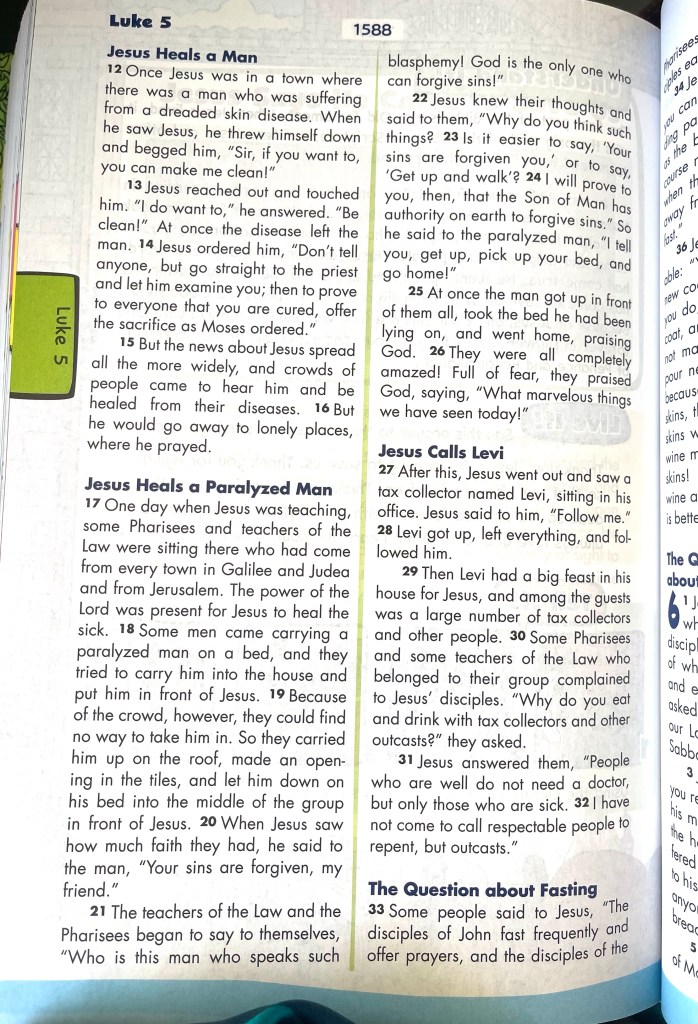
This blog post will share with you a glimpse of our recent learning with the story of how Jesus healed a man who was paralyzed (Matthew 9:1-8, Mark 2:1-12, and Luke 5:17-26).
Part 1: I told the story (twice), and then students discussed their responses to reflection questions.
The first 90 seconds is Ms. Poirier telling the story, and at the 1:30 mark, you can hear students share their own first responses to four big questions about the story.
Part 2: We watched THE CHOSEN reenactment of the story.
Part 3: We listened to the HALLOW app’s retelling in the context of a “lectio divina”.
Part 4: We re-read and compared the original Bible story texts as they appear in Matthew 9:1-8, Mark 2:1-12, and Luke 5:17-26) AND notes their differences in various Bible translations.
Part 5: Students are learning to faithfully retell and dramatize the story themselves.
Next week is Literacy Week, and we will kicked it off with all St. Patrick’s students invited to come to school this Monday dressed as a favourite character from a book they have read!
Also, as a part of the Physical Education program, all grade 5s will participate in a fun and friendly basketball jamboree for local independent schools this Thursday, January 30th.
(Mr. Dufort will follow up with more information and permission forms on Monday for the basketball trip.)
Ask your child what happened in the “paper clips experiment”!
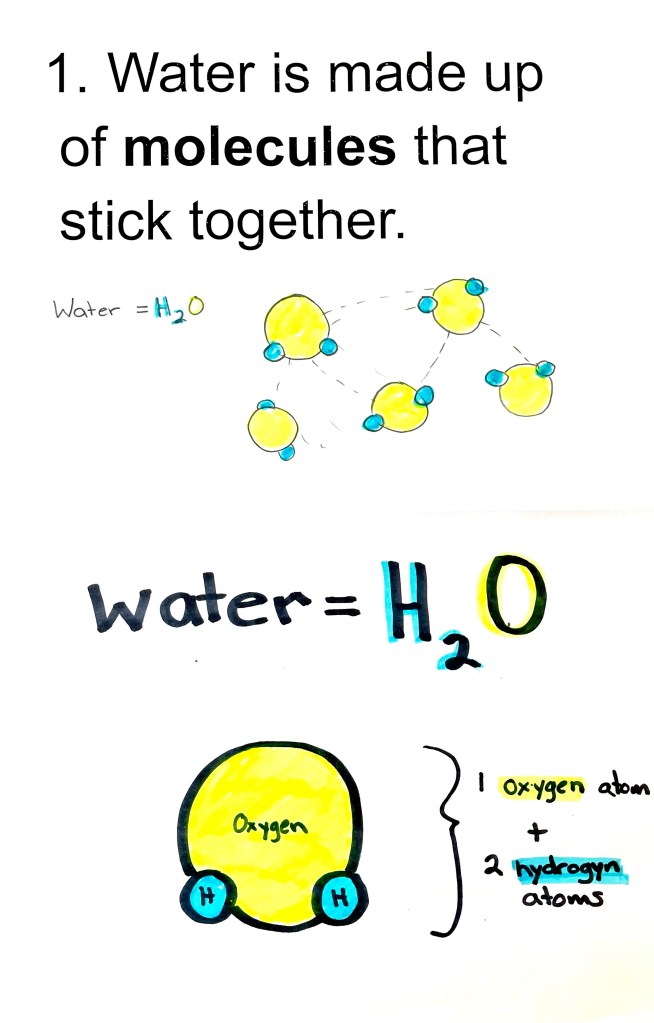
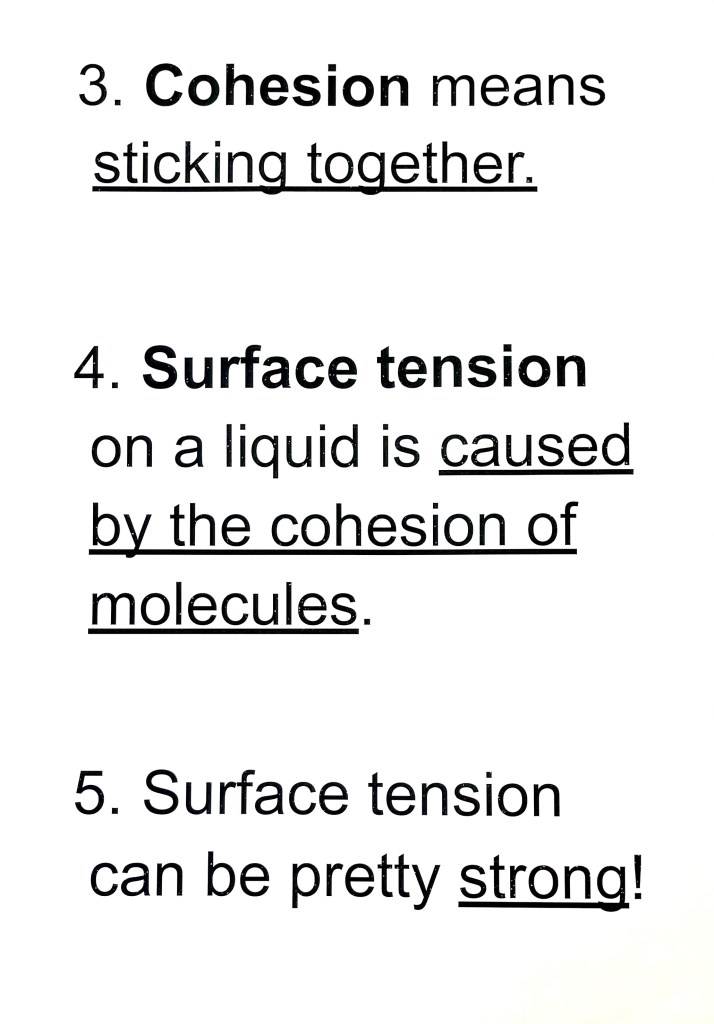
It was an exciting time using the scientific method and sharing delight together at witnessing unexpected results. We observed and recorded how many paper clips we could sneak into an already full glass of water without spilling it—thanks to the power of surface tension.
Most students guessed we could fit 3-6 paper clips; one person guessed we could 16 to fit. But the results revealed……139! Our minds were blown. We couldn’t have believed if not for seeing it with our own eyes.
In term three, students will be challenged to prepare and present a simple science experiment of their own choosing, either live in class or on video. Today I modelled how an experiment presentation could look.
This experiment assignment is intended to be entirely student directed— no family help or purchasing of materials is necessary. By offering students over 4 months advance notice and lots of class time to prepare the experiment with teacher support, I hope everyone will have what they need to be successful and have fun!
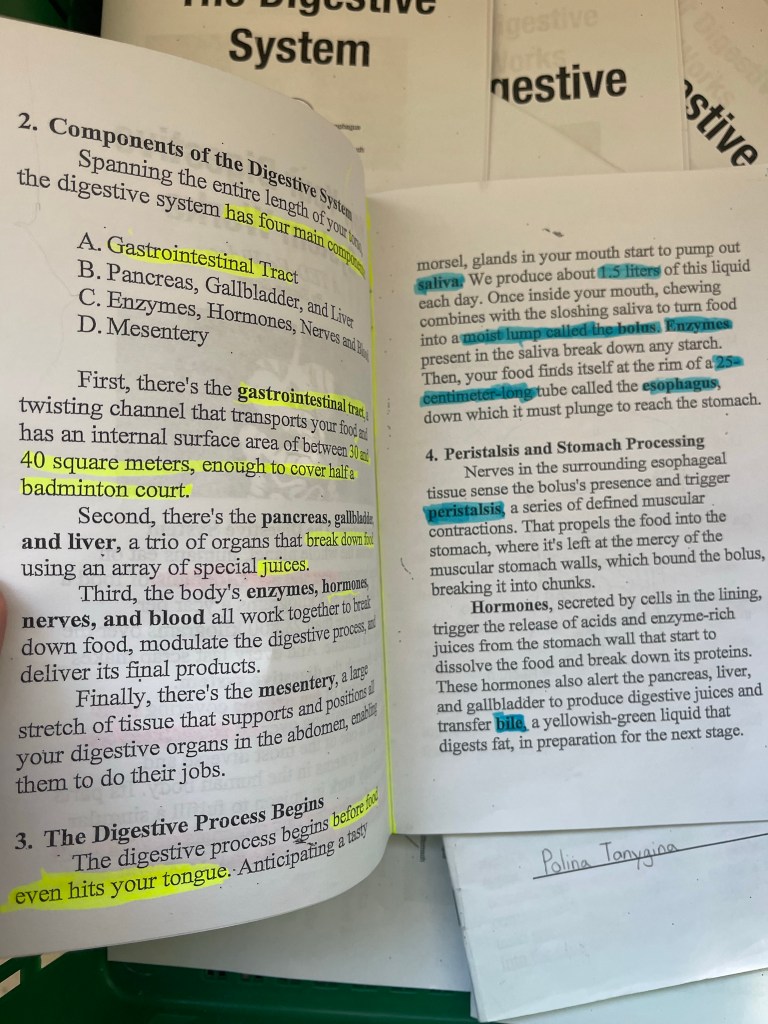
As well, in Science students have been working through a unit on the digestive system. Their major creative research project this term is designing a board game as a fun way to teach other people about the digestive system.
In Language Arts, we have been reviewing spelling rules and are on chapter 12 of our “Hatchet” novel study—lots of rich discussion and critical thinking happening as a result!
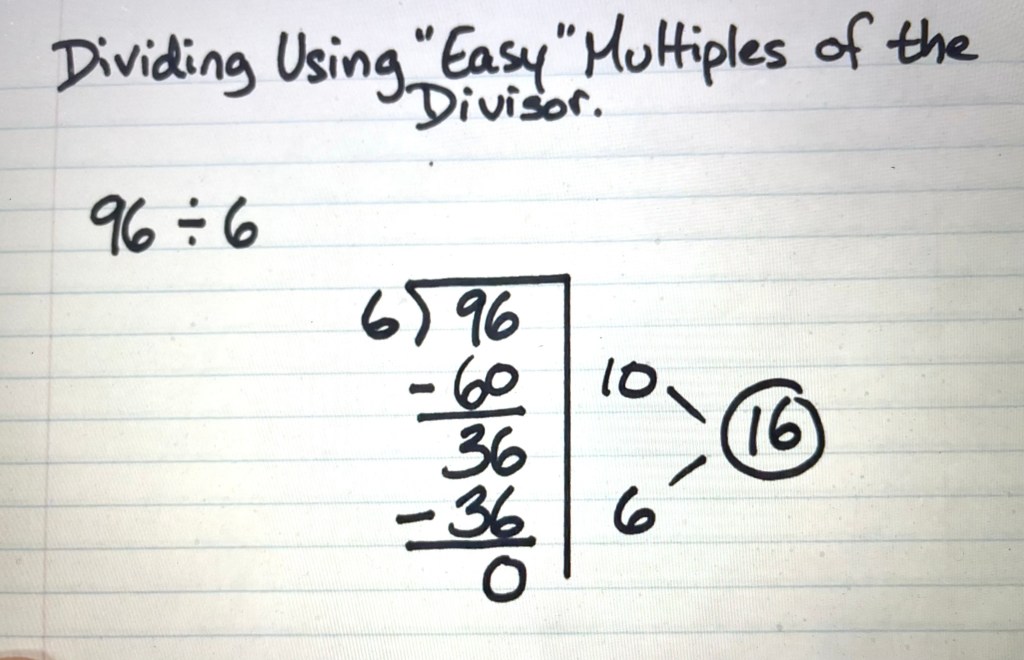
In Math, we have made excellent progress in our multi-digit multiplication unit, and quizzes are coming home today to share that growth. Next week we will layer in multi-digit division skills at an even pace, while also continuing to practice this week’s lessons.
I learned this strategy from a teacher named Aaron Pite who works at Monterey Middle School in Oak Bay; this is his helpful video!
Here is a video that teaches a very helpful division strategy we will use next week. (It’s likely a strategy parents were not taught years ago, but I wish we were because I’ve seen how it really helps students keep focussed on the meaning of division.)
Ask your child about “Cranky Cats”—we have been having a blast in Art recreating our own versions of this “Where’s Waldo”-style illustration.
The lesson connect to analysis of facial expressions, practice in perspective-taking, and creative brainstorming about what could cause a to be cat cranky. Students also engaged in storytelling, imagining how the cats might solve their crankiness.
This activity brought giggles while teaching illustration strategies alongside social-emotional learning topics from the Health Ed. curriculum.
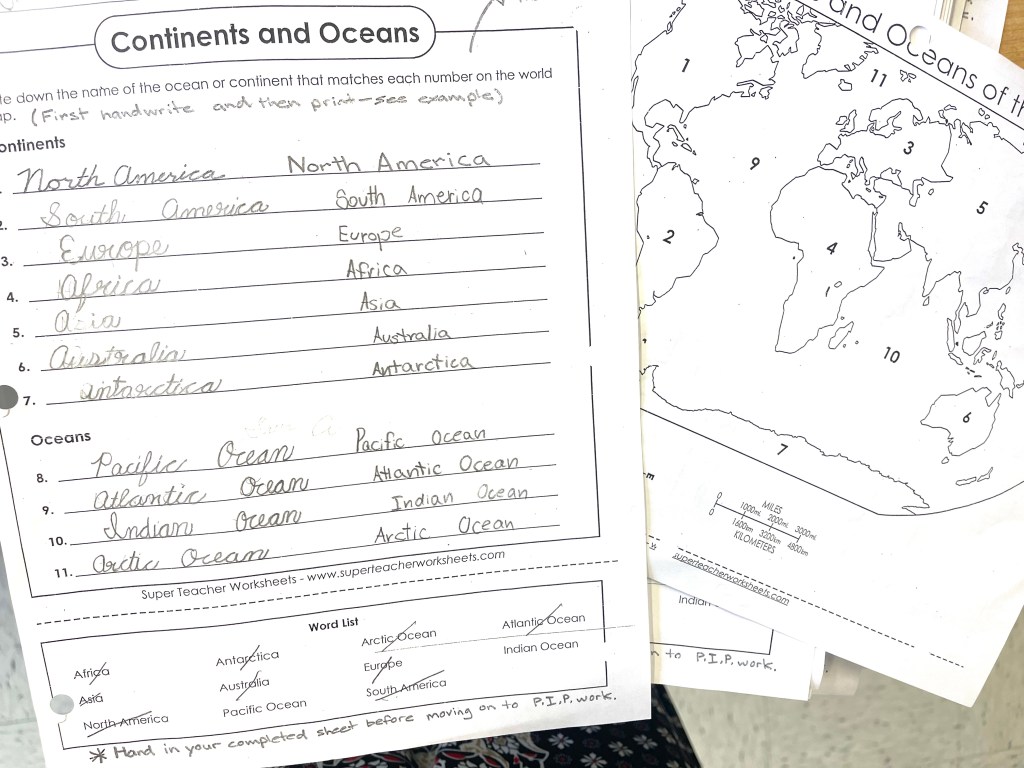
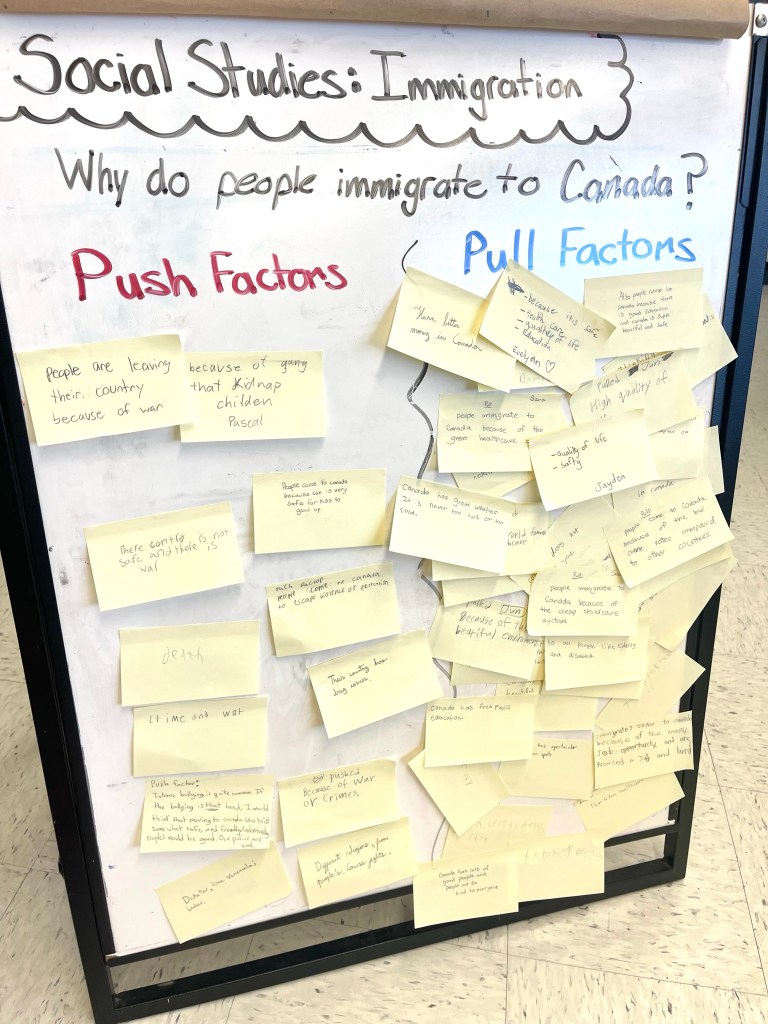
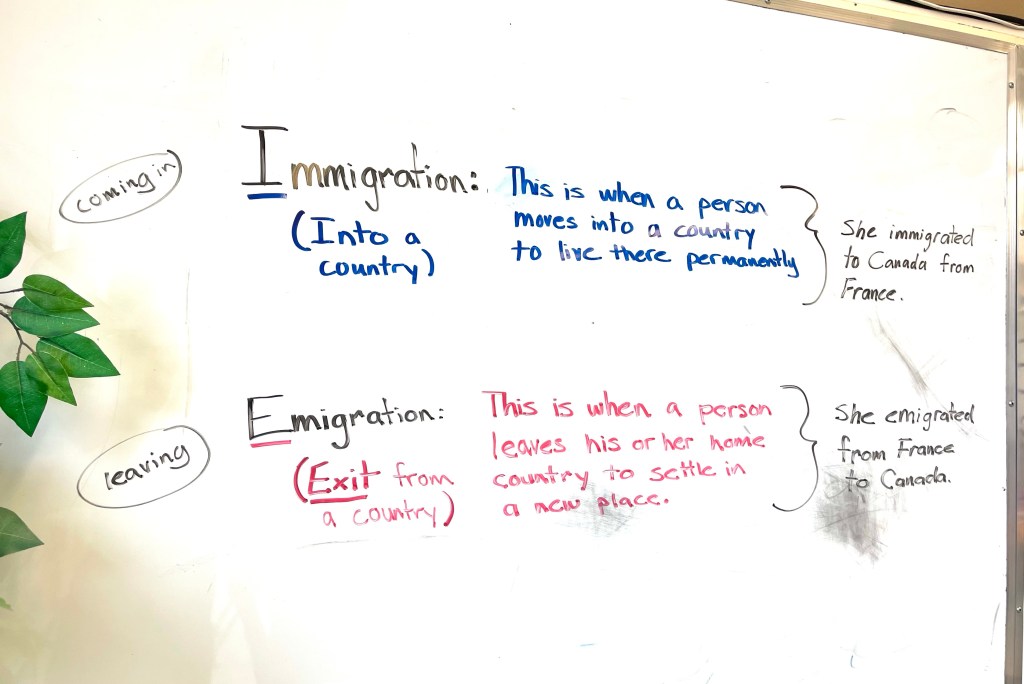
In Social Studies, we have been expanding our knowledge of geography and doing a unit on immigration in Canada.
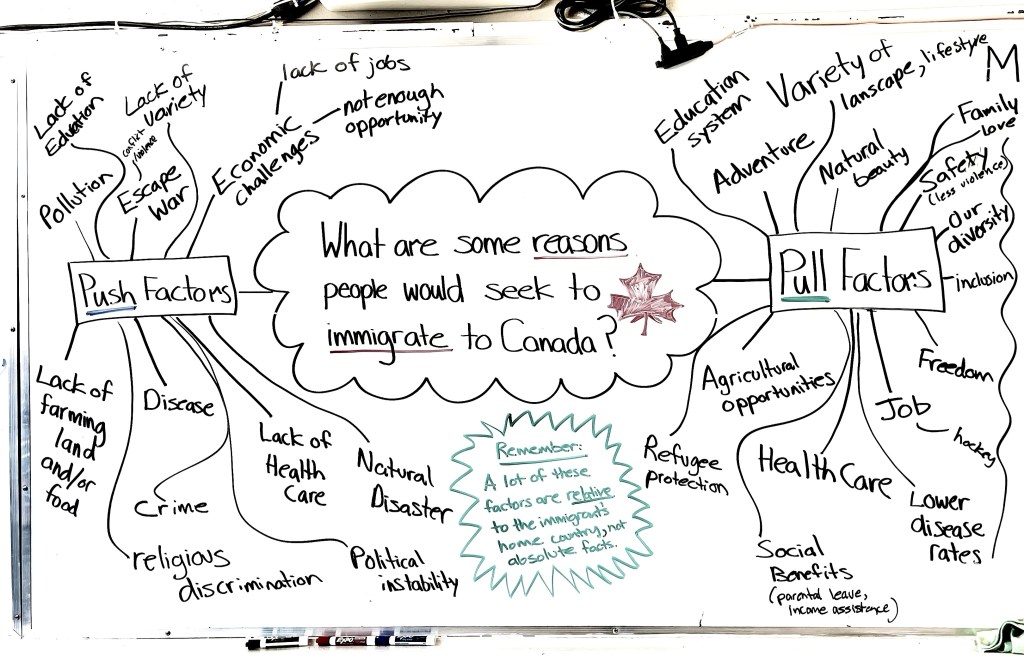
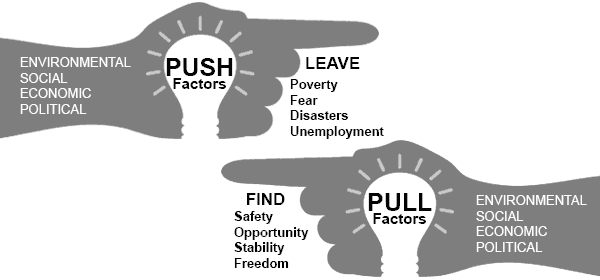
SOCIAL STUDIES: What motivates people to immigrate to Canada? In Social Studies, we began exploring the topic of changing trends in Canadian immigration over time and the push and pull factors.
Today we watched the above video, which fleshed out our understanding of push and pull factors even more. Student will soon began writing short essays on the topic using a specific structured template. The goal of this assignment is to both capture students’ learning, while also helping them work through a helpful model of a way to clearly communicate their ideas in the social sciences.Above you can see some great examples of draft essays on “Canadian Immigration: the Push and Pull Factors” as well as some summary graphics of the the big ideas we are exploring.
Click here to download KYAK magazine with lots of rich historical information for students about immigration to Canada:
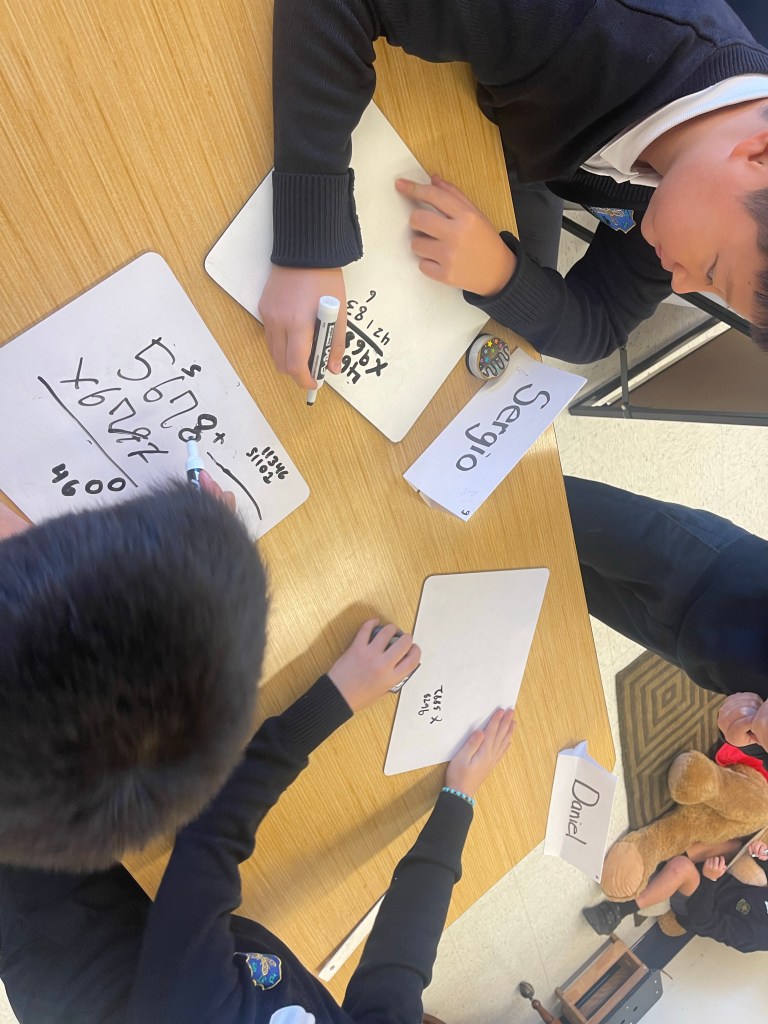
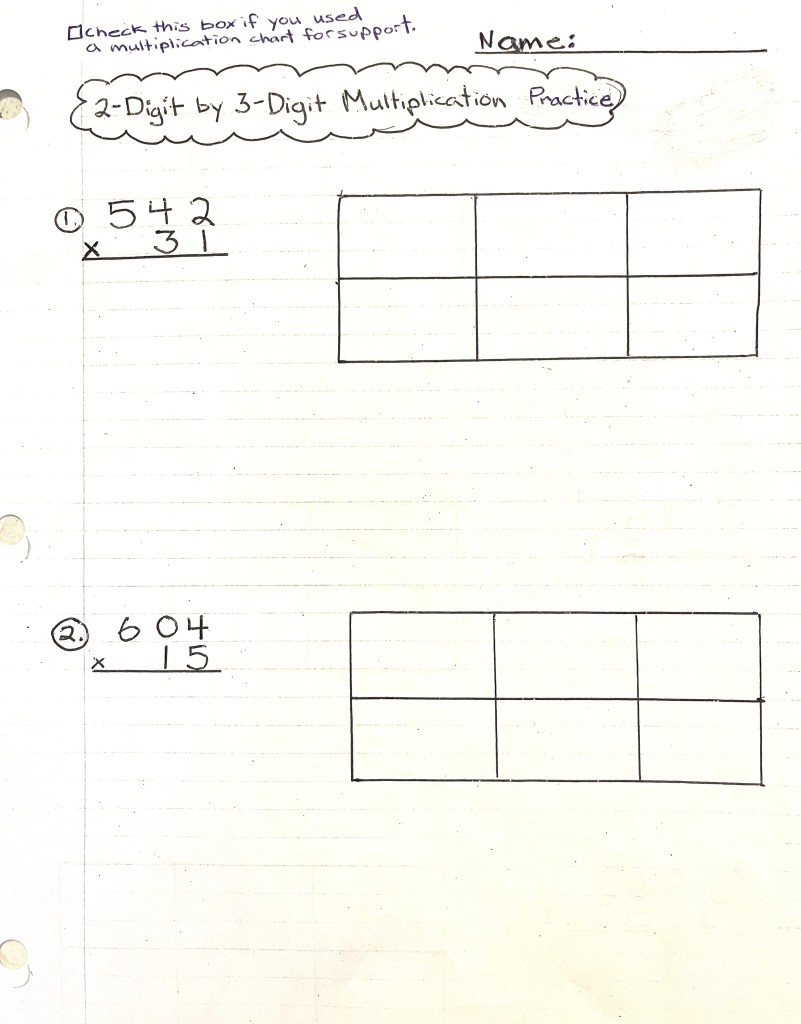
We’ve started 2025 with a focus on multi-digitmultiplication, a critical skill for building numeracy and preparing students for future math concepts. This month, we are reviewing the traditional algorithm while introducing the box method, which many students find particularly helpful and intuitive.
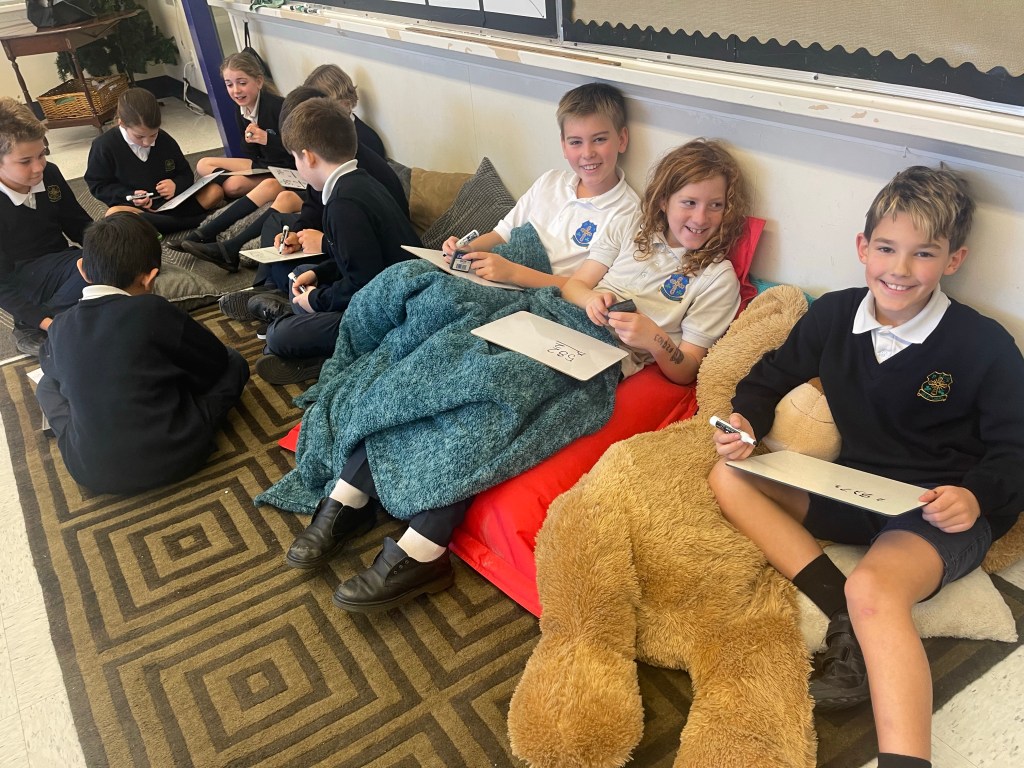
Get comfortable, and let’s practice some math!
In class, I’ve shared my video tutorials to guide students through these methods. We’ve practiced together, and I’ve taught them how to adjust playback speed and pause videos so they can learn at their own pace. These tutorials are an helpful resource for additional practice at home.
Grade 5 is a pivotal year for establishing strong math foundations, and multiplication is a cornerstone skill. Let’s ensure every child has the time and support needed to succeed. I’ll continue providing tutorials, working with students individually, and offering class-wide guidance—regular study time at home as well may be needed for mastering these skills.
Students are encouraged to explore both methods and choose the one that works best for them after gaining confidence in each. This flexibility is key to developing problem-solving skills and adaptability.






























































 Tiffany Poirier