Spelling, Arrays & Patterns

Hello, families of division 4!

We started this week with a spelling diagnostic, which will help inform the focus our spelling program this year. The assessment had 106 standard words and a few extras I added from our recent units of study. We spread the assessment out over two blocks, and I involved students in marking and correcting their own work; so they could benefit from the learning experience and hear me talk through the nuances and rationales for various spelling rules. You can hear how the diagnostic sounds here: https://youtu.be/QYjGbehSmNA.

We have already been doing spelling lessons in the context of our cross-curricular studies (especially with our “Word Wall” vocabulary lists, which we used for our poetry writing). However, we will launch a regular weekly spelling program near the end of the month, and I will post our spelling lists on this blog.

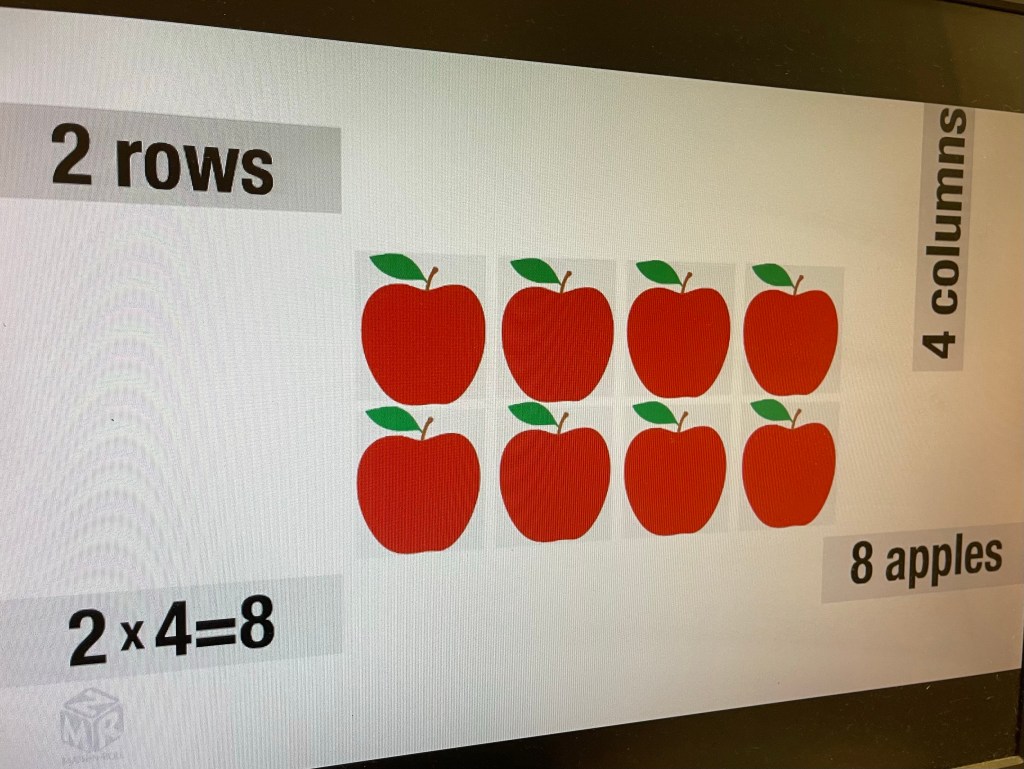
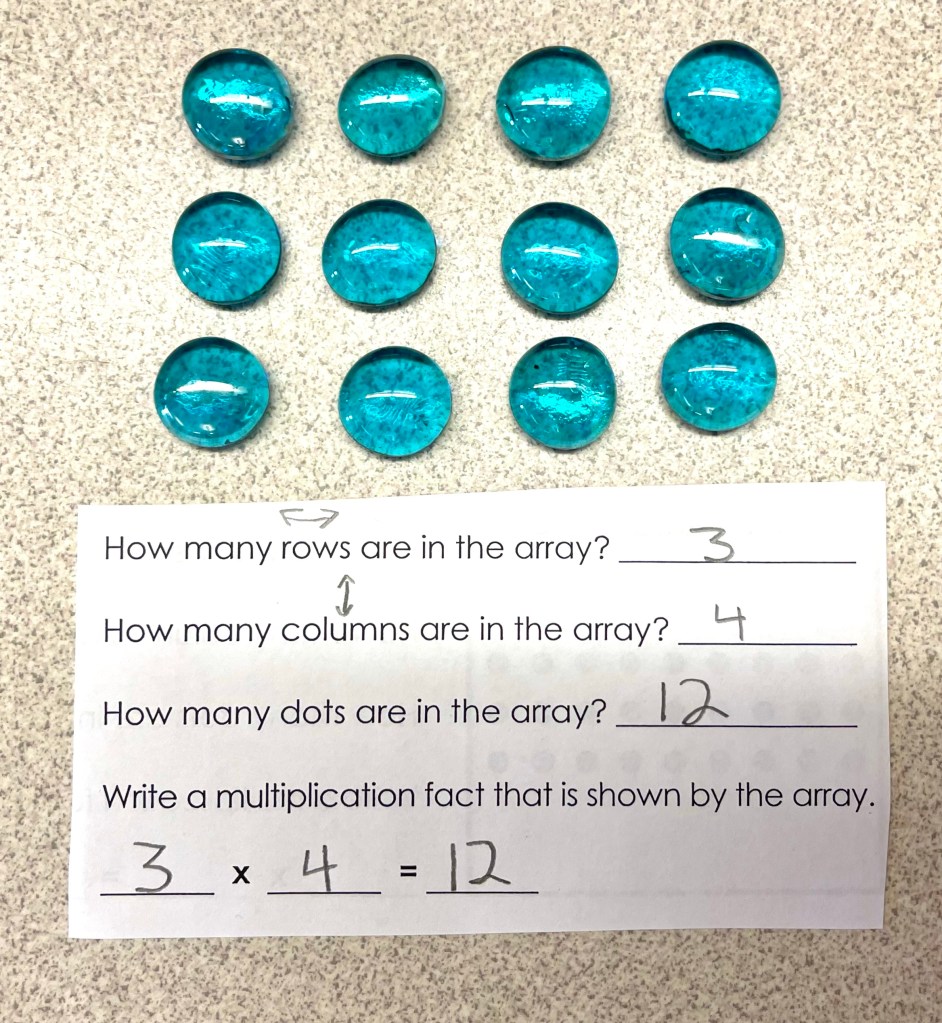
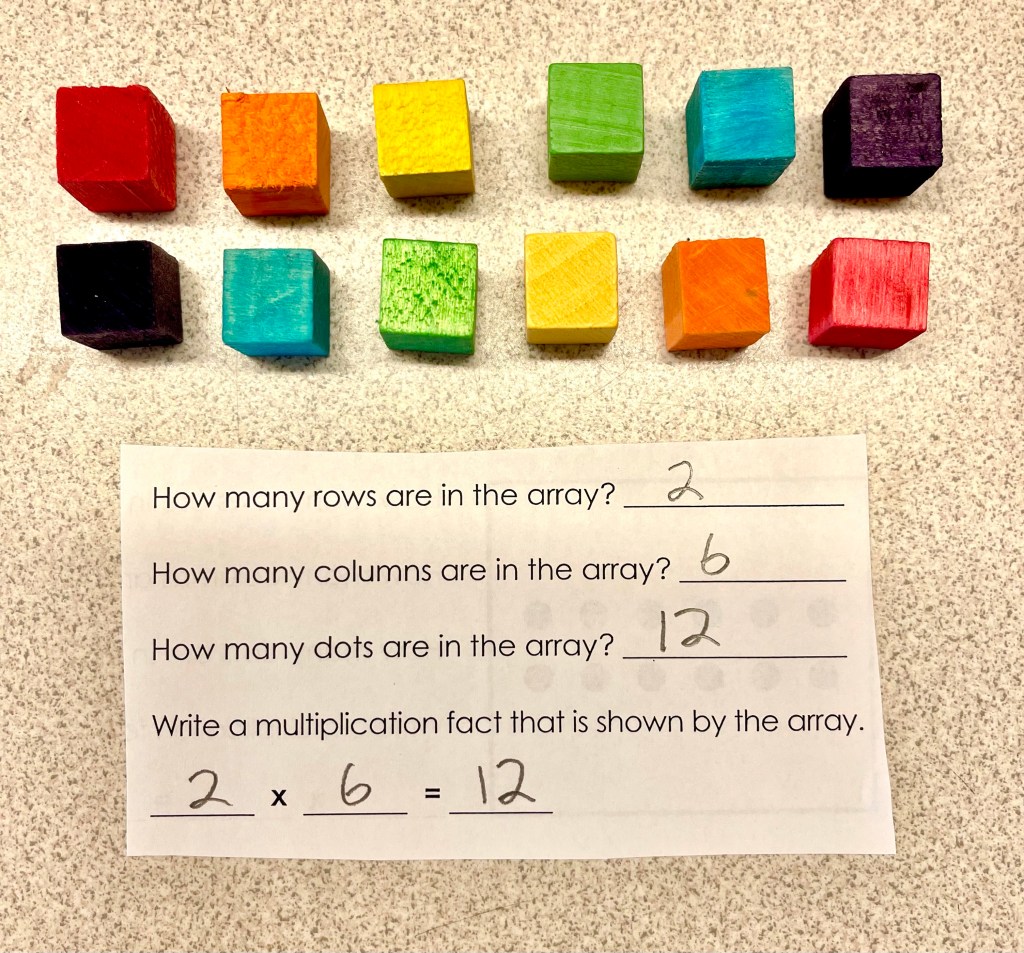
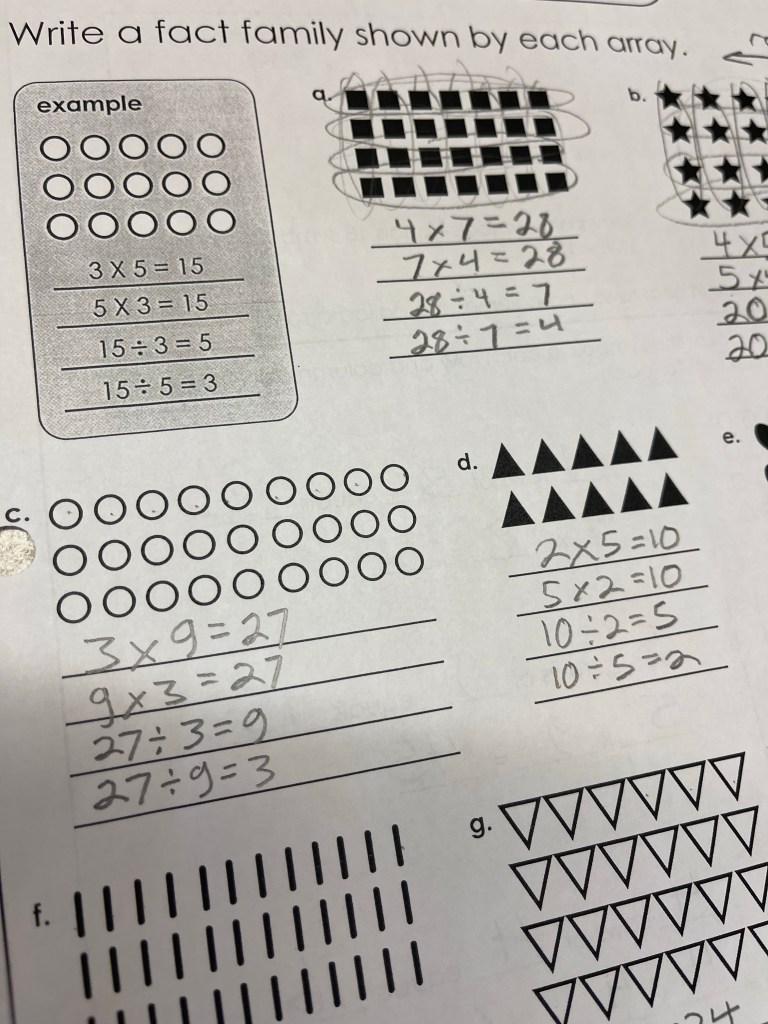
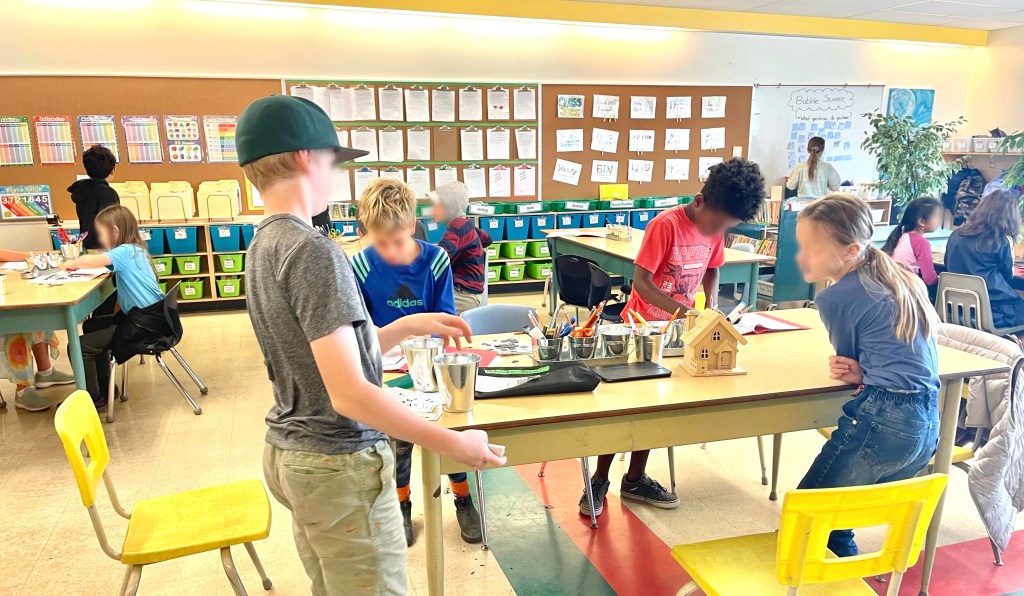
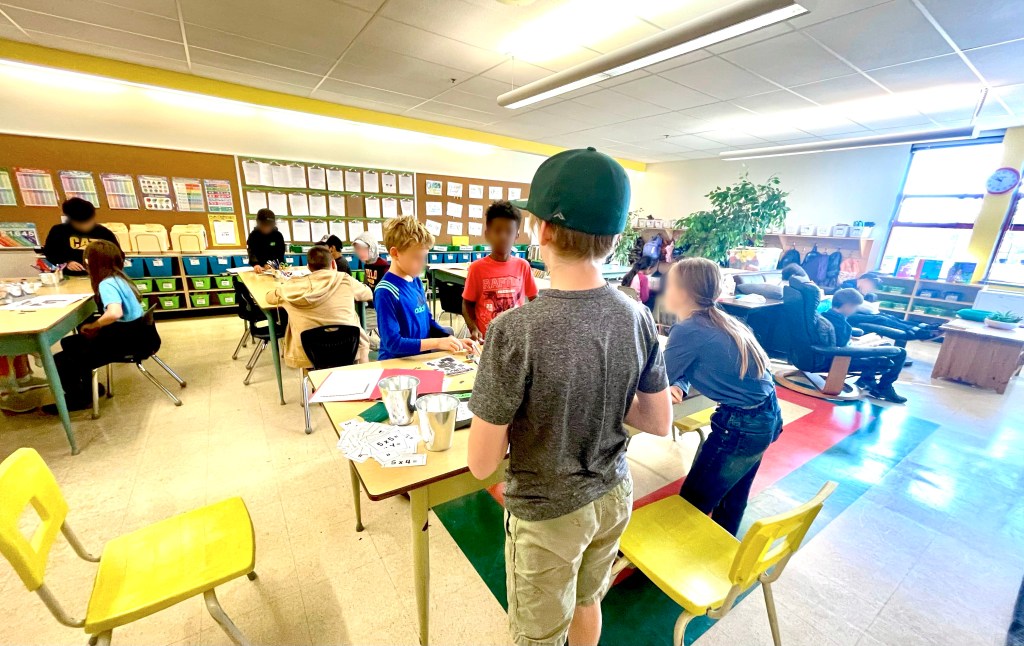
In Math, we explored multiplication using arrays, which led to playing with fun manipulatives to help us understand fact families.

Here is a video we watched in class that students can review about arrays:

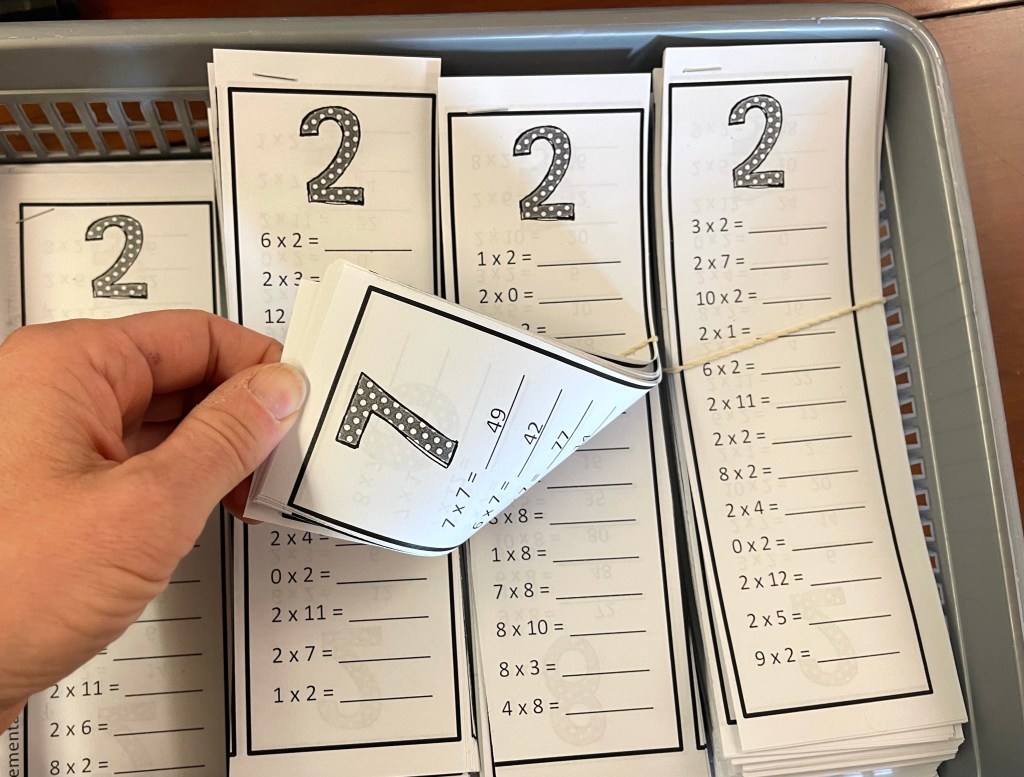
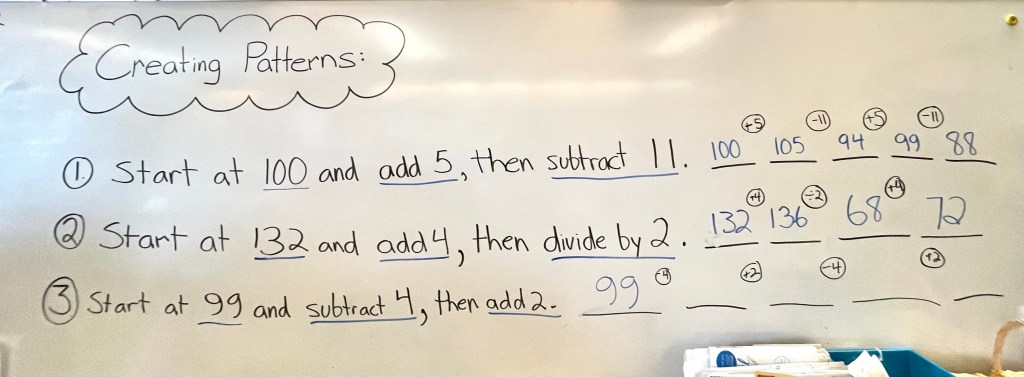
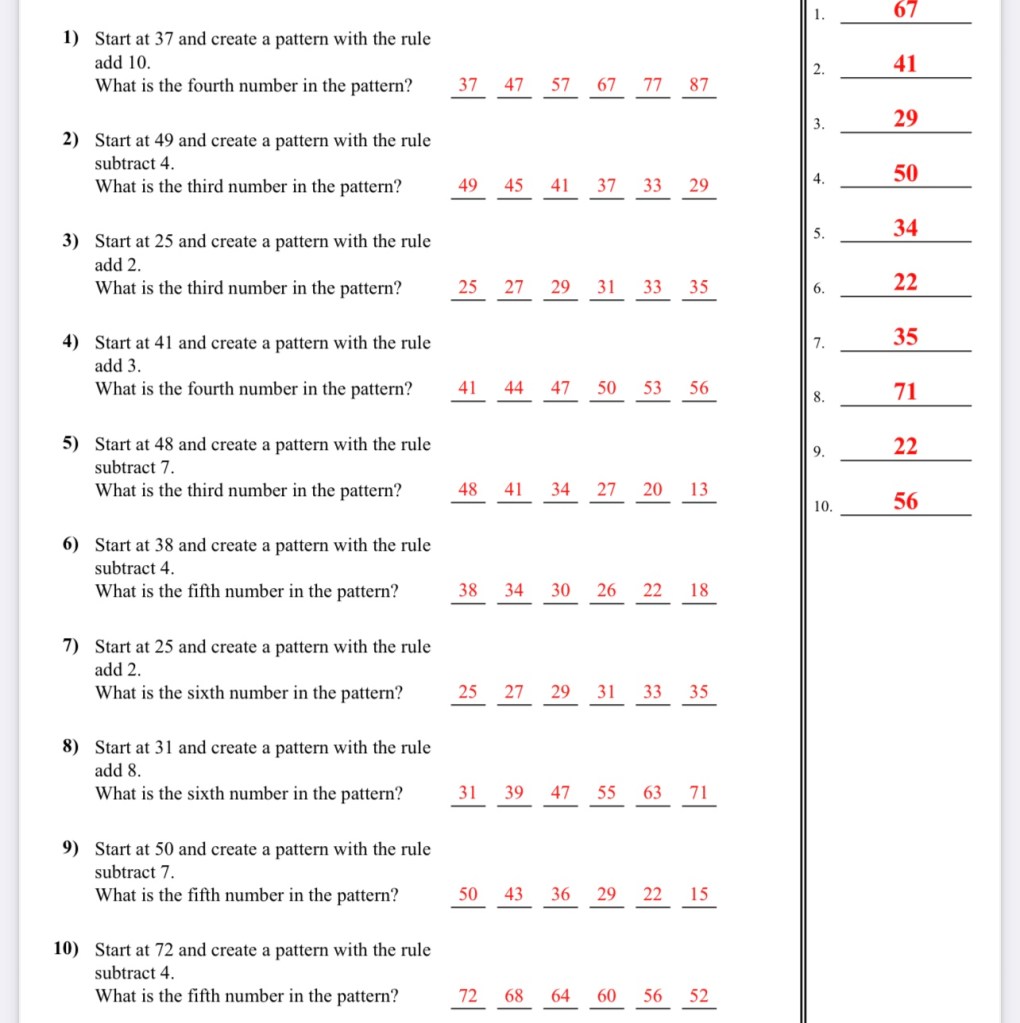
In Math, we are now also looking at identifying and creating one- and two-step number patterns with various operations. This kind of numerical sleuthing (“find the missing number”) is wonderful mental math practice and good for fostering a mathematician’s mindset. It can feel like fun detective work for students; and it becomes creative as students create and test the workability of their own pattern rules with increasing complexity. Please see the white board photos and example of worksheet questions below.

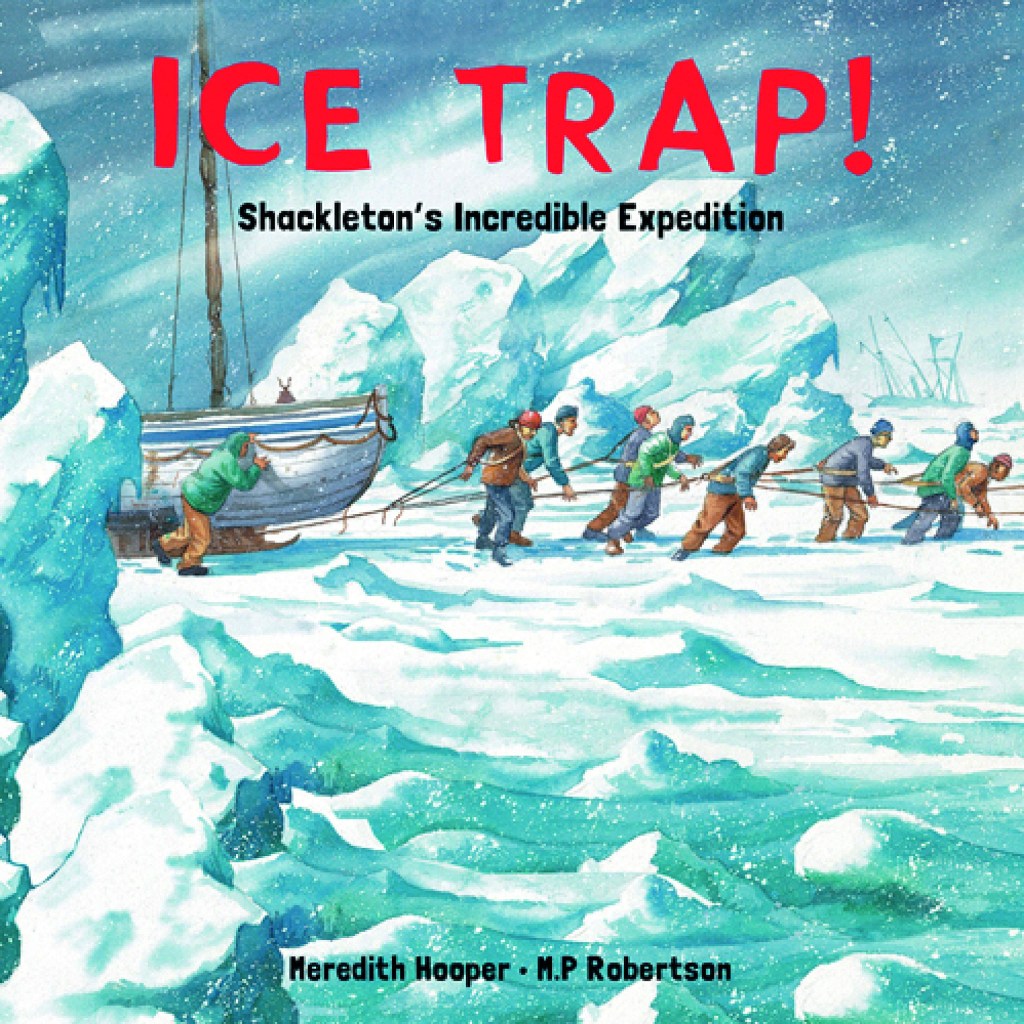
In Social Studies, students learned about the daring explorations of Earnest Shackleton through the story, “Ice Trap”—which inspired a rich “Career Ed.” discussion of the most important qualities of a leader with our guest teacher, Mr. Russell.

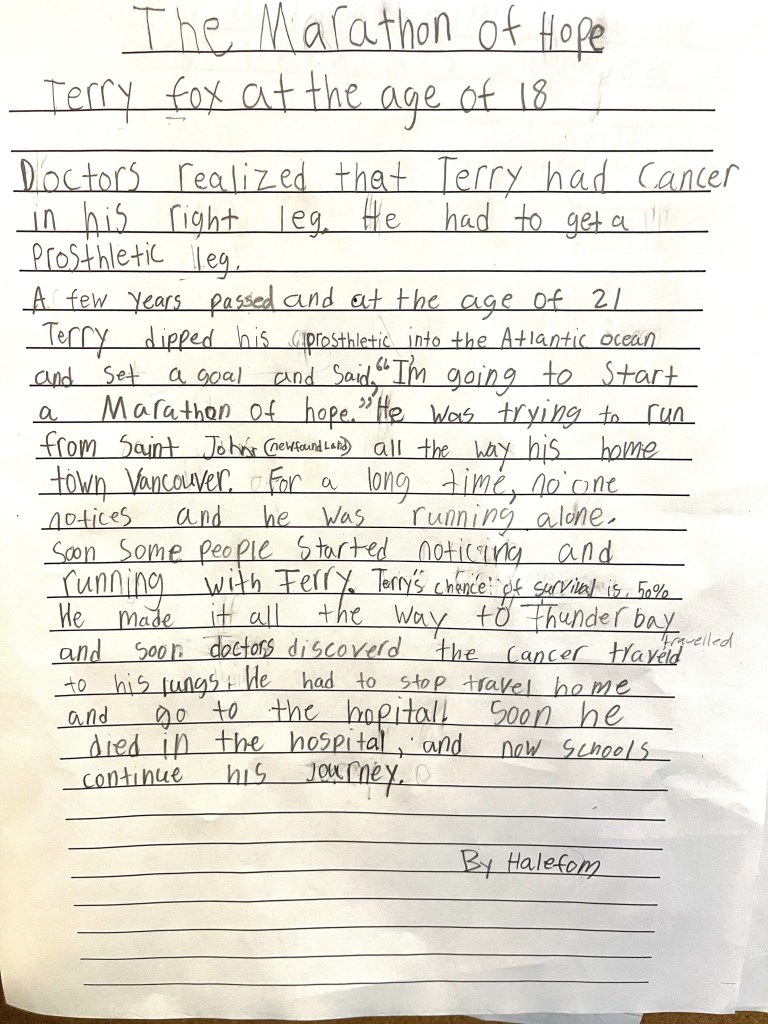
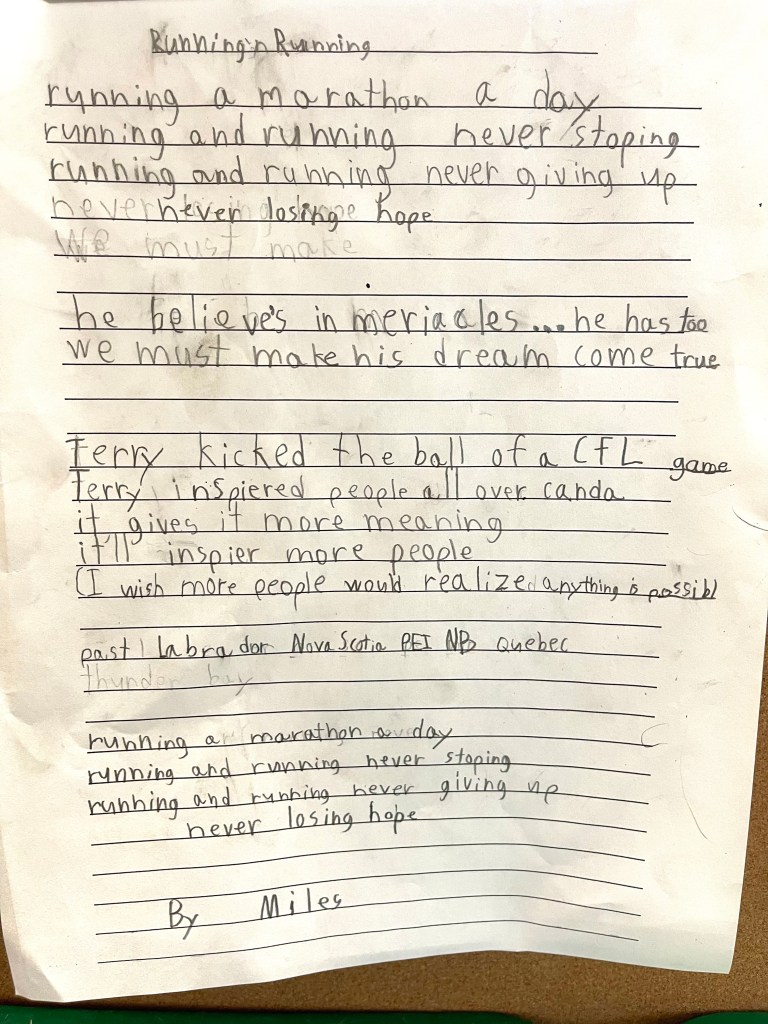
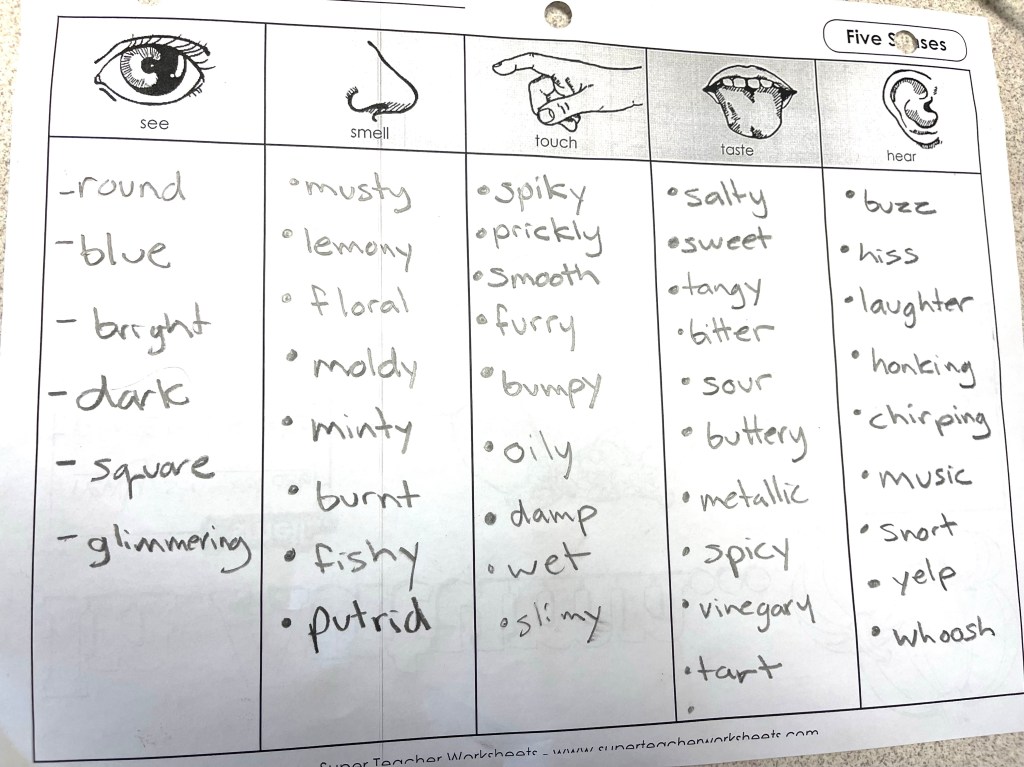
In Language Arts, students have continued with their independent reading, and explorations of “five senses” writing, poetic forms and conventions of writing. Now we turn to looking at expository writing, which is writing that exposes facts. Expository writing “explains and educates its readers, rather than entertaining or attempting to persuade them.

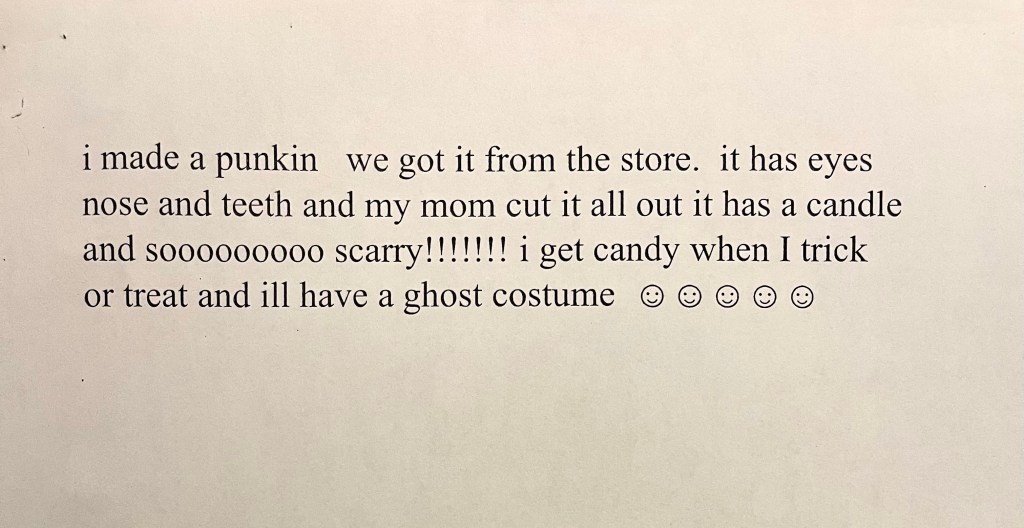
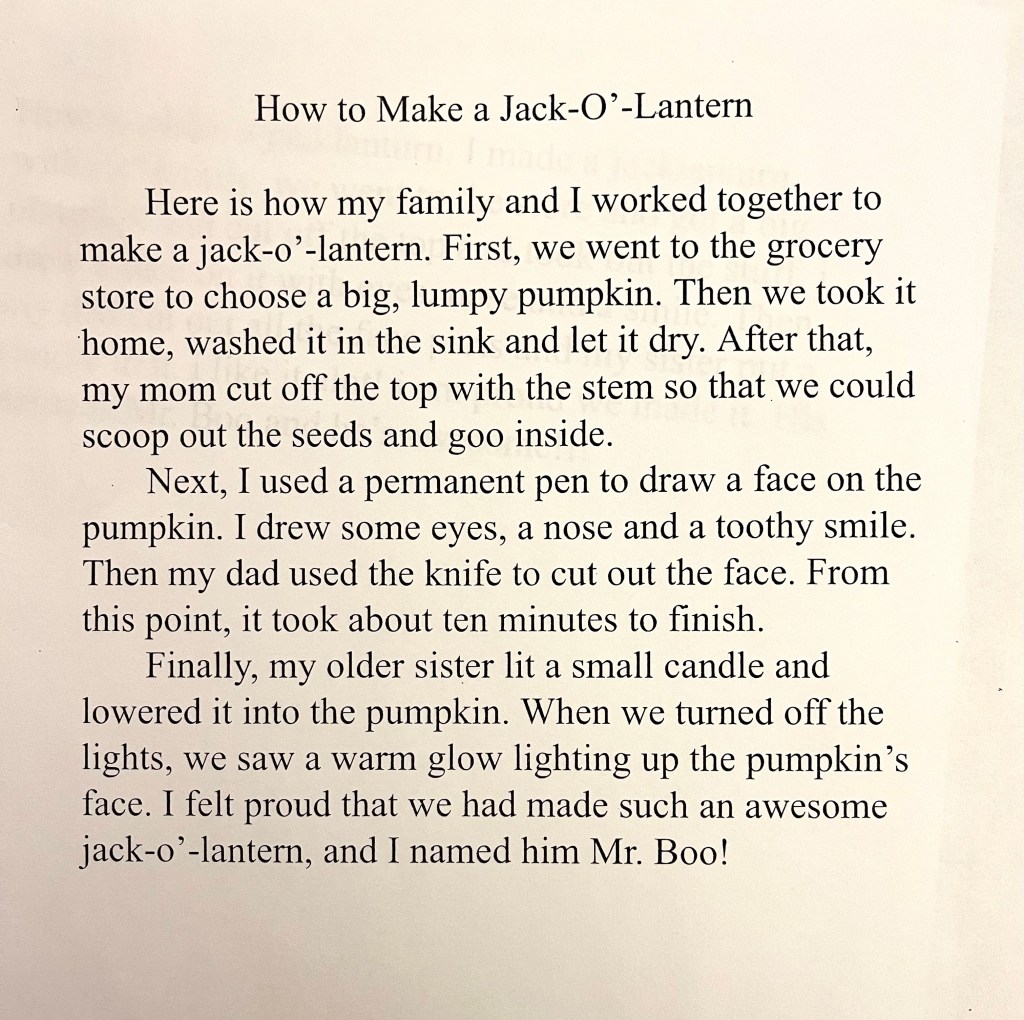
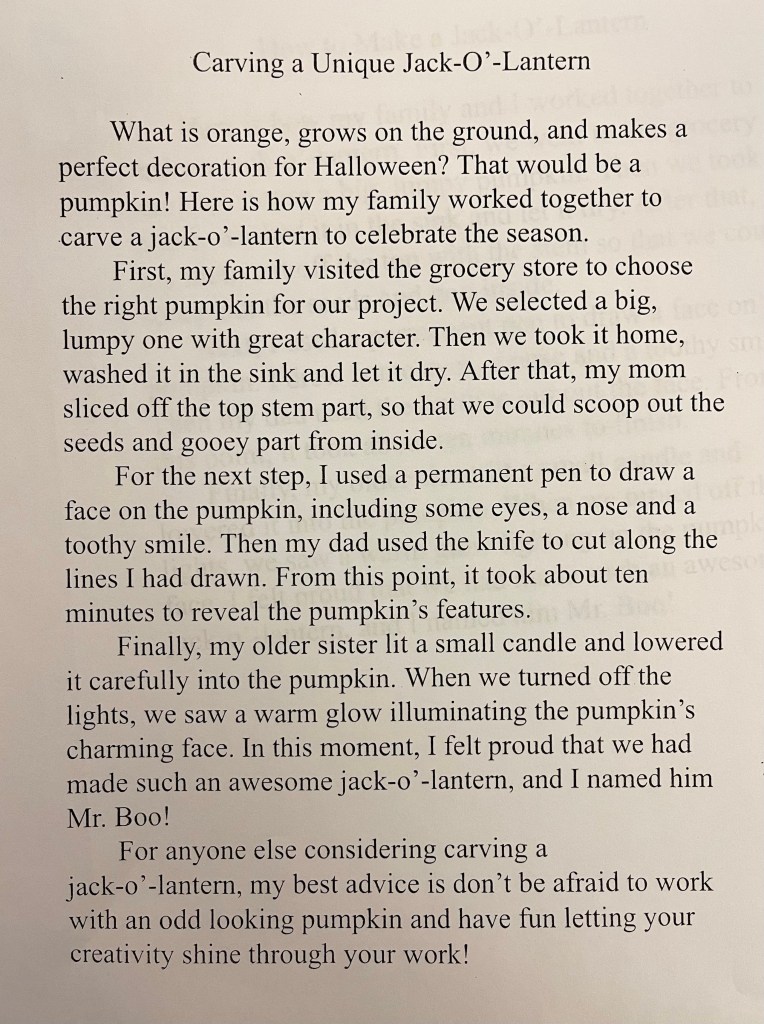
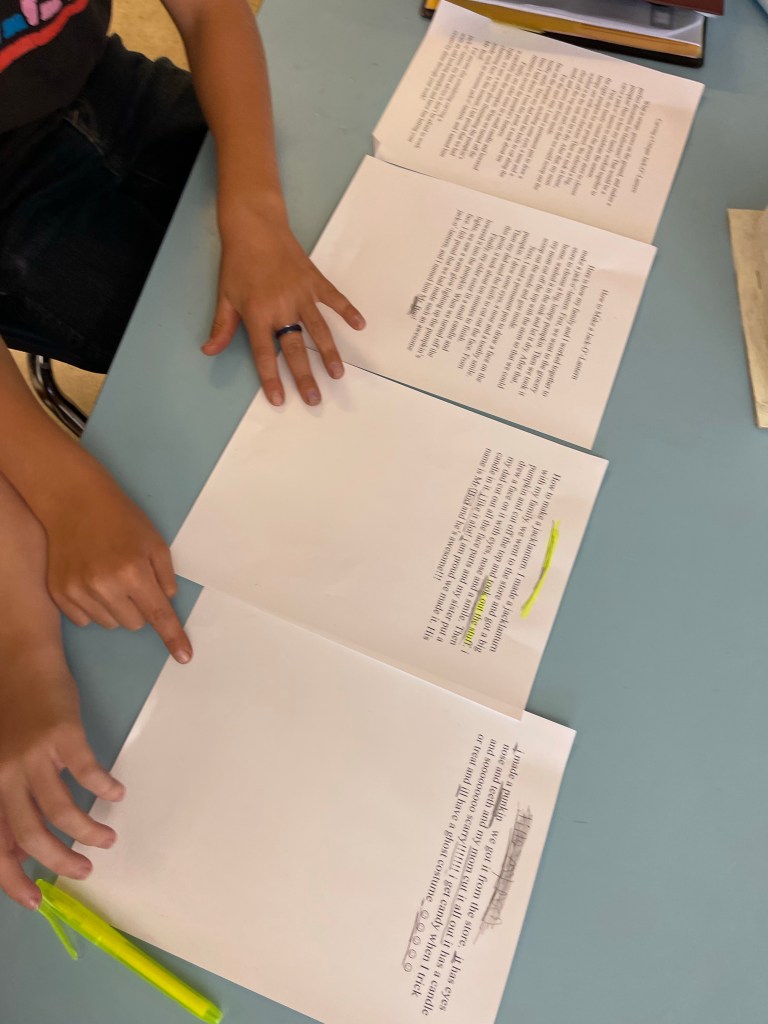
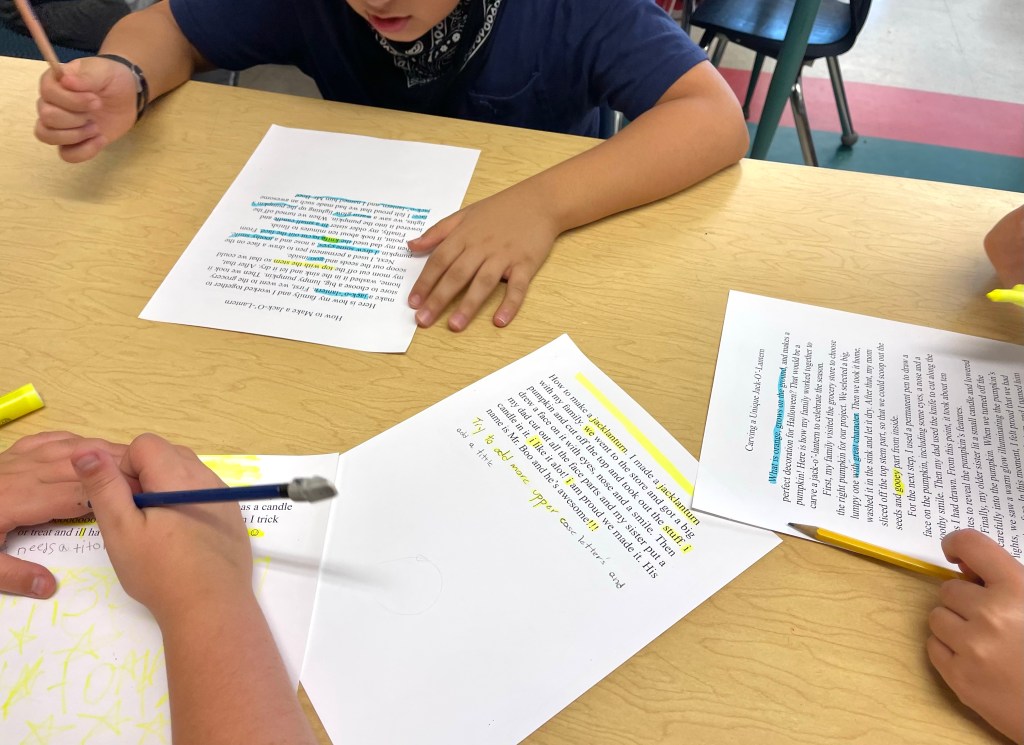
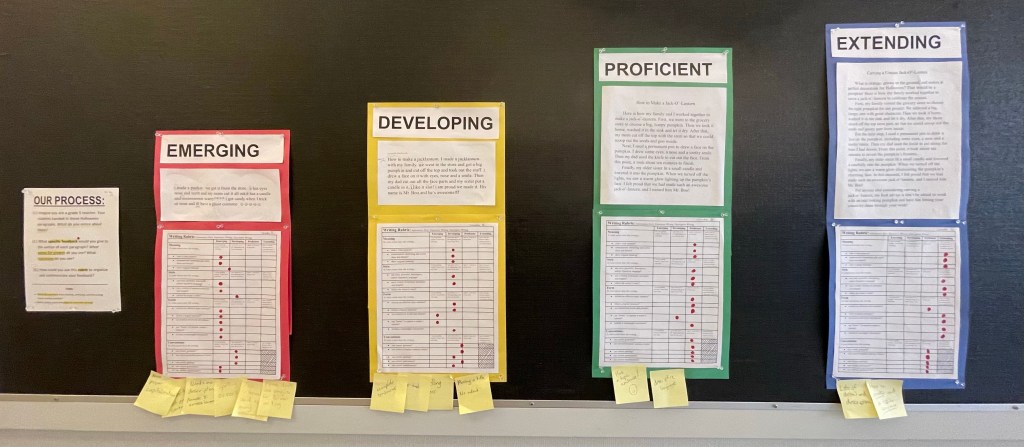
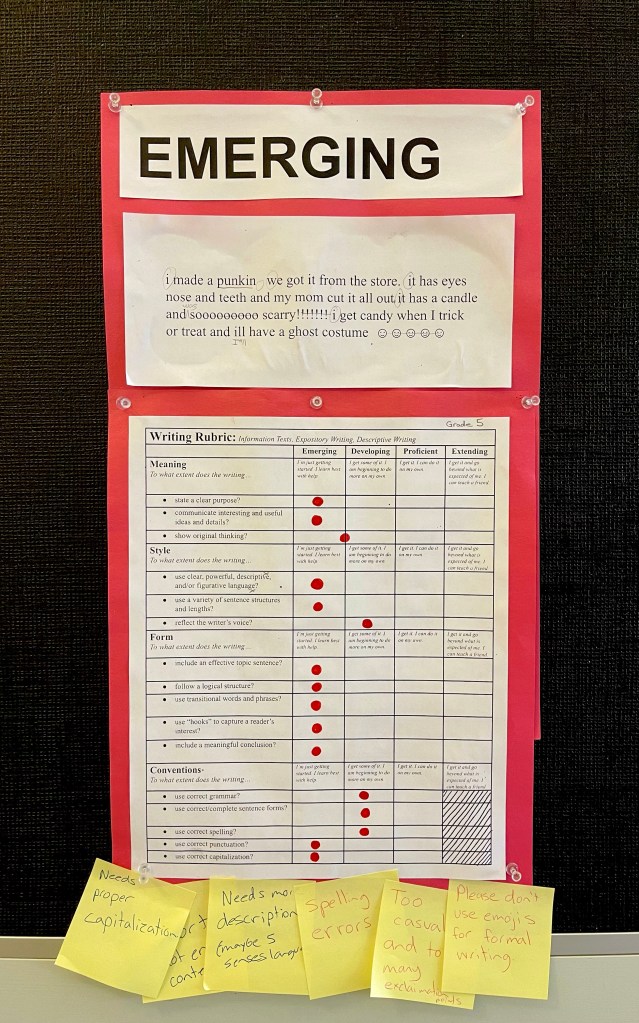
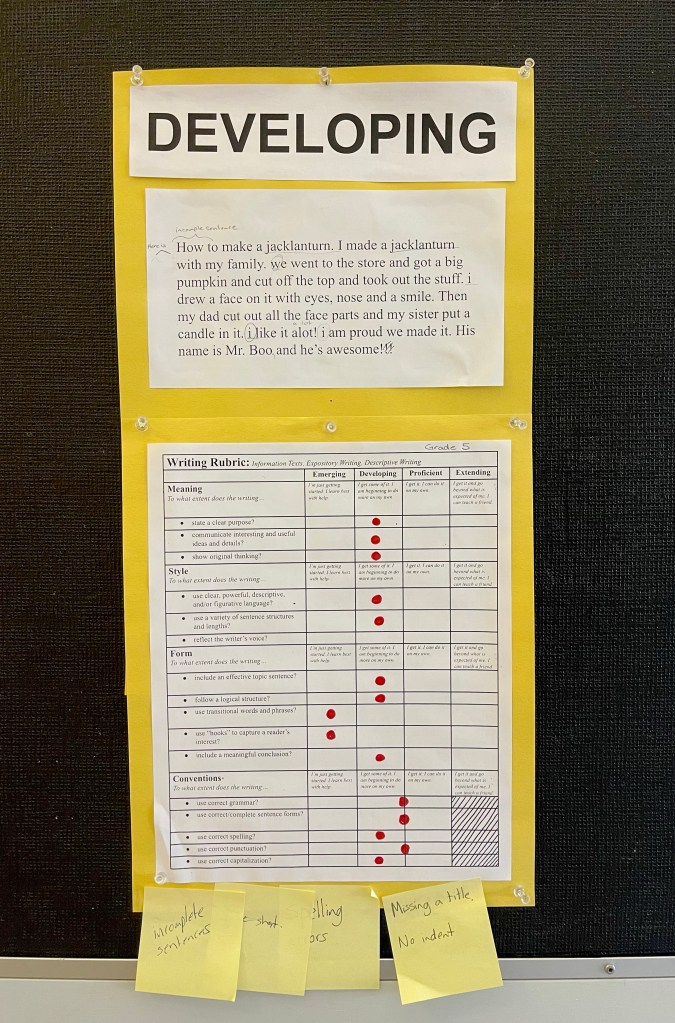
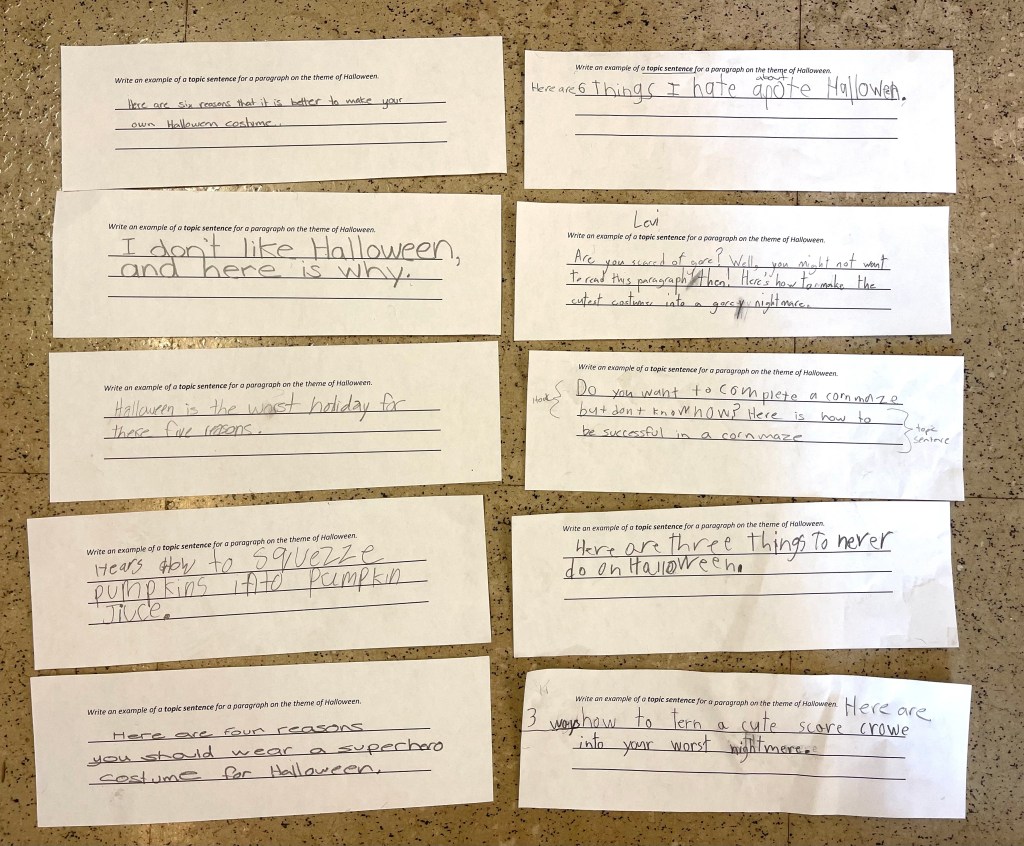
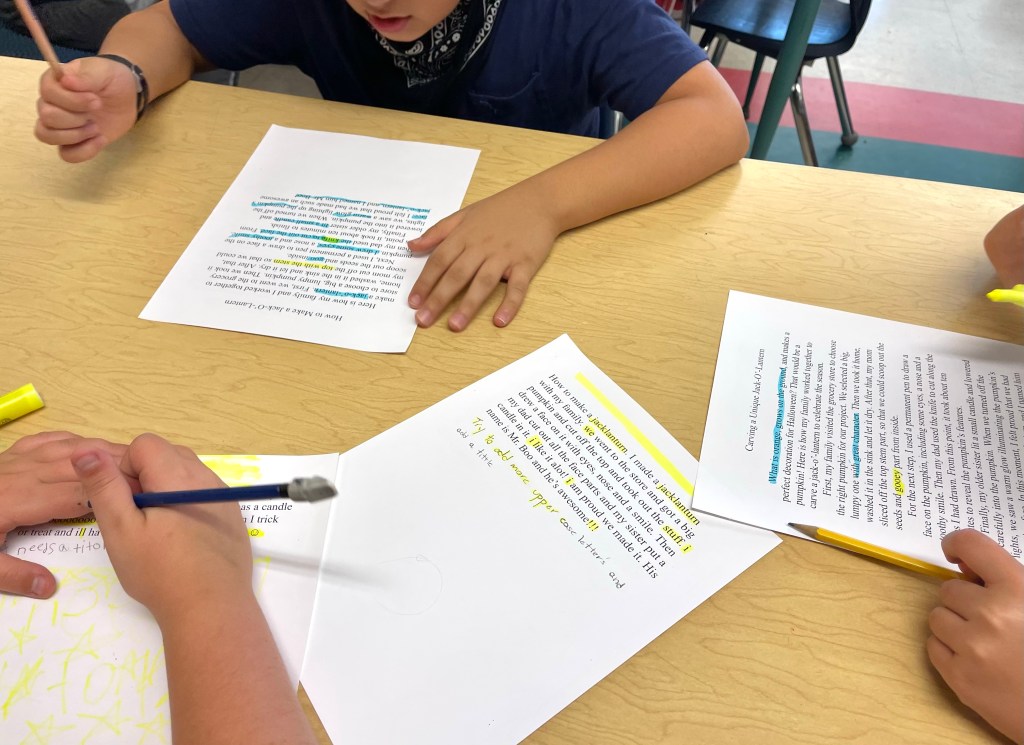
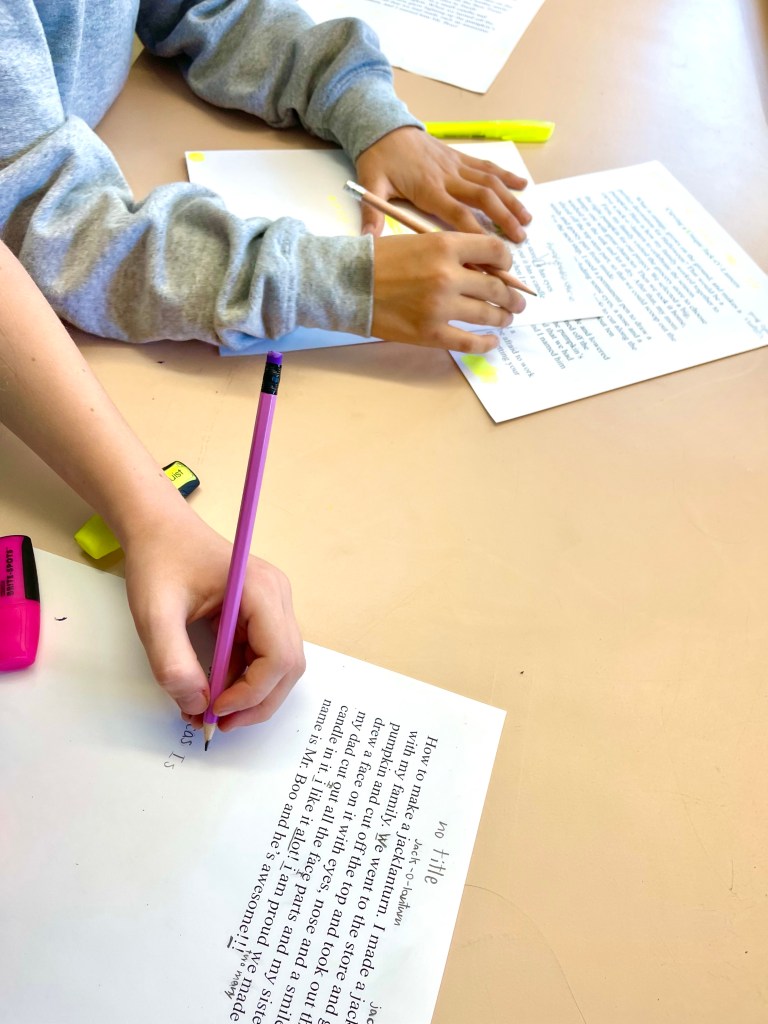
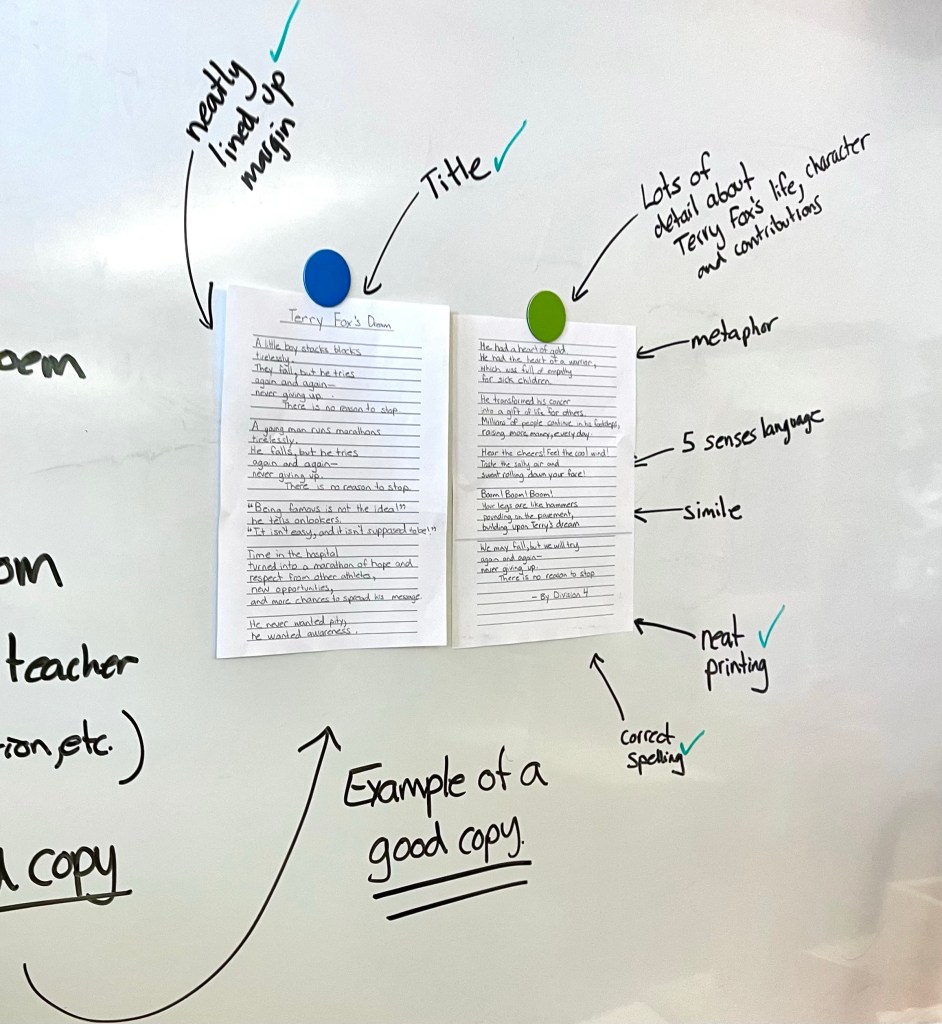
Today students worked in groups to analyze and discuss the merits of various samples of Halloween-themes essays. The challenge was this: “Imagine you are a teacher and these are the Halloween essays your students hand in to you. How would you assess these pieces? What specific feedback and advice would you offer?

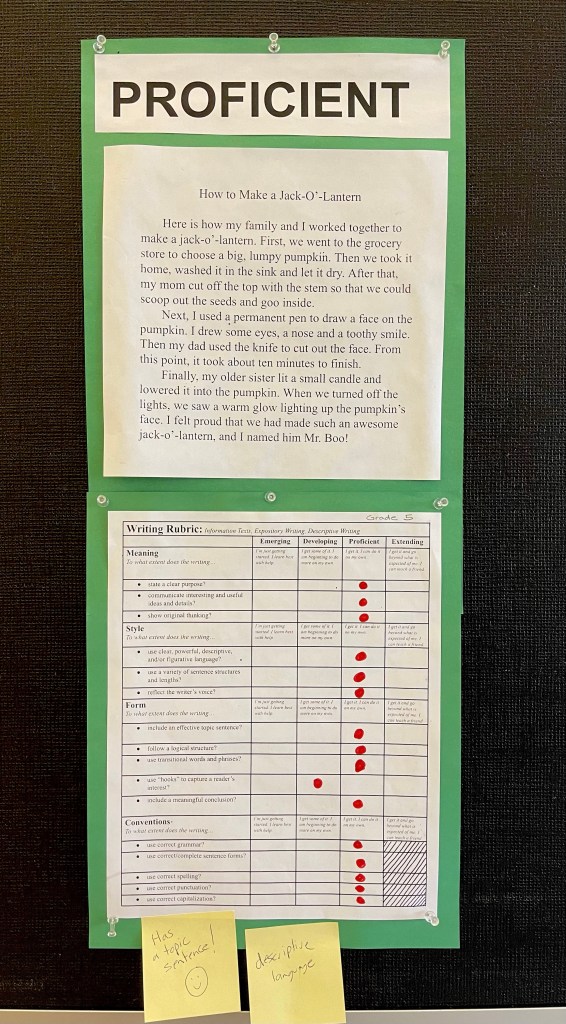
Together we are creating a bulletin display board based around an assessment rubric that clarifies specific differences between expository writing at an emerging, developing, proficient, and extending level. I will post more on this next week.

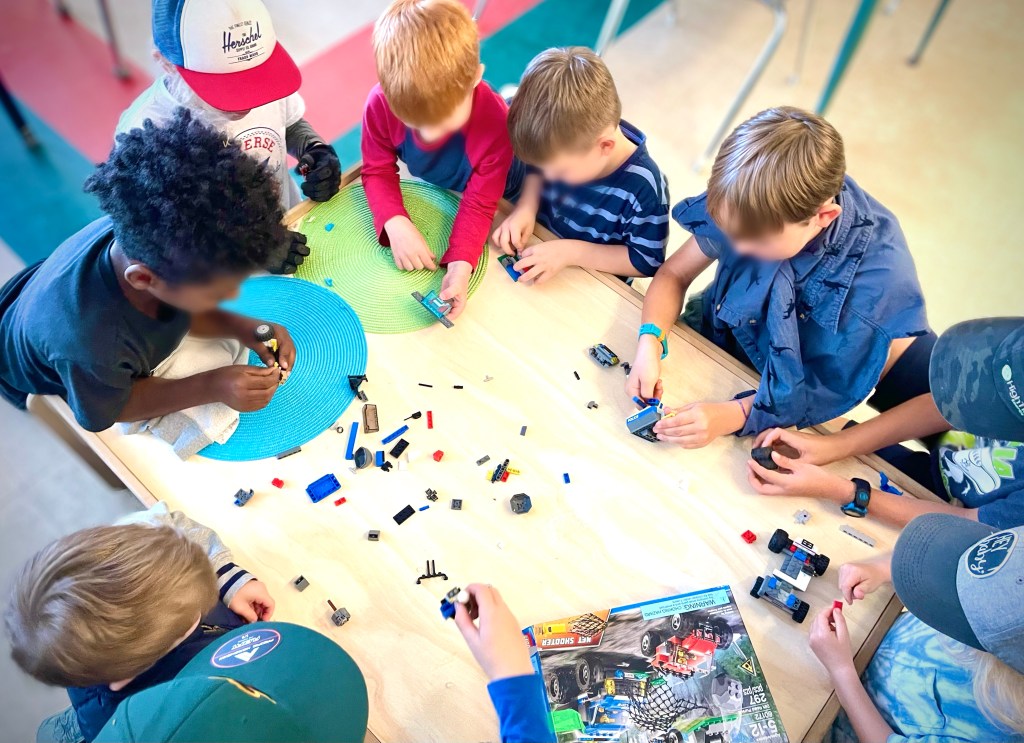
We also enjoyed time with our Little Buddies again today! These connections are so special. I love seeing how students worked hard to help focus and teach the kindergarten students during their preferred play and learning tasks. Families, you would be so proud to see your caring kids in action! I’m happy to report that our grade 4/5 students growing in their confidence as leaders of the school.

Parent/Guardian-Teacher Conferences will happen on Wednesday, October 26th in person. I have now emailed you a link to the online appointment booking app. I strongly encourage families who are able to take advantage of the in person meeting on October 26th. This in person meeting is a chance to see and review a student’s portfolio, notebooks, and work bins—which is not possible over Zoom. Zoom or phone meetings will still be a possibility to accommodate families with extenuating circumstances.

5 Senses: Exploring Lemons

Hello, division 4 families!

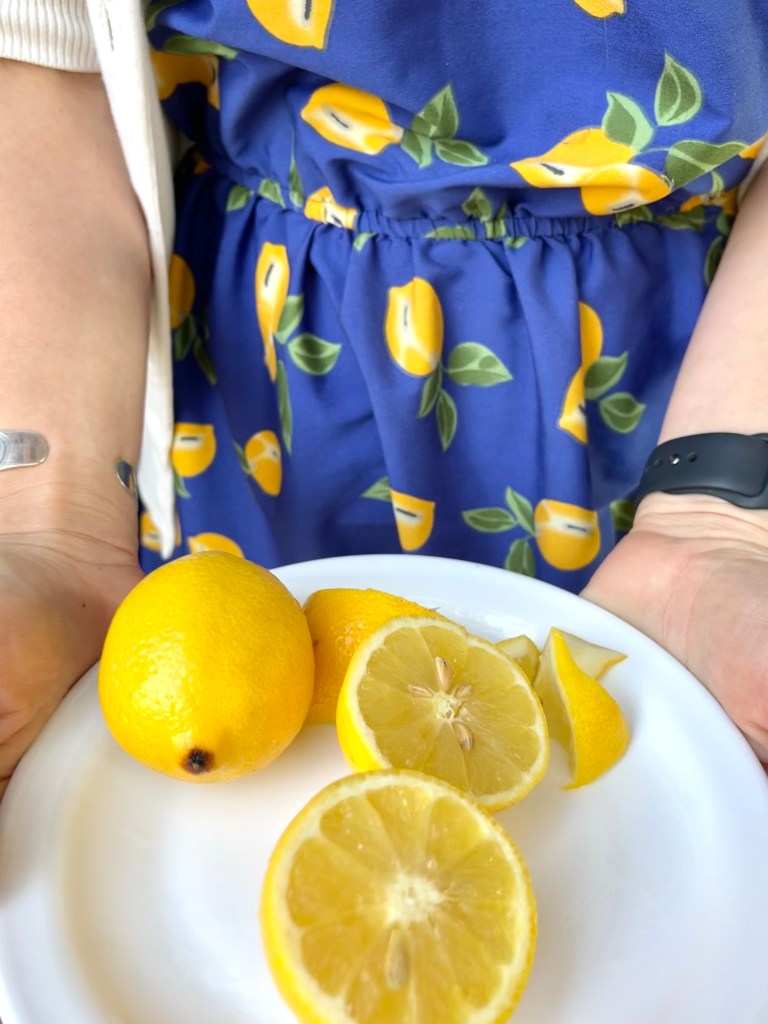
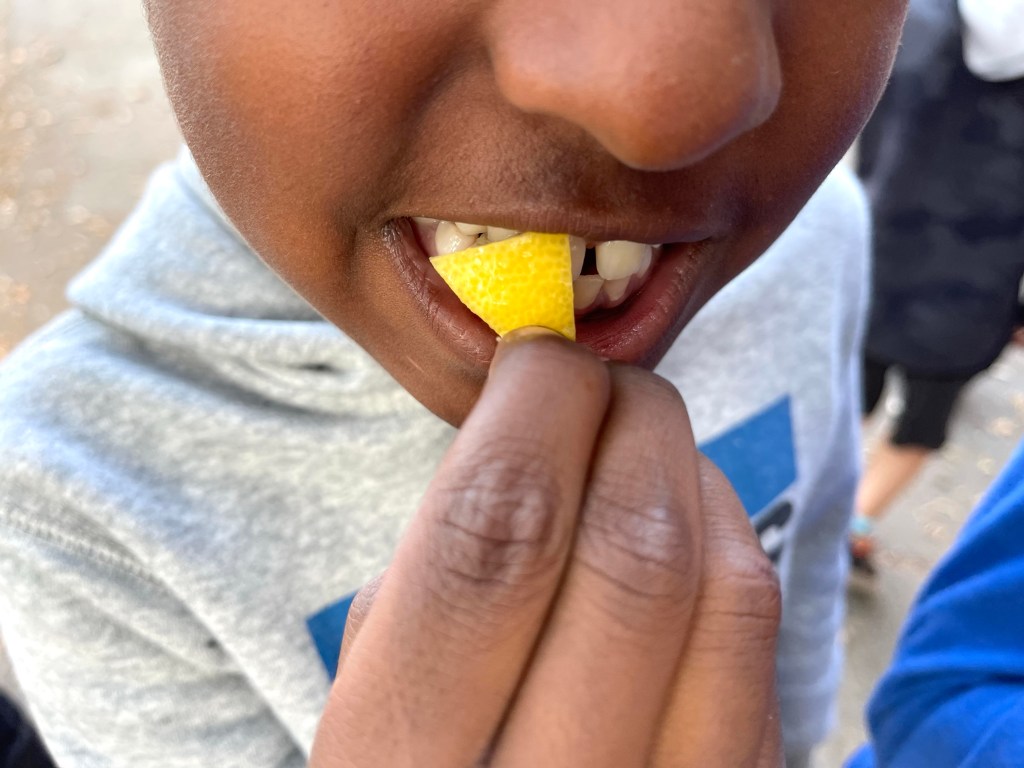
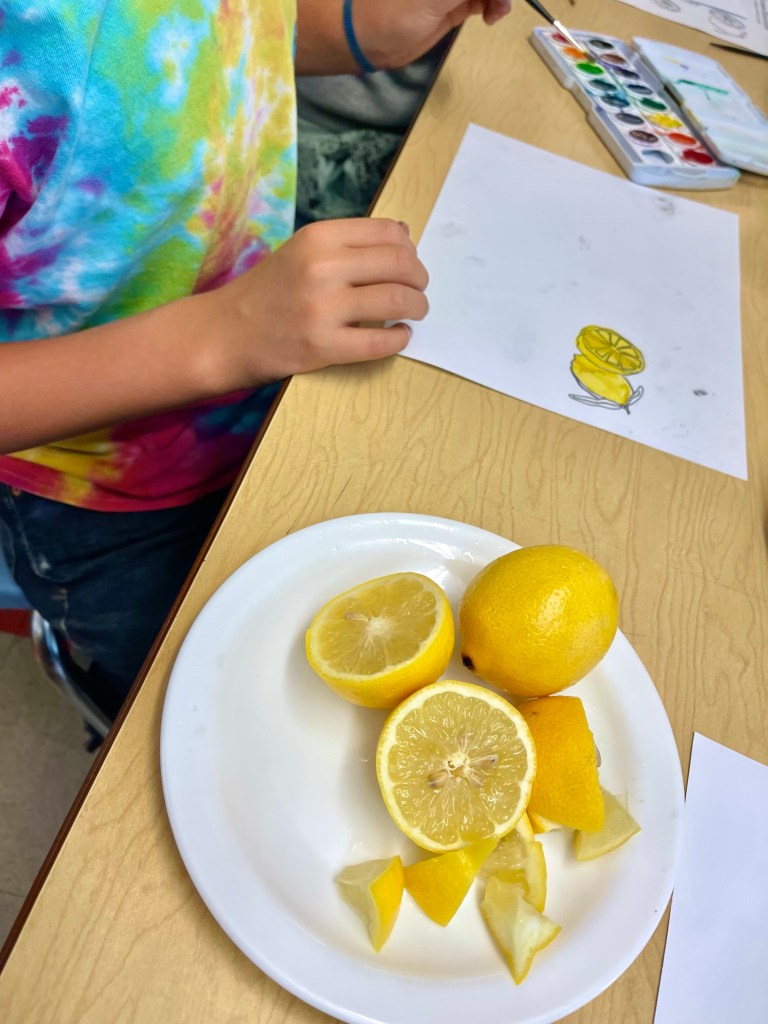
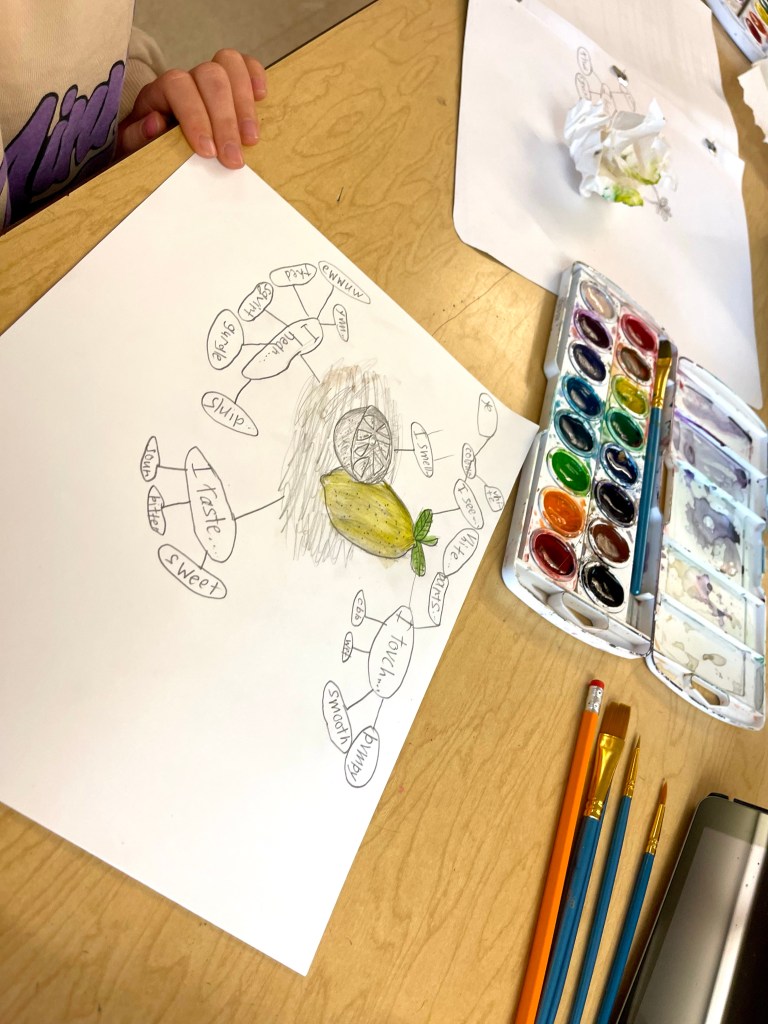
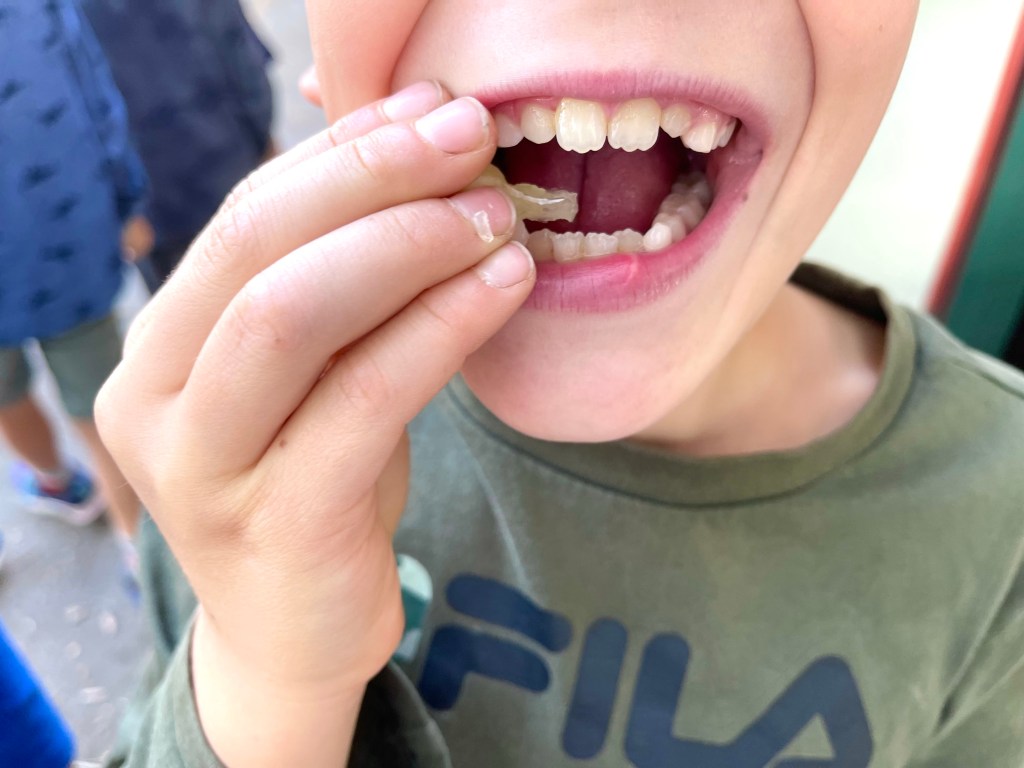
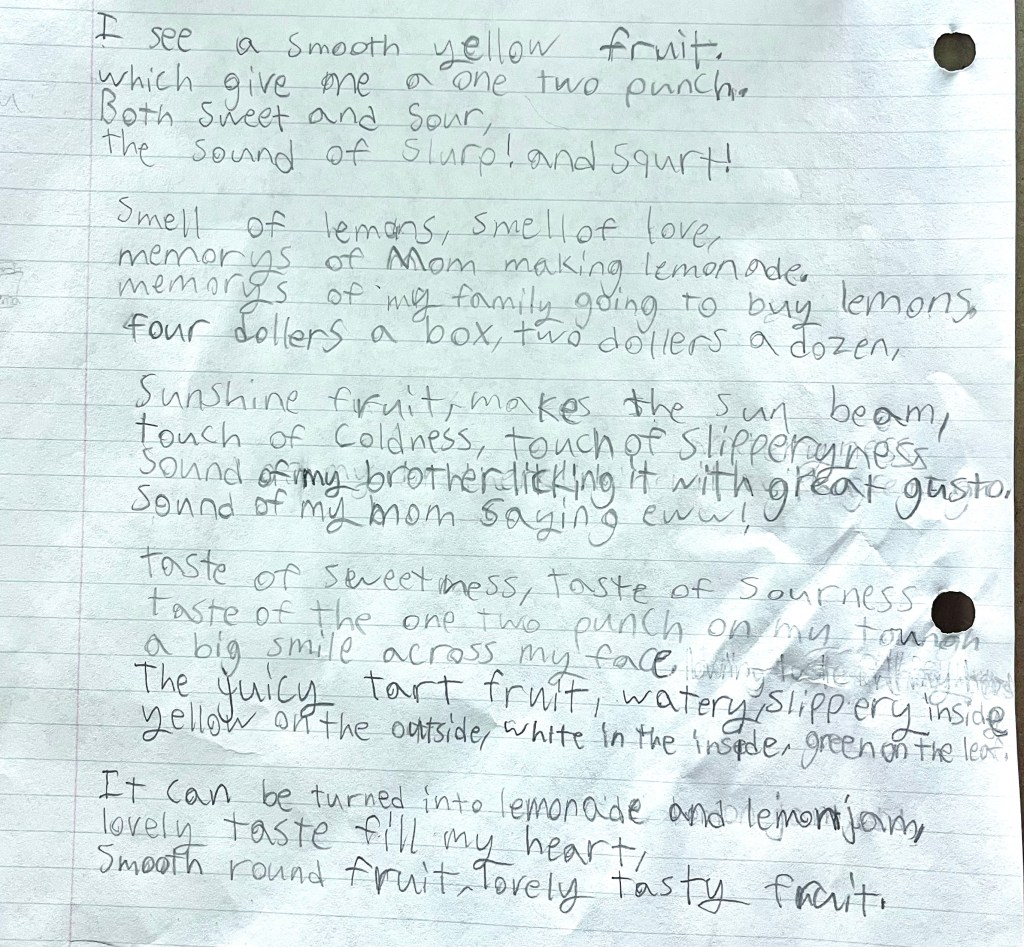
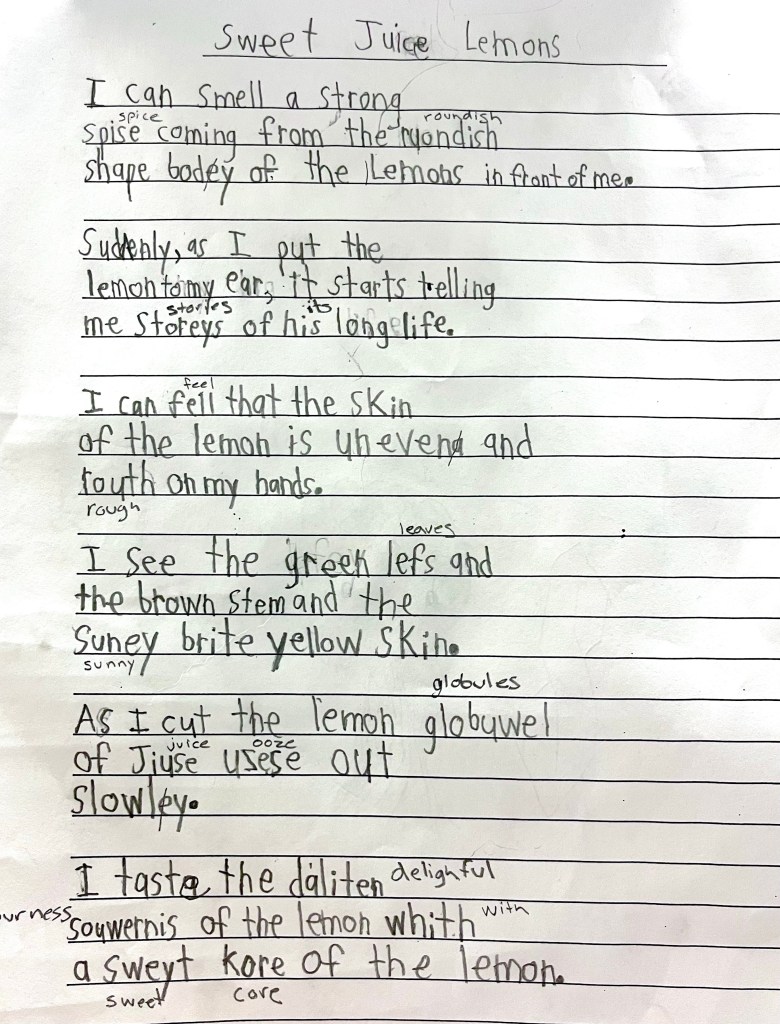
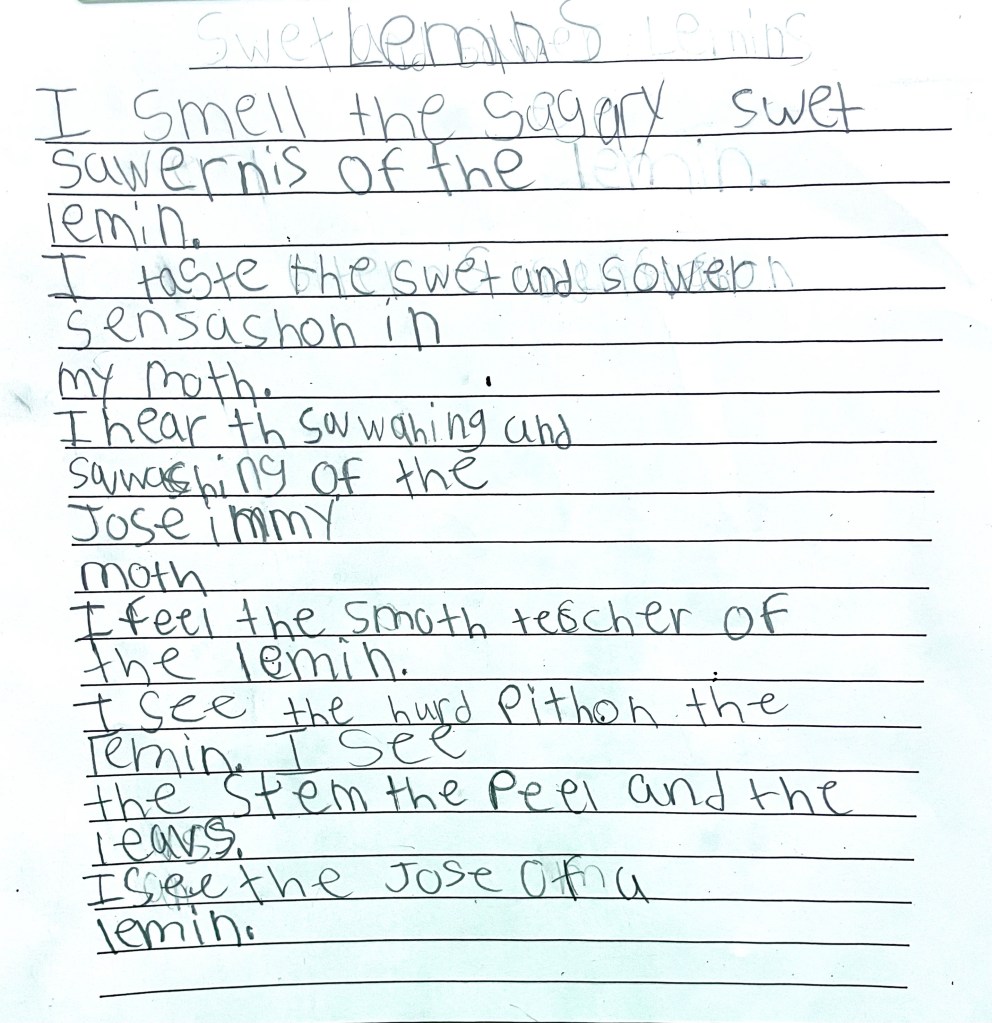
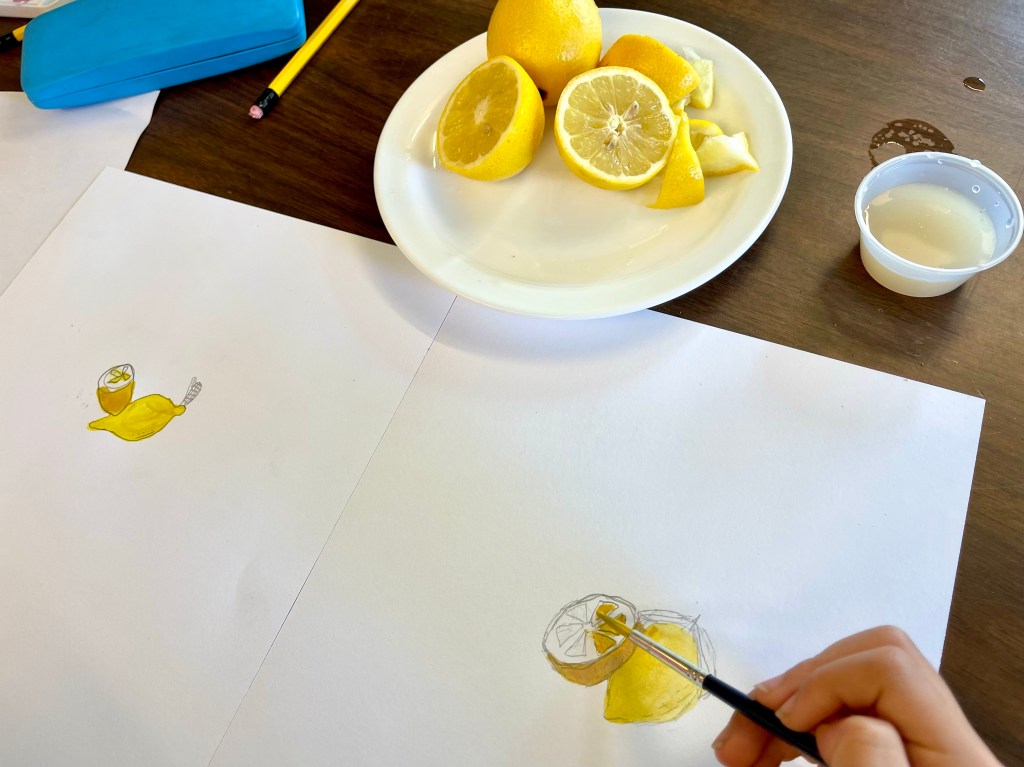
Tangy! Sour! Sweet! This week we enjoyed testing and reflecting upon our five senses with a Language Arts and Science inquiry starring lemons.

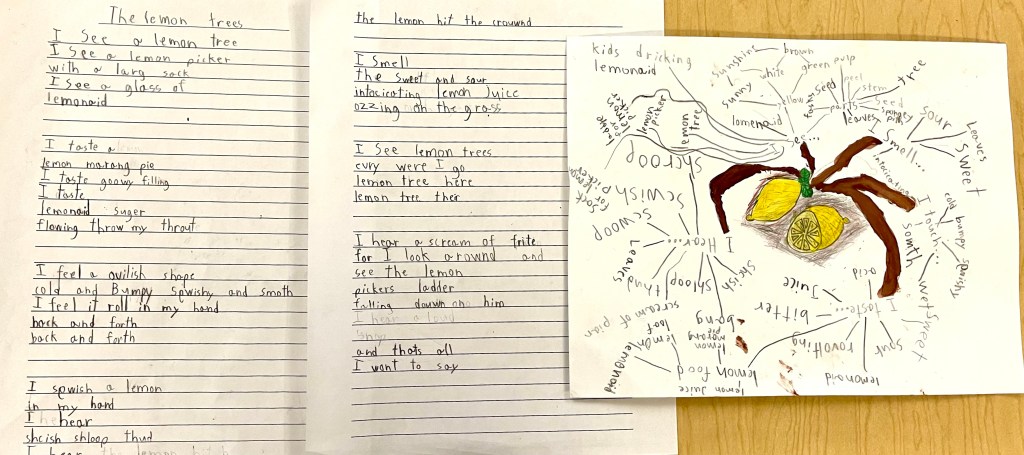
The students continue to practice creating mind maps as a way to collect and organize their sensorial observations. As well, we worked together to model practical strategies for making that creative leap from data to poetry.

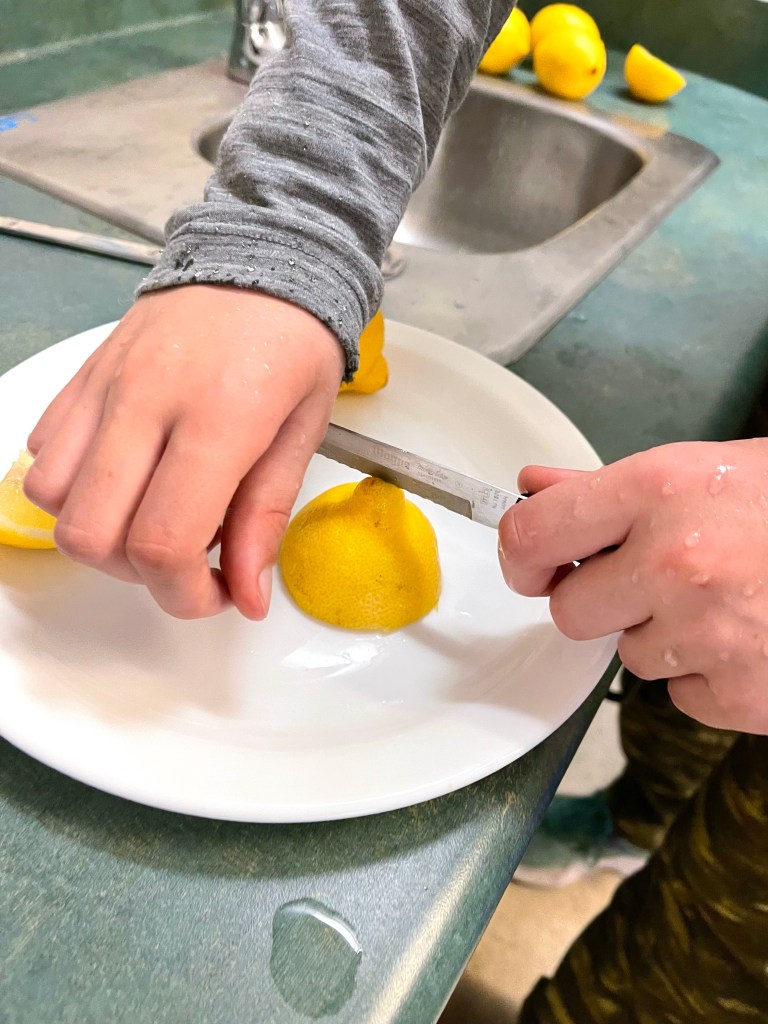
Another science class component was practicing safe and hygienic handling of materials. Students took turns “dissecting” the lemon with a butter knife, using proper technique. New vocabulary we learned included pith, pulp, citrus, acidic, and membrane.

As you can read below, our young writers continue to apply their poetic skills and literary devices to make lovely poems.

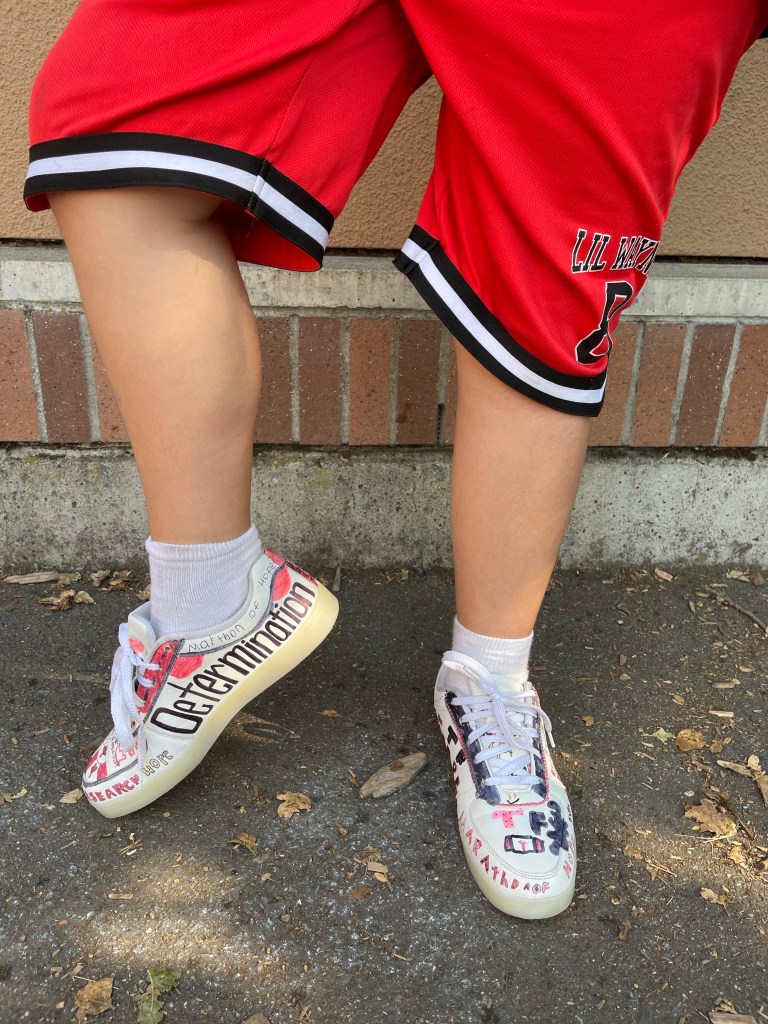
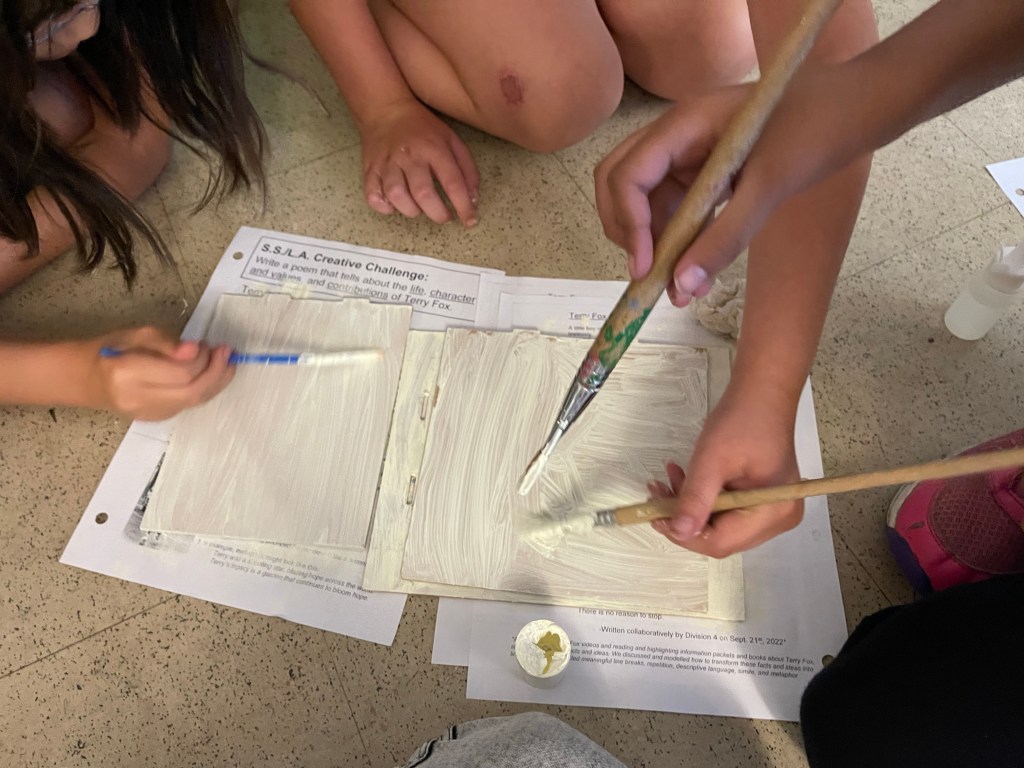
Congratulations and a huge thanks to all Terry Fox Run participants and fundraisers! Awesome collaborative effort to create these Terry Fox-themed running shoes, too!

Buddies Day!

It’s a joy to see the grade 4s and 5s teaching, inspiring, and taking good care of their kindergarten buddies. This leadership experience for our students stems from goals in the “Career Ed.” curriculum, and it helps to strengthen bonds across the school, inspire students to bring out the best of themselves, and role model skills and positive behaviours.

When our kindergarten buddies visit, my heart melts to see smiling little faces light up in these caring mentoring moments. How magical to feel seen and supported by the big kids of the school! How precious the responsibility to lead.

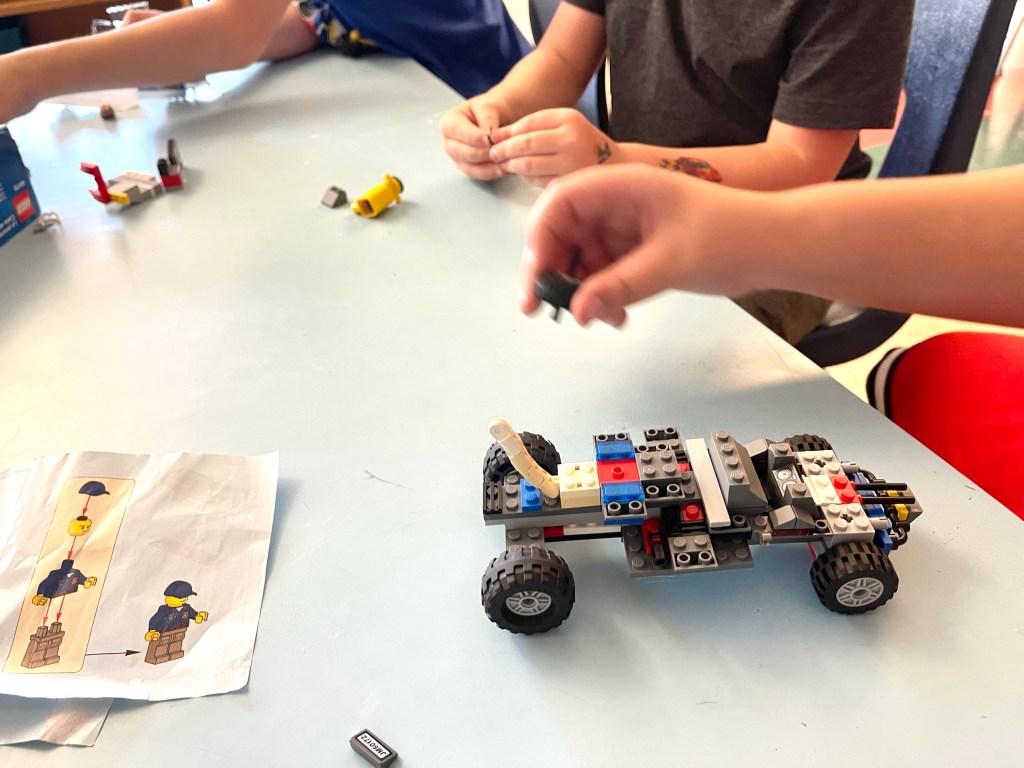
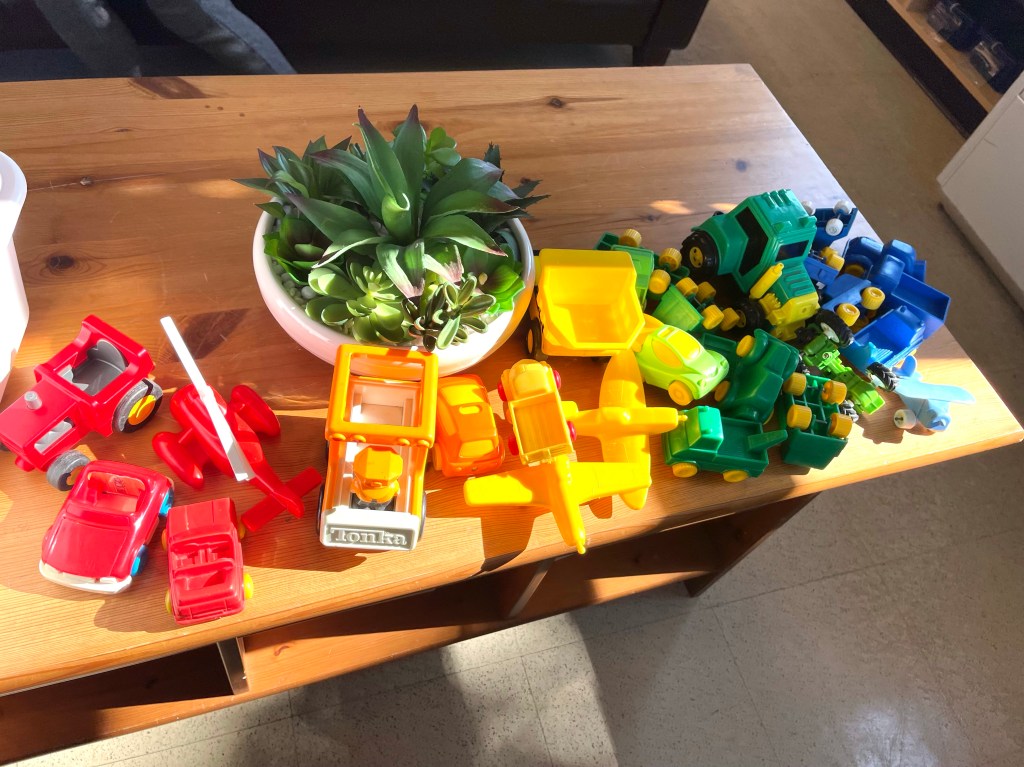
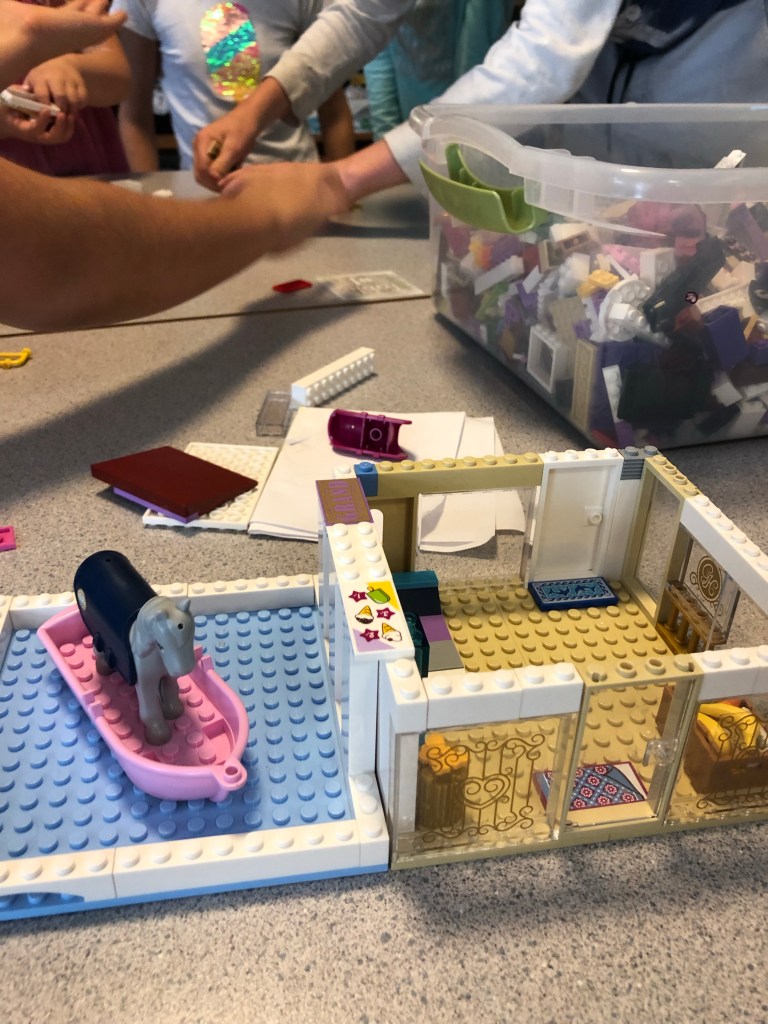
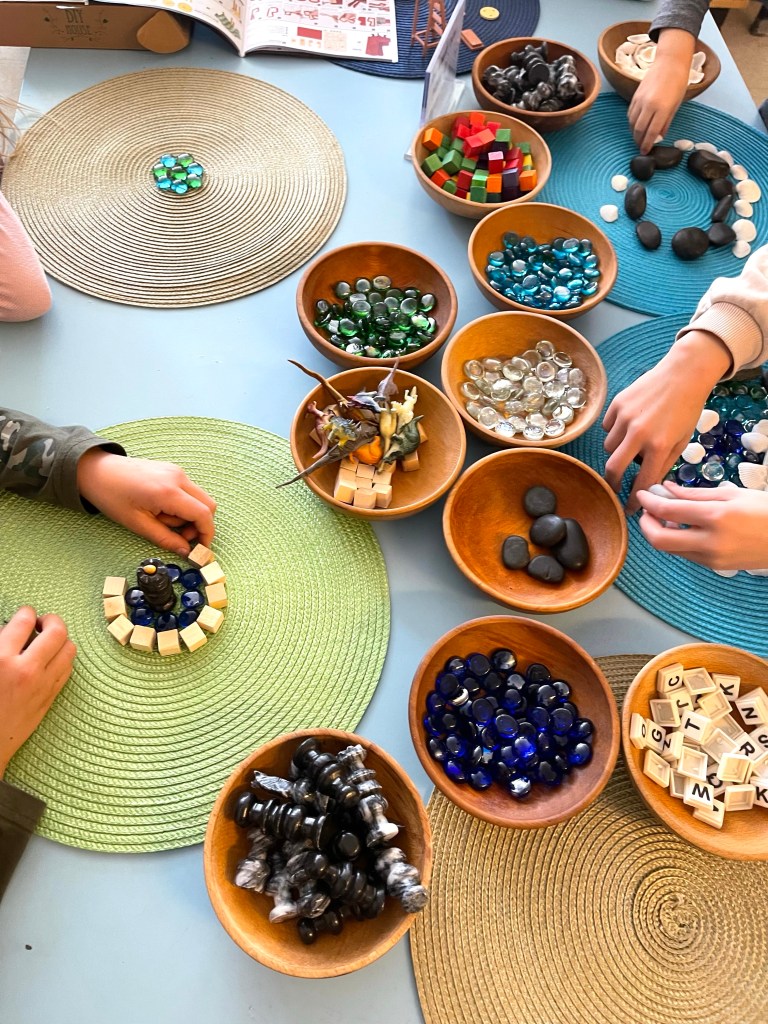
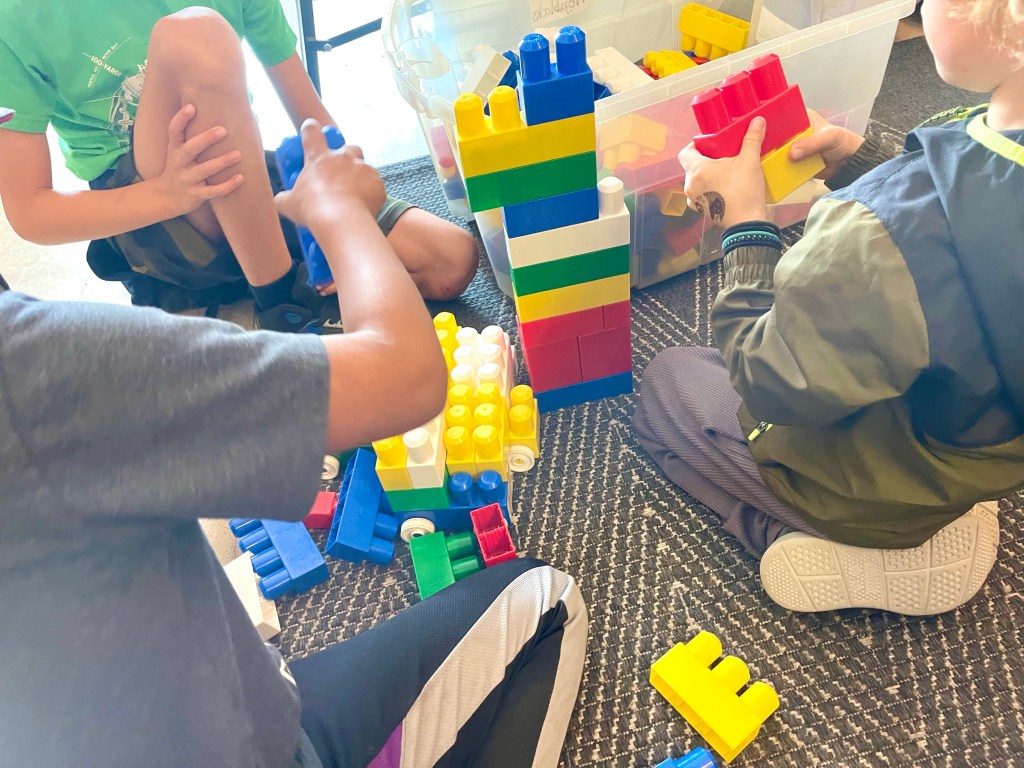
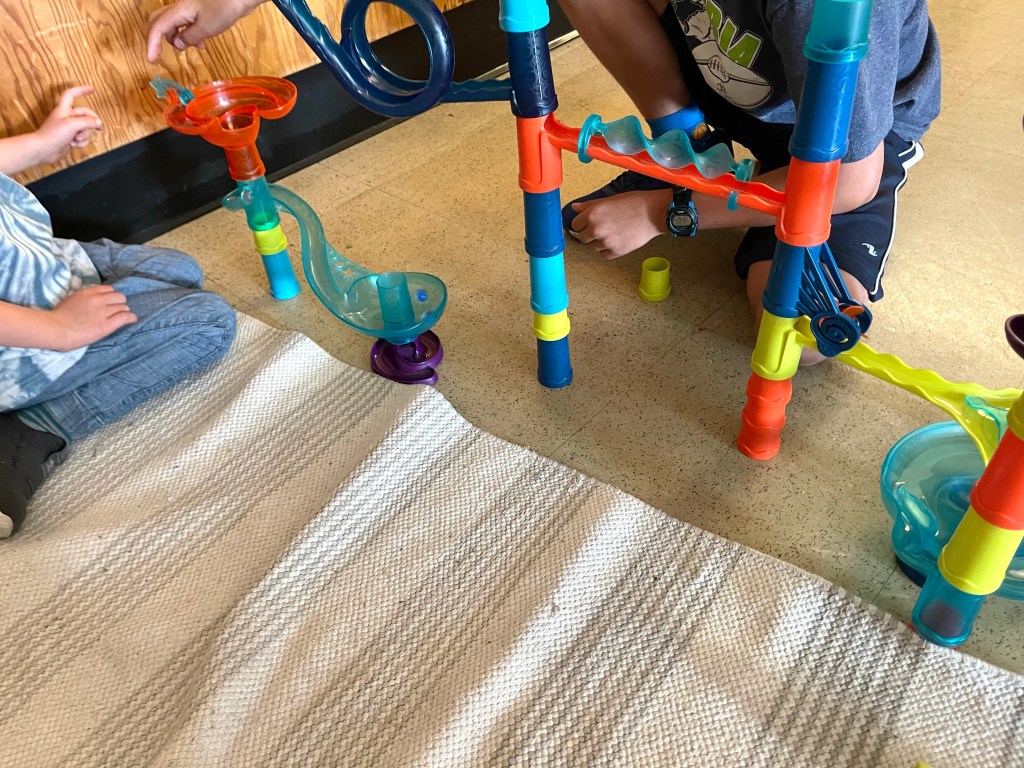
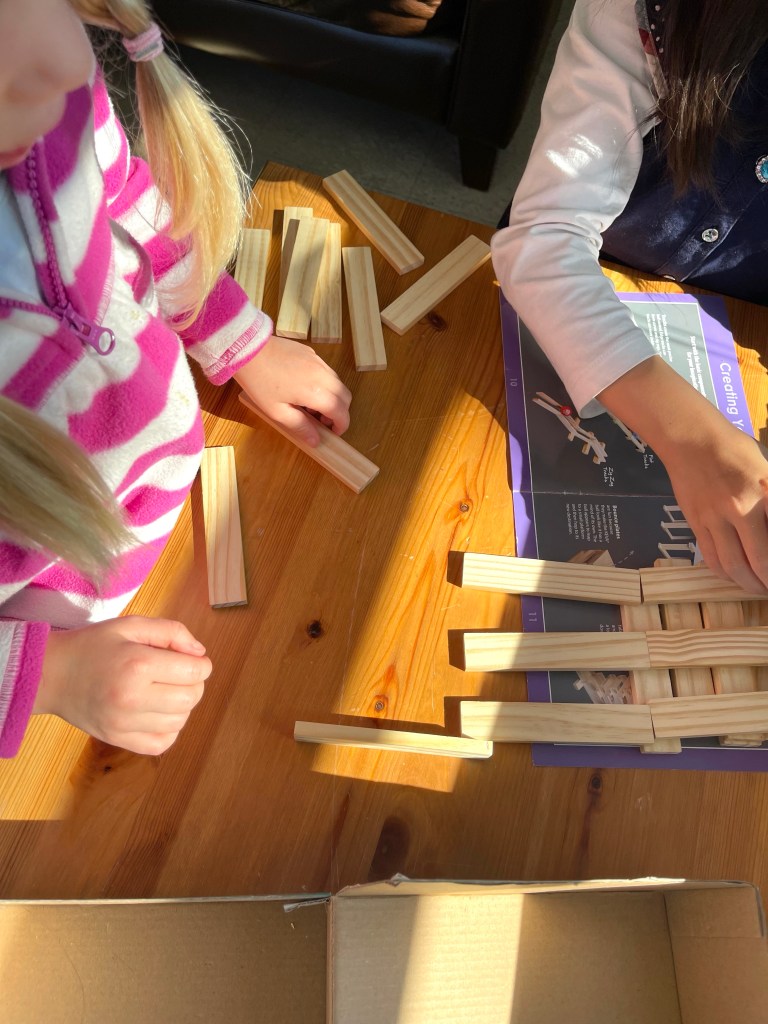
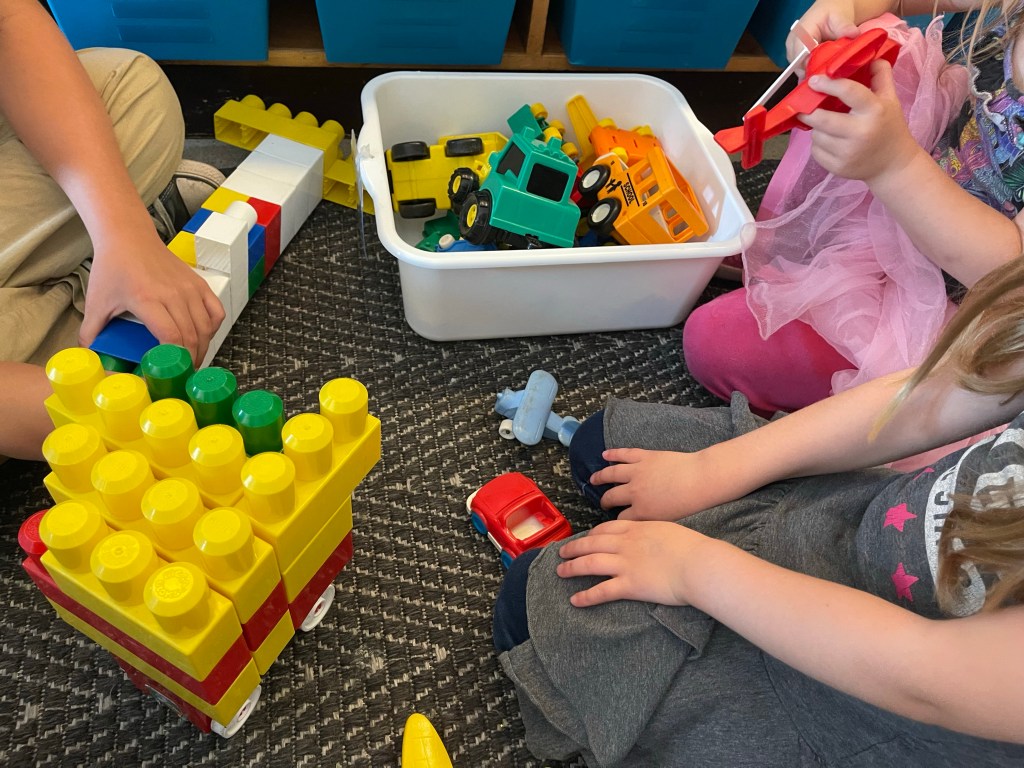
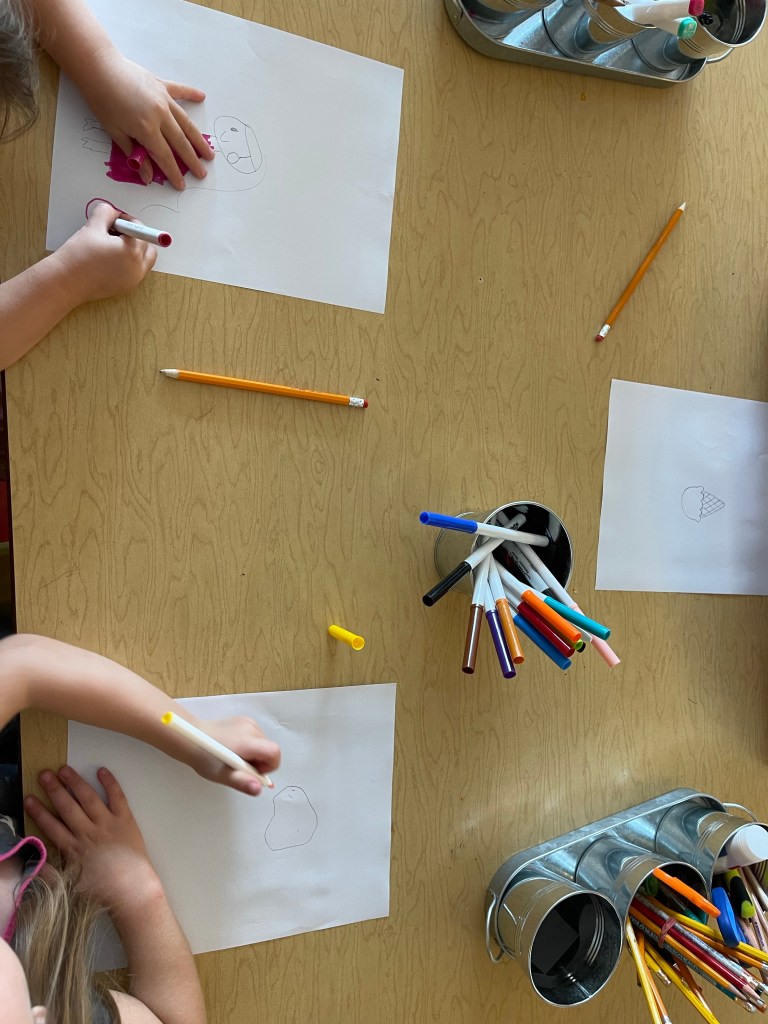
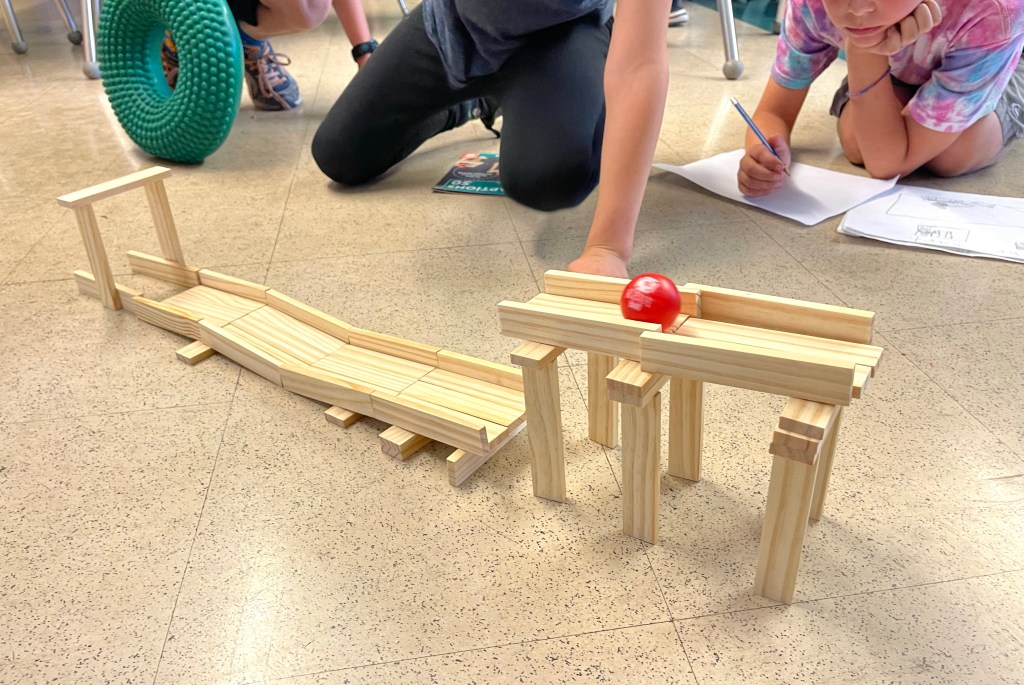
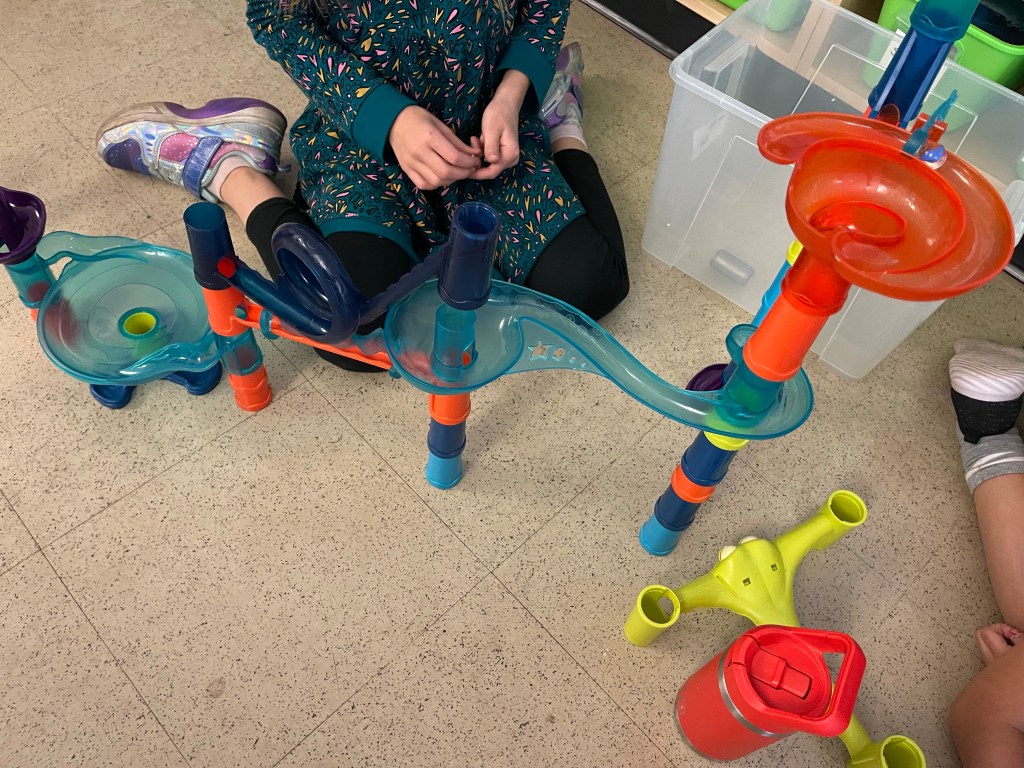
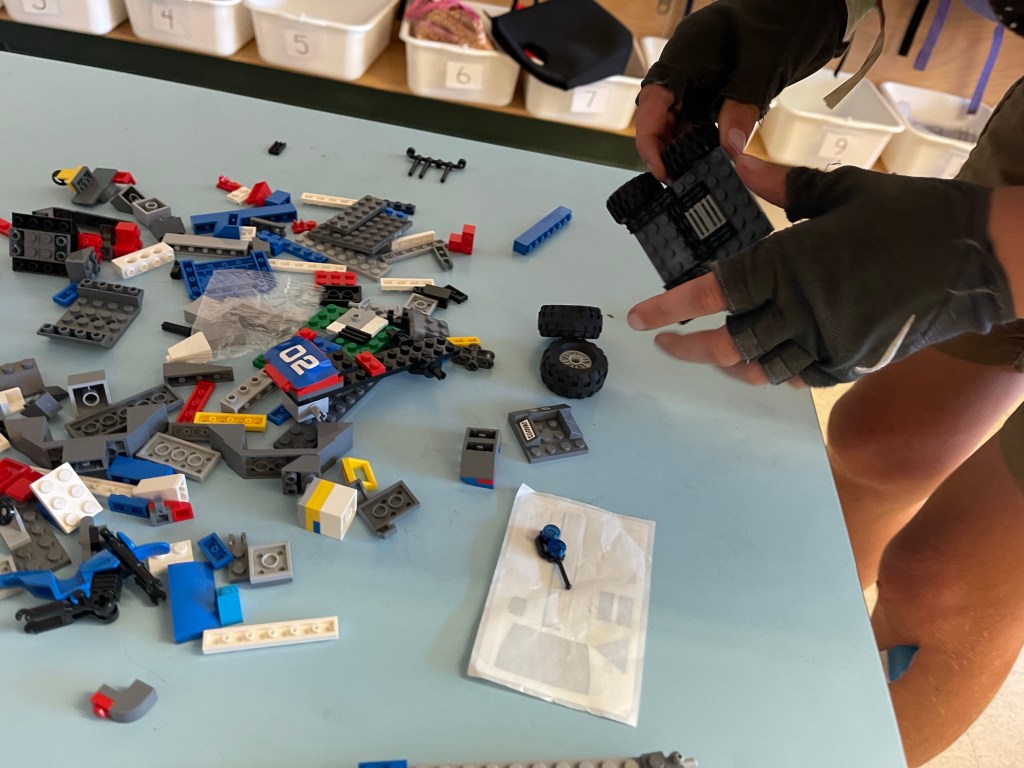
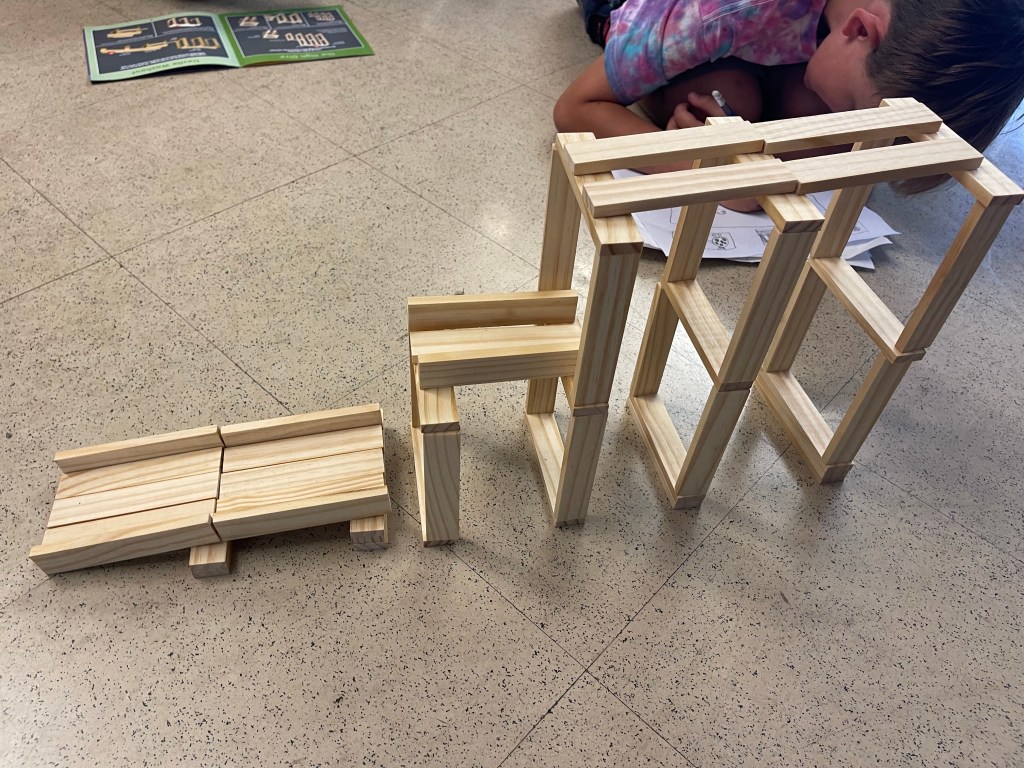
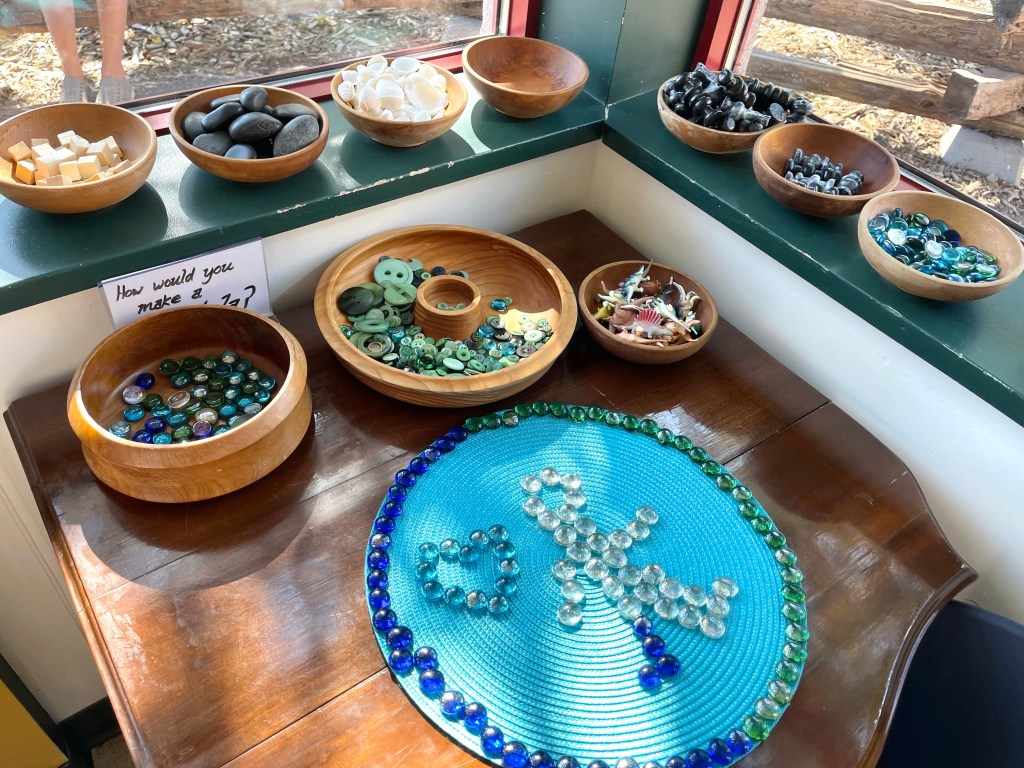
Here are some photos of the hands-on, collaborative arts and sciences activities they shared today including building a marble run, KEVA plank engineering, drawing, Megablocks constructions, toy vehicles, Lego, Story Studio (loose parts play), reading, and more.

Multiplication Bingo, Capitals & End Marks

Here is a fun KEVA plank construction students made during ADST time today.

Hello division 4 families,

Today we began to put together our portfolios of our best work. It is amazing how much we have accomplished together already! As well, the grade 5s enjoyed a presentation by our new Strings teacher.

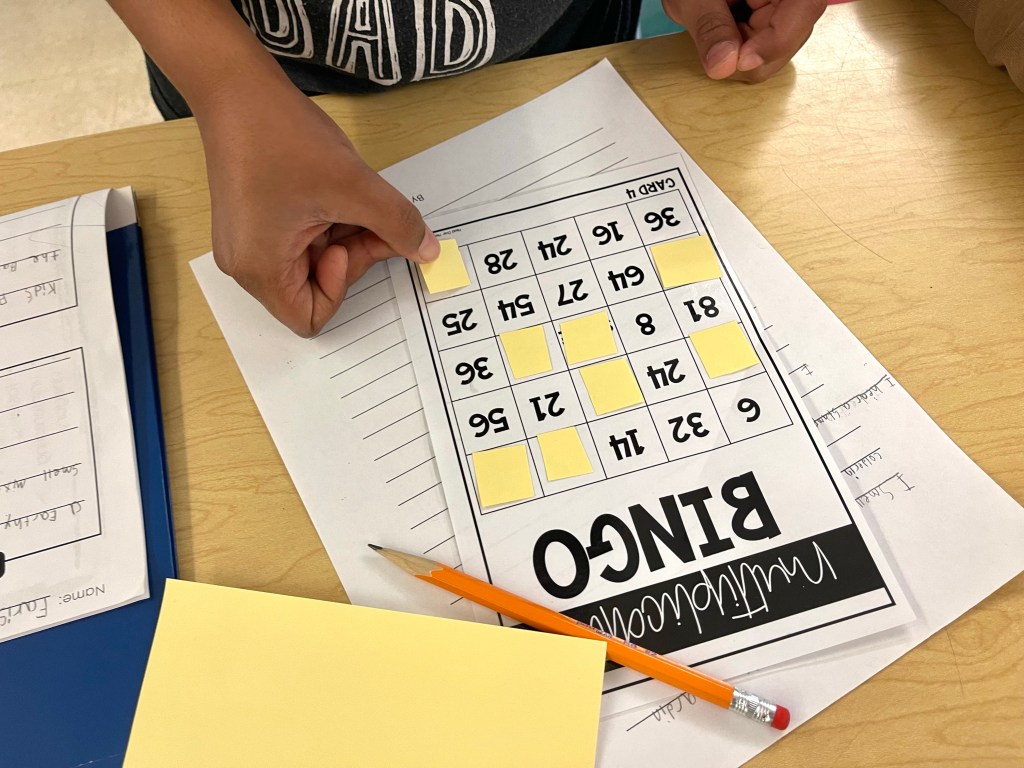
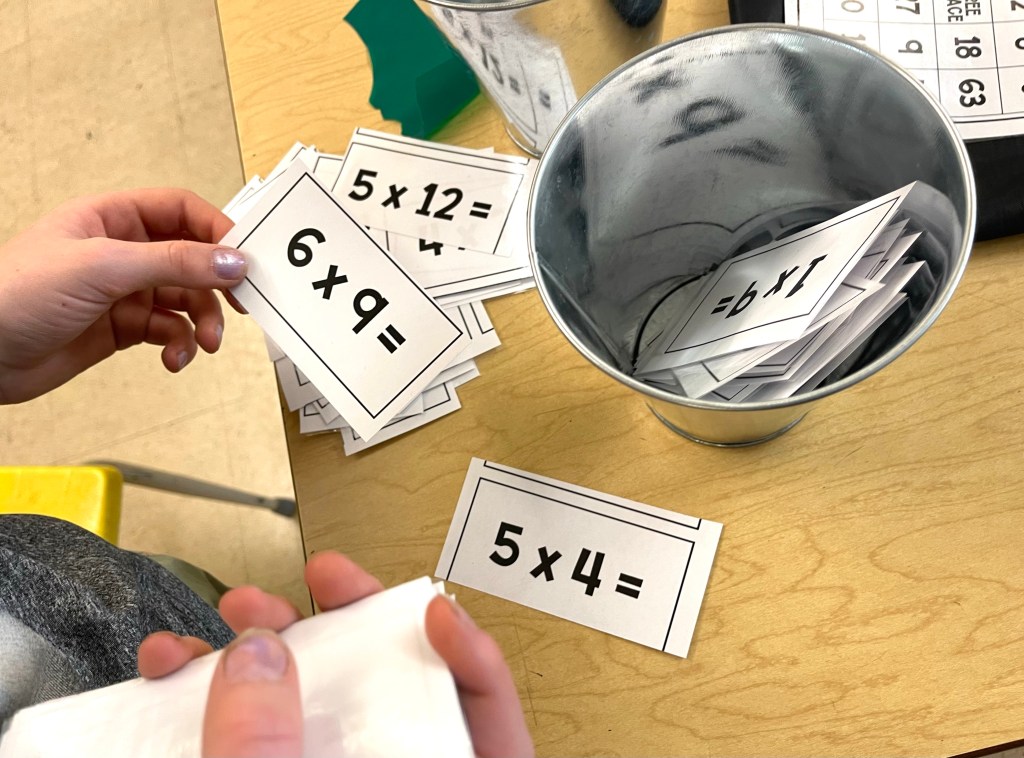
In Math, we have been reviewing the concepts of place value, telling time, and math facts (+, -, x, and ÷). A fun way we have been practicing multiplication facts is with Multiplication Bingo!

I have requested students bring their math duo-tangs home to review in preparation for the quiz we will have this Friday as a formative assessment. Students who need extra time and supports will be accommodated, and all students will be challenged in ways that are appropriate for their learning needs. We spend a lot of time in the minutes and days in advance of any quiz discussing mindset and strategies for success. Students are aware that they can demonstrate their learning in many ways beyond testing, especially through in class participation.

After any quiz, students are always welcome to (1.) do their quiz corrections, (2.) get more teaching support at school and at home, and then (3.) do a quiz rewrite. Alternatively, students may also demonstrate their math understanding in one-to-one “math meetings” with me instead of doing a quiz rewrite.

In Language Arts today, we focussed on finishing our “Five Senses Autumn Poems” and “Rock Garden Poems”.

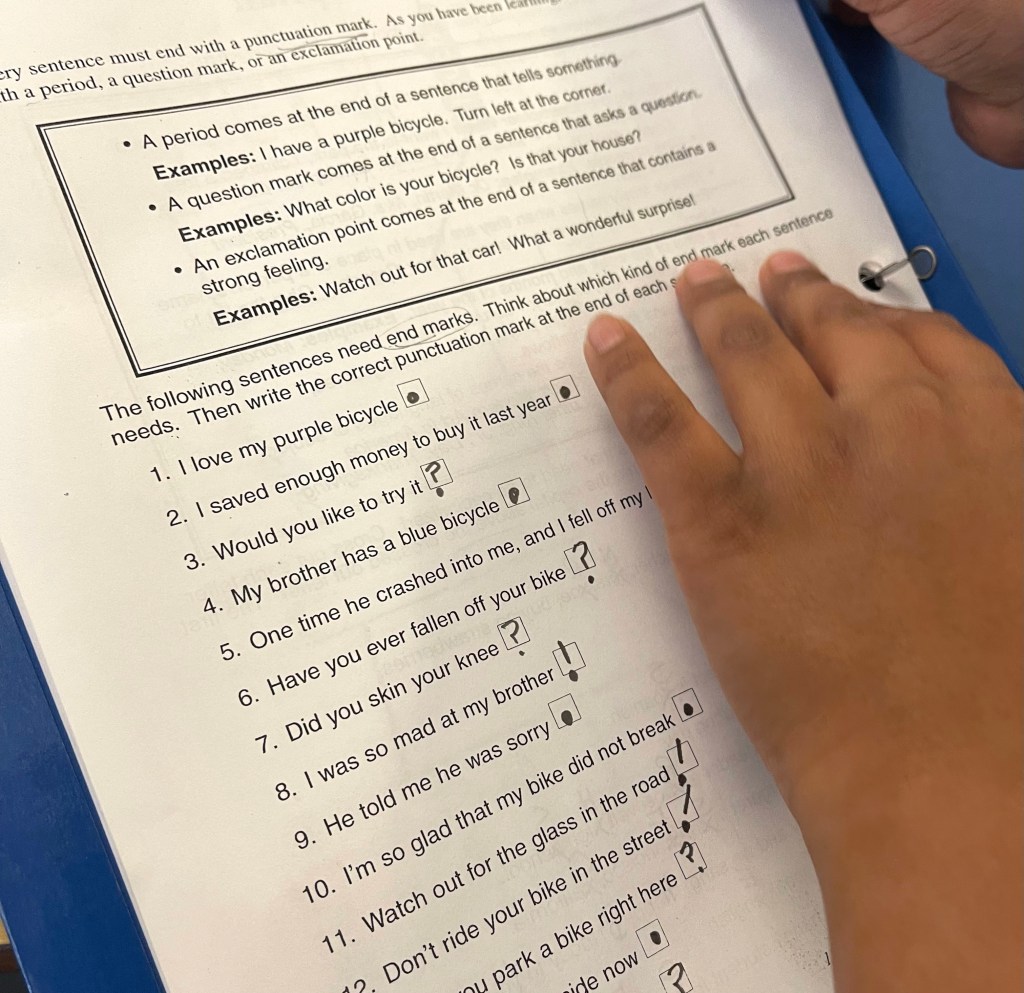
As well, we reviewed “end marks” (punctuation at the ends of sentences), and we went deeper with the rules of capitalization. The video below provides an overview.

For extra practice, you could ask your child to correct the following sentences* to add capitals and end marks:

i would love to go to paris, france

we live in victoria, british columbia

“joanne, can you please tell mom i want her to pick me up at oaklands elementary today”

did you see kathy and marco at hillside mall yesterday

watch out for the falling rocks

*See the bottom of yesterday’s blog post about “Bubble Science” for the answers.

Bubble Science

This summer I was trying to do an “acrylic pour” canvas artwork, but I messed it up. While I was using a squeegee to wipe off the pooling paint, my five-year-old son said, “Hey, that looks like BUBBLES!” I decided to harness his suggestion, and added a few reflections. I brought the painting into class for students to discuss—to see what is working and what could be improved to be more “bubble-like”. Students watched a “How to Paint Realistic Bubbles Tutorial” on YouTube, and we will post their own bubble paintings tomorrow.

Hello, division 2 families!

Exploring the world as scientists is so much fun! We are learning more about the scientific method and how to collect data we perceive through our five senses. Here are some highlights from our ongoing “Bubbles Inquiry”.

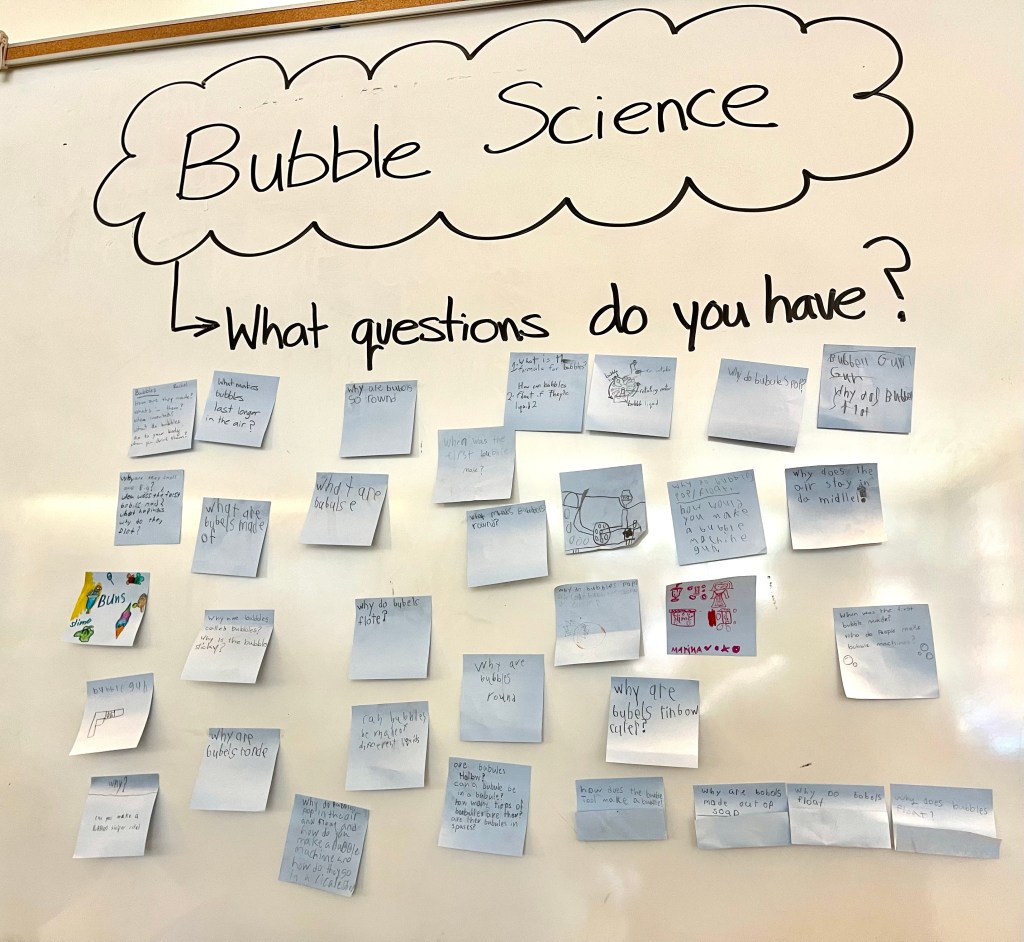
We began our learning with a group brainstorm of what we already know about bubbles. Then students jotted down all of the bubble-related questions they could conjure.

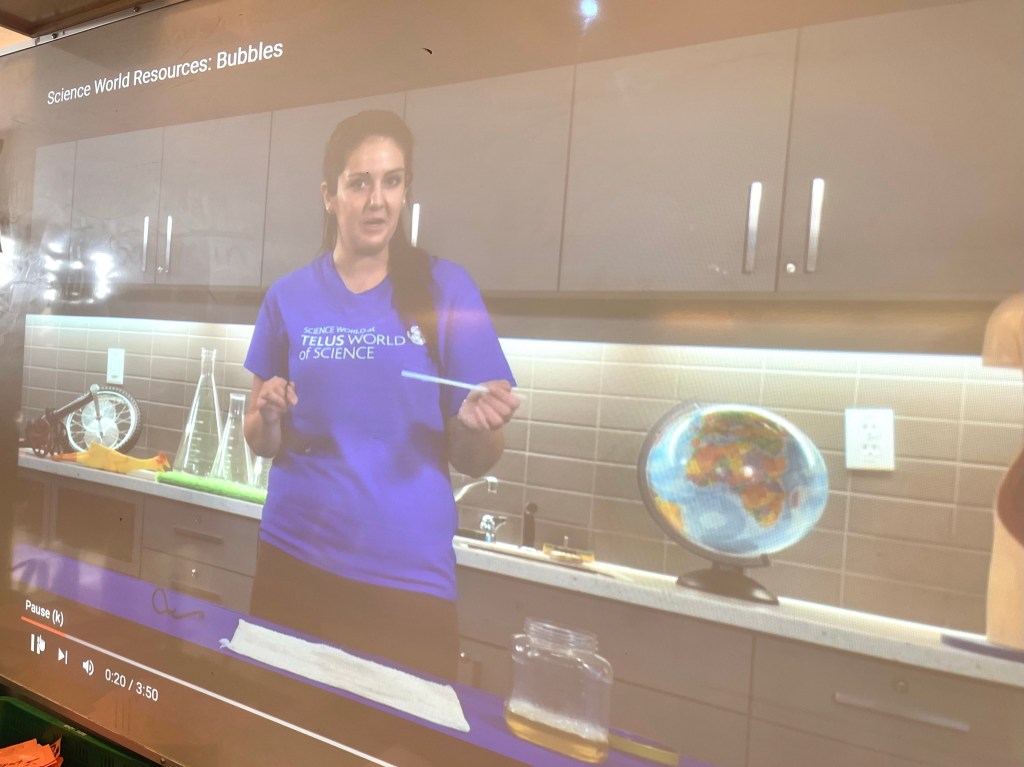
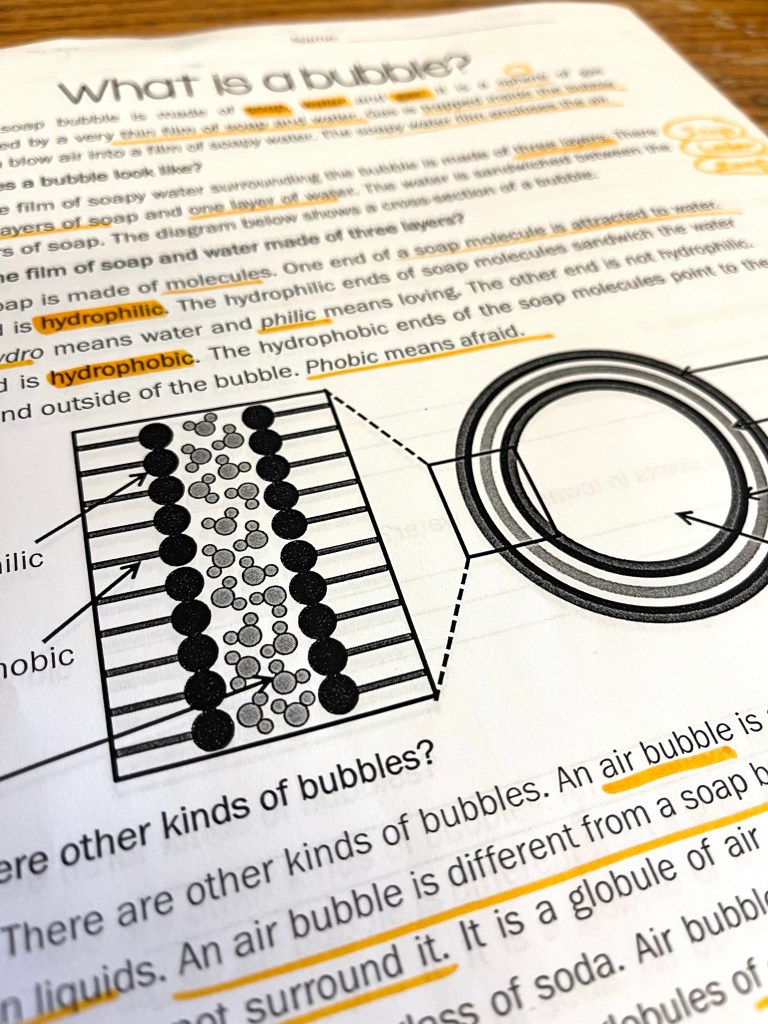
Next, we explored some text about bubbles and learned new vocabulary, and then we watched a Science World video about fun bubble tricks and special moves.

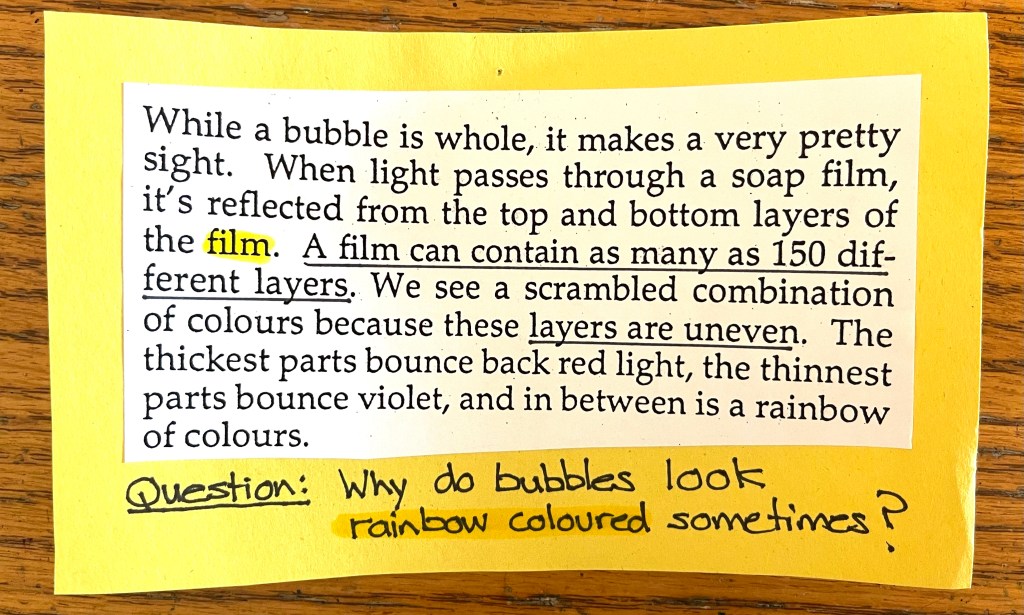
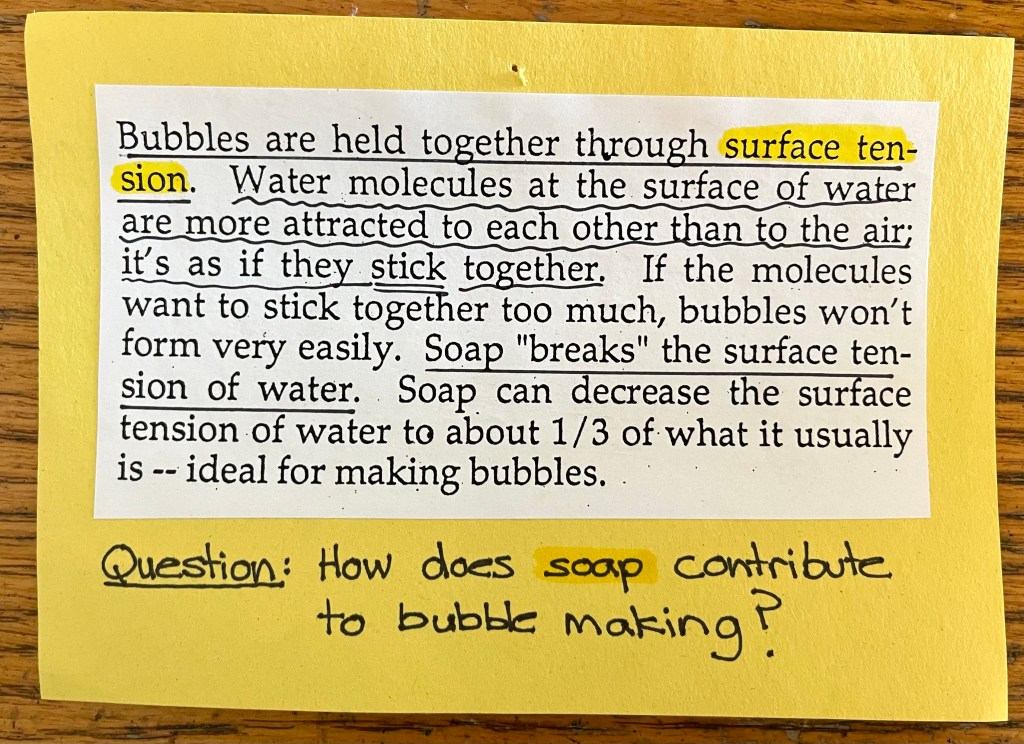
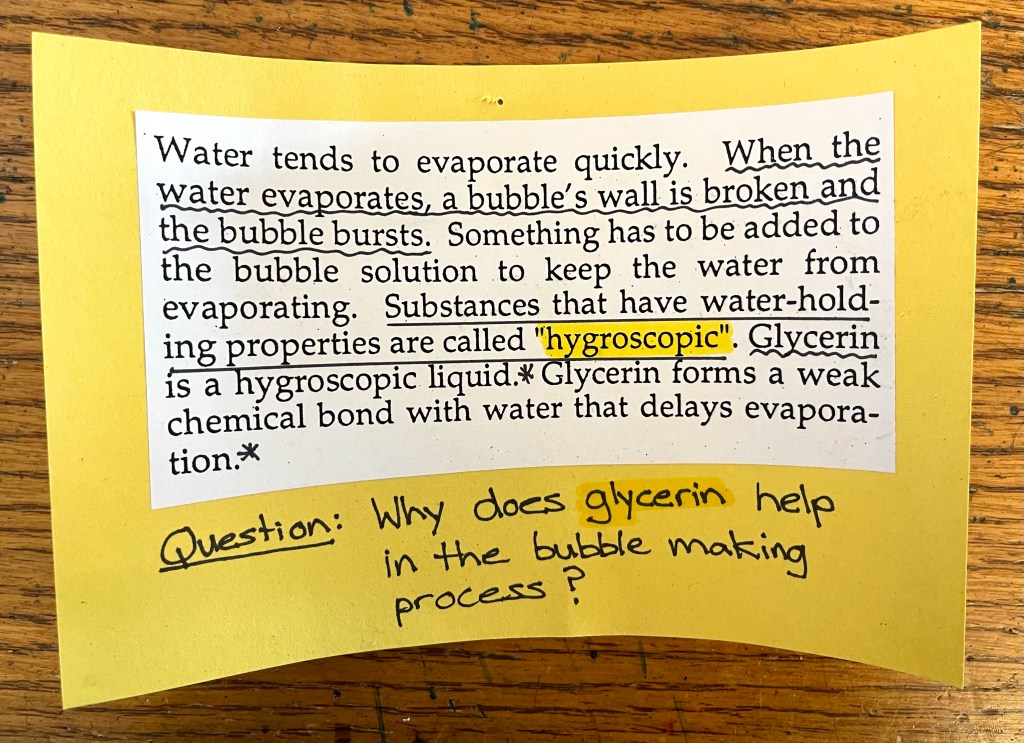
We discussed the movement of the molecules in bubbles and compared soap bubbles versus air bubbles. Key words we learned were: film, surface tension, water vapour, globules, hydrophilic, hydrophobic, and hygroscopic.

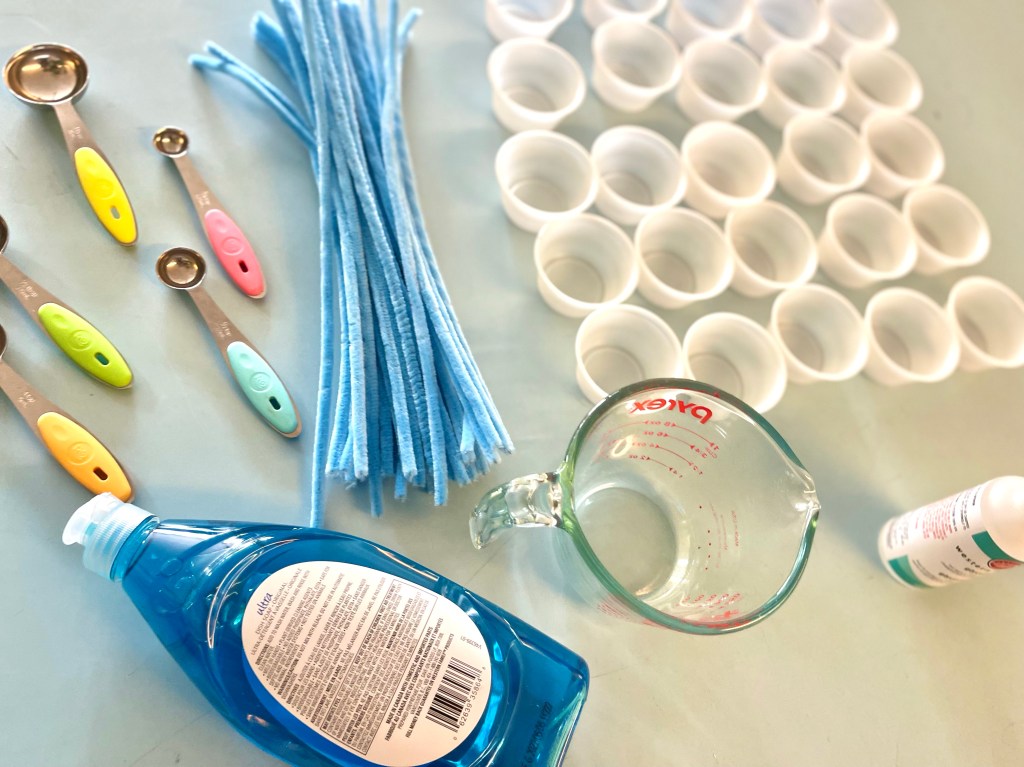
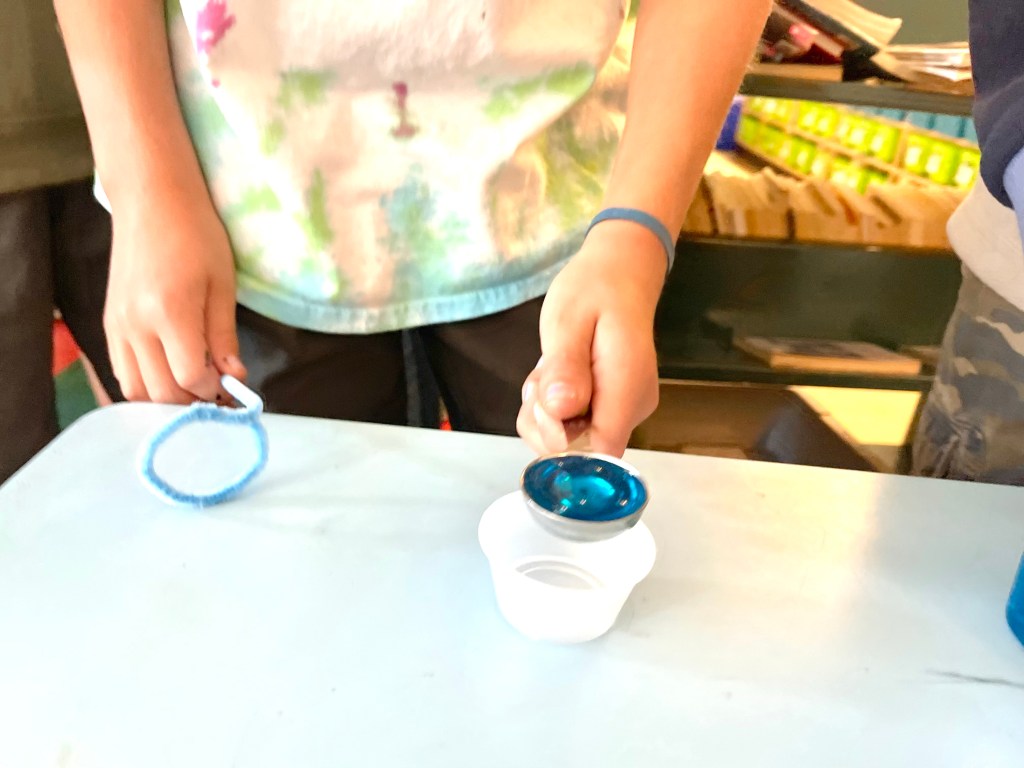
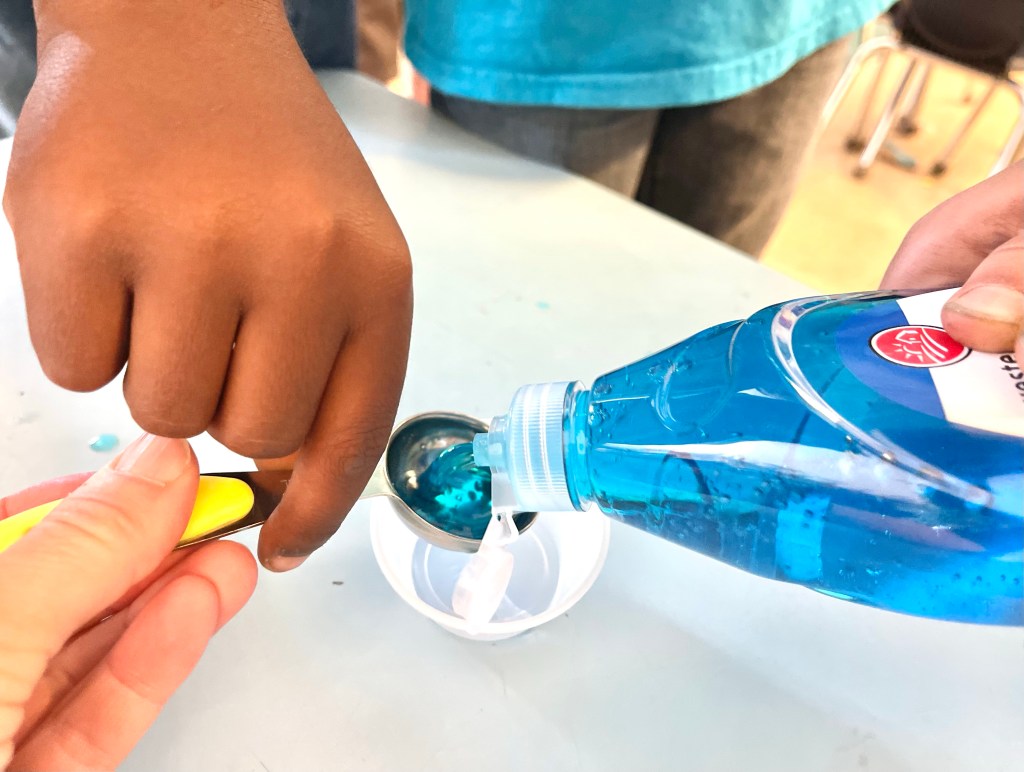
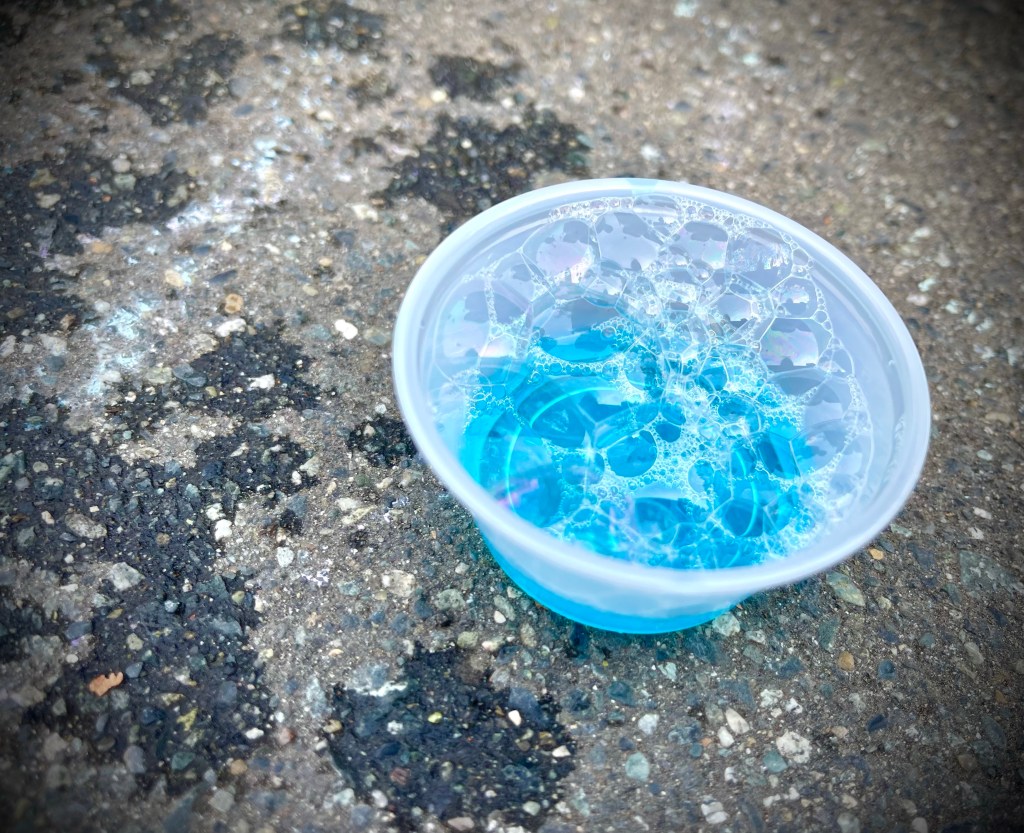
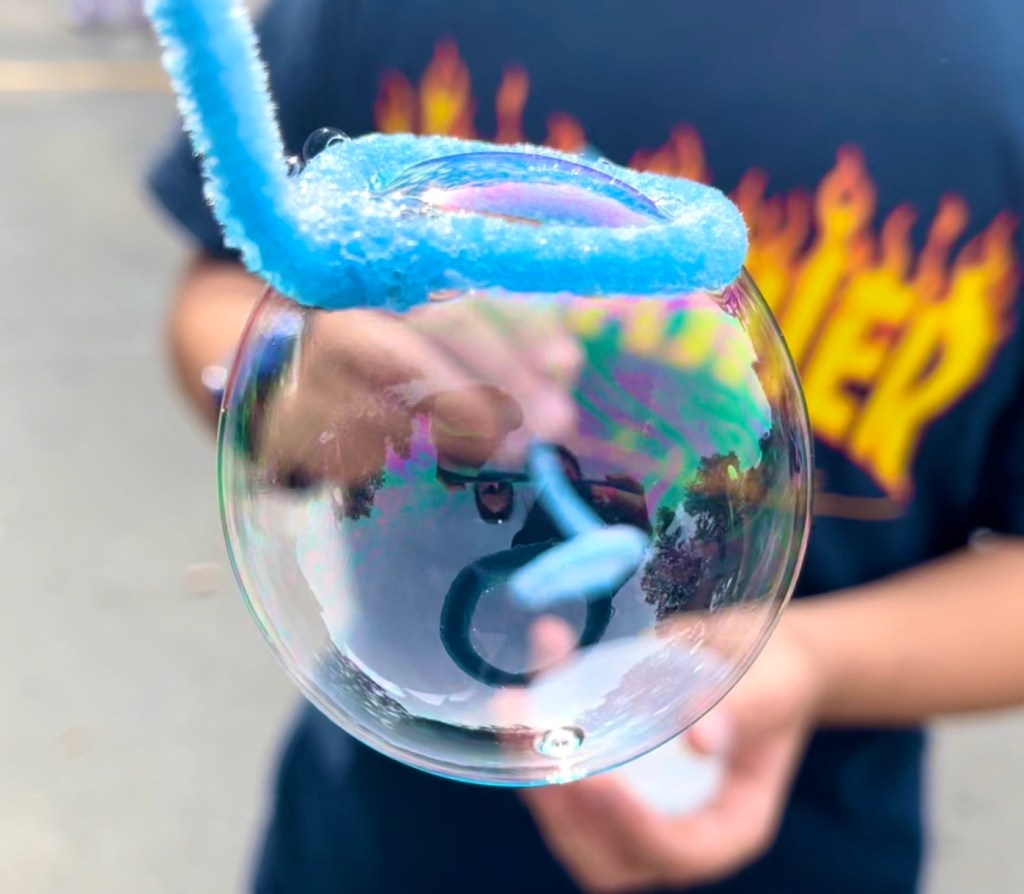
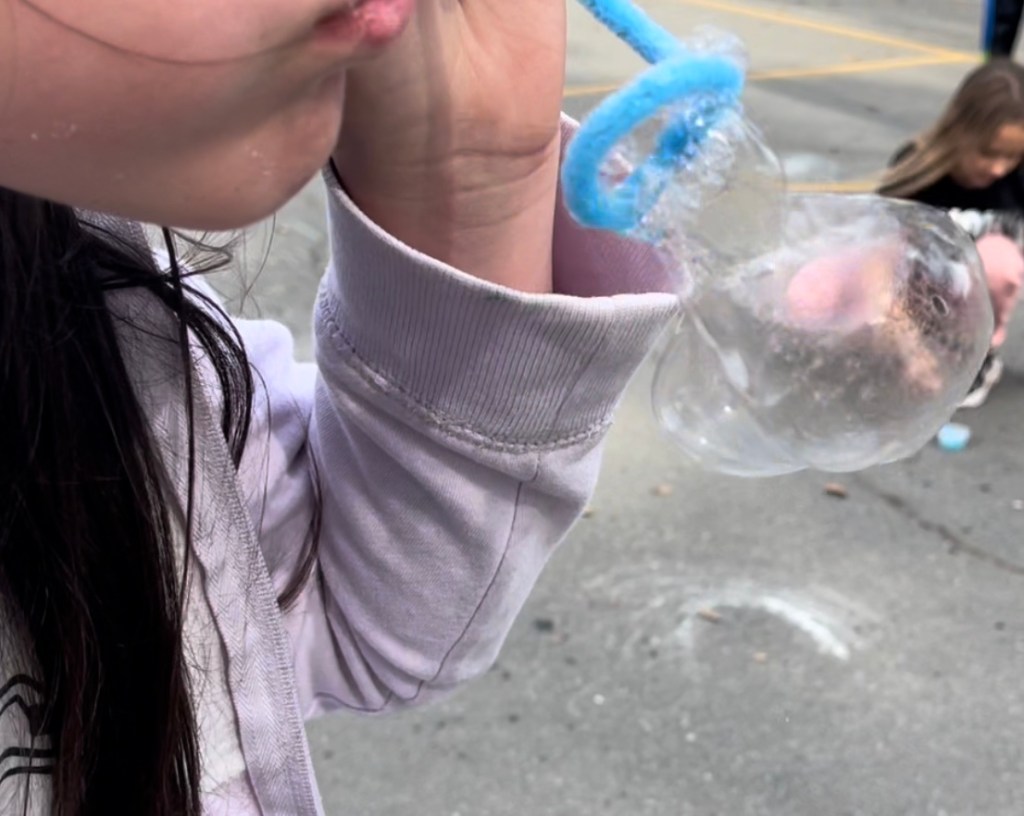
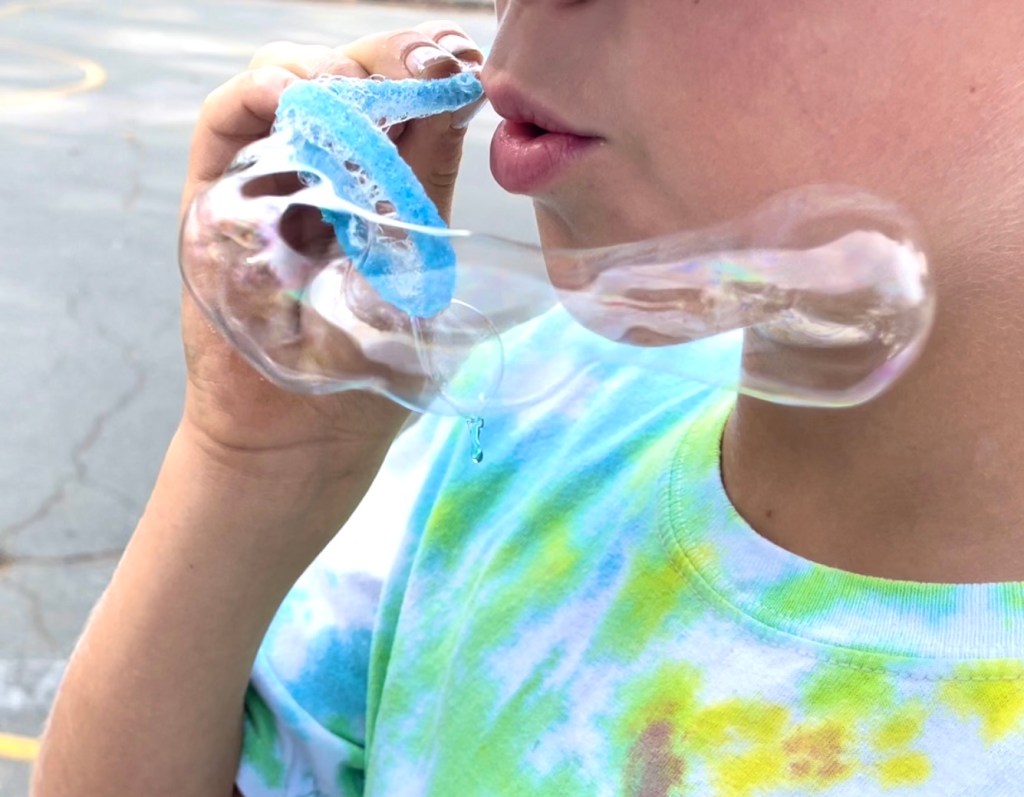
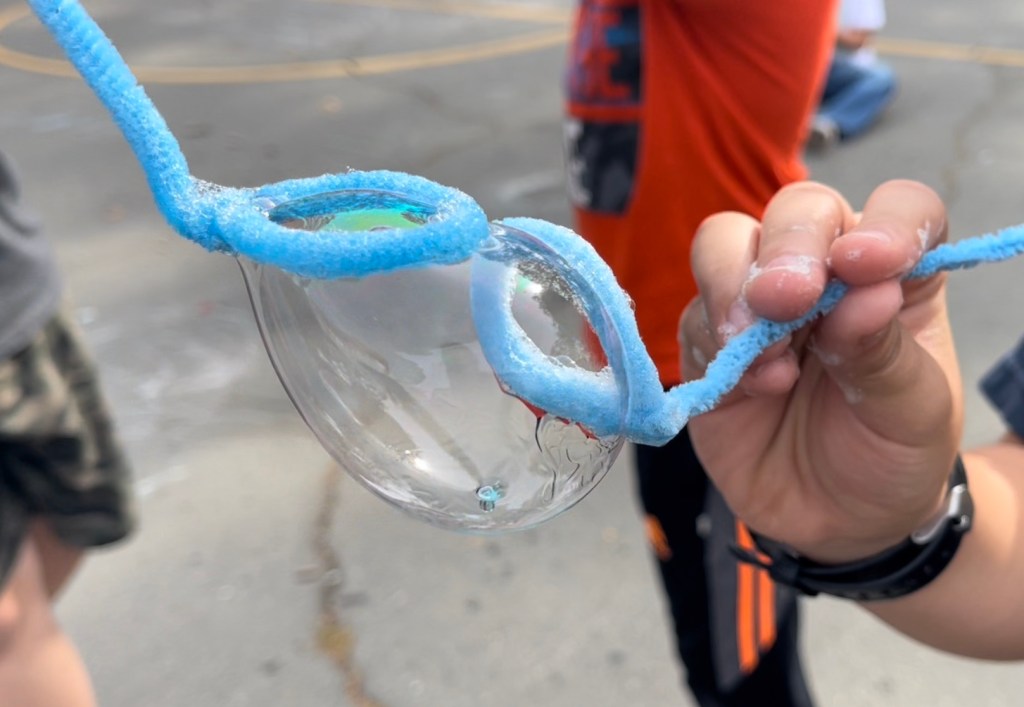
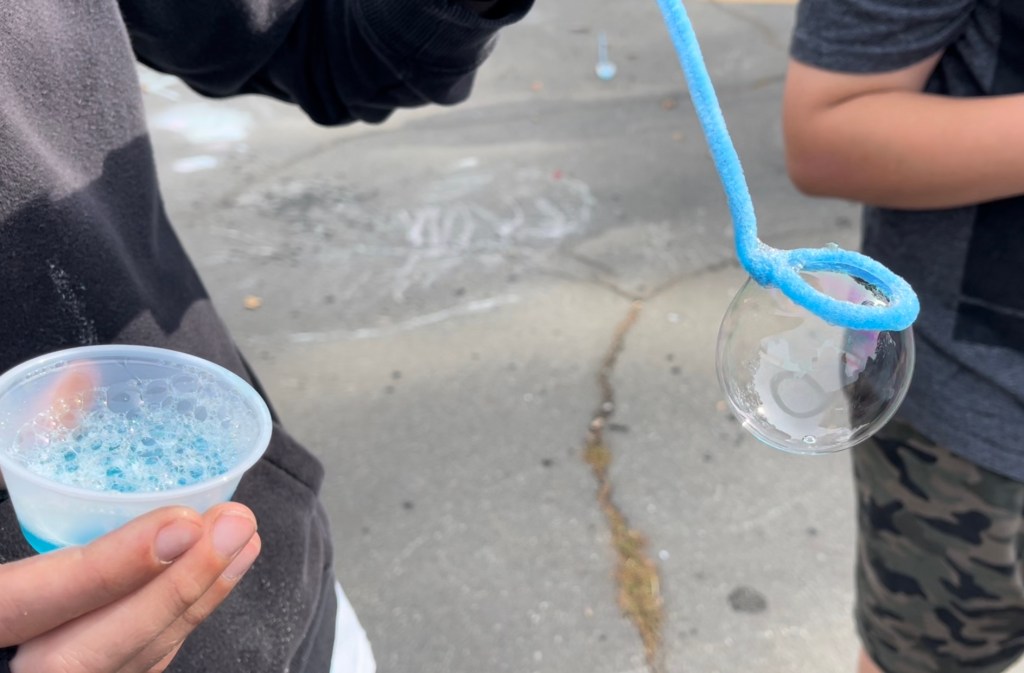
Then came the time to make and test our own bubble solution*. It was one part water (approx. 1.5 tablespoons) with a 1/2 teaspoon of glycerin. Students mixed their solutions and made bubble wands of various sizes with pipe cleaners. We discussed the importance of safe practices in science class. (I did need to mention, “Please don’t eat the bubbles.”)

*A solution is a liquid mixture in which the minor component (the solute) is uniformly distributed within the major component (the solvent).

It was valuable to experiment to see how important the proper ratio of ingredients is to ensure big bouncy bubbles. Students often came back asking for more soap if they discovered they used too much water.

Students noticed that trying to blow bubbles into the wind was hopeless as they popped immediately. Yet, blowing bubbles in the direction the wind was blowing was way easier and lent lift to the bubbles— which helped them soared up several stories high.

We also marvelled at the swirling rainbows of light reflected off of the bubbles.

It was interesting to observe all the blobby shapes bubbles would contort into in the initial blowing up phase. Yet the bubbles always become spheres eventually.

We will continue exploring the science behind bubbles this week—check back on Friday night for more photos of student artwork and updates!

Answers to Oct. 5th Extra Practice Sentences:

I would love to go to Paris, France.

We live in Victoria, British Columbia.

“Joanne, can you please tell Mom I want her to pick me up at Oaklands Elementary today?”

Did you see Kathy and Marco at Hillside Mall yesterday?

Watch out for the falling rocks!

Orange Shirt Day, Buddies & Sentences

Hello, division 4 families.

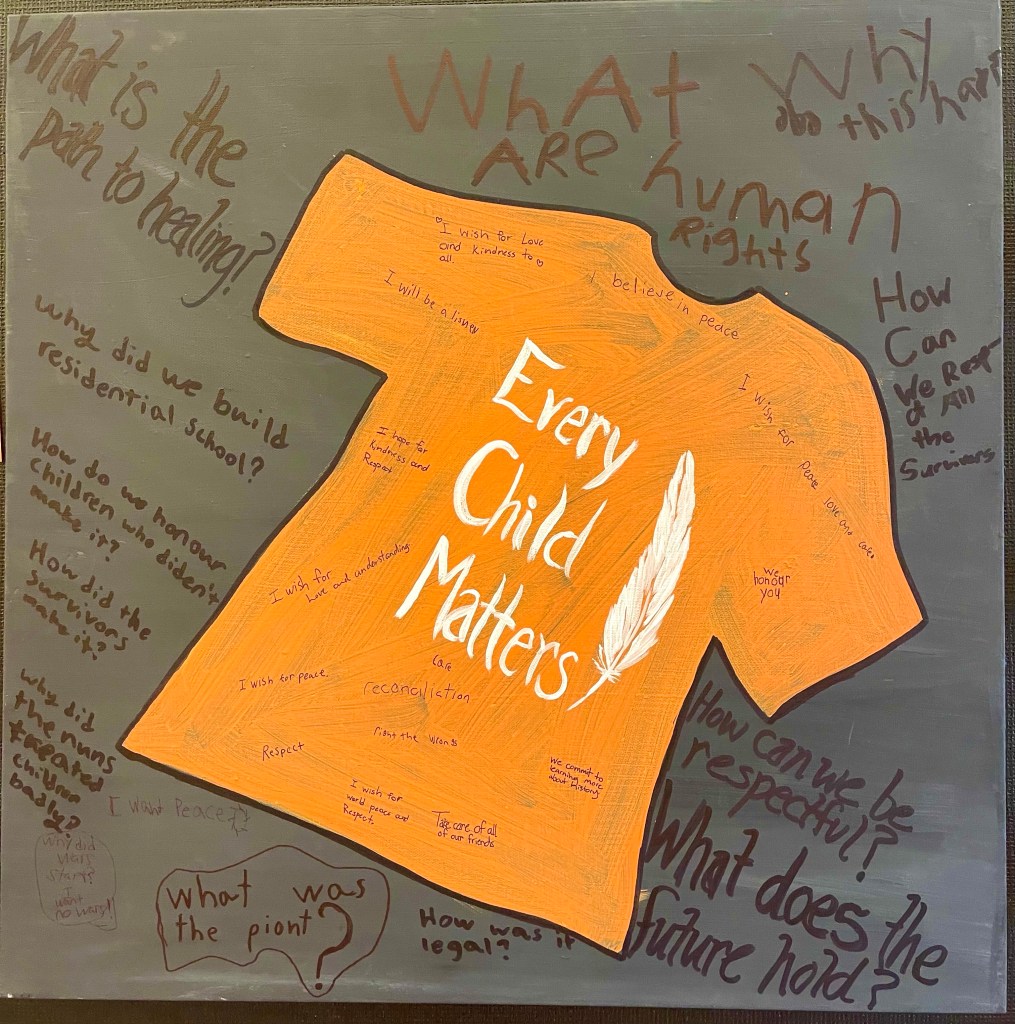
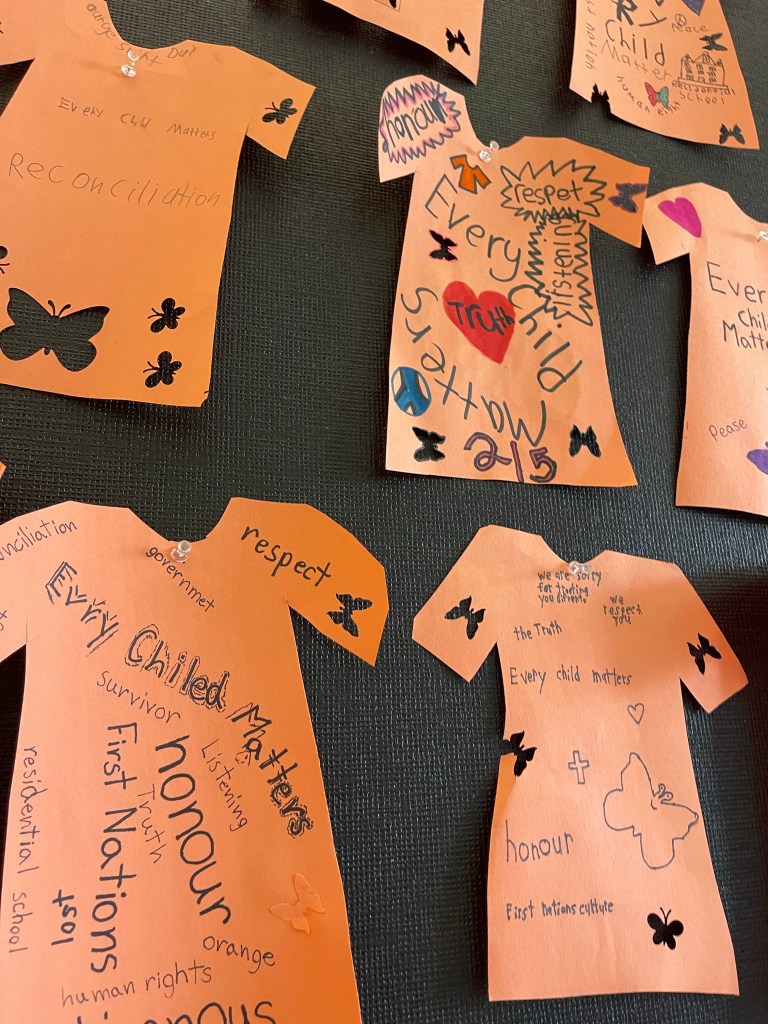
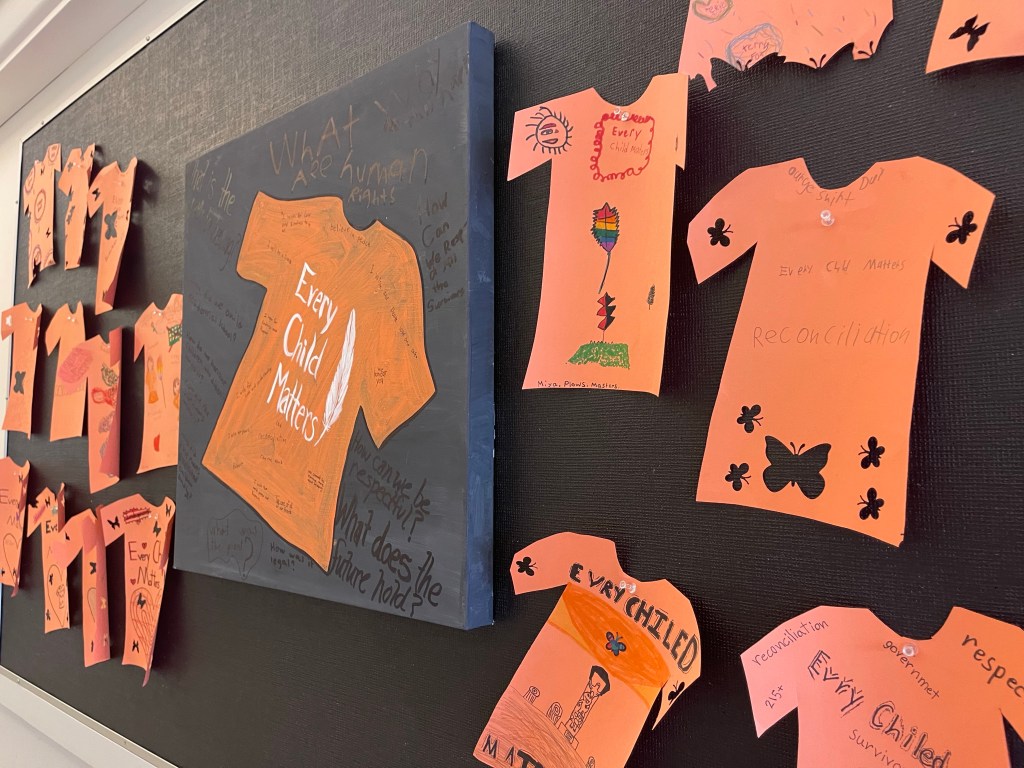
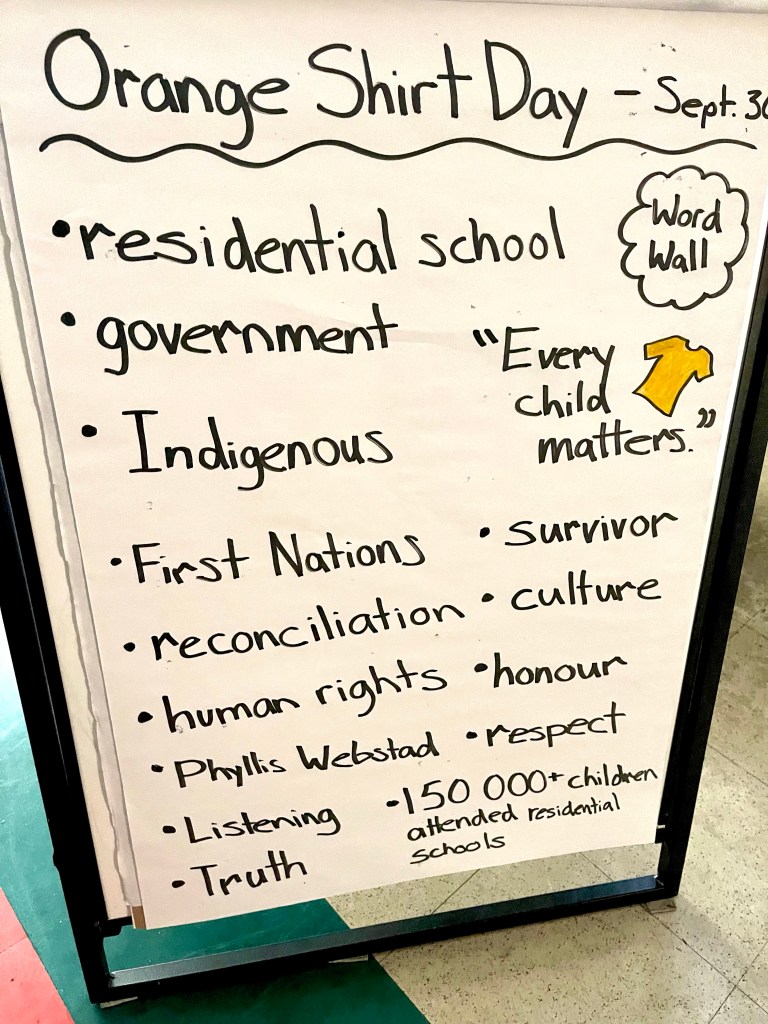
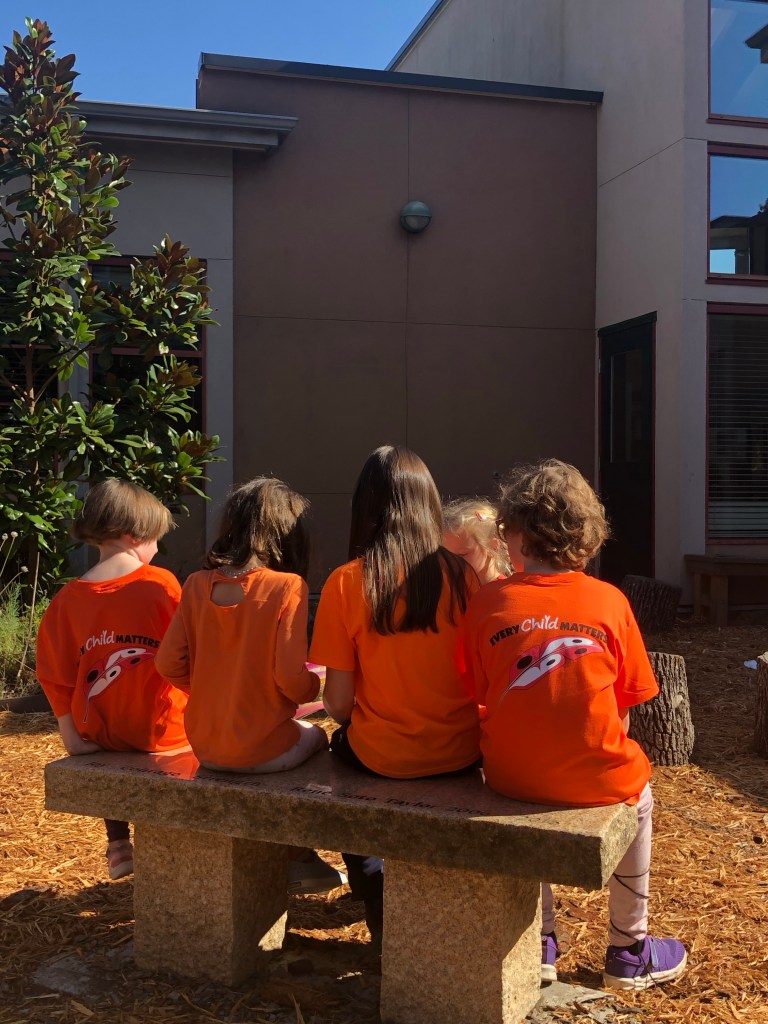
This week in a Social Studies, Language Arts, and Art, we have been learning about the history and meaning behind “Orange Shirt Day” through stories, videos, and dialogue. We are exploring the question: What does reconciliation mean to you?

The students created individual orange shirt artworks and contributed to a collaborative artwork. Below you can see information and links to the videos we watched in class…

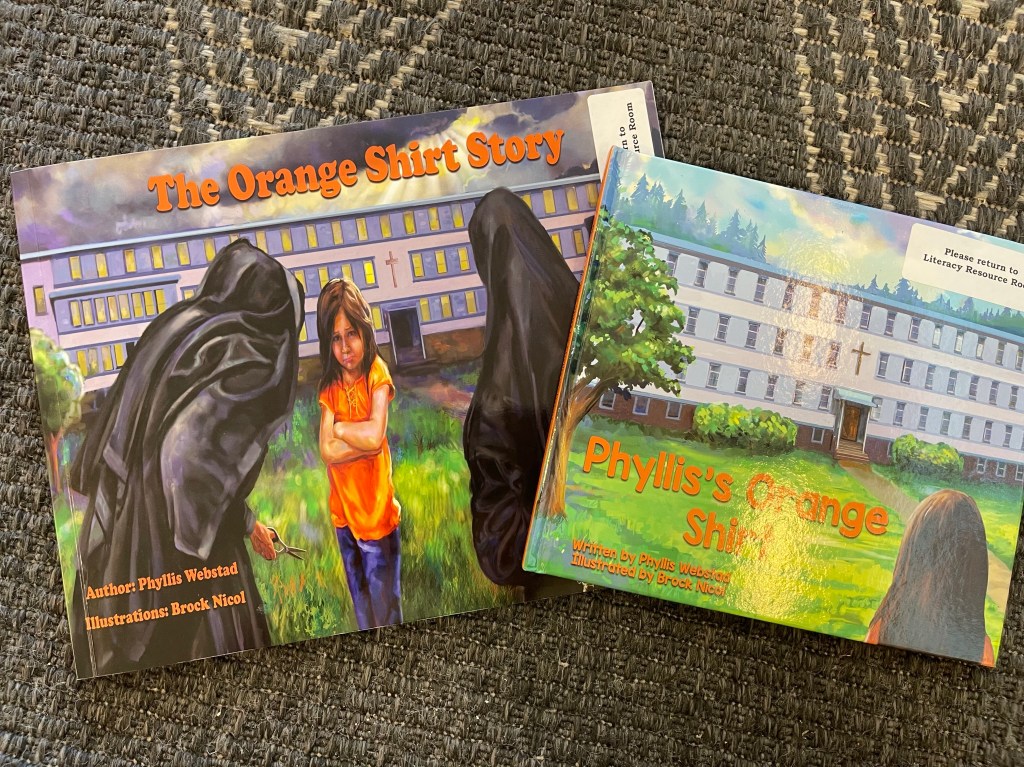
What is Orange Shirt Day? “Since 2013, September 30th has been known by many as Orange Shirt Day. This is an event that grew from Phyllis Webstad, from the Stswecem’c Xgat’tem First Nation, sharing her story of having her new school clothes – including a very special shiny orange shirt – taken from her at the age of six when she arrived at St. Joseph Mission residential school. Her story created an opportunity for discussion of the residential school legacy. The combination of Orange Shirt Day with the new National Day for Truth and Reconciliation allows Canadians to show their acknowledgement of the legacy of the residential school program by wearing orange shirts and purposely engaging in the Calls to Action identified in the final report of the Truth and Reconciliation Commission of Canada.”

In Language Arts, we have been analyzing sentences and sentence fragments, and we played a “thumbs up, thumbs down” game to reinforce and show our learning. We also had fun with the challenge to transform boring sentence fragments in creative sentences. We reviewed that sentences should are made up of a subject and predicate and that they always begin with a capital letter and end in a punctuation mark (period, question mark, or exclamation point). I announced the expectation that students should try to always write in complete sentences with appropriate capitalization and end punctuation—except when taking creative license in writing poetry. We will work on this goal all year.

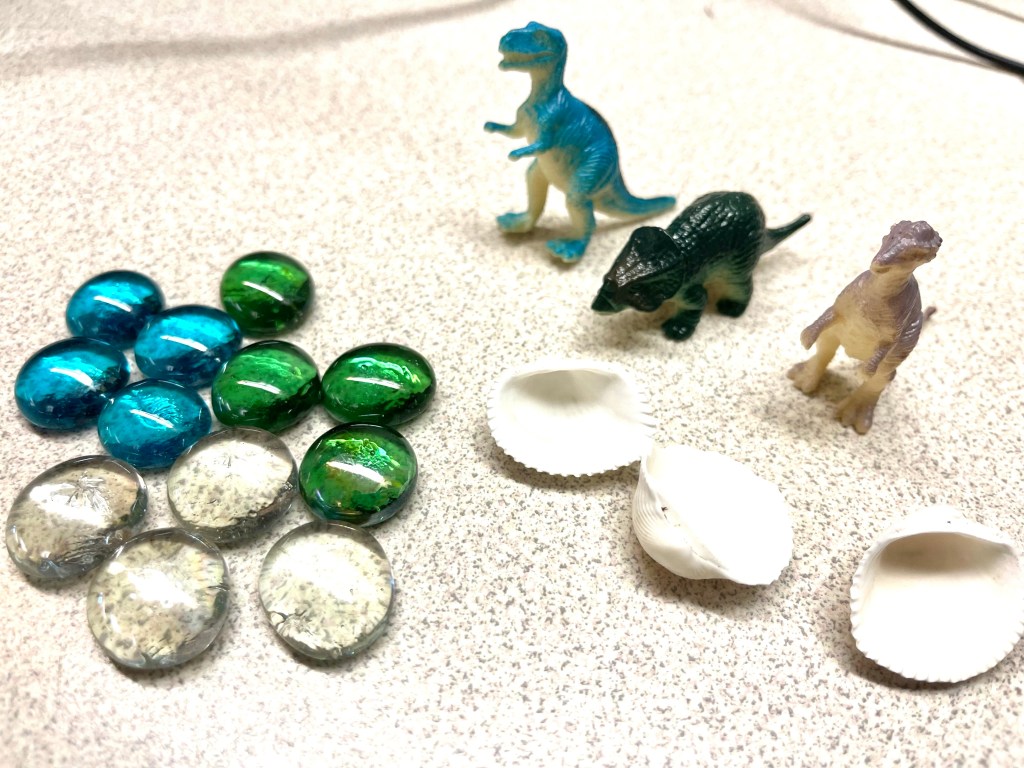
In math, this week I introduced the idea of creating and sharing “Math Stories” using fun toys and math manipulatives. Math stories can be simple word problems brought to life with props, but with creativity they can evolve in complexity and have more interesting narratives with classic story features. Math stories are a fun way for us to deepen and enrich our math learning, develop our math vocabulary and oral language skills, and make more real world math connections. There will be more information on this to come.

“Math Stories”

As well today was our first day of meeting our Buddy Class. Each student was paired with a kindergarten student to mentor. Today the big buddies read aloud in the school’s courtyard garden from books that their little buddies chose, and then they played games. They all did a great job building new connections. It was heart-warming to see how happy the little buddies were to be treated with such kindness by the leaders in division 4. The purpose of having a buddy class is to offer a valuable act of service to younger students while providing new opportunities to practice leadership skills and collaboratively engage with curriculum in fresh ways. As we explore different activities with our buddy class, we will cover many curricular goals, especially in the areas of Language Arts, Science, Career Education, Art, and ADST.

Below are some questions and discussion topics you might want to explore…

  • Tell me about your experience meeting your little buddy.
  • What is the meaning of “Orange Shirt Day”?
  • What is the difference between a sentence and a sentence fragment? Which of the following are sentences?
    • Let’s go to the store.
    • The big angry, hairy bear.
    • On the top of the refrigerator
    • Cheese tastes delicious!
    • Do you like going to the beach?
    • I exist.

Terry Fox Poems, Five Senses & Place Value

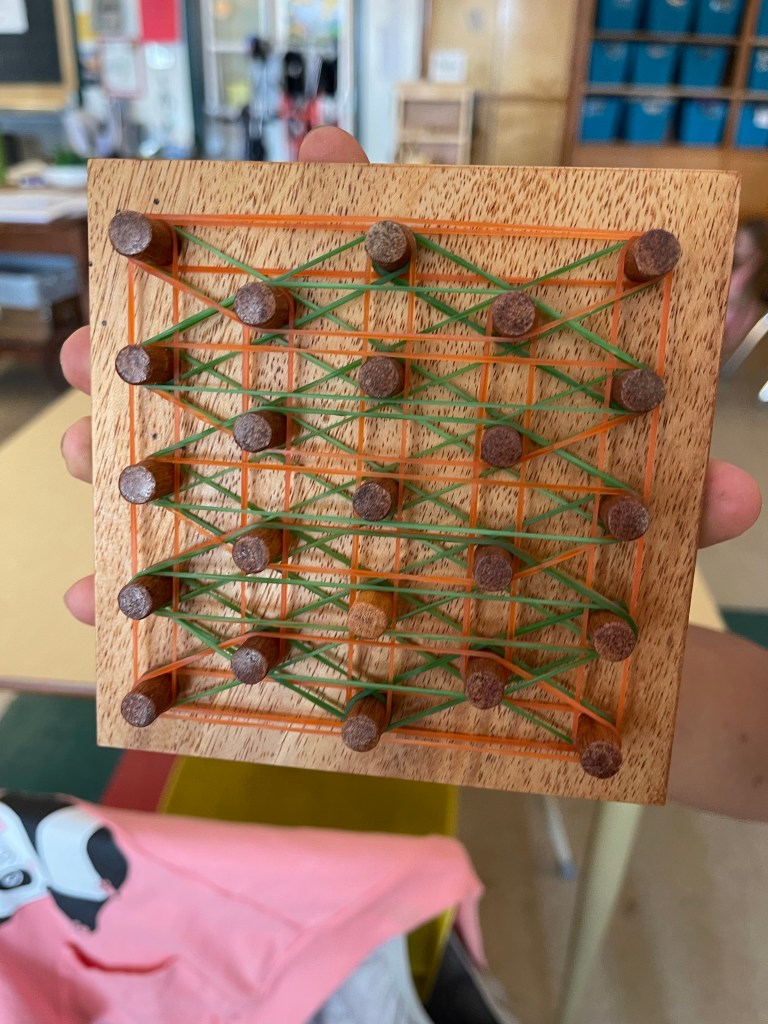
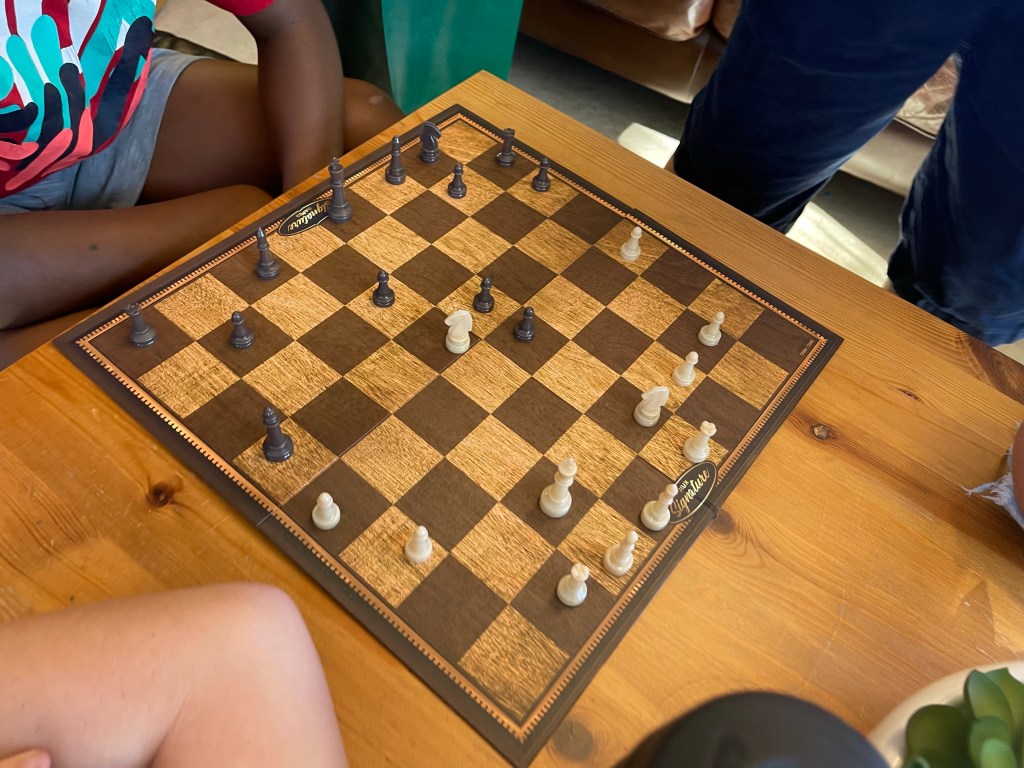
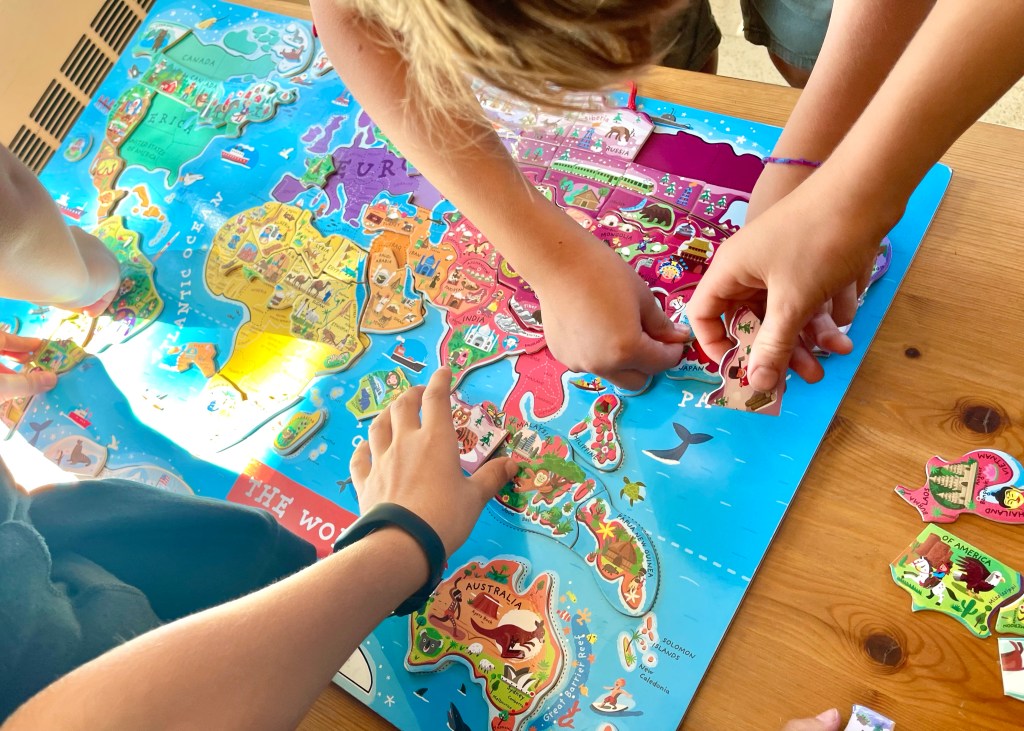
Hello, division 4 families! We are off to another exciting week! Perhaps you have already heard about the fun we are having in ADST time. ADST is where we bring out a number of hands-on “centres” activities that foster critical thinking, creative problem solving, and collaboration. Here are some photos of ADST from last week:

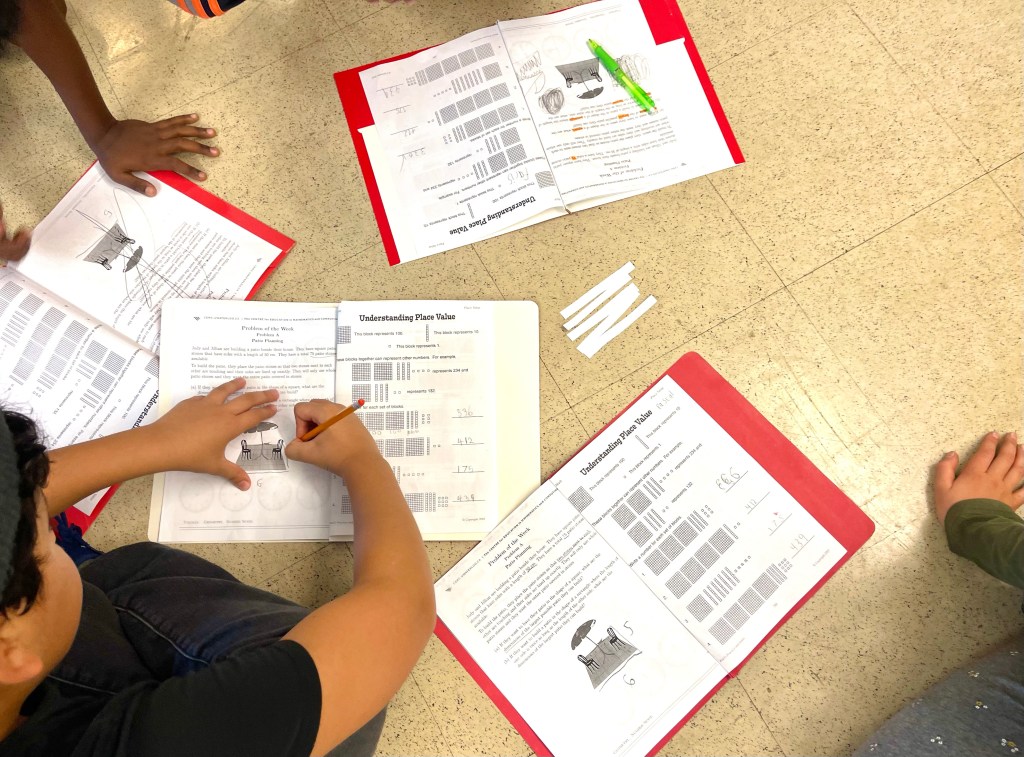
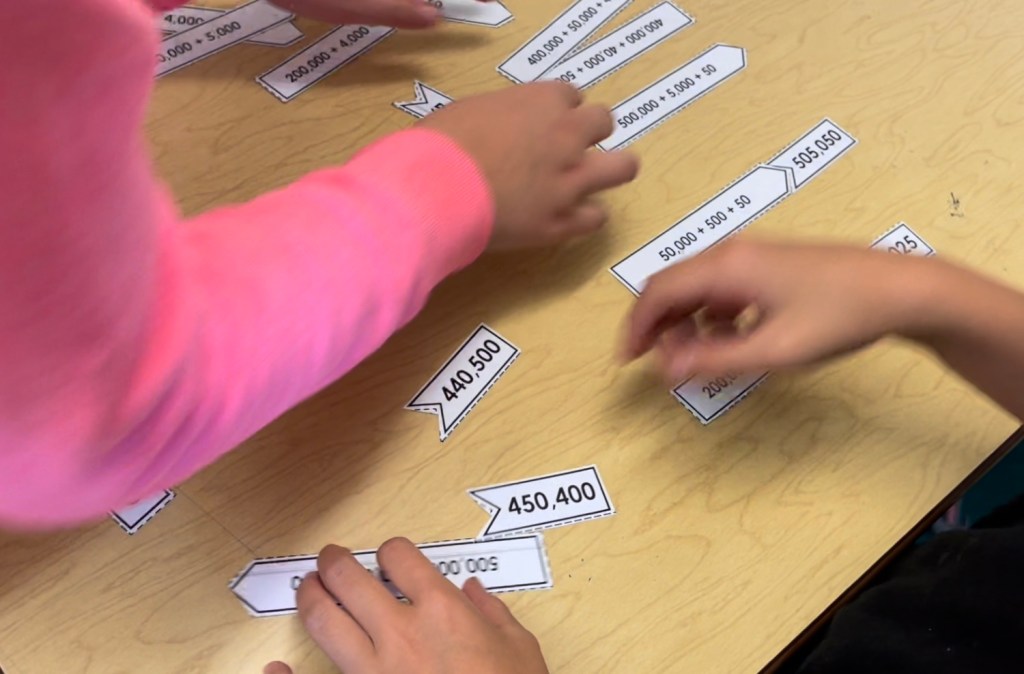
In math, we continue to explore place value. The students are working with numbers in standard form, expanded form and word form—grade 4s work up to the ten thousands and grade 5s work up to the hundred thousands. We used the greater than and less than symbols as well to compare and order numbers. We have been doing team challenges and puzzles to reinforce learning and have fun with it.

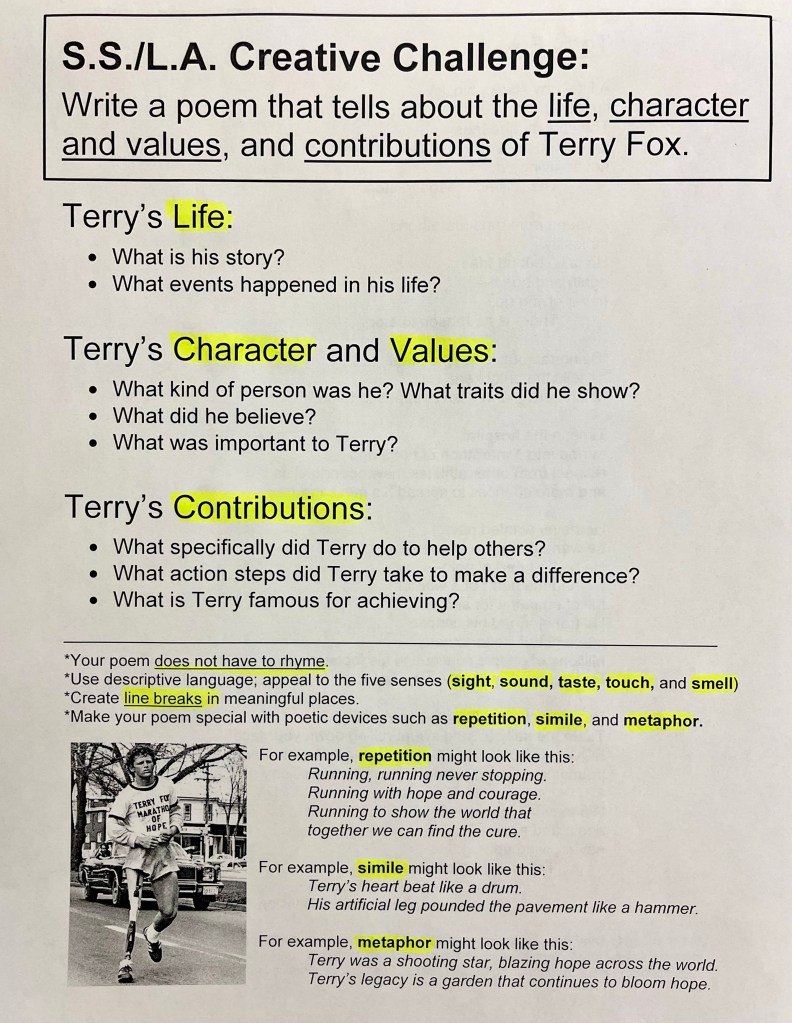
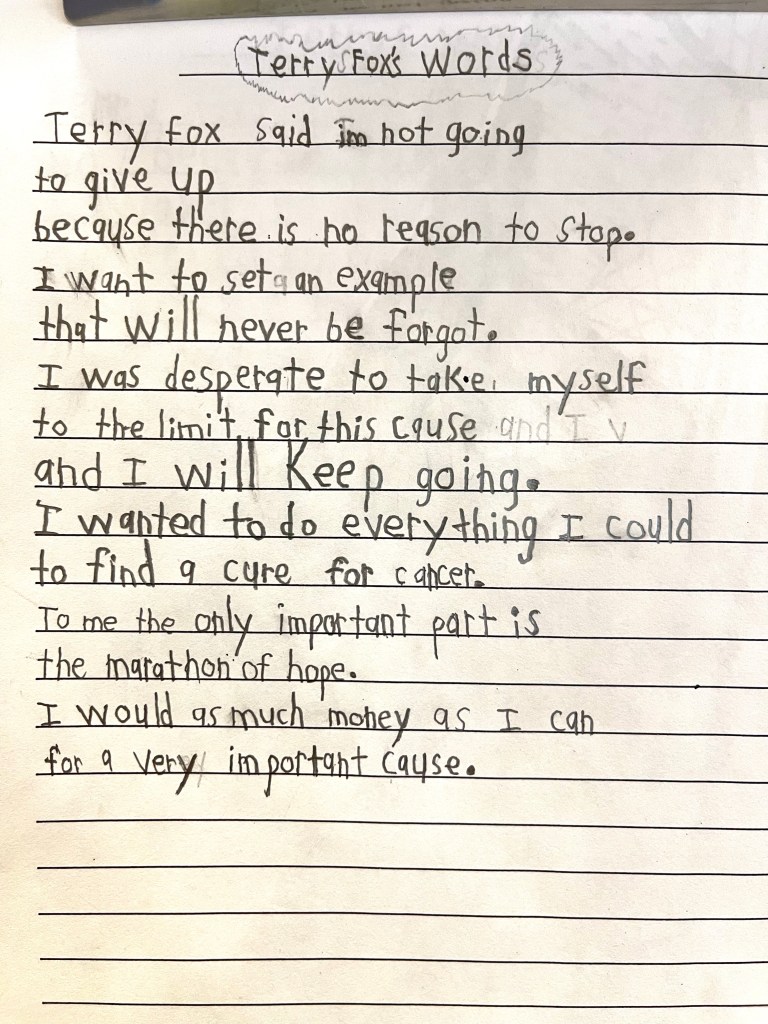
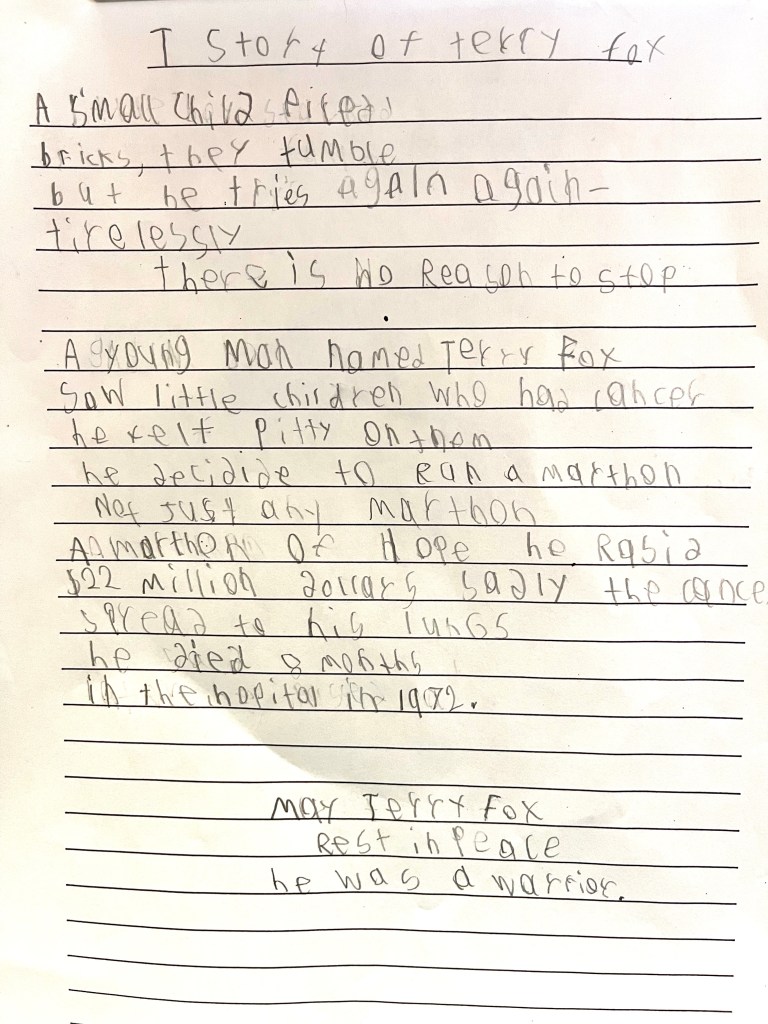
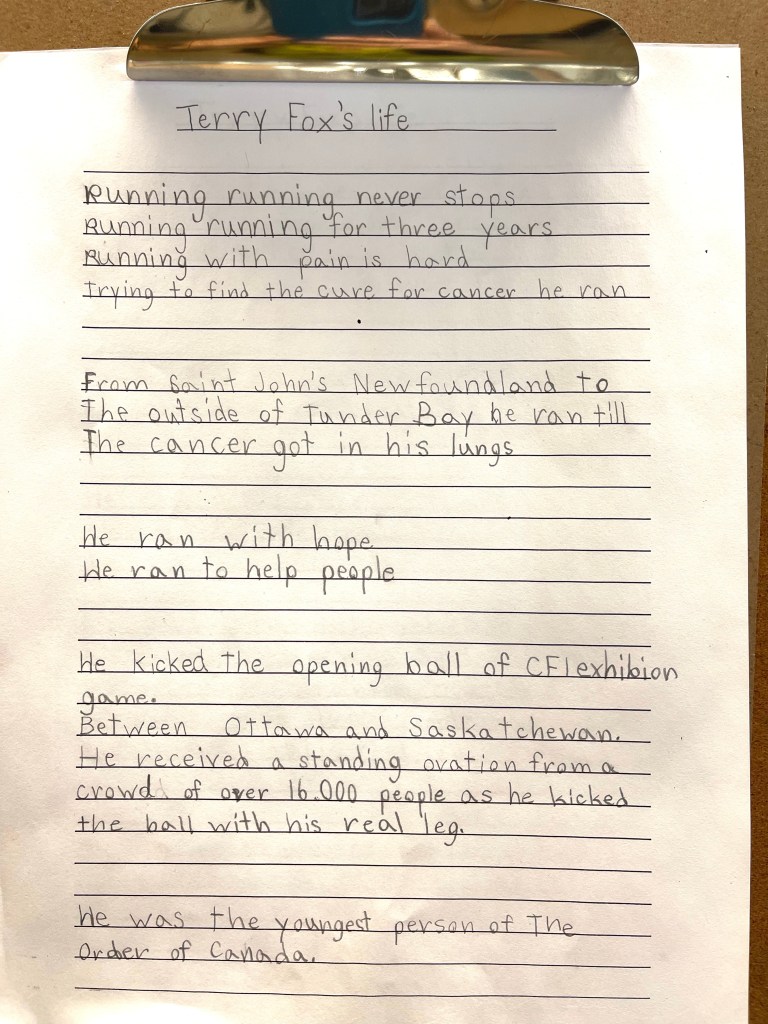
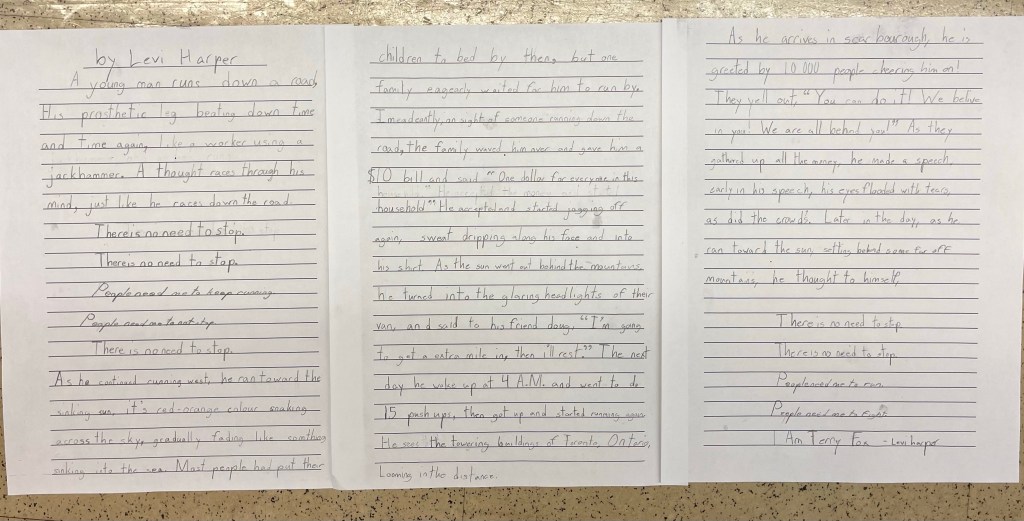
In Social Studies last week, our class learned more about the life, values and contributions of the Canadian hero, Terry Fox. The students are working on a collaborative art piece about Terry: a pair of running shoes.

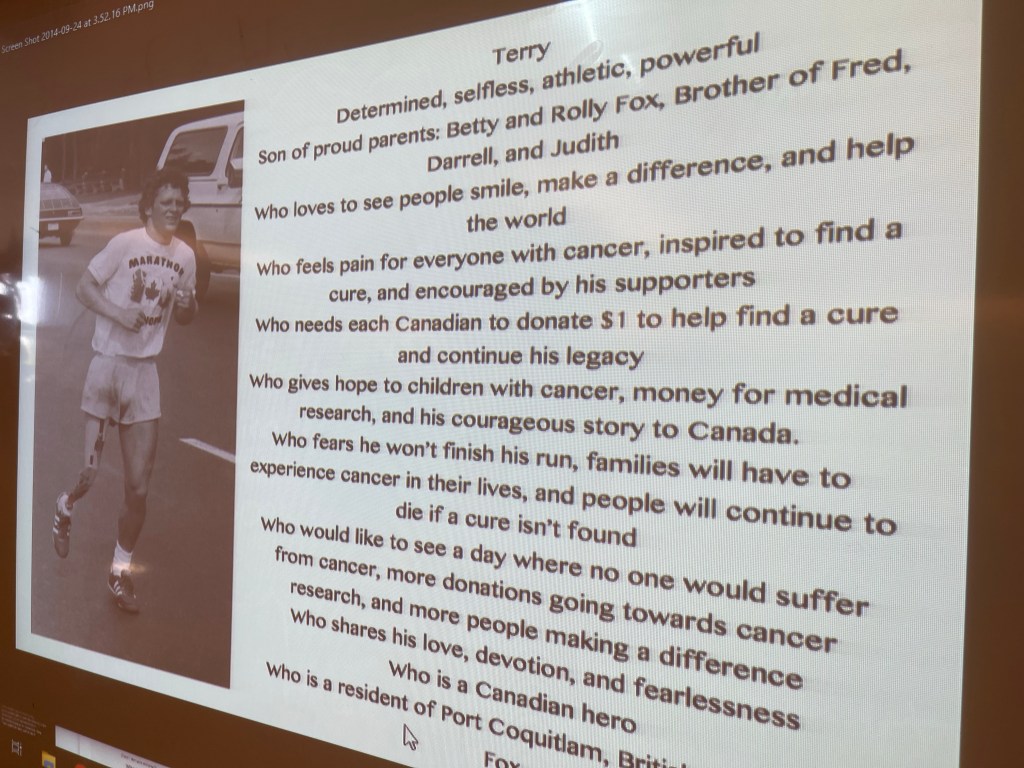
We have explored print primary and secondary sources of information, print and digital. We practiced identifying and recording notes, and students transformed their research into biographical poems about Terry Fox.

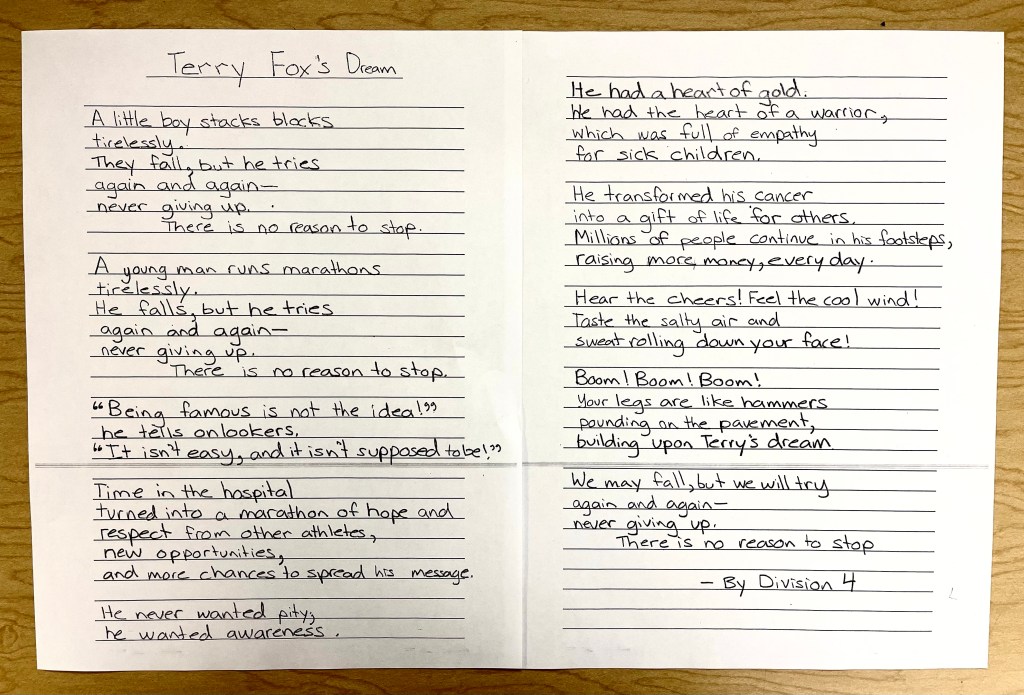
As a whole class, we brainstormed key words and ideas, and then I modelled how to use students’ research notes and ideas to write a poem. We identified and discussed the successful features of our collaboratively written poem.

We spent time we exploring specific strategies for making our poems more interesting and creative. For example, we learned about how to use repetition, make meaningful line breaks, and use figurative language like simile and metaphor. This term, students will continue to work on these Terry Fox poems and revisit them with edits as they develop more tools as poets and editors.

Combining the great ideas the students volunteered, I modelled a process for turning research points into a biographical poem. This is the result: a poem by division 4!

As we go further in our Language Arts writing lessons, we are practicing how to write descriptively through appealing to the five senses: sight, sound, taste, touch, and smell. Learning about the five senses is one of the Science curriculum goals this year as well.

Today we did a creative visualization about what we might experience through our five senses on an autumn day in Victoria, and we brainstormed and shared ideas together using a graphic organizer.

Building our skills as writers, we also introduced the concept of alliteration today. For example, the line “farmers’ fields are full of fresh pumpkins” is an example of alliteration because the beginning “f” sound is repeated.

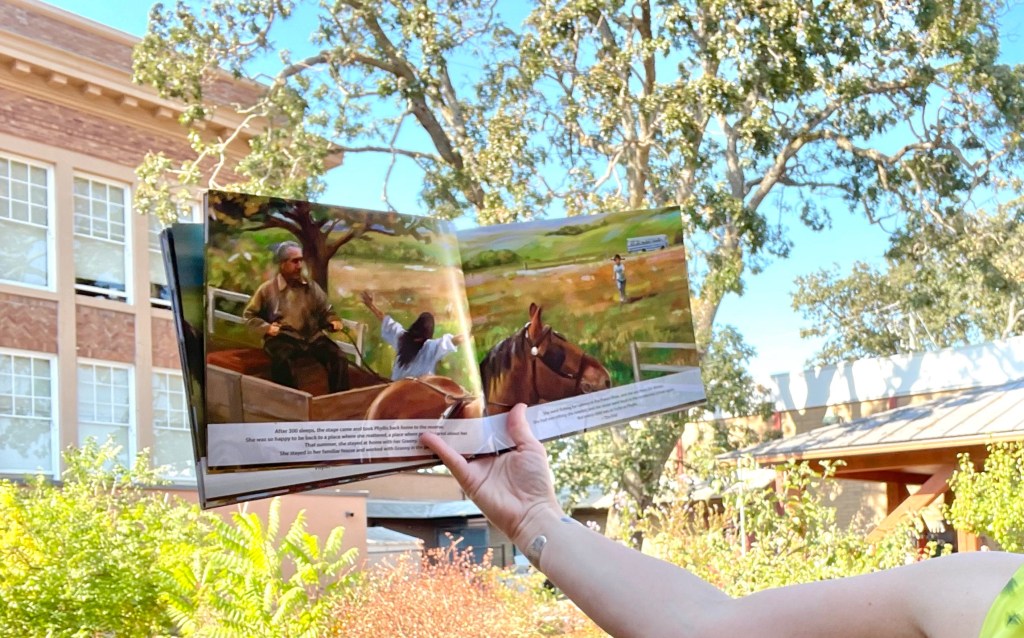
In Social Studies we are also beginning to look at the meaning of Orange Shirt Day and the history of residential schools. Today students discussed their prior learning, and we saw a video of Phyllis Webstad introducing some context and her personal experiences. I read the book “The Orange Shirt Story” aloud in the garden and asked students to connect with their families to continue discussion and thinking about this topic. We are preparing for an inquiry into the question: What does reconciliation mean to you?

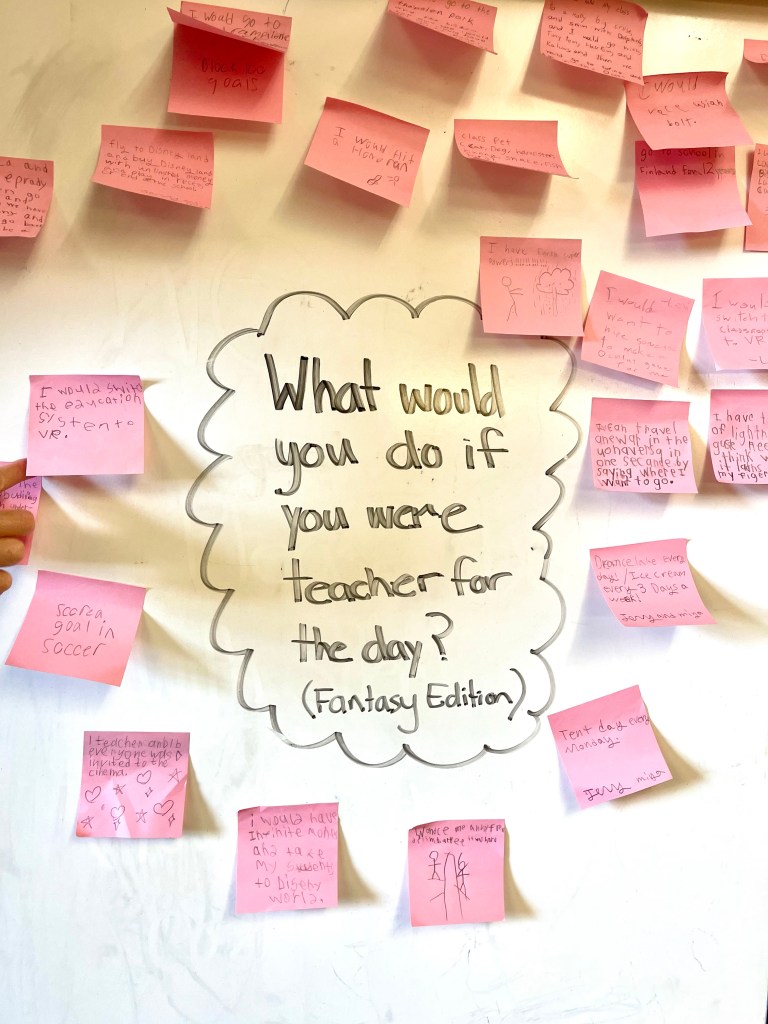
“If I were teacher for a day…”

This Friday, the learning in division 4 began with independent reading and then storytelling practice in small groups. Then in Math class, we gamified reviewing place value using “base ten blocks” and continued work on a more challenging word problem involving finding the possible dimensions of a patio built with 75 tiles.

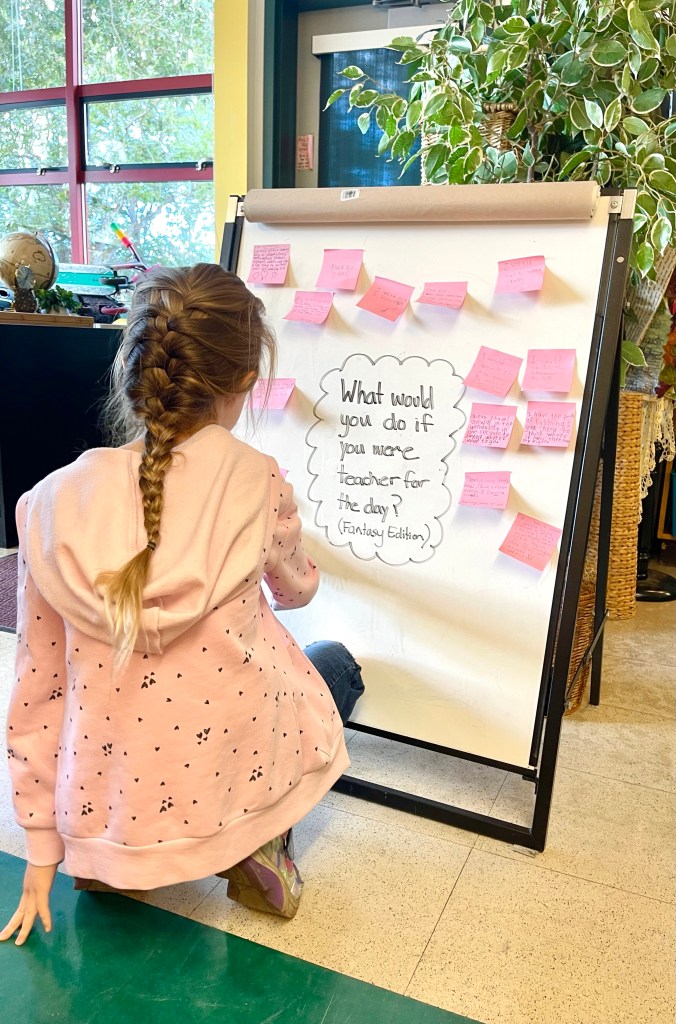
Our writing activity today focussed on this question: “What would you do if you were the teacher of our class for a day?” I invited students to be playful, and we called this writing challenge a “fantasy edition” where the limits of time and space do not have to apply.

Our pre-writing activity was small group brainstorming around the topic and each group’s recorder posted their ideas on the flip chart to inspire others. Then, students had 30 minutes to quietly write a sequenced paragraph that started with the sentence stem and was structured with transition words. I encouraged students to be imaginative and to do their best to spell difficult words on their own.
“If I were teacher for a day…” – illustrated

The students ideas were so fun to read! I offered that if any students wanted to record themselves reading their work, I would post it on the blog and choose one recording at random and add graphics to it for fun. Enjoy!
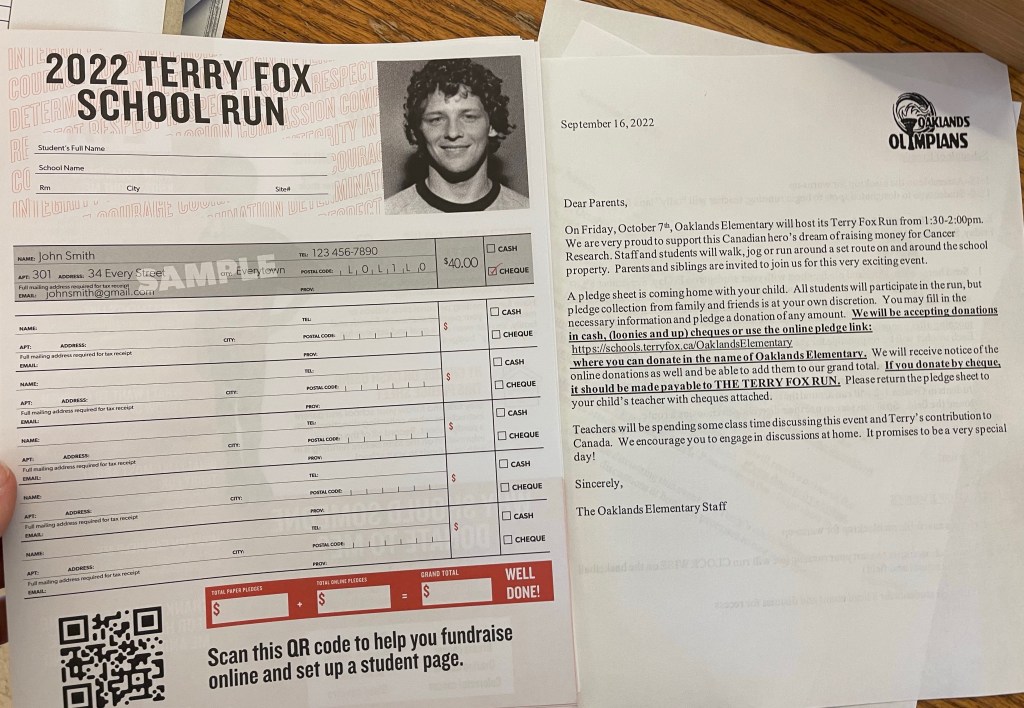
In the afternoon, we explored Terry Fox’s contributions with a video, discussion, and art activity—there will be more on that posted next week. Students came home with some fundraising forms as well. Below you can see the link to the Terry Fox video we watched.
Creating Together…

Hi, division 4 families!

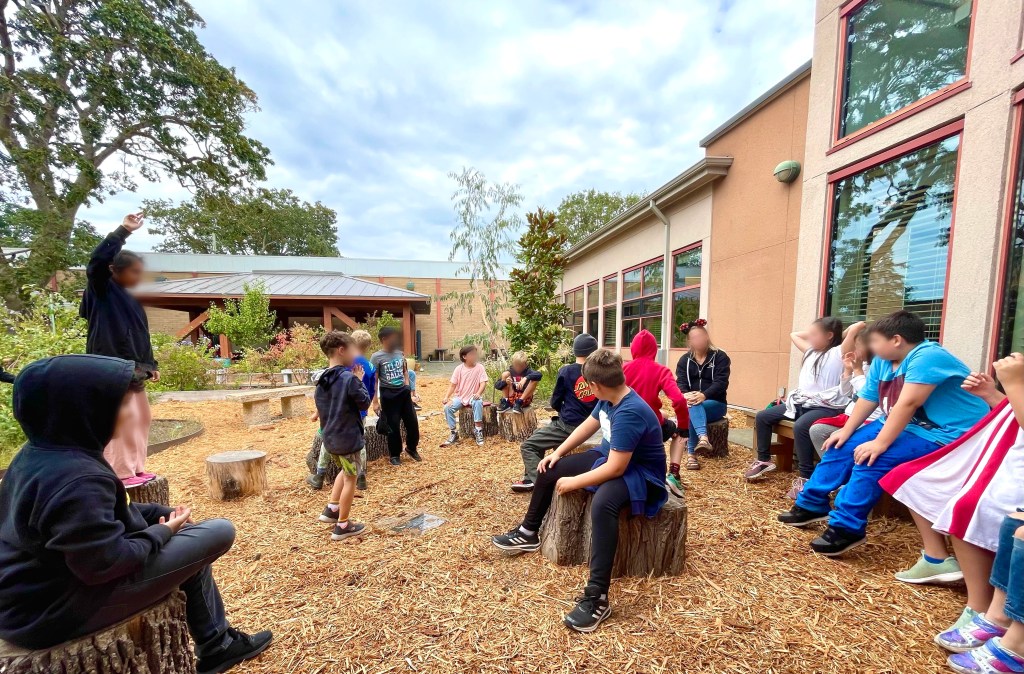
What a fun day! We have now started a “storytelling” unit to foster students’ creative thinking and oral language skills. We did some small group storytelling activities as well as a collaborative game of “Story Ball” in the beautiful outdoor classroom. It’s great to see so many students eager to speak up and try telling an impromptu story!

STORY BALL: This is a fun game where we collaborate to tell a story by building it one sentence at a time with each toss of the ball.

As well, today we practices how to tell time, did some review of place value, and explored some more problem solving involving calculating elapsed time.

We also enjoyed investing time getting to know one another and building social connections. The students have been learning about their “Multiple Intelligences”, and here is an instructional video I made to give students and families and overview. We learn about Multiple Intelligence theory to give students more precise language to describe their strengths and to foster self-confidence and growth mindset.

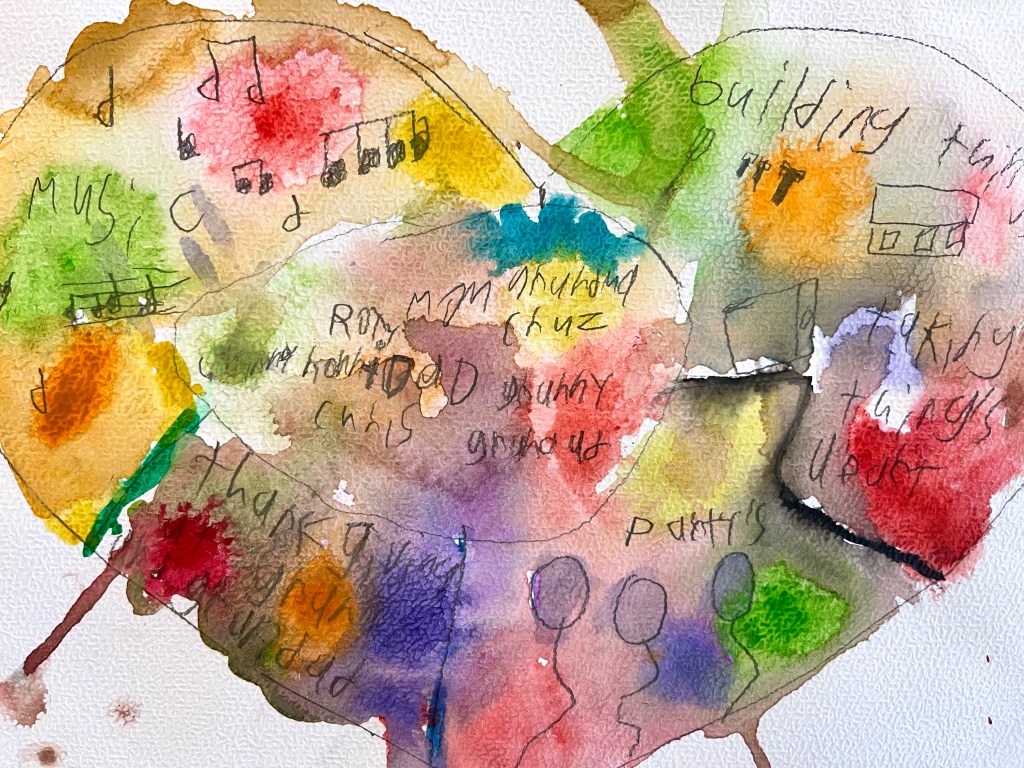
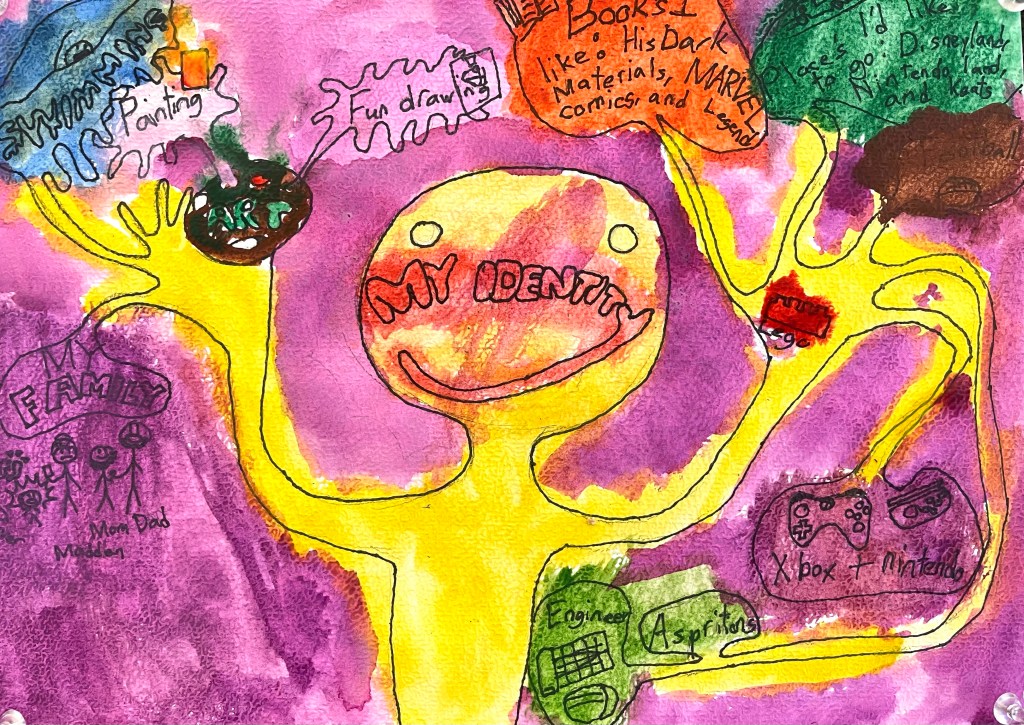
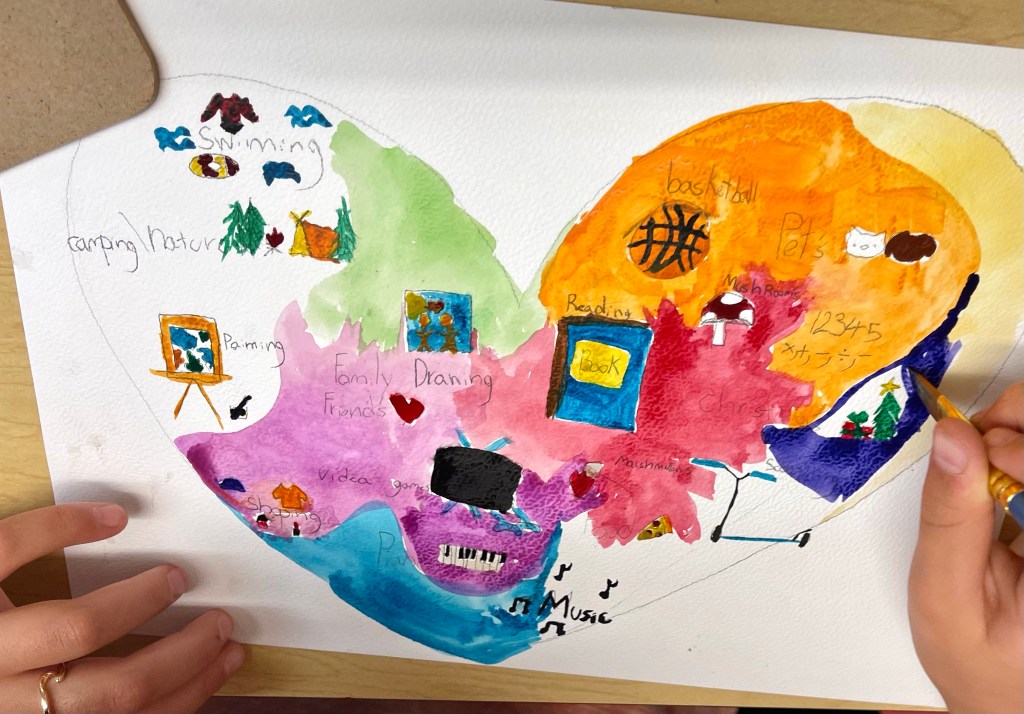
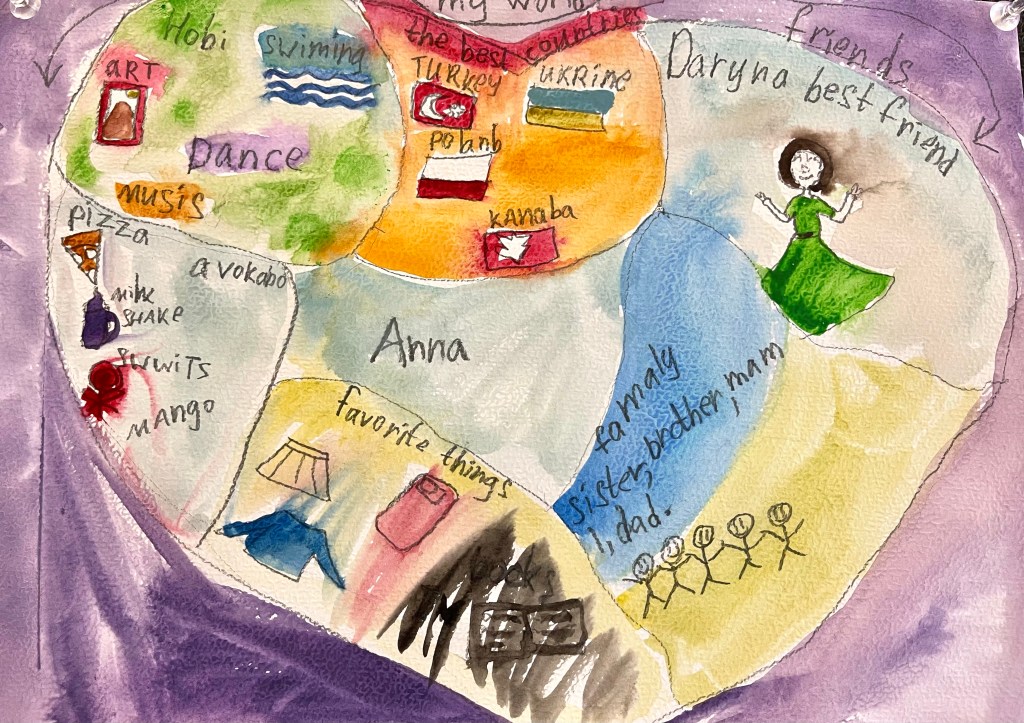
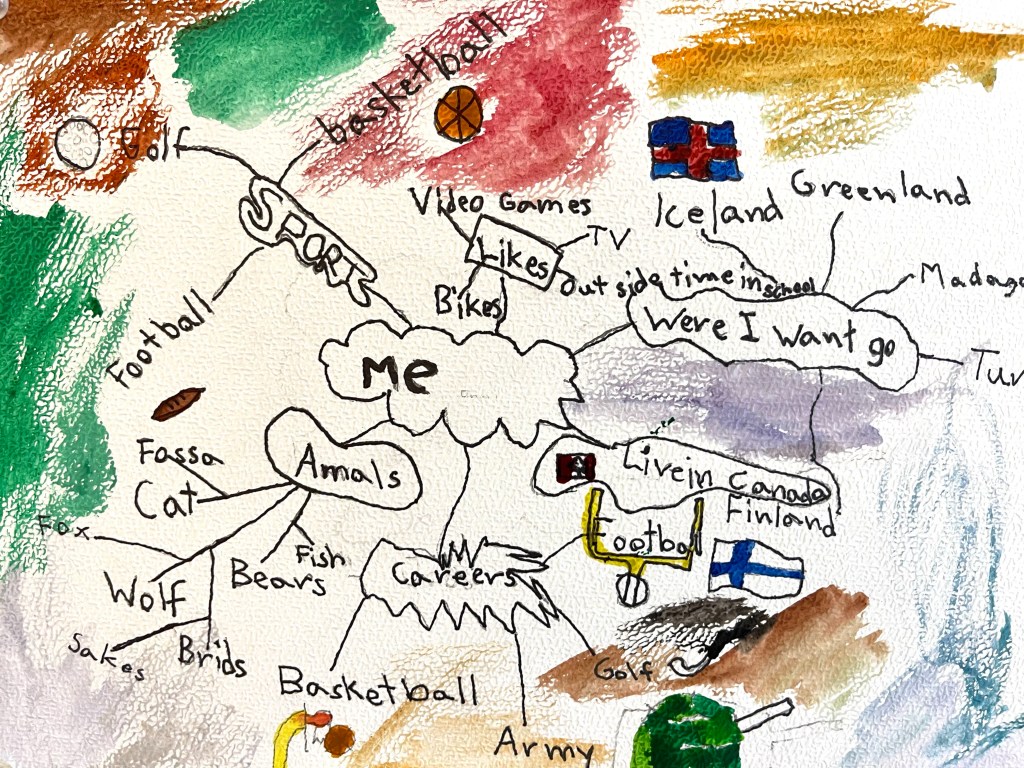
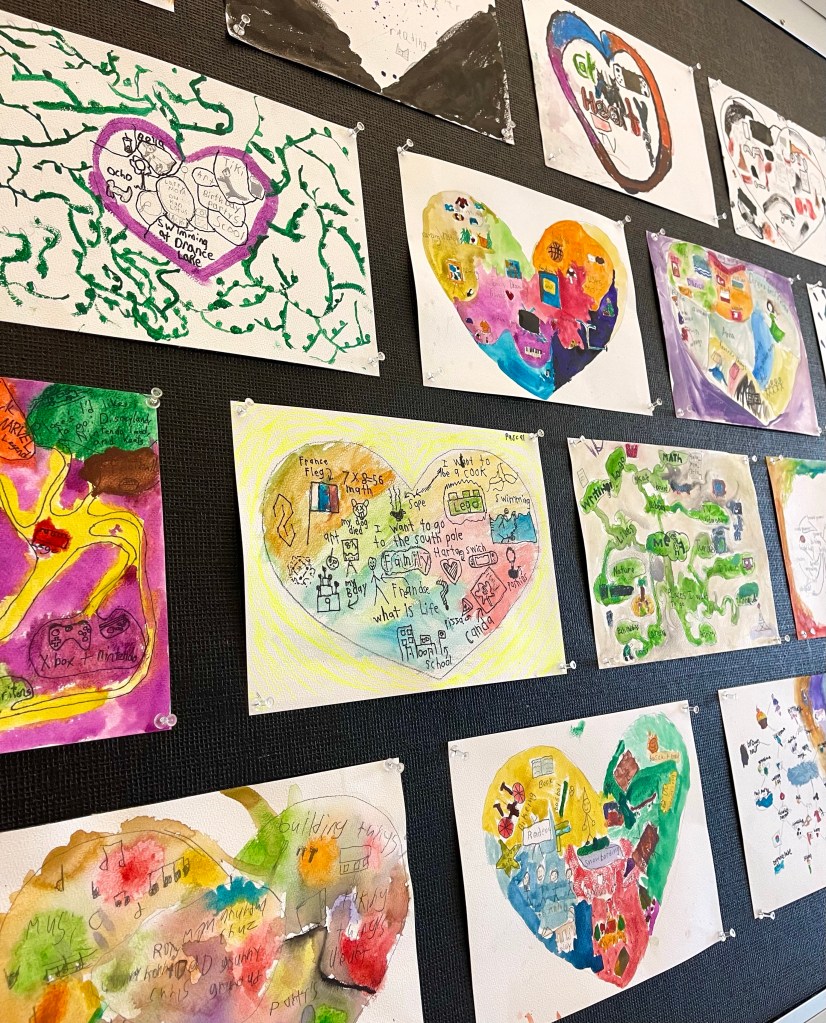
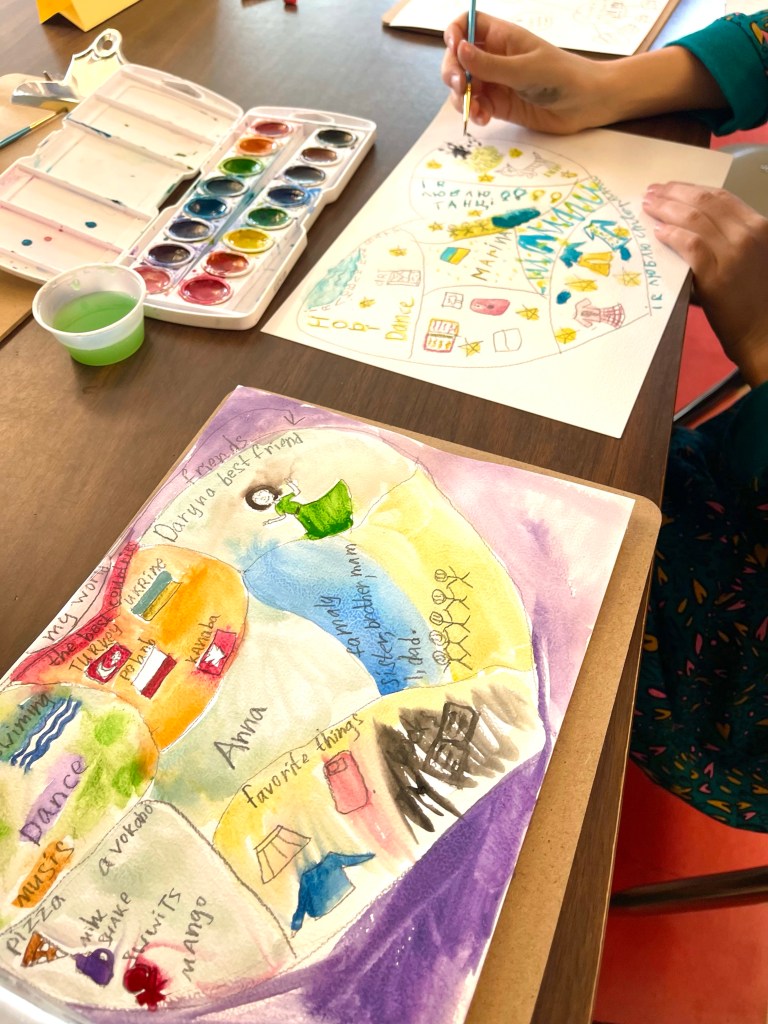
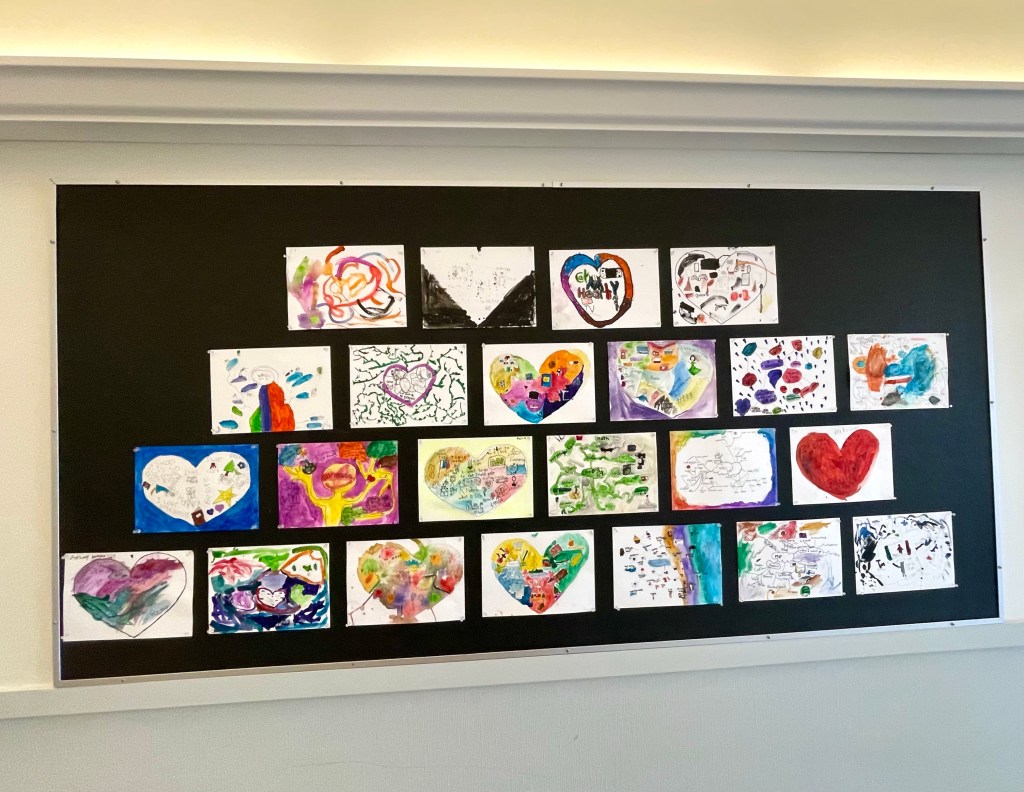
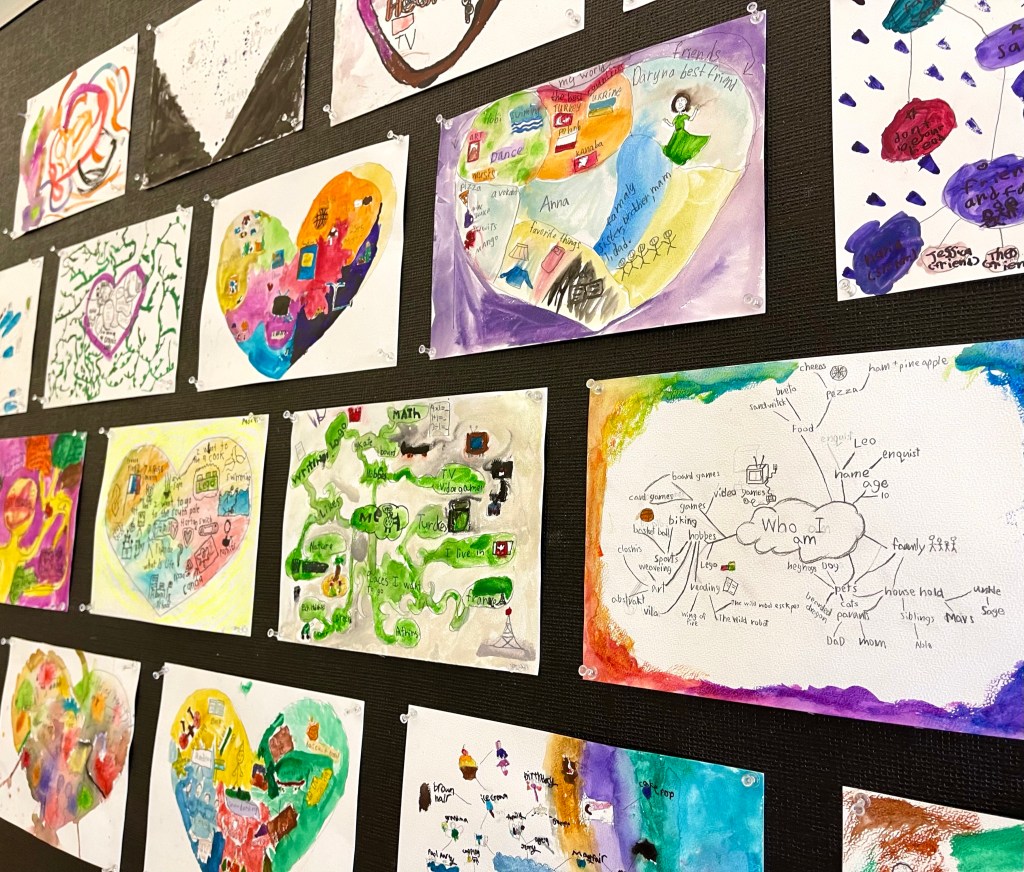
As well, the students have the now completed their wonderful “Heart Maps” and “Identity Maps”. Below you can see my instructional video, which explains the project concept. Keep scrolling and you will see the detailed and lovely artworks the students made to communicate who they are.

Here are some questions you could ask your children…

-How do you play “Story Ball”? Can you show me?

-How is your independent reading practice going? What novel are you reading now?

-Did you do any of the “centres” today? Which ones?

-What happened in the school assembly?

-What are some things you illustrated on your “Heart Map” or “Identity Map”?

-What is a digit? What is place value?

-In the number 78 561, which digit is in the thousands place?

For further study, here is a video that reviews the concept of place value:

Hello, Division 4!

We are off to a wonderful start in division 4! I am so happy to be your teacher this year. We have such caring, creative, fun, and helpful students in our class, and it has been so nice to see them collaborate and make new friends with one another.

We have started our year with some stories, discussion, brainstorming together, art activities, gym class, games, music class, writing activities and more. We have jumped right into our math learning with some initial open-ended assessments, a review unit on how to tell time, math stories, and problem solving challenges as desired. We have established a fun an motivating end-of-day “Centres” time where students meet a range of curricular goals by choosing from selection of fun hands-on activities that challenge their critical and creative thinking, while fostering collaboration and communication skills.

There is so much more to share with you about our classroom, such as routines, practices and schedules and what we are learning. However, I will hold off on sending home much more information until things are finalized with our Gym, Music, Library and other classes.

For now, I invite families and students to please enjoy exploring and discussing these photos together. Here are some questions you might pose to your division 4 student…

-What are you enjoying most about your class this year?

-What can you tell me about “Centres Time”?

-How do you store your belongings in class?

-What novel have you been reading in class?

-What can you tell me about “Class Jobs”?

-What are “tiny artworks”?

-How does “cozy reading” work?

-What are some of the routines you have in class?